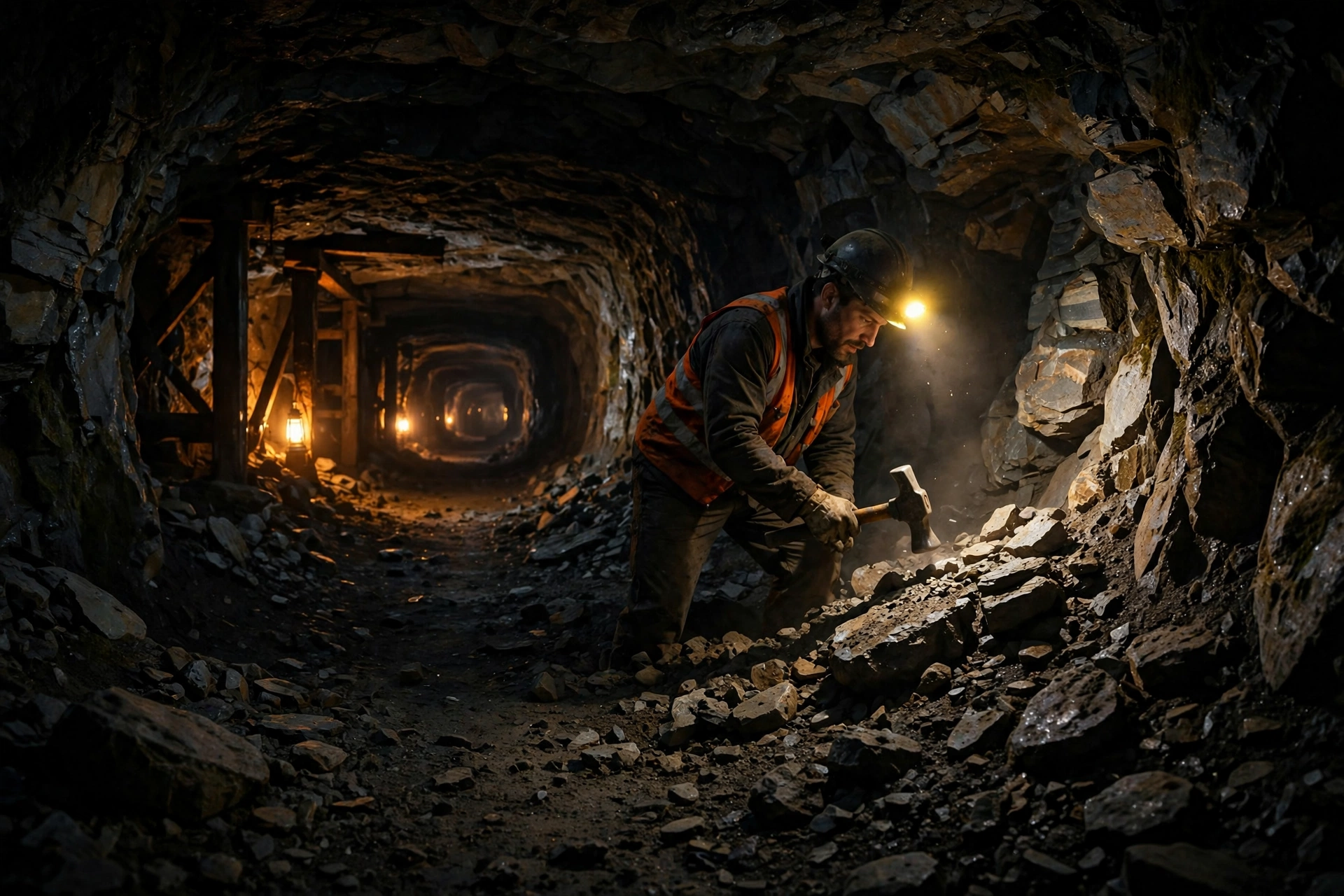
A miner helmet is a hard hat with a lamp bracket worn underground, protecting miners from falling rock, bumps, and low tunnels. Mining takes place in tunnels and shafts where the roof can be low, the ground can be uneven, and rock can fall from above. The helmet is the miner’s main head protection, and the lamp fitted to it is often the miner’s main source of light.
Miners work in a dark, dusty, and sometimes wet environment, far from daylight. The helmet has to be tough enough to take a knock from rock, comfortable enough to wear for a whole shift, and fitted with a lamp that lights the way ahead. It is one of the first pieces of kit a miner puts on, and one of the last they take off.
What is a miner helmet made of?
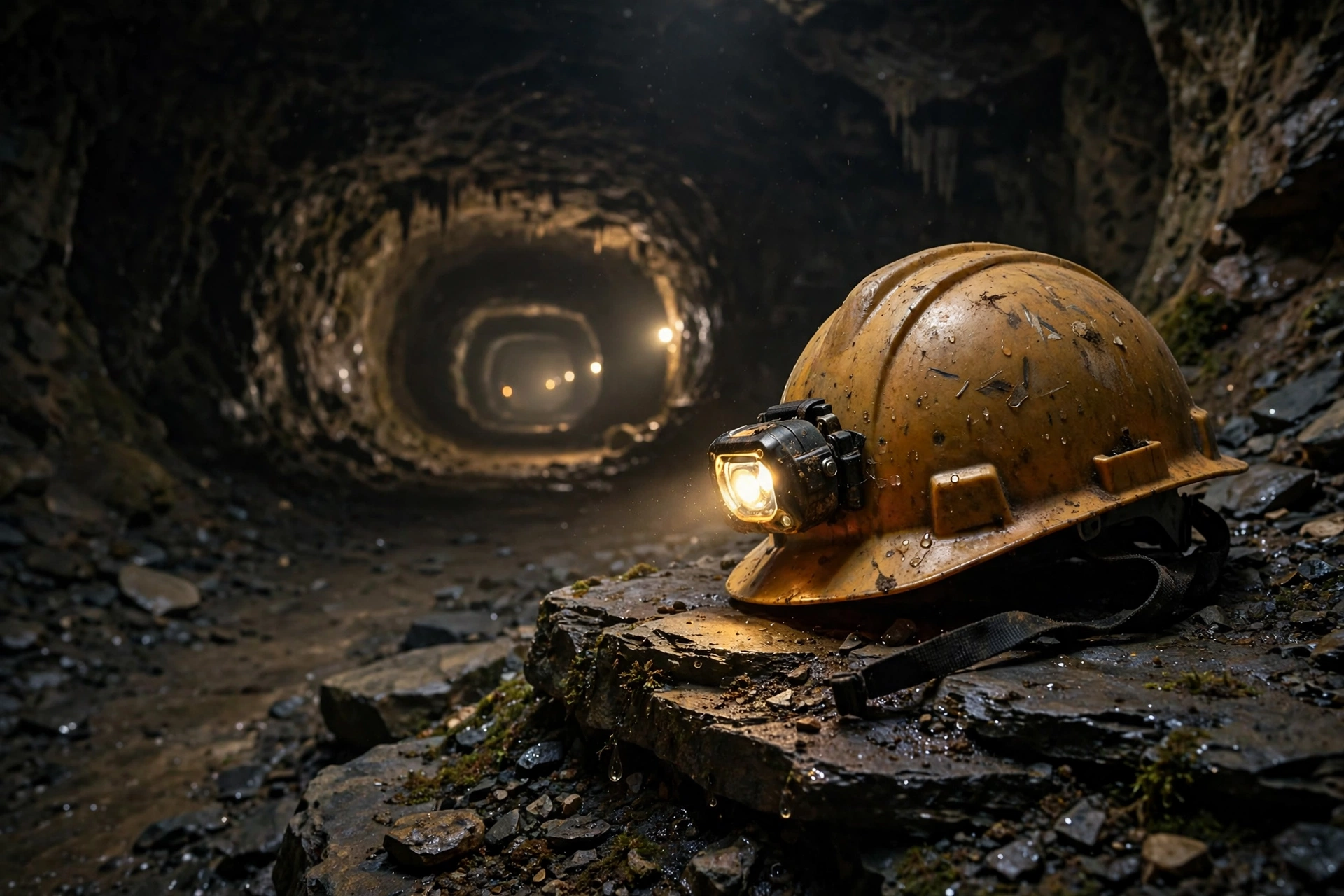
A miner helmet is usually made from a strong plastic or a composite material that can absorb the force of a falling object. The shell is hard on the outside and has a suspension system on the inside, which is a set of straps that hold the shell away from the head. When something hits the shell, the suspension spreads the force and gives the head room to move, which reduces the injury.
The helmet has a brim around the edge, which helps keep water, dust, and small debris off the face. It also has a bracket at the front for a cap lamp, which is a small, bright lamp that clips onto the helmet. The lamp is powered by a battery worn on the belt, with a cable running up to the helmet. Some modern helmets have a built-in lamp instead, but the clip-on lamp is still common.
Why do miners wear a lamp on their helmet?
Underground mines are dark, and a helmet lamp leaves the miner’s hands free. The lamp points where the miner looks, so it lights the work in front of them without needing to be held. This is safer and more practical than carrying a torch, especially when the miner needs both hands for tools or for climbing.
The lamp also helps other miners see each other in the dark. A moving light in a tunnel shows where a person is, which helps prevent collisions with vehicles and machinery. Some lamps have a main beam for work and a lower setting for moving around, so the miner can adjust the light to suit the task.
Modern cap lamps are usually LED lamps, which are bright, use little power, and last a long time on one charge. The battery is checked and charged before each shift, and a spare lamp or battery is kept ready in case one fails. A miner should never go underground without a working lamp, because the dark is total without it.
How should a miner helmet fit?
A miner helmet should sit level on the head, with the front edge just above the eyebrows. It should feel snug but not tight, and it should not slide forward when the miner bends down. Most miner helmets have an adjustment dial or a sliding strap at the back, so the fit can be set in a few seconds. A helmet that fits well stays in place all shift.
The chin strap should be used when working in steep or uneven ground, or where the helmet might be knocked off. It should be fastened snugly under the chin, leaving just enough room for a finger between the strap and the skin. The lamp should be clipped firmly into its bracket, and the cable should be tucked away so it cannot catch on anything.
What standards do miner helmets meet?
In general terms, miner helmets must meet the safety standard for industrial head protection in the country where the mine operates. In Europe, that is often EN 397, which covers shock absorption, penetration resistance, and protection against lateral forces. In the United States, the common standard is ANSI/ISEA Z89.1, which sets out similar tests. Other countries have their own standards, but the ideas are the same.
A genuine miner helmet will have a label inside the shell showing the standard, the maker, the date of manufacture, and the size range. If there is no marking, the helmet should not be used. Some miner helmets also offer extra protection against electrical contact or against molten metal splash, which is marked with extra symbols on the label.
Some helmets also use a system that lets the shell move slightly in an angled impact, an idea similar to MIPS in other sports helmets. Miner helmets are built for falling rock and bumps rather than for sports impacts, but the principle is the same: a helmet that spreads force and stays in place gives the best protection.
What other safety kit do miners wear?
A helmet is only one part of a miner’s safety kit. Miners wear sturdy boots with steel toecaps, which protect the feet from falling rock and heavy equipment. They wear high-visibility clothing so they can be seen by vehicle drivers in the dark, and gloves to protect their hands. Eye protection is worn where dust or flying rock is a risk.
Breathing protection is also important in many mines. Dust from drilling and blasting can damage the lungs, so miners may wear a mask or a respirator. Hearing protection is needed near loud machinery, such as drills and fans. A miner may also carry a self-rescuer, which is a small device that gives clean air in an emergency.
How should a miner helmet be looked after?
A miner helmet should be checked before every shift. The shell is looked over for cracks, dents, or deep scratches, and the suspension is checked for fraying or missing parts. The lamp bracket is tested, and the lamp is switched on to check that it works. If anything is wrong, the helmet should be swapped for a good one before going underground.
Helmets should be cleaned after each shift, because dust and mud can build up inside. The lining can be removed and washed, which keeps the helmet fresh and helps it keep its shape. Helmets should be stored in a dry place away from direct sunlight, which can weaken the plastic over time.
A helmet that has taken a hard knock should be replaced, even if there is no visible damage. The plastic may have weakened in ways that cannot be seen. In general terms, a hard hat should be replaced after about five years, and sooner if it is damaged. Never drill holes in a helmet, paint it with solvent-based paint, or stick heavy labels on it, because these can weaken the shell.
Can a miner use a normal construction hard hat underground?
In general terms, a construction hard hat can be suitable if it meets the right standard and has a lamp bracket, but miner helmets are made for the underground environment. Always use the helmet specified by the mine, and check that it has a working lamp.
How long does a miner helmet last?
In general terms, a hard hat should be replaced after about five years, and sooner if it is damaged or has taken a hard knock. Always follow the maker’s guidance and the mine’s rules, and replace the helmet if the suspension is worn or the shell is cracked.
What should I do if my helmet lamp stops working underground?
Stay calm, tell a colleague or a supervisor, and follow the mine’s emergency procedure. Do not try to fix the lamp in the dark, and do not continue working without light. Mines keep spare lamps and batteries ready for this reason.

Olivia
Writer at Helmet Today, covering helmet reviews, fit and riding safety.