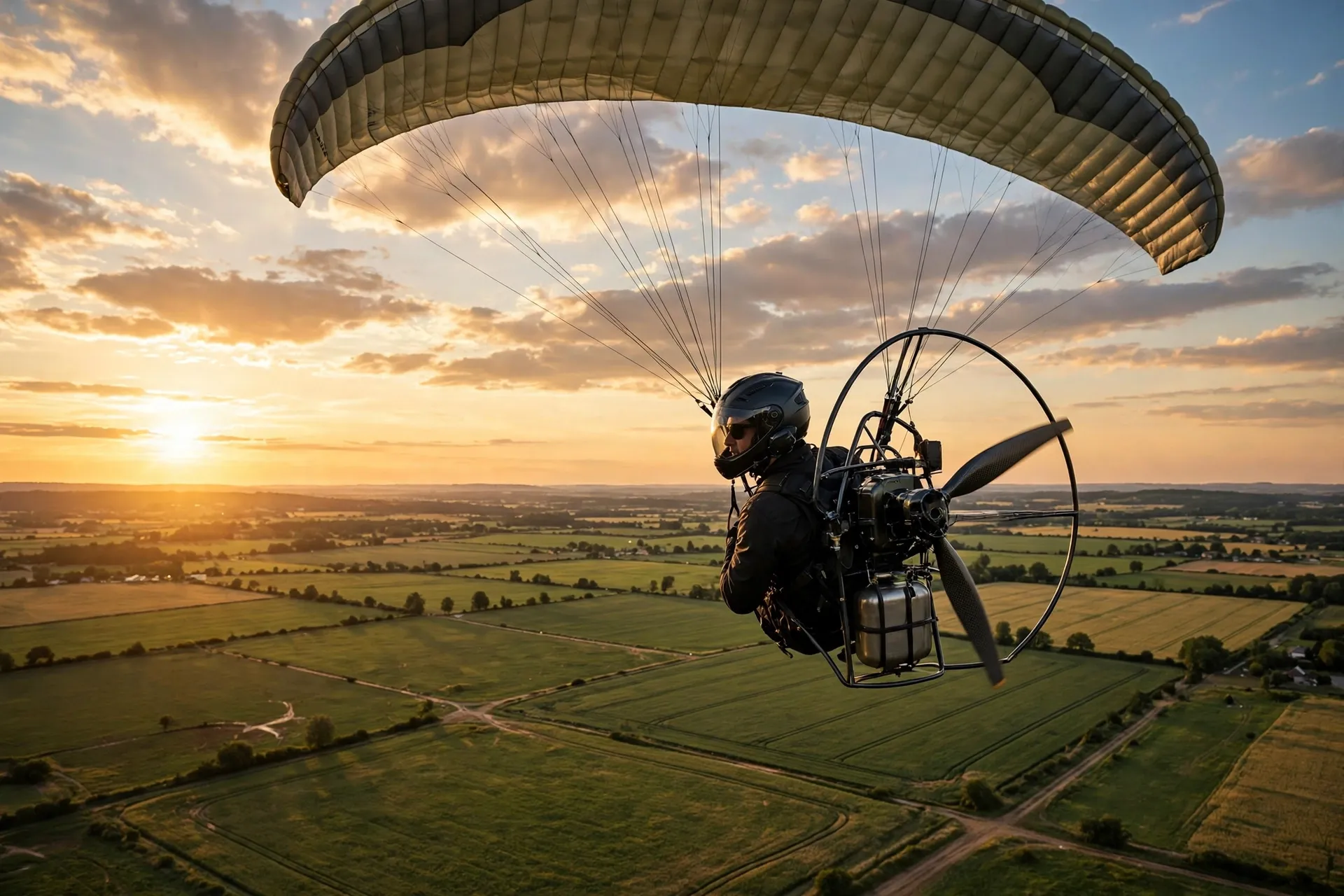
A helmet for paramotoring is a flying helmet worn to protect your head from the propeller, hard landings, and falling objects while you fly a powered paraglider. Paramotoring means flying a paraglider wing with a motor and propeller strapped to your back, and the helmet is essential safety kit. The propeller spins just behind your head, so the helmet guards against the one risk that makes paramotoring different from ordinary paragliding.
In general terms, a paramotoring helmet is a full or open-face flying helmet, often with a built-in headset and a visor or goggles, chosen for protection, communication, and comfort. Many pilots use a helmet with ear protection and a microphone, so they can talk to other pilots and hear the engine note. The helmet is worn for the whole flight, from the moment the engine starts until you are safely on the ground.
What is paramotoring?
Paramotoring is a form of powered paragliding in which the pilot wears a motor unit on their back, with a propeller in a protective cage, and flies under a paraglider wing. The pilot runs forward to launch, the wing lifts overhead, and the motor provides the thrust to climb and stay airborne. Unlike unpowered paragliding, which needs a hill or a tow to launch, a paramotor can take off from a flat field.
Flights are usually low and slow, at speeds that feel gentle compared with other aircraft, and pilots often fly in the calm air of the early morning or evening. Even so, the pilot sits close to a spinning propeller, and landings can be rough, so protective kit matters from the first minute of the flight to the last.
Why is a helmet so important for paramotoring?
A helmet is important for paramotoring because of the propeller. The propeller spins in a cage behind the pilot’s back, close to the head, and a helmet is the main protection if something goes wrong. It also protects the pilot in a hard landing, a fall on takeoff, or a tumble on the ground if the wing drags them after landing.
The helmet also guards against objects kicked up by the propeller wash, such as stones, dust, and sticks, which can be thrown up from the ground during takeoff and landing. In general terms, a paramotor pilot without a helmet is taking a risk that no experienced pilot would accept, and most flying schools and clubs treat a helmet as compulsory kit.
What kind of helmet do paramotor pilots wear?
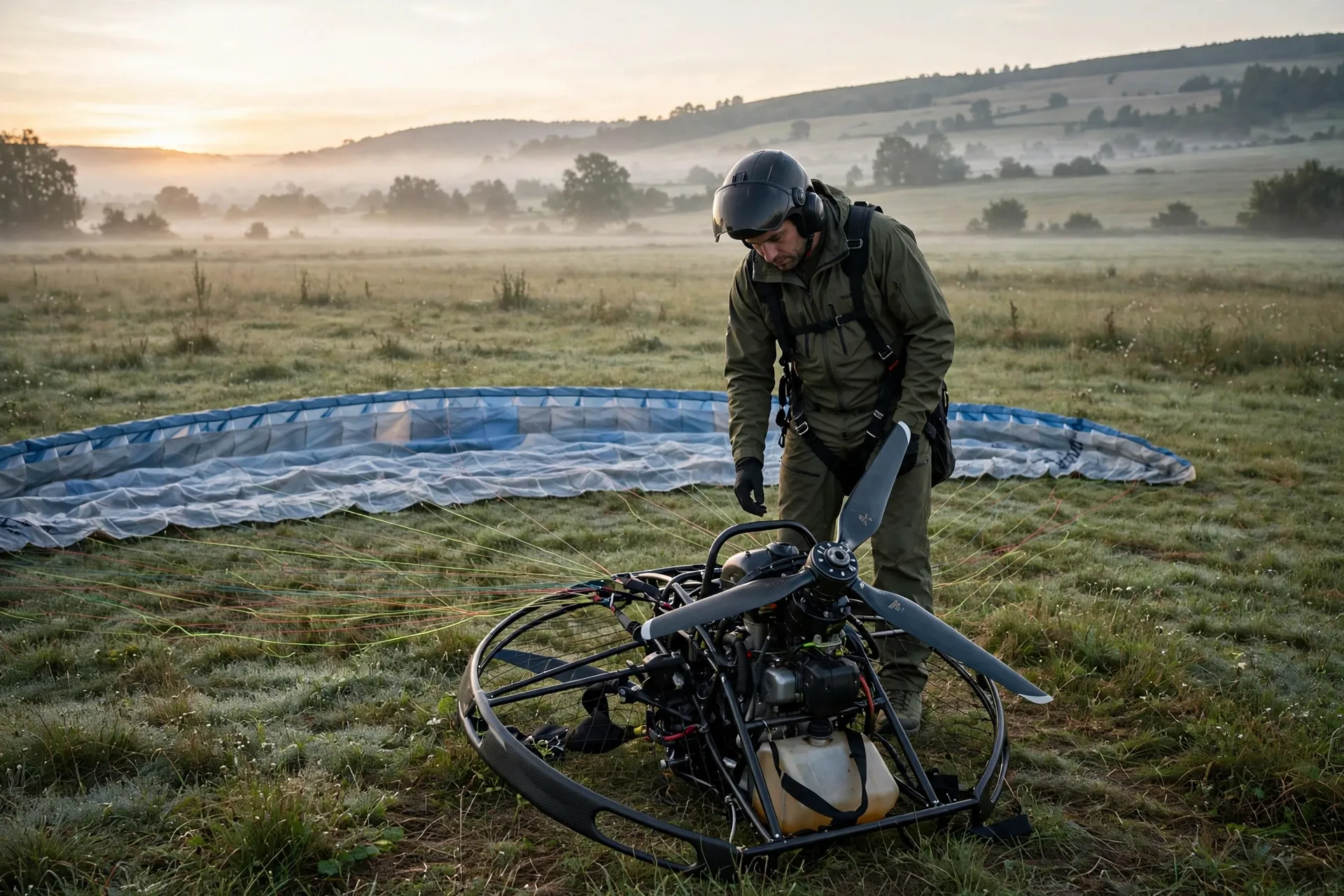
Paramotor pilots usually wear a purpose-made flying helmet, which is often a full-face or open-face design with a strong shell, a visor, and space for a headset. Some pilots use a helmet made for paramotoring, while others use a paragliding helmet with a headset added. The key features are a secure chin strap, good hearing protection, and a shape that works with the motor unit and the wing’s lines.
A full-face helmet gives the most protection, covering the chin and jaw as well as the top of the head, and it helps keep wind, dust, and insects out of the face. An open-face helmet is lighter and cooler, and it is often used with goggles. Whichever style you choose, it should be comfortable enough to wear for a long flight and should not press on the headset or the ears.
How do communication and hearing protection work in a paramotor helmet?
Many paramotor helmets have a built-in headset with ear cups and a microphone, which lets the pilot talk to other pilots by radio and hear instructions from an instructor on the ground. The headset also cuts down engine noise, which is important because the engine sits right behind the pilot’s head and runs for the whole flight. Without hearing protection, a long flight can be very loud and tiring.
Some helmets have the headset built in, while others have pockets or clips that hold a separate headset in place. Check that the headset fits comfortably under or inside the helmet, and that the microphone sits close to your mouth without pressing against it. Some pilots also use a system designed to reduce rotational forces in a fall, such as MIPS, and it is worth asking about when you choose a helmet.
How should a paramotor helmet fit?
A paramotor helmet should fit snugly all round your head, without pressing painfully on your forehead or temples. It should sit level, low enough at the front to protect your forehead, and it should not tip forward over your eyes or slide back when you nod. Try it on with the headset in place, since the ear cups change the fit, and wear the same balaclava or head covering you plan to use in the air.
The chin strap should be snug enough that you can fit only a finger or two between the strap and your chin. The visor should close fully and seal against the wind, and the helmet should not press on your ears or your glasses. A helmet that is too loose can shift in the airflow, while one that is too tight will give you a headache on a long flight. Check the fit on the ground before you start the engine.
How do you look after a paramotor helmet?
After flying, check your helmet for cracks, dents, and scratches, and look at the visor, straps, and headset wiring for wear. Wipe the shell with a damp cloth, clean the visor with a soft cloth and a cleaner made for visors, and let the lining dry naturally away from direct heat. Do not leave the helmet in a hot car, as heat can damage the foam inside over time.
In general terms, a helmet that has taken a hard impact should be replaced, even if it looks fine on the outside, because the inner layer may have been compressed. Store your helmet in a dry place, away from fuel and oil, and keep it in a bag when you carry it, so the visor is not scratched and the headset wiring is not snagged.
Can you wear a motorcycle helmet for paramotoring?
Some pilots do, but a purpose-made flying helmet is usually a better choice. A motorcycle helmet can be heavy and may not fit a headset well, while a flying helmet is made for long, low-speed flights with radio communication.
Do you need a helmet for a tandem paramotor flight?
Yes, both the pilot and the passenger should wear helmets on a tandem flight. The passenger sits in front of the motor, and both people need protection from the propeller and from a hard landing.
When should a paramotor helmet be replaced?
Replace it after a hard impact, if the shell, visor, or straps are damaged, or if the headset no longer works reliably. In general terms, a helmet that has protected you in a serious knock has done its job and should not be relied on again.

Olivia
Writer at Helmet Today, covering helmet reviews, fit and riding safety.