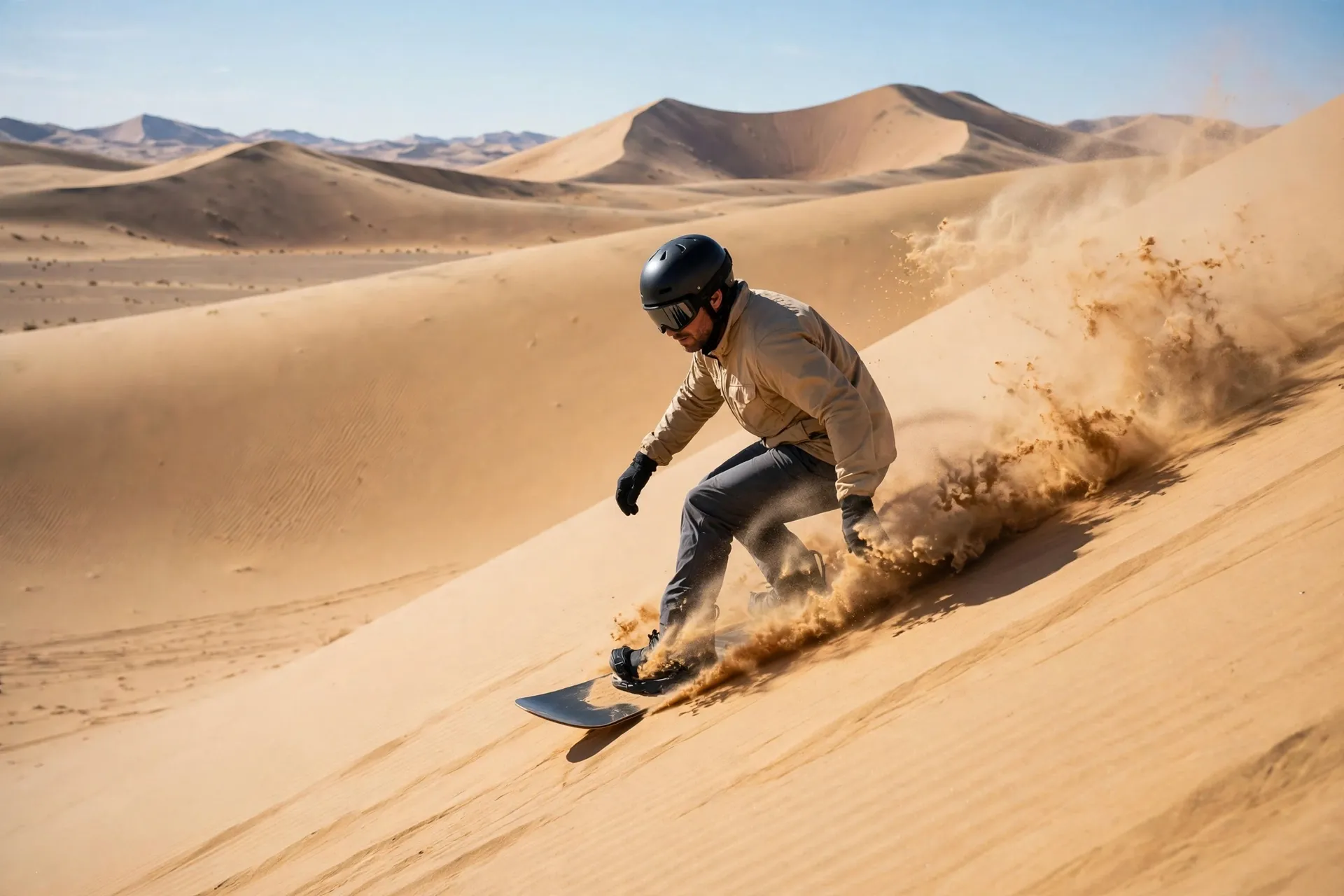
A helmet for sandboarding is a protective helmet worn while riding a board down sand dunes, to guard your head in a fall onto hard-packed sand or a tumble at speed. Sandboarding is like snowboarding, but on a desert or coastal dune instead of snow, and the rider stands sideways on a board and slides down the slope. The sand looks soft, but at speed a fall can be hard, and a helmet is the main protection for your head.
In general terms, the helmet used for sandboarding is a snowboard or skate-style helmet, chosen for a secure fit, good coverage, and ventilation in the heat. Many sandboarding operators provide a helmet as part of the hire kit, and they will help you fit it before your first run. If you are sandboarding on your own, bring a helmet that fits well and fasten the strap every time.
What is sandboarding?
Sandboarding is a board sport in which a rider stands on a board and slides down a sand dune, steering with their feet and their body weight. It began in desert areas and at coastal dunes, and it is now offered as an activity at dune parks and desert tours in many parts of the world. The board is similar to a snowboard, but the base is often waxed so it slides smoothly over the sand.
Riders can also lie down on the board, feet first, for a faster and simpler ride, which is a popular option for beginners and for children. The dunes used for sandboarding are usually large and smooth, with a clear run-out at the bottom, and riders walk or ride back up to the top for the next run.
Why wear a helmet for sandboarding?
You wear a helmet for sandboarding because a fall on sand can still hurt, especially at speed. Sand at the top of a dune is often soft, but lower down it can be packed hard by wind and by other riders, and a fall onto hard sand is much like a fall onto firm ground. The helmet spreads the force of the impact and helps prevent a head injury.
The helmet also protects you from other knocks, such as hitting your own board, bumping into another rider, or catching a hidden rock or piece of debris in the sand. In general terms, a helmet is a simple precaution for a sport where the rider is moving fast, standing up, and a long way from the bottom of the dune.
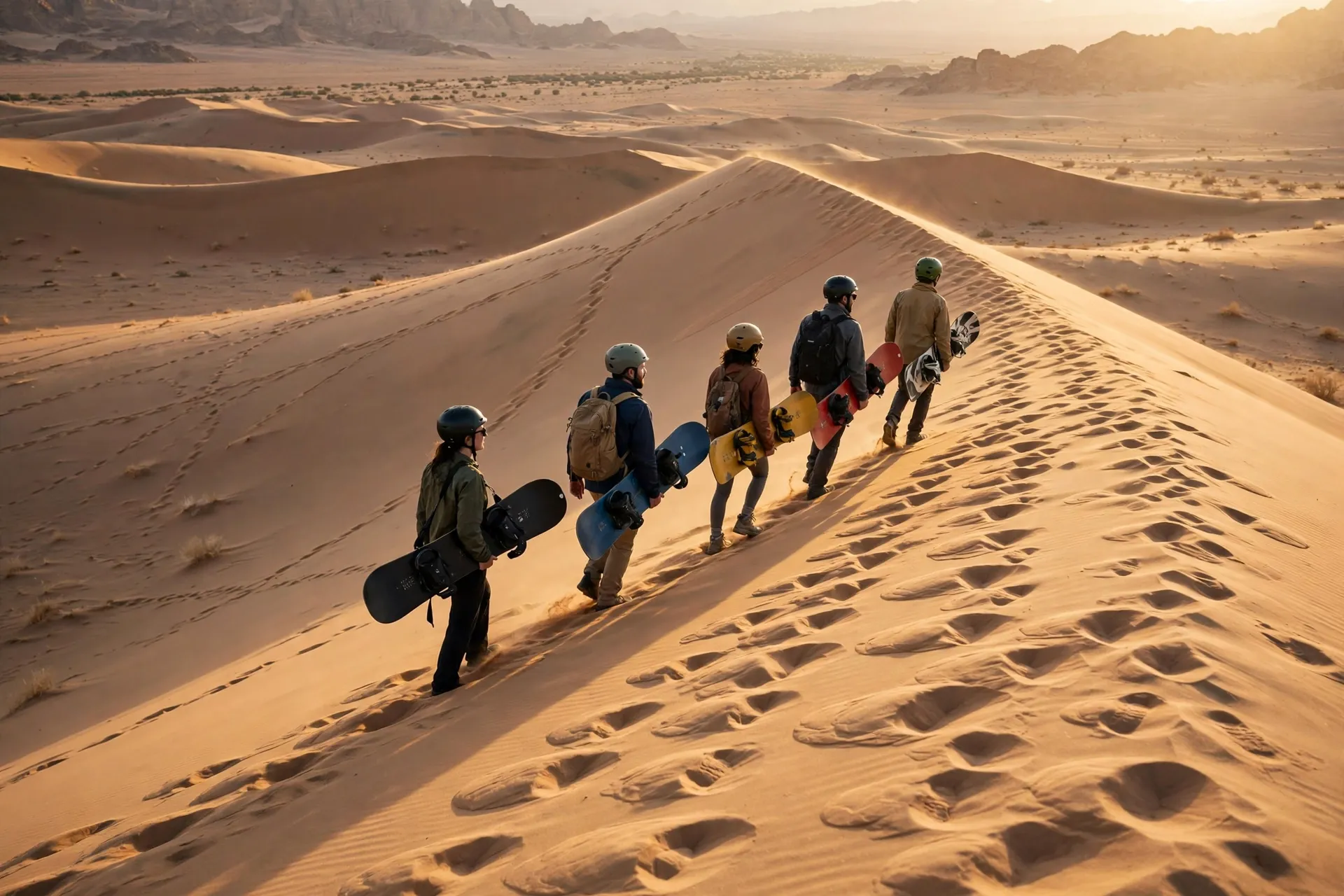
What kind of helmet is used for sandboarding?
The helmet used for sandboarding is usually a snowboard helmet or a skate-style helmet, both of which have a hard outer shell and a foam lining that absorbs impact. A snowboard helmet is a popular choice because it covers the back and sides of the head well, has vents that can be opened or closed, and is made to be worn in cold and warm conditions alike. A skate helmet is lighter and also covers the head well.
A bike helmet is less suited to sandboarding, because it is designed for a different kind of impact and often has large vents that let sand in. Whichever helmet you choose, it should be in good condition, with no cracks or damage, and the chin strap should fasten securely. Goggles or sunglasses can be worn with most sandboarding helmets to keep sand out of your eyes.
How should a sandboarding helmet fit?
A sandboarding helmet should fit snugly all round your head, without pressing painfully on your forehead or temples. It should sit level, low enough at the front to protect your forehead, and it should not tip forward over your eyes or slide back when you nod. Try it on with any goggles or sunglasses you plan to wear, so you know they fit together without gaps.
The chin strap should be snug enough that you can fit only a finger or two between the strap and your chin, and the rear adjustment should be tightened so the helmet does not rock when you shake your head. A helmet that is too loose can shift in a fall, while one that is too tight will give you a headache in the desert heat. Check the fit before your first run, and adjust it again if it loosens during the day.
What else should you wear for sandboarding?
For sandboarding, wear comfortable clothes that cover your arms and legs, because sand can sting at speed and the sun on a dune is strong. Closed shoes are best, and sunscreen, a hat for the walk back up, and plenty of water are all important in the heat. Goggles or wraparound sunglasses keep sand out of your eyes on the way down.
Some sandboarding helmets also include a system designed to reduce rotational forces in a fall, such as MIPS, and it is worth asking about when you choose a helmet. Gloves can protect your hands if you put them down to balance, and knee and elbow pads are a good idea for beginners who are still learning to stay on the board.
How do you look after a sandboarding helmet?
After sandboarding, shake the sand out of the vents and the lining, and brush the shell clean before you put the helmet away. Wash the lining with lukewarm water and mild soap if it is sweaty or sandy, and let the helmet dry naturally in the shade, away from direct heat or strong sunlight. Do not leave it in a hot car, as heat can damage the foam inside over time.
In general terms, a helmet that has taken a hard impact in a fall should be replaced, even if it looks fine on the outside, because the inner layer may have been compressed. Store your helmet in a dry place, away from chemicals and sharp objects, and keep it in a bag when you carry it, so it is not scratched or crushed by other kit.
Do children need a helmet for sandboarding?
Yes, children should always wear a helmet for sandboarding, and it should be a junior-sized helmet that fits their head properly. A loose adult helmet can shift and protect less well, so check the fit before every run.
Is sand softer than snow to fall on?
Soft dune sand is kinder than hard snow, but sand can be packed hard by wind and other riders, and a fall at speed can still hurt. In general terms, treat a sand fall like any other board-sport fall and wear the helmet every time.
When should a sandboarding helmet be replaced?
Replace it after a hard impact, if the shell or straps are damaged, or if the fit no longer stays secure. In general terms, a helmet that has protected you in a serious knock has done its job and should not be relied on again.

Olivia
Writer at Helmet Today, covering helmet reviews, fit and riding safety.