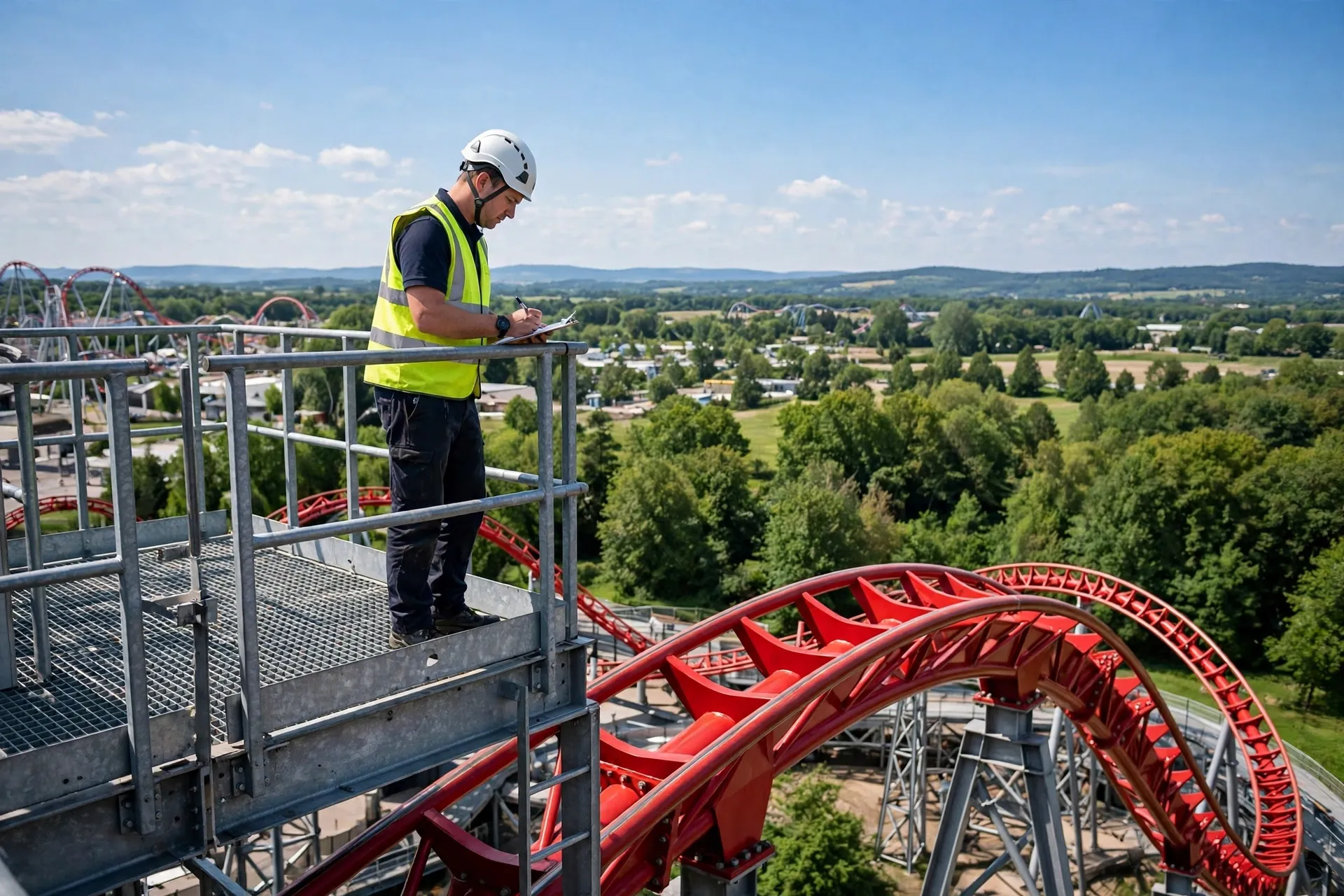
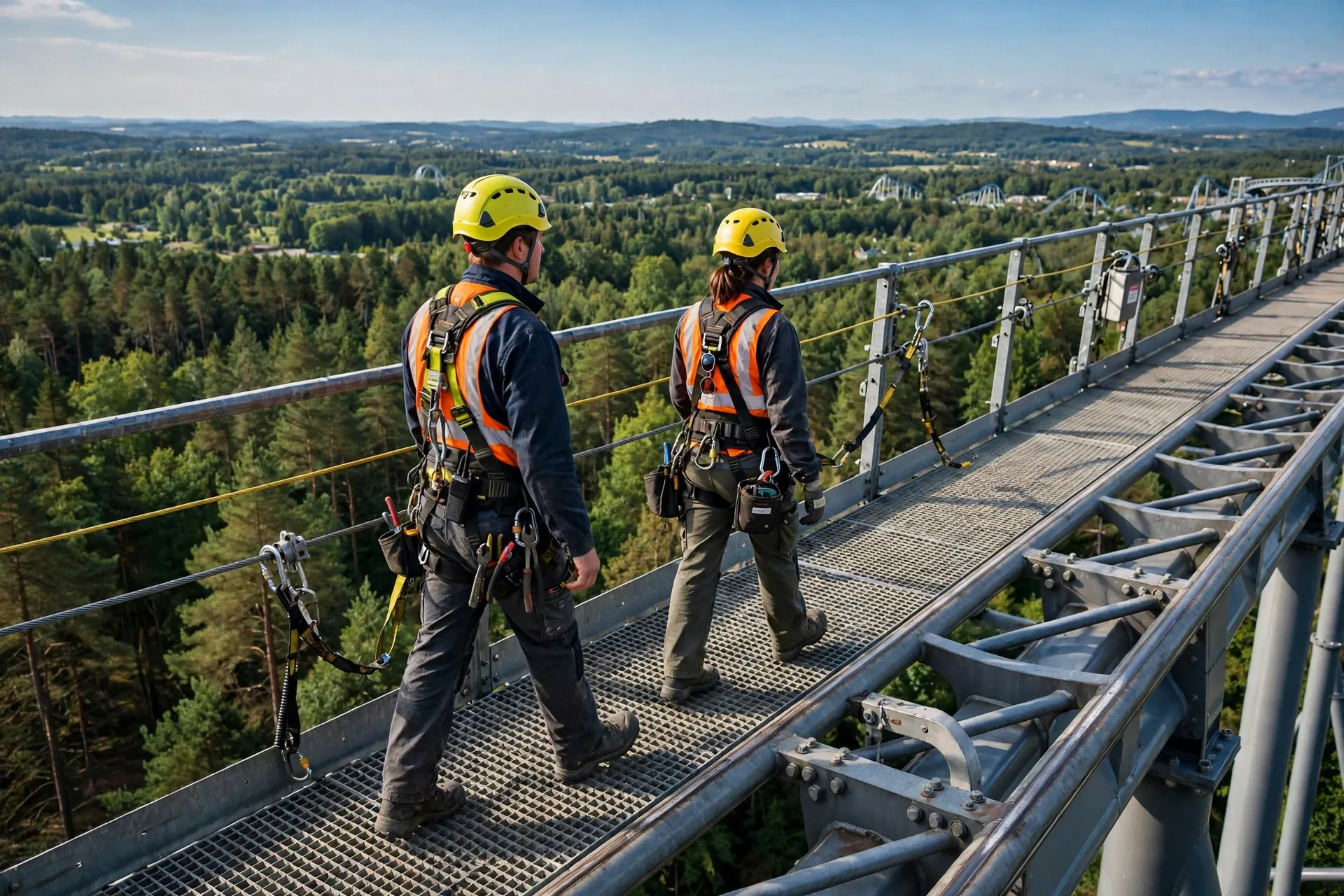
A helmet for theme park ride operators is a protective helmet worn by staff during ride inspections, maintenance, and rescue work, to guard their heads around moving machinery, high platforms, and overhead structures. Ride operators do not usually wear a helmet while they are running a ride from the control booth, but they do wear one when they climb onto a track, walk a coaster structure, or work in a restricted area. The helmet is part of the park’s safety rules for staff working at height or near moving parts.
In general terms, the helmet used by theme park ride staff is an industrial safety helmet, similar to a hard hat, chosen for protection against falling objects and bumps. Some parks also use climbing helmets for staff who work on tall structures, because they stay on the head better when climbing. The park’s safety team decides which helmet is right for each task, and staff are trained to wear it correctly.
What do theme park ride operators do?
Theme park ride operators run the rides, check restraints, load and unload guests, and watch for safety issues during the ride. They follow a strict routine for each ride, from the morning safety checks to the end-of-day shutdown, and they are trained to stop a ride and help guests if something goes wrong. Their work mixes guest service with safety checks, and it is carried out to a tight timetable.
Operators also work with the maintenance team, who inspect the track, the cars, and the machinery every day before the park opens. Some of that work takes staff onto high platforms, along the track, or under the ride structure, where a helmet is needed. The helmet is part of the personal protective equipment that parks provide for these jobs.
When do ride operators wear a helmet?
Ride operators wear a helmet when they work in areas where their head is at risk, such as on a coaster track, on a high platform, or inside a ride building where there are low beams and moving parts. They also wear one during evacuations, when guests need to be helped down from a stopped ride, because the walkway may be narrow, high, and exposed.
Operators do not usually wear a helmet while they are standing on the platform loading guests or working in the control booth, because there is no overhead risk in those spots. In general terms, the rule is simple: if the job takes you above the ground, under a structure, or near moving machinery, the helmet goes on before you start.
What kind of helmet is used by ride staff?
The helmet used by theme park ride staff is usually an industrial safety helmet, the kind worn on building sites, with a hard shell and a suspension system inside that spreads the force of an impact. It protects against falling tools, loose bolts, and bumps against steelwork, which are the main risks around a ride structure. Many parks choose a helmet with a chin strap, so it stays on when the wearer leans over or climbs.
For work on tall structures, some parks use a climbing helmet instead, because it fits closer to the head and stays put when the wearer is climbing or working at an angle. Either way, the helmet should be in good condition, with no cracks or damage, and it should be checked regularly as part of the park’s safety routine.
How should a ride operator’s helmet fit?
A ride operator’s helmet should fit snugly all round the head, without pressing painfully on the forehead or temples. It should sit level, low enough at the front to protect the forehead, and it should not tip forward over the eyes or slide back when the wearer nods. The internal adjustment should be set so the helmet stays put, and the chin strap, where fitted, should be fastened snugly.
Staff should try the helmet on at the start of the shift and adjust it before they go up onto the structure. A helmet that is too loose can fall off or shift at the wrong moment, while one that is too tight will be a distraction during a long inspection. Some helmets include a system designed to reduce rotational forces in a fall, such as MIPS, and parks may ask about this when they choose staff helmets.
What other safety kit do ride operators use?
Alongside a helmet, ride operators working at height usually wear a safety harness and a lanyard that clips to a fixed point, so they cannot fall from a platform or a track. They wear gloves to protect their hands on steelwork, sturdy footwear with a good grip, and high-visibility clothing so they can be seen easily by other staff. Eye protection is also common when working near machinery or when cleaning ride parts.
All of this kit is checked before use, and staff are trained in how to wear it and when to use it. In general terms, the helmet is only one part of a wider safety system that includes training, checklists, and supervision, and it works best when it is used together with the rest of the kit.
How are ride staff helmets looked after?
Ride staff helmets are checked regularly for cracks, dents, and damage to the shell and the suspension, and any helmet that is damaged is taken out of use. Staff clean the shell with mild soap and water, and they let the helmet dry naturally away from direct heat or strong sunlight. Helmets are stored in a dry place, away from chemicals and sharp objects, often on a rack or in a labelled box for each member of staff.
In general terms, a helmet that has taken a hard impact from a falling object should be replaced, even if it looks fine on the outside, because the inner suspension may have been damaged. Parks keep a record of their safety helmets, so a damaged one can be traced and replaced quickly, and a spare is always kept on hand.
Do ride operators wear helmets while the ride is running?
Usually not, because the operator is on the platform or in the control booth, where there is no overhead risk. The helmet is worn for inspections, maintenance, and evacuations, when staff work on or around the ride structure.
Can guests wear a helmet on a ride?
In general terms, guests are not given helmets for most theme park rides, because the ride restraints and the ride design are the safety system. A helmet could change how a guest sits in the restraint, so parks ask guests to follow the ride’s own rules instead.
When should a ride staff helmet be replaced?
Replace it after a hard impact, if the shell or suspension is damaged, or if the fit no longer stays secure. In general terms, a helmet that has protected someone from a serious knock has done its job and should not be relied on again.

Olivia
Writer at Helmet Today, covering helmet reviews, fit and riding safety.