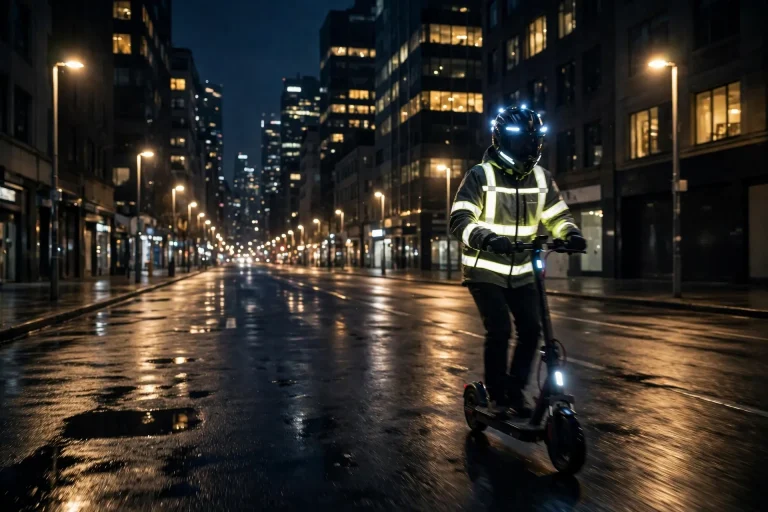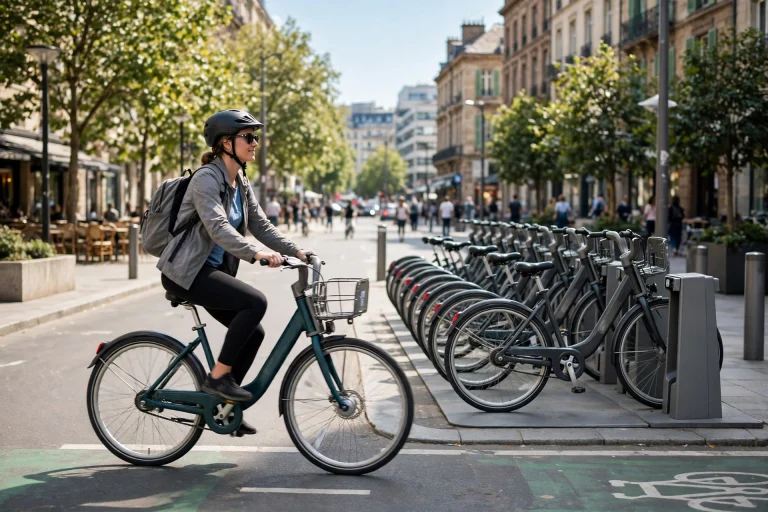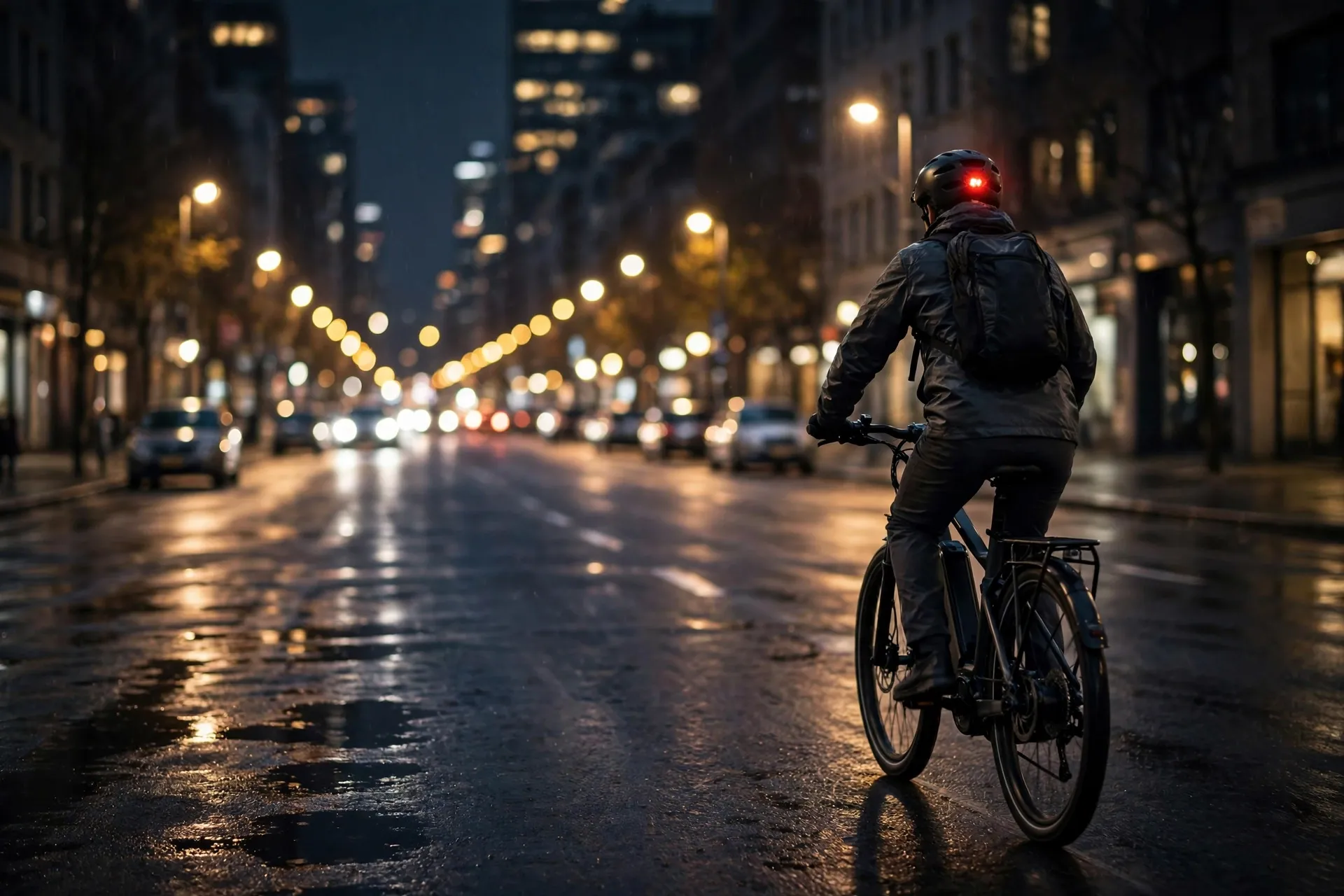
An e-bike helmet for night riding is a bike helmet with bright lights, reflective details, and a secure fit, worn to protect your head and help other road users see you after dark. Riding an e-bike at night brings two risks at once: the risk of a fall or a collision, and the risk of not being seen. A night-riding helmet deals with both, by protecting your head in a crash and by making you easier to spot in the dark.
In general terms, the best e-bike helmet for night riding is a well-fitting bike helmet with a built-in rear light and reflective panels, worn with the bike’s own lights and reflective clothing. The motor on an e-bike means you travel faster than on a normal bike, often with less effort, so a good helmet matters even more. Choose a helmet that is comfortable, well ventilated, and easy to see from a distance.
Why is night riding different on an e-bike?
Night riding is different on an e-bike because you travel faster and quieter than on a normal bike, and other road users may not expect you. An e-bike can cruise at a steady speed with little effort, which means you can arrive at a junction sooner than a driver expects. At night, drivers have less time to spot you, and their view can be limited by glare, rain, or parked cars.
The road itself is harder to read at night. Potholes, wet leaves, drain covers, and kerbs are all harder to see, and a surprise bump can throw you off balance. In general terms, night riding on an e-bike calls for slower speeds, more care at junctions, and kit that makes you visible from every angle, including a helmet that can be seen in the dark.
What should a night riding e-bike helmet have?
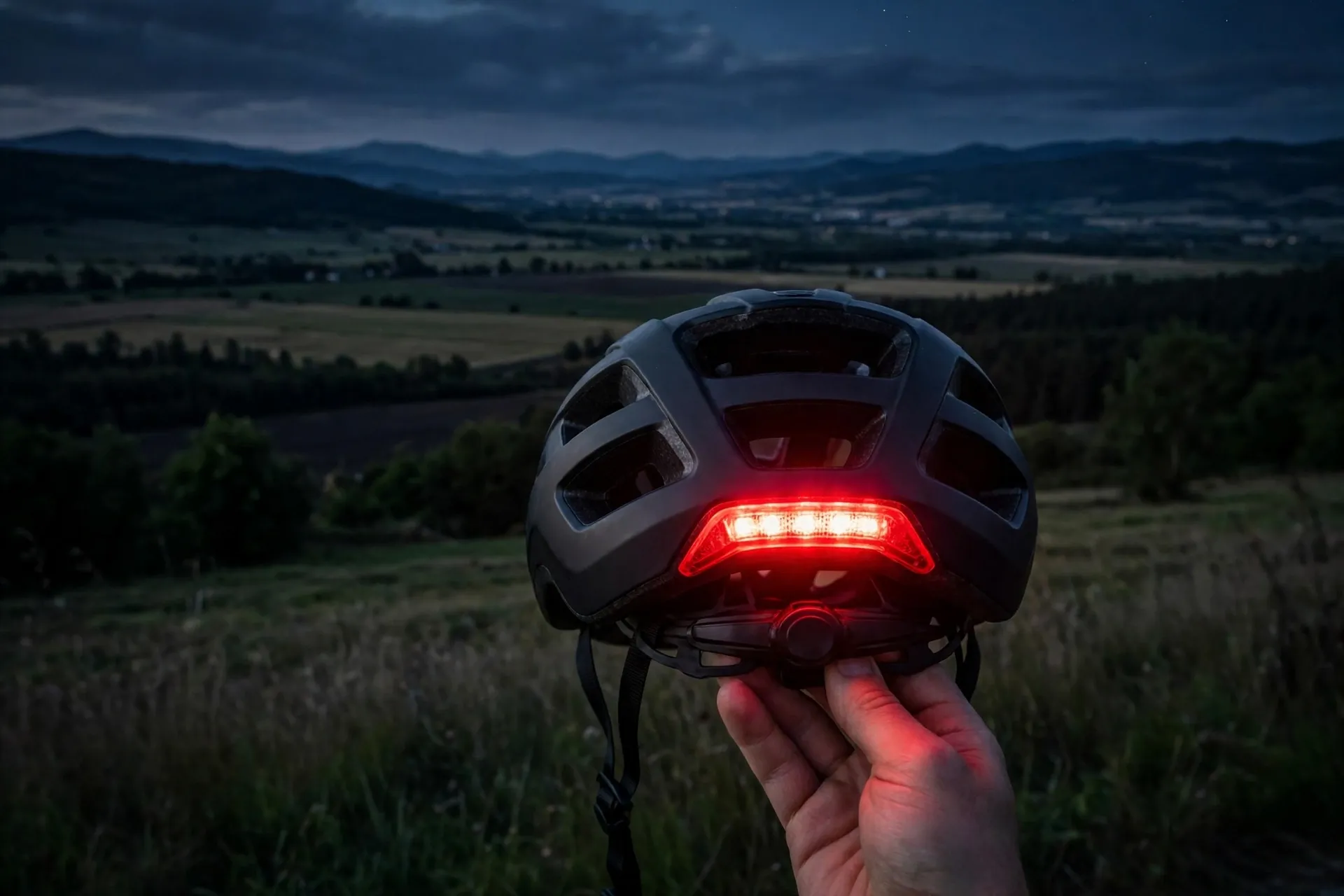
A night riding e-bike helmet should have a bright shell, reflective details, and a built-in rear light if possible. Some helmets have a light built into the back, with steady and flashing modes, while others have a clip or mount for a separate rear light. Reflective strips on the sides and back help drivers see you from different angles, and a light-coloured shell is easier to spot than a dark one.
The helmet should also be comfortable and well ventilated, since you may be riding for a long time, and it should have a secure fit system that keeps it in place. A visor can help keep rain and glare out of your eyes, and a helmet that works with glasses is useful if you wear them. Look for a helmet that meets a recognised bike helmet safety standard and is in good condition.
How should an e-bike helmet fit for night riding?
An e-bike helmet should fit snugly all round your head, without pressing painfully on your forehead or temples. It should sit level, low enough at the front to protect your forehead, and it should not tip forward over your eyes or slide back when you nod. The fit matters more at night, because you will be looking around more, checking junctions and mirrors, and a helmet that shifts can block your view.
The chin strap should be snug enough that you can fit only a finger or two between the strap and your chin, and the rear adjustment should be tightened so the helmet does not rock when you shake your head. Try the helmet on with any lights or mounts attached, and with the same hat or head covering you plan to wear underneath in cold weather.
What lights and reflective kit go with the helmet?
The helmet light is only part of the setup. Your e-bike should have a bright front light and a red rear light, both switched on and charged before you set off. Reflective clothing, such as a jacket or a vest with reflective strips, helps drivers see your body, while reflective ankle bands move as you pedal and catch the eye. A reflective backpack cover is also useful if you carry a bag.
Check all your lights before every night ride, and carry a spare light or a spare battery if you are riding far. Some riders also use a helmet light as a second front light, aimed where they are looking, which helps at dark junctions. The aim is to be seen from the front, the back, and the sides, and the helmet is one part of that picture.
How do you ride safely on an e-bike at night?
To ride safely on an e-bike at night, slow down, keep a bigger gap from other traffic, and take extra care at junctions and roundabouts. Use your lights, signal clearly, and ride where drivers can see you, rather than hugging the kerb. Watch for hazards such as wet leaves, potholes, and drain covers, and be ready to stop sooner than you would in daylight.
Some e-bike helmets also include a system designed to reduce rotational forces in a fall, such as MIPS, and it is worth asking about when you choose a helmet. Plan your route to use lit roads and cycle paths where you can, and let someone know where you are going if you are riding alone late at night. A calm, steady ride is safer than a fast one in the dark.
How do you look after a night riding helmet?
After a night ride, check your helmet for cracks, dents, and damage, and look at the straps and buckles for wear. If the helmet has a built-in light, check that it still works, and charge it or change the battery so it is ready for the next ride. Clean the shell with a damp cloth, and let the lining dry naturally away from direct heat.
In general terms, a helmet that has taken a hard impact in a fall should be replaced, even if it looks fine on the outside, because the inner layer may have been compressed. Store your helmet in a dry place, away from chemicals and sharp objects, and keep the lights charged so you are never caught out by a dead battery.
Do you need a special helmet for night riding on an e-bike?
Not always, but a helmet with a built-in light and reflective details is a big help at night. In general terms, any well-fitting bike helmet is better than none, and you can add a clip-on light and reflective stickers to a plain helmet.
Is a flashing rear light better than a steady one?
Both have their place, and many riders use a steady light on the bike and a flashing light on the helmet. A steady light helps drivers judge your distance, while a flashing light catches the eye, so the two together work well.
When should a night riding helmet be replaced?
Replace it after a hard impact, if the shell or straps are damaged, or if the built-in light no longer works reliably. In general terms, a helmet that has protected you in a serious knock has done its job and should not be relied on again.

Olivia
Writer at Helmet Today, covering helmet reviews, fit and riding safety.