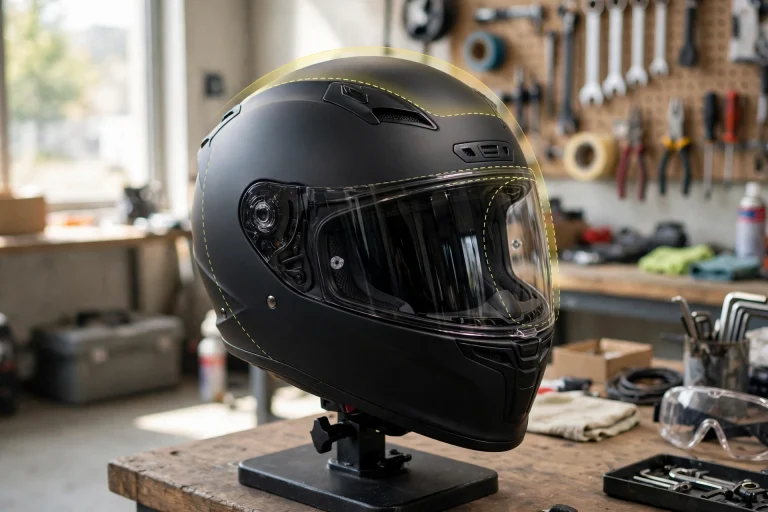
A helmet has to do its whole job in a fraction of a second, because the time between your head hitting a surface and coming to a stop is extremely short. There is no slow build-up and no second chance: the shell spreads the force, the foam crushes, and your head slows down, all before you have time to react. That brief moment is the entire window in which a helmet can protect you.
This is why helmet design is so focused on what happens in that tiny slice of time. Every layer of the helmet, from the hard shell to the softest padding, is there to make the best possible use of the short distance and the short time available. Understanding how fast a helmet must work helps explain why thickness, materials, and fit all matter so much.
How much time does a helmet have?
A helmet has only the time it takes for your head to stop moving, and that is a very short time indeed. When your head hits a hard surface, it goes from moving fast to standing still in a fraction of a second. The helmet cannot add time that is not there; it can only stretch the stop out as much as the space inside the helmet allows.
The foam liner is what does the stretching. As your head presses into the liner, the foam crushes and gives your head a short distance to travel while it slows down. That distance is only the thickness of the liner, which is why every bit of it counts. In general terms, a helmet works by trading distance for time: more crushing distance means a slightly longer, gentler stop. That is why a helmet that is too thin in the liner, or one where the liner has already been crushed, leaves so little room for the head to slow down, and why the stop becomes much harsher as a result.
Why is the stopping distance so short?
The stopping distance is short because a helmet has to be wearable. A liner thick enough to give your head a long, slow stop would make the helmet huge and heavy, and nobody could wear it comfortably for long. So designers work with a modest thickness, and the helmet must do its job within that space.
That limit shapes everything about a helmet. The foam must crush at the right rate: too soft and it crushes flat too quickly, leaving no cushion for the rest of the stop; too firm and it barely crushes at all, so your head stops almost as suddenly as it would without a helmet. Getting that balance right is the central challenge of helmet design, and it is why the same foam is not used in every helmet.
What does the foam do in that brief moment?
In that brief moment, the foam crushes cell by cell, soaking up energy as it collapses. Each tiny air cell in the foam pops or folds as your head presses into it, and that controlled collapse is what turns speed into a slower stop. The foam does not bounce your head back; it absorbs the energy and stays crushed.
The shell helps by spreading the force first, so the foam is crushed evenly over a wide area rather than being overwhelmed in one spot. Together, the two layers make the most of the short time available: the shell shares the load, and the foam spends it. If either layer fails, the other cannot make up for it in the time left.
What slows the head down most?
What slows the head down most is the crushing of the foam liner. The shell spreads the force, but it absorbs very little energy itself. It is the foam’s controlled collapse that takes the speed out of your head and turns a sudden stop into a more gradual one.
Fit is the next biggest factor. A helmet that fits snugly stays in place and lets the liner crush evenly, so the full thickness of the foam is available to slow your head down. A loose helmet can shift before the liner starts working, wasting precious distance and time. The chin strap also matters: if the helmet comes off or moves too far, the liner cannot do its job at all.
Why does every bit of time matter?
Every bit of time matters because the force on your brain depends on how quickly your head stops. A slightly longer stop means a smaller peak force, and a smaller peak force means less strain on the brain. Even a tiny improvement in the stopping time can make a real difference to the outcome of a crash.
That is why small design details matter. A liner that crushes smoothly, a shell that spreads the load evenly, and a fit system that holds everything in place all add up to a better use of the brief moment available. Designers therefore test and refine every layer, because even a small gain in stopping time can mean a meaningful drop in the force your brain must absorb. None of these details works on its own, but together they give the helmet the best chance of protecting you in the time it has.
How do designers test a helmet at crash speed?
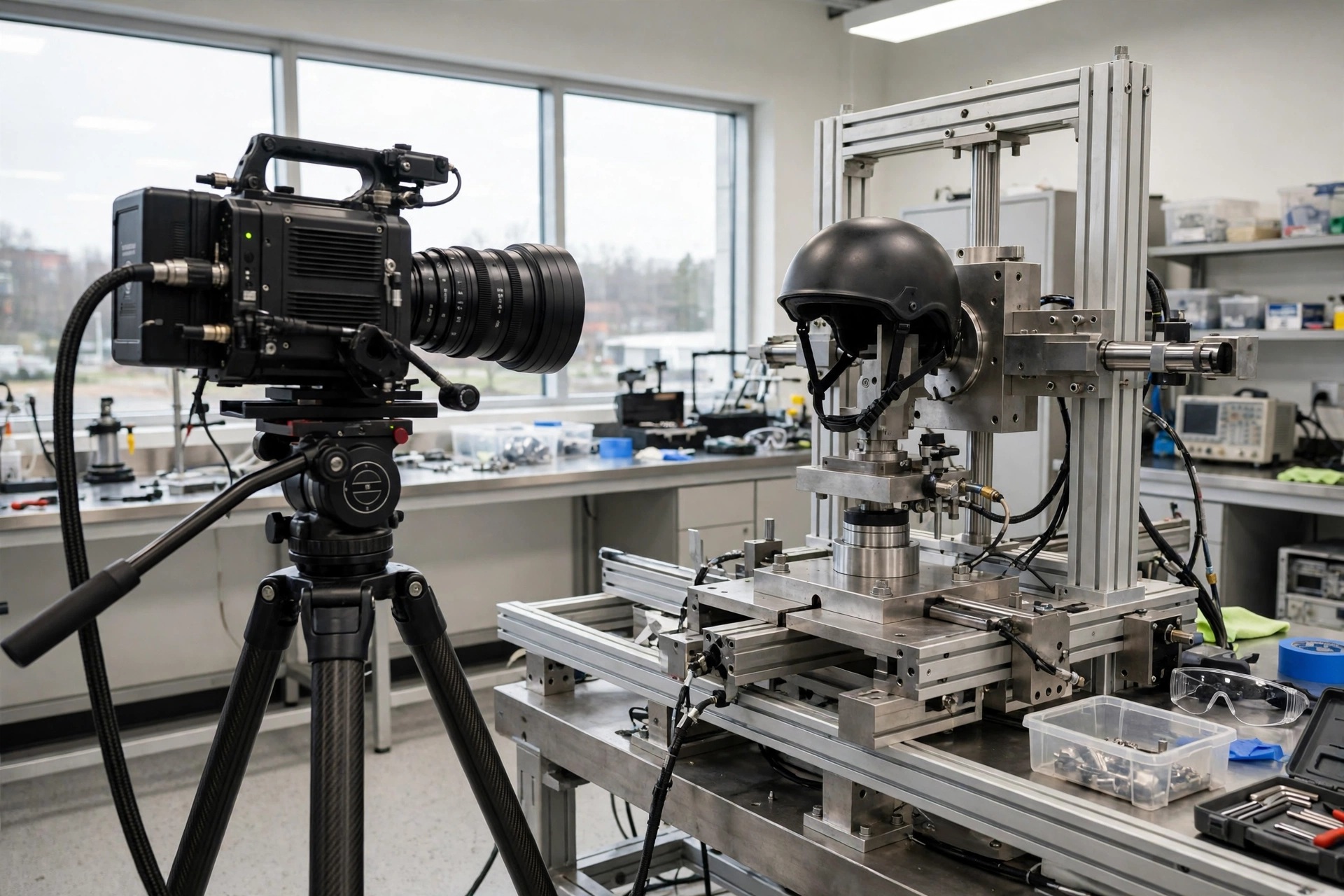
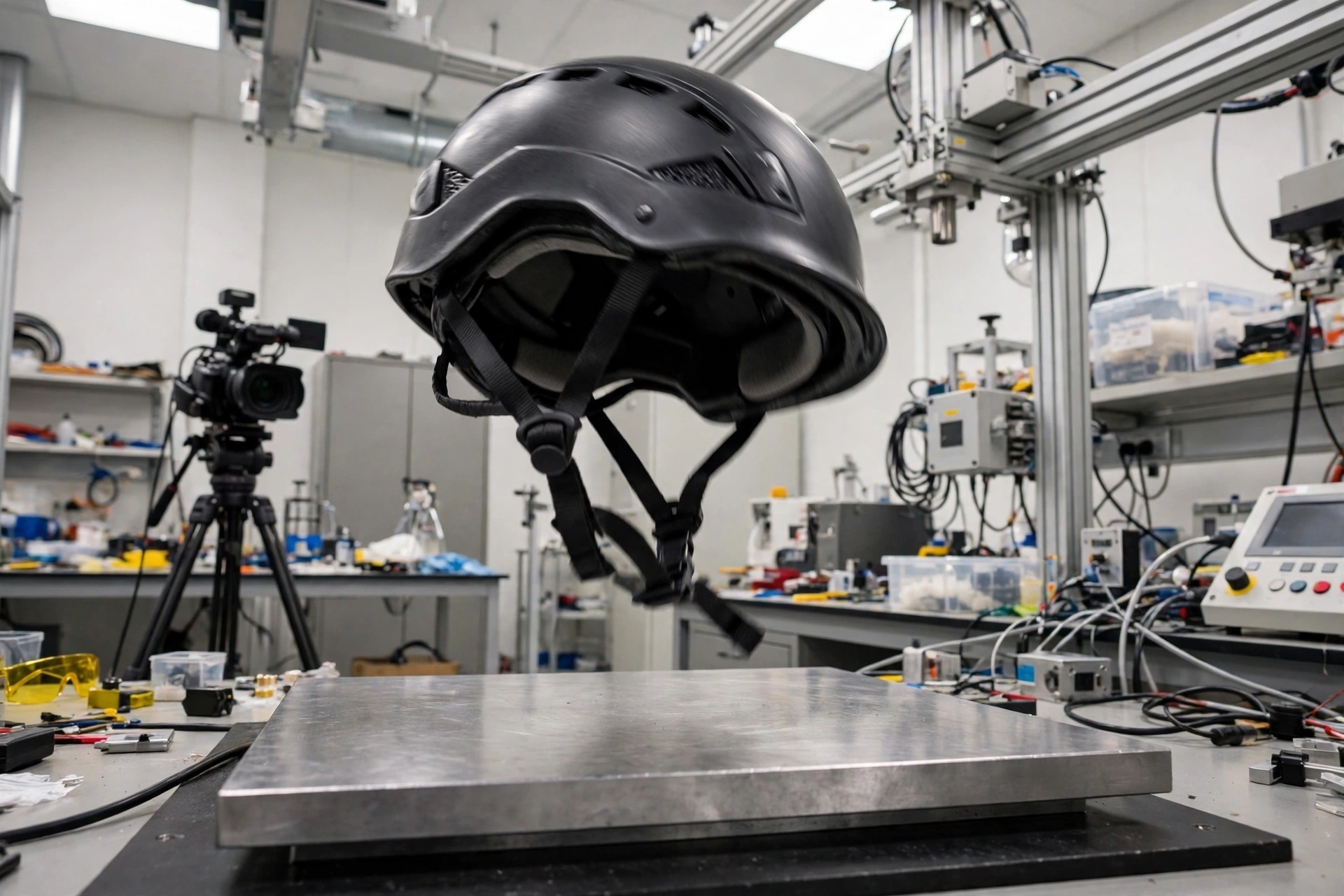
Designers test helmets at crash speed by dropping them onto hard surfaces in a laboratory, and by measuring what happens inside the helmet during the impact. Sensors inside a test headform record how sharply the head slows down and how much it twists, which shows whether the shell and liner are doing their jobs in the short time available.
Some helmets also include systems designed to handle the twisting part of a crash, such as MIPS, and these are tested with angled impacts that mimic real falls. The results help designers adjust the foam, the shell shape, and the slip layer until the helmet uses its brief moment as well as possible. Testing cannot copy every real crash, but it shows whether a helmet can work fast enough when it matters.
Can a helmet work slowly in a crash?
No. A crash gives the helmet only a fraction of a second, and the helmet must absorb the energy within that time. There is no slow or gradual option once the impact has started.
Does a thicker helmet work faster?
A thicker liner gives the head more distance to slow down, which makes the stop gentler, but thickness alone does not make the helmet faster. The foam must also crush at the right rate to use that distance well.
Why can’t helmets give you more time in a crash?
Because the time available is set by the thickness of the liner and the speed of the impact. A helmet can only stretch the stop within the space it has, so designers focus on using that space as efficiently as possible.

Olivia
Writer at Helmet Today, covering helmet reviews, fit and riding safety.