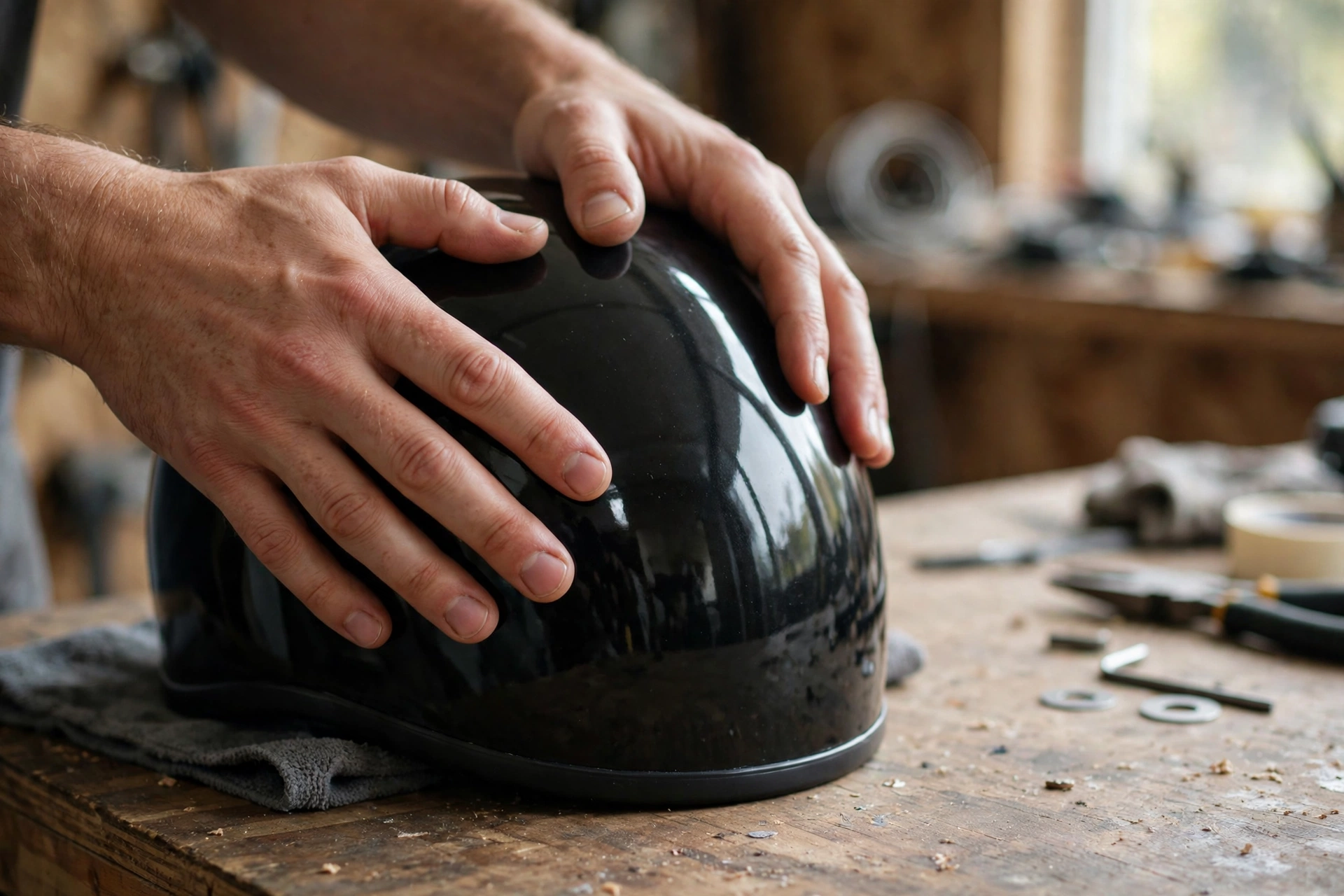
Helmet shell flex is the small amount of bending or give in the hard outer shell of a helmet when it is pressed or struck. A helmet shell is not perfectly rigid: under force it flexes slightly, spreading the load and working with the foam liner inside. In general terms, a little flex is normal and useful, while too much or too little can both be problems.
Flex is easy to misunderstand. People often think a helmet shell should be as hard and unyielding as possible, but a shell that cannot flex at all would pass the full shock of an impact straight through to the liner in one spot. A shell that flexes in a controlled way shares the load more evenly, which is exactly what the liner needs to do its job well.
What does shell flex mean?
Shell flex means the outer shell bends slightly under pressure instead of staying completely rigid. If you press the shell of a helmet gently with your hands, you may feel a tiny amount of give. That give is the shell flexing, and it is part of how the helmet handles force.
The flex is small by design. The shell is stiff enough to hold its shape, spread an impact over a wide area, and resist being pierced, but not so stiff that it cannot bend at all. In a crash, the shell flexes for a brief moment as it meets the surface, and that flex helps pass the force sideways through the shell material to a broader area of liner underneath.
Why is a little flex helpful?
A little flex is helpful because it helps the shell share the load. When the shell bends slightly, it spreads the force of the impact across more of the liner, so no single patch of foam has to absorb everything at once. The liner can then crush more evenly, which makes the stop gentler for your head.
Flex also helps the shell cope with uneven surfaces. A kerb, a rock, or a branch does not press evenly, and a shell that can flex a little adapts to the shape of the impact instead of concentrating all the force at one point. In general terms, controlled flex turns a sharp, localised blow into a broader, more manageable push.
What happens if a shell is too stiff?
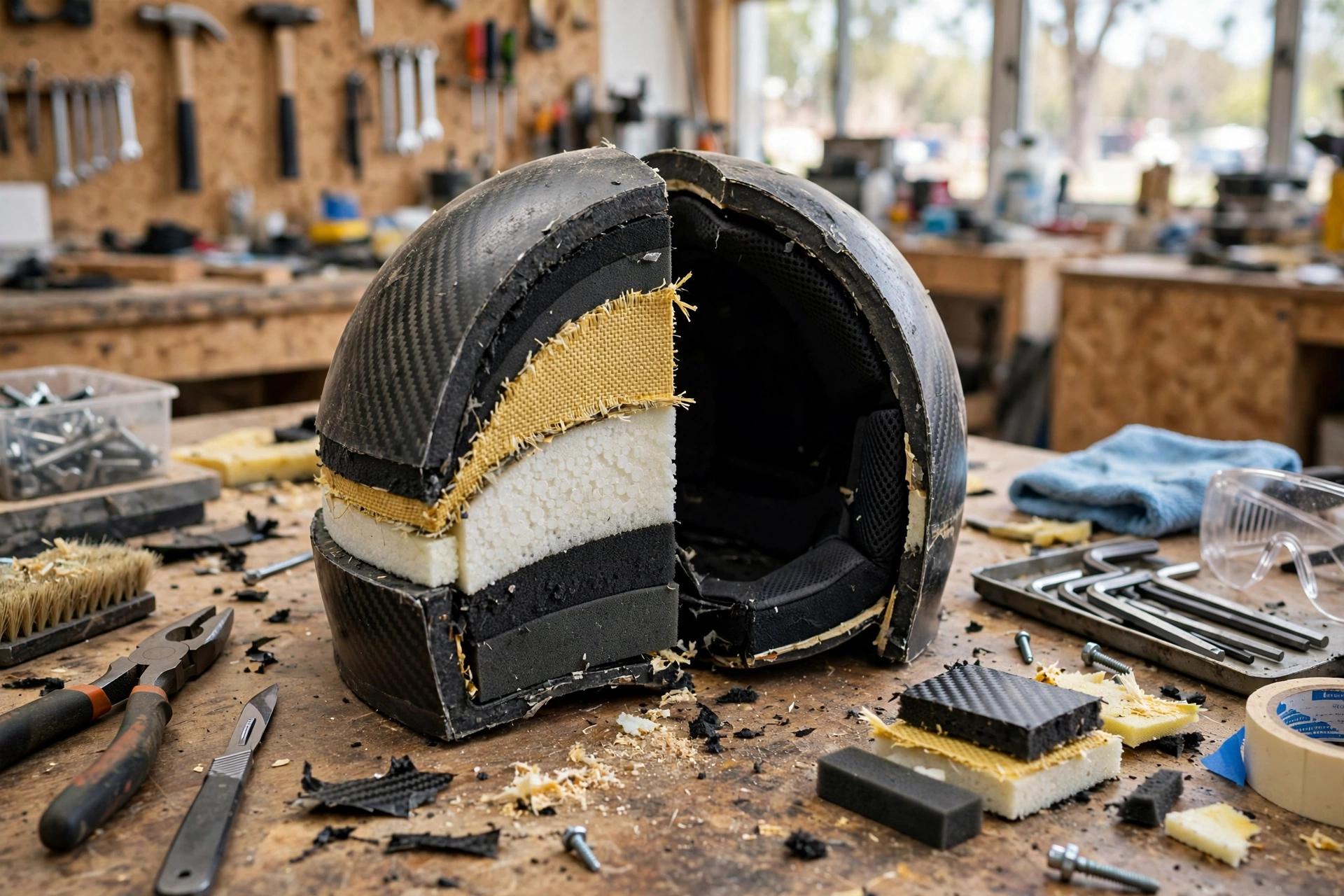
If a shell is too stiff, it passes the force of an impact through to the liner in a concentrated way. A very rigid shell does not spread the load sideways as well, so the foam underneath the impact point is crushed hard while the foam around it does very little. That uneven crushing means less of the liner is working, and the stop for your head is harsher.
An overly stiff shell can also be brittle, which means it is more likely to crack under a hard blow instead of flexing. A crack breaks the shell’s ability to spread force at all, and a cracked shell should always mean the helmet is replaced. Stiffness has to be balanced against toughness: the shell needs to be strong, but it also needs to give a little.
What happens if a shell flexes too much?
If a shell flexes too much, it can press too far inward and squeeze the liner before the liner has a chance to crush properly. The shell is meant to protect the liner and spread the load, not to collapse onto it. A shell that is too flexible may also deform permanently under a hard impact, leaving the liner compressed in one area and the helmet misshapen. In that state the helmet cannot spread the next impact properly either, because the shell no longer holds its designed shape over the liner.
Too much flex can also mean the shell is too thin or made from a material that is not suited to the job. Such a shell may feel soft or flimsy when handled, and it may not hold up well over time, especially if it is left in heat or sunlight. A helmet shell should feel firm and solid in the hand, with only a small amount of give when pressed.
How do shell materials affect flex?
Shell materials affect flex because different materials bend in different ways. Some materials are naturally stiff and strong, while others are more flexible and better at absorbing small knocks. Helmet makers choose a material, or a combination of materials layered together, to get the right balance of stiffness, toughness, and weight.
Layered shells, where several thin sheets of material are bonded together, can be tuned more precisely than a single thick layer. The layers work together to spread force while still allowing a small amount of controlled flex. In general terms, the material matters less than the overall design: a well-designed shell in a common material will flex correctly, while a poorly designed shell in an expensive material may not. Some shells are also paired with an inner layer designed to reduce twisting forces in angled impacts, such as MIPS, which works with the shell’s flex rather than against it.
How can you tell if a shell is flexing normally?
You can get a rough idea by pressing the shell gently with your hands. A healthy shell feels firm and springs back when you let go, with only a small amount of give. If the shell feels soft, bends easily, stays dented after you press it, or makes cracking sounds, something is wrong and the helmet should be checked or replaced.
Look for visible signs too: cracks, deep dents, or areas where the shell has separated from the liner are all signs that the shell is no longer flexing as designed. After any crash, the helmet should be replaced regardless of how the shell feels, because the liner inside may have crushed even if the shell has sprung back. Flex is a sign of a working shell, not a sign of damage, but only when it is small and the shell returns to shape.
Should a helmet shell bend when you press it?
A little, yes. A small amount of give under gentle hand pressure is normal. A shell that bends easily or stays dented is not normal and the helmet should be replaced.
Does shell flex replace the foam liner?
No. The shell’s flex only spreads the force; it absorbs very little energy itself. The foam liner does the main work of slowing your head down, and the shell and liner depend on each other.
Can heat change how a shell flexes?
Yes, in general terms heat can soften some shell materials over time, which is one reason helmets should not be stored in hot cars or near radiators. A shell that has been overheated may flex more than it should.

Olivia
Writer at Helmet Today, covering helmet reviews, fit and riding safety.