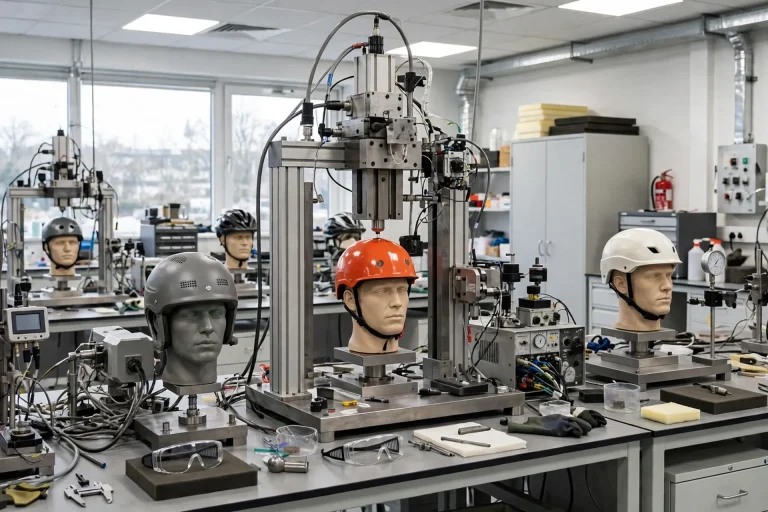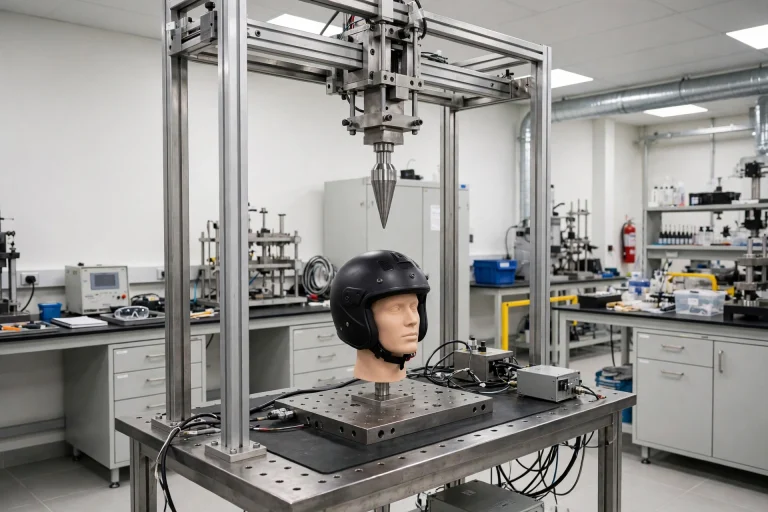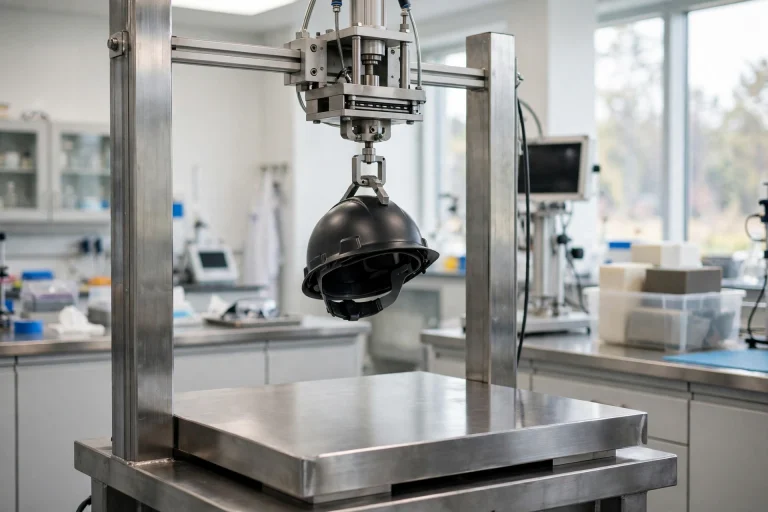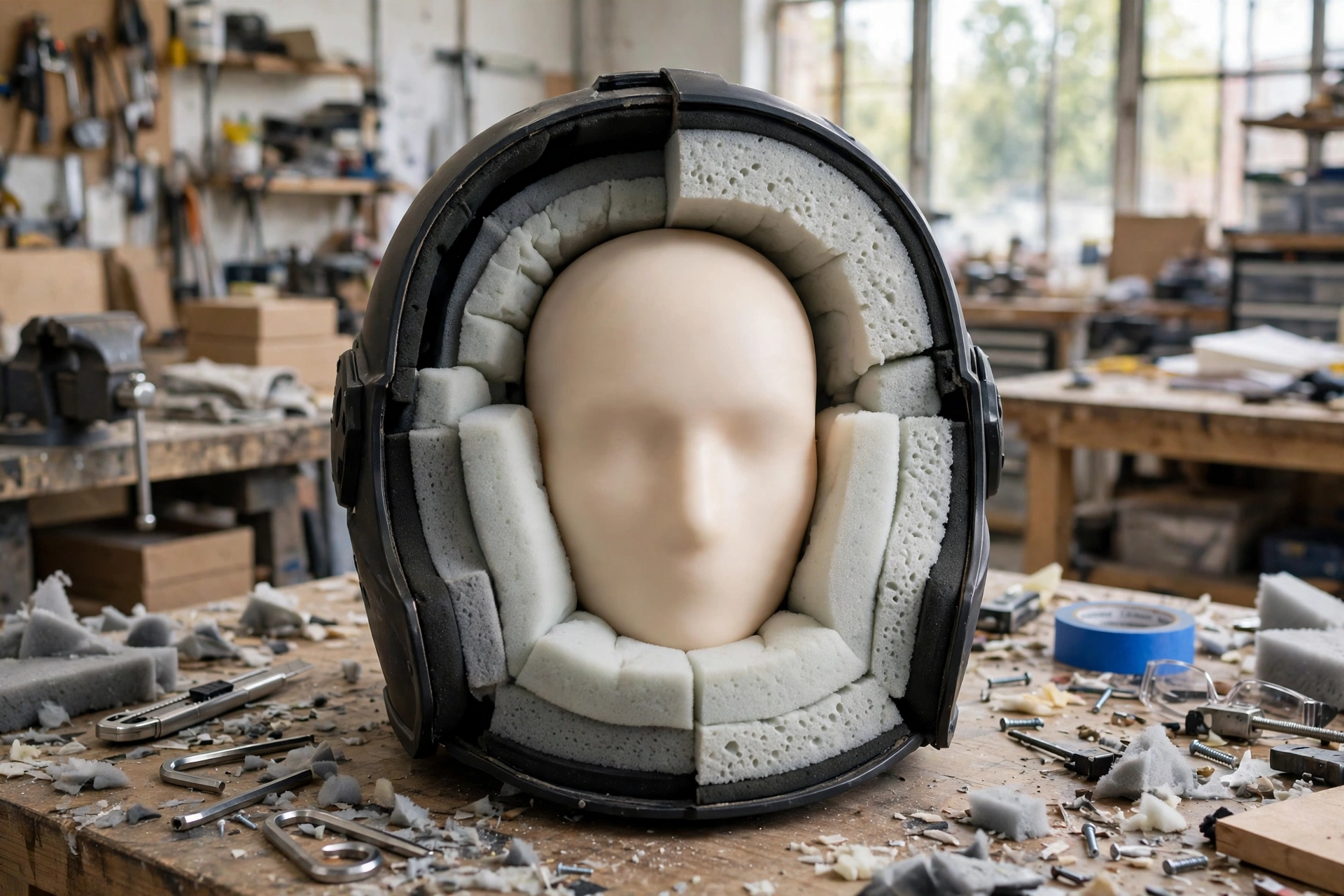
A helmet protects your brain by slowing your head down gently in a crash, so the brain inside your skull is not thrown around as violently. The hard shell spreads the force of the impact, the foam liner absorbs it by crushing, and the fit system keeps the helmet in place so those layers can work. In a fraction of a second, the helmet turns a sudden, violent stop into a softer one that your brain can cope with better.
The brain is delicate. It is soft tissue, it floats in fluid inside a hard skull, and it is easily hurt by sudden stops and twists. A helmet cannot make a crash harmless, but it can reduce the forces that reach the brain, and that reduction is often the difference between a minor knock and a serious injury. That is the whole purpose of wearing one.
What is the helmet actually protecting?
The helmet is protecting your brain, not just your skull. The skull is a hard case, and it can crack under a sharp blow, but the brain inside is far more vulnerable. When your head stops suddenly, the brain keeps moving for a brief moment and can press or twist against the inside of the skull, and that movement is what causes most head injuries.
Because the brain is soft and surrounded by fluid, it is sensitive to both straight-line stops and twisting movements. A helmet’s job is to reduce both kinds of force before they reach the brain. That is also why a helmet is shaped to cover the whole head, not just the top: every part of the brain needs the same careful protection. The shell and liner handle the straight-line stop, while features designed for rotation help with the twist. Protecting the brain means dealing with both.
How does the shell help protect your brain?
The shell helps by spreading the force of an impact over a wide area before it reaches the liner. When a helmet hits a hard surface, the force is concentrated at one small point. The stiff shell passes that force sideways through the shell material, so the liner underneath feels the blow over a broad patch instead of a single spot.
The shell also protects the liner from being cut or pierced, and its smooth shape helps the helmet slide along a surface instead of catching and twisting the head. Without the shell, the liner would be overwhelmed in one place and the brain would feel a much sharper, more concentrated blow. The shell does not absorb much energy itself, but it sets up the liner to do its job properly.

What does the foam liner do for your brain?
The foam liner is the part that does most of the work for your brain. When your head presses into the liner, the foam crushes cell by cell, soaking up energy and slowing your head down over a short distance. That slower stop means the brain inside your skull also slows down more gently, with less sudden pressure against the skull wall.
Think of the liner as a cushion that gives your brain time. The thicker the liner, and the more evenly it crushes, the more time your brain has to come to rest. The foam crushes permanently, which is why a helmet that has been in a crash must be replaced: the liner has spent its cushioning, and it cannot protect your brain a second time.
What about twisting forces and your brain?
Twisting forces are a serious risk for the brain, because brain tissue is easily stretched and sheared by rotation. In an angled crash, the helmet can catch on a surface and twist the head, and that rapid rotation can strain the brain even when the straight-line stop is well handled. Reducing the twist is therefore just as important as reducing the force of the stop.
Some helmets include a low-friction layer or a system designed for this, such as MIPS, which allows a small amount of movement between the helmet and the head during an angled impact. That small slip reduces the twisting force that reaches the brain. A smooth shell also helps, by letting the helmet glance off a surface instead of gripping it and dragging the head around.
Why is fit part of brain protection?
Fit is part of brain protection because a helmet can only protect the head it stays on. A helmet that is too loose can shift in a crash, so the impact lands on a part of the helmet with less liner, or the helmet can come off altogether. A helmet that is too tight is uncomfortable, and people are less likely to wear it at all.
A well-fitting helmet sits level on the head, low on the forehead, with the straps snug under the chin. When it fits like that, the shell and liner stay in the right place through the crash, and the protection is spread evenly over the head. If a helmet wobbles when you shake your head, it is too loose, and if it presses painfully after a few minutes, it is too tight; either way, the protection will not work as designed. Fit is not a minor detail; it is what lets every other part of the helmet work as designed.
What are the limits of a helmet?
A helmet has real limits, and it is important to know them. A helmet reduces the force that reaches your brain, but it cannot remove all risk. Very hard impacts, sharp objects, and crashes that involve extreme forces can still injure the brain even when a good helmet is worn correctly. A helmet is a risk reducer, not a guarantee.
Helmets also have a limited life. The foam liner degrades over time, especially in heat and sunlight, and a helmet that has been in a crash has already used up its protection. A helmet should be replaced after a crash, when the liner shows wear, or when the shell is cracked or damaged. Wearing a helmet correctly, and replacing it when needed, is the best way to give your brain the protection it deserves.
Does a helmet stop the brain from moving in a crash?
No. The brain will still move inside the skull, but a helmet slows the head down more gently, so the brain moves less violently and presses less hard against the skull.
Is the brain safer from straight impacts or twisting impacts?
In general terms, the brain copes better with a straight stop than with a twist. Twisting can stretch and shear brain tissue, which is why helmets are also designed to reduce rotational forces.
Can a helmet protect against every brain injury?
No. A helmet lowers the risk and reduces the severity of many brain injuries, but it cannot prevent every injury, especially in very severe crashes. It is still the best protection available for the head.

Olivia
Writer at Helmet Today, covering helmet reviews, fit and riding safety.