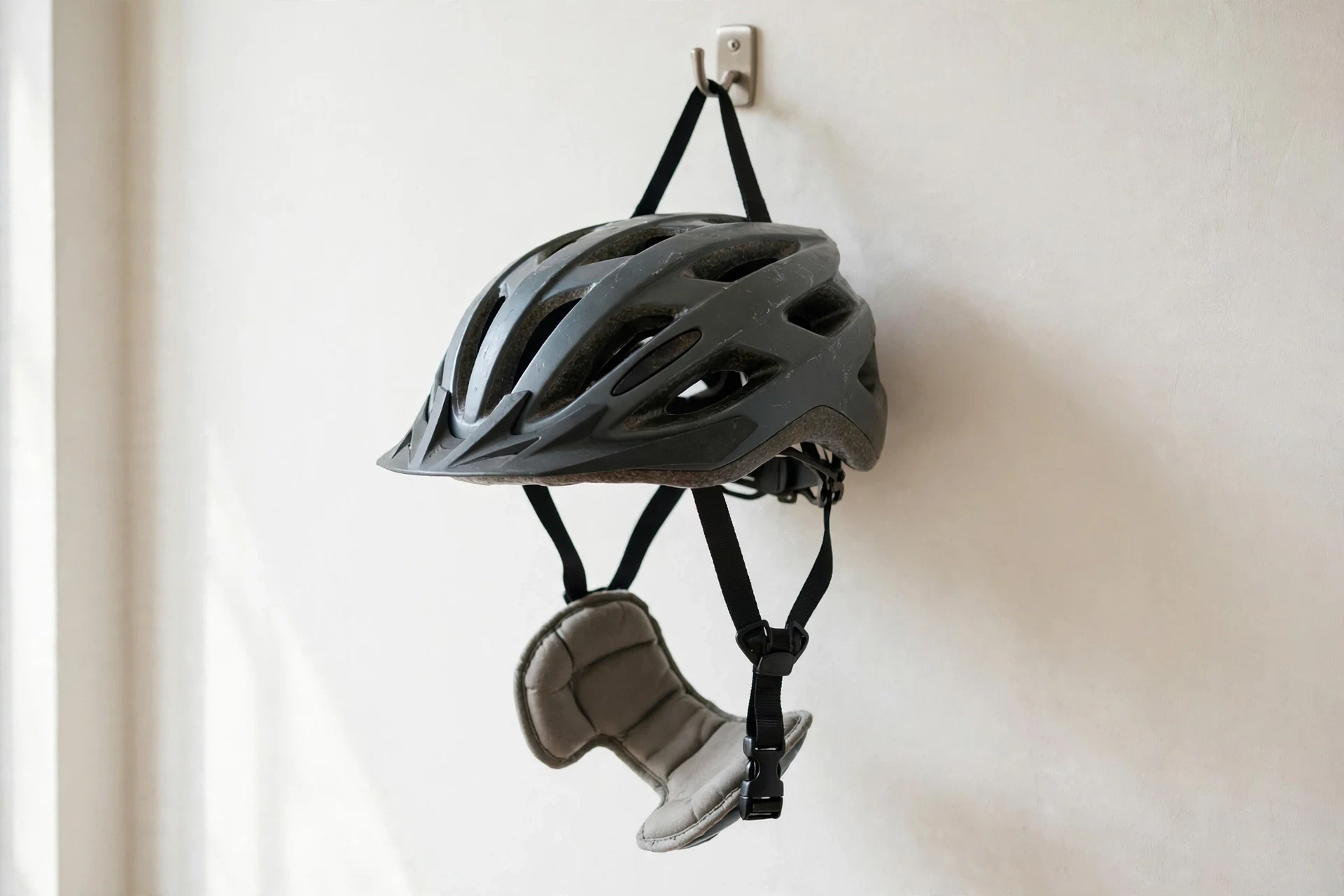
A helmet chin pad is the soft, padded piece that sits under the chin where the chin strap passes, and it is made to cushion the strap, spread its pressure, and stop it from rubbing or digging into the skin. In general terms, a chin pad is usually made from soft foam wrapped in a fabric cover, sometimes with a layer of mesh or a gel insert, so that it feels gentle against the chin while still holding the strap firmly in place. Most helmets have a chin pad of some kind, and it is one of the small comfort parts that makes a helmet pleasant to wear for a long ride.
What Is a Helmet Chin Pad?
A helmet chin pad is a small cushion that sits on the chin strap, directly under the chin, and its job is to make the strap comfortable. Without a chin pad, the strap would be a narrow band of webbing pressing into the skin, which would soon become sore, especially on a long ride or when the strap is pulled tight. The pad spreads that pressure over a wider area, so the strap feels softer and less noticeable.
The chin pad is usually held on the strap by a sleeve or a pocket of fabric that slides over the webbing, and it can often be moved along the strap so that it sits in the right place under the chin. On some helmets the pad is fixed in one position, while on others it can be taken off for washing. In general terms, the chin pad is a simple part, but it makes a real difference to how a helmet feels after an hour or two of wear.
What Materials Are Chin Pads Made From?
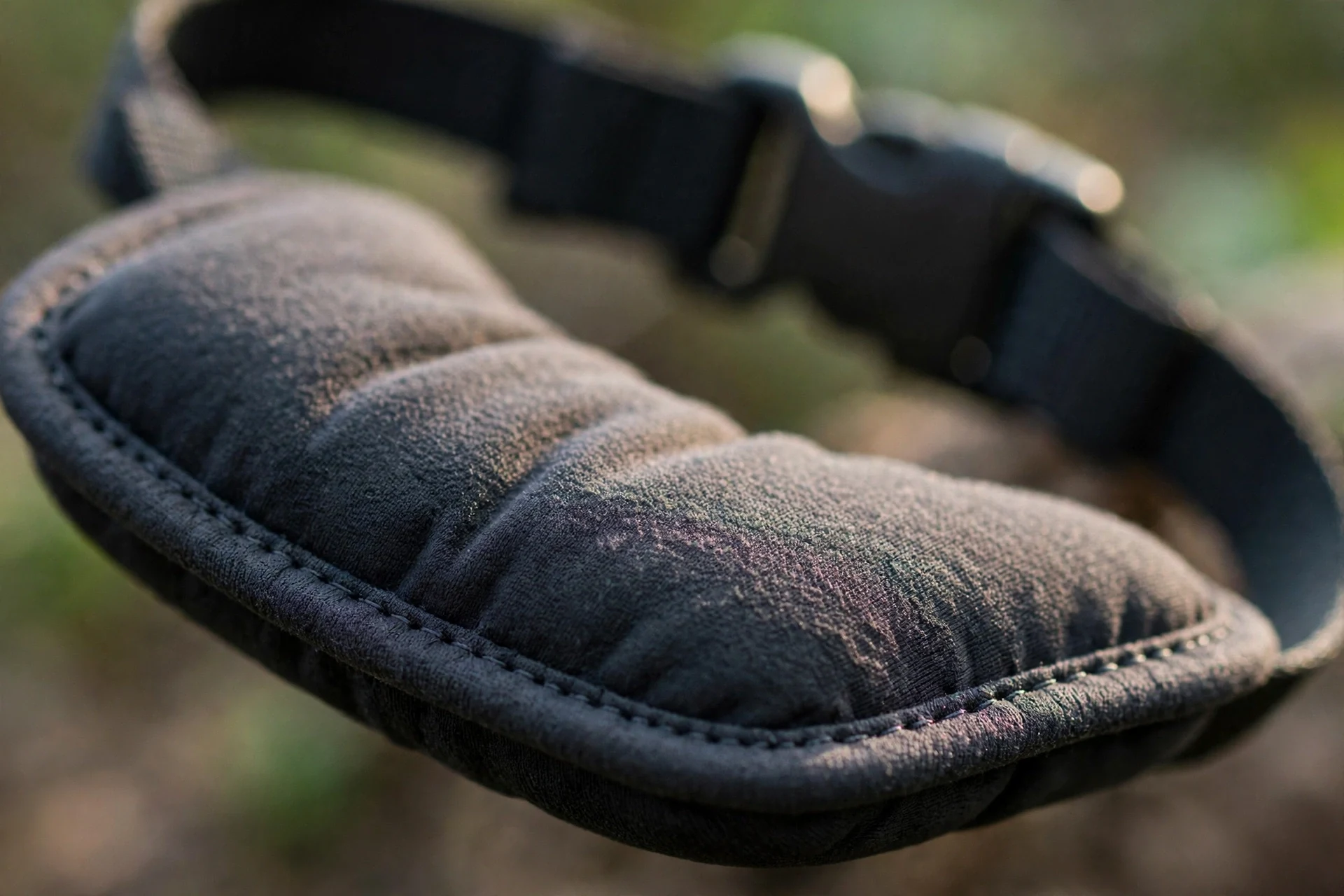
Chin pads are usually made from a core of soft foam, often the same kind of open-cell foam used in helmet padding, wrapped in a cover of fabric such as nylon, polyester, or a soft mesh. The foam gives the pad its cushioning, while the fabric cover makes it smooth against the skin and helps it dry out after a sweaty ride. Some pads use a memory foam core, which moulds gently to the shape of the chin and spreads the pressure even more evenly.
A few chin pads have a gel insert inside the foam, which adds a cool, soft feel and can help the pad keep its shape over time. The cover is often made from a moisture-wicking fabric that pulls sweat away from the skin, and the stitching is kept flat so that it does not rub. In general terms, the materials are chosen to be soft, breathable, and easy to wash, since the chin pad sits against the skin and collects sweat on every ride.
Why Do Chin Pads Use Soft Materials?
Chin pads use soft materials because the chin is a bony, sensitive area with little natural padding, so a hard strap pressing into it would quickly become painful. Soft foam and fabric spread the pull of the strap over a wider patch of skin, which lowers the pressure at any one point and makes the strap feel far more comfortable. The softness also lets the pad mould to the shape of the chin, so it stays in place instead of sliding around.
Soft materials are also kinder to the skin when the rider sweats, since they absorb moisture and reduce the friction that can cause chafing and sore spots. A firm, rough pad would rub with every movement of the head, while a soft, smooth pad moves gently with the skin. In general terms, the softer and smoother the chin pad, the longer a rider can wear the helmet without noticing the strap at all.
How Does a Chin Pad Help the Helmet Fit?
A chin pad helps the helmet fit by keeping the chin strap in the right place and by making the strap comfortable enough to be worn snugly. A helmet only works well when its strap is fastened firmly, and a rider is far more likely to fasten the strap properly if it feels comfortable under the chin. A pad that is too thin or too hard can tempt a rider to leave the strap loose, which lets the helmet move around on the head.
The pad also stops the strap from twisting or bunching up under the chin, which can happen with a bare strap and can make the fit feel uneven. By holding the strap flat and centred, the pad helps the helmet sit level and stable. If you want to understand one of the safety technologies used in modern helmets, reading about MIPS is a good place to start, though the chin pad itself is a comfort part rather than a safety system.
Can Chin Pads Be Removed and Washed?
Many chin pads can be removed and washed, and this is worth doing regularly because the pad sits against the skin and collects sweat, skin oils, and dirt. On most helmets the pad slides off the strap once the strap is unthreaded from the buckle, or it opens with a small hook-and-loop fastening. Once it is off, it can usually be hand-washed in warm water with mild soap and left to dry naturally.
Some chin pads are fixed to the strap and cannot be removed, in which case they can be wiped clean with a damp cloth and a little mild soap. In general terms, a clean chin pad feels softer, smells fresher, and lasts longer than one that is never washed, and washing also stops the fabric from going stiff with dried sweat. It is worth checking the maker’s instructions first, since some pads should not go in a washing machine.
What Should You Look For in a Chin Pad?
When choosing a helmet, it is worth looking for a chin pad that feels soft and smooth, covers the strap fully under the chin, and stays in place when the strap is pulled tight. A good pad is thick enough to cushion the strap but not so bulky that it feels hot or gets in the way when the rider talks or swallows. The cover should be made from a soft, breathable fabric with flat stitching, so that nothing rubs or scratches the skin.
It is also worth checking whether the pad can be removed for washing, and whether a spare is available, since a worn or flattened pad can be swapped for a fresh one. In general terms, the best chin pad is the one you forget is there: it cushions the strap, stays put, and lets the helmet be worn snugly for hours without any soreness under the chin.
Do all helmets have a chin pad?
In general terms, most helmets with a chin strap have a chin pad, though some very light helmets have only a thin sleeve on the strap. If a helmet has no pad, a soft aftermarket pad can often be fitted to make the strap more comfortable.
Why does my chin pad feel flat after a while?
In general terms, the foam inside a chin pad slowly compresses with use and washing, so it cushions less over time. A flattened pad can usually be replaced with a fresh one, which restores the comfort of the strap.
Can a chin pad cause skin irritation?
In general terms, a dirty or rough chin pad can irritate the skin, especially on long rides. Keeping the pad clean, and choosing a pad with a soft, smooth cover, helps prevent soreness and chafing under the chin.

Olivia
Writer at Helmet Today, covering helmet reviews, fit and riding safety.