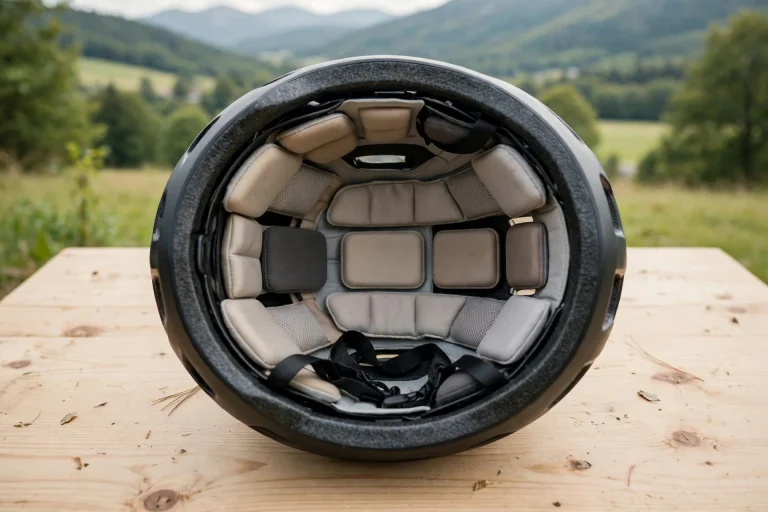
Helmets have foam inside because the foam is the main layer that protects your head, slowing down and spreading out the force of an impact so that far less of it reaches your skull. In general terms, the foam is a thick, firm layer moulded to the shape of the shell, and when the helmet is hit, the foam crushes slowly and absorbs energy, acting like a cushion between the hard outside world and your head. Without the foam, a helmet would just be a hard shell, and a hard shell alone cannot protect the head from a sudden knock.
What Is the Foam Inside a Helmet?
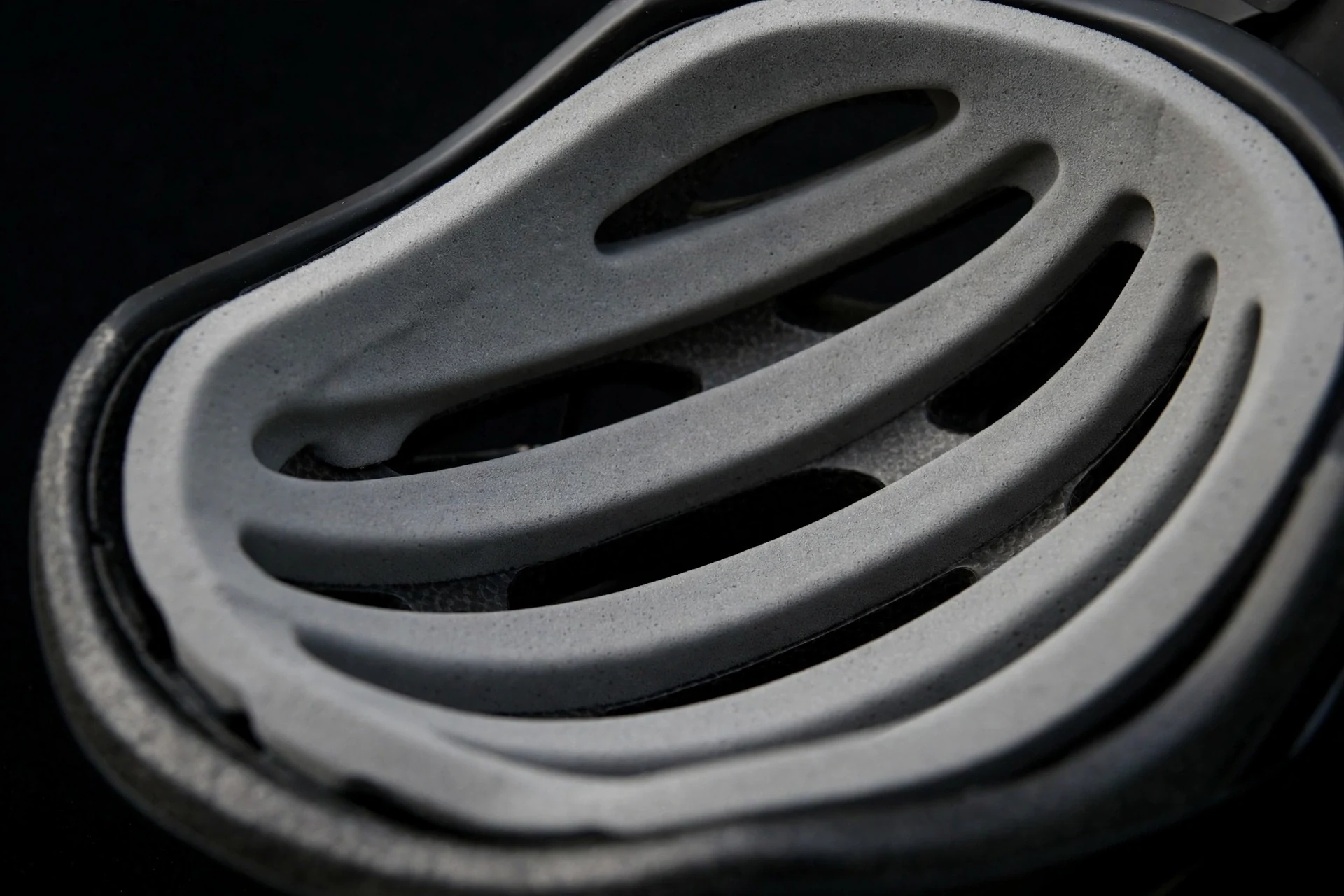
The foam inside a helmet is a layer of firm, lightweight foam, usually expanded polystyrene, that fills the space between the hard outer shell and the soft comfort padding. It is moulded to match the shape of the shell, so it sits snugly inside, and it is much thicker than the thin comfort pads that touch the head. The foam is firm to the touch, but it is designed to crush in a controlled way when it is hit hard.
The foam layer is the working heart of the helmet: the shell spreads the force of a blow over a wide area, and the foam then absorbs it by crushing slowly. In general terms, the foam is a single-use safety layer, which is why a helmet that has taken a hard knock should be replaced even if it looks fine from the outside. The comfort padding sits between the foam and the head, but it is the foam that does the protective work.
How Does Foam Protect Your Head?
Foam protects your head by slowing down the sudden stop that happens in a crash. When a helmet hits a hard surface, the head inside keeps moving for a tiny moment, and without foam it would stop abruptly against the shell. The foam crushes as the head presses into it, which stretches out the impact over a slightly longer time and over a wider area, so the force reaching the head is much lower.
This crushing action turns the energy of the impact into the work of deforming the foam, instead of letting it all reach the skull. In general terms, the foam works like the crumple zone of a car: it gives way in a controlled way so that the person inside is protected. The thicker and better made the foam, the more energy it can absorb before the head is affected.
Why Is Helmet Foam Soft but Firm?
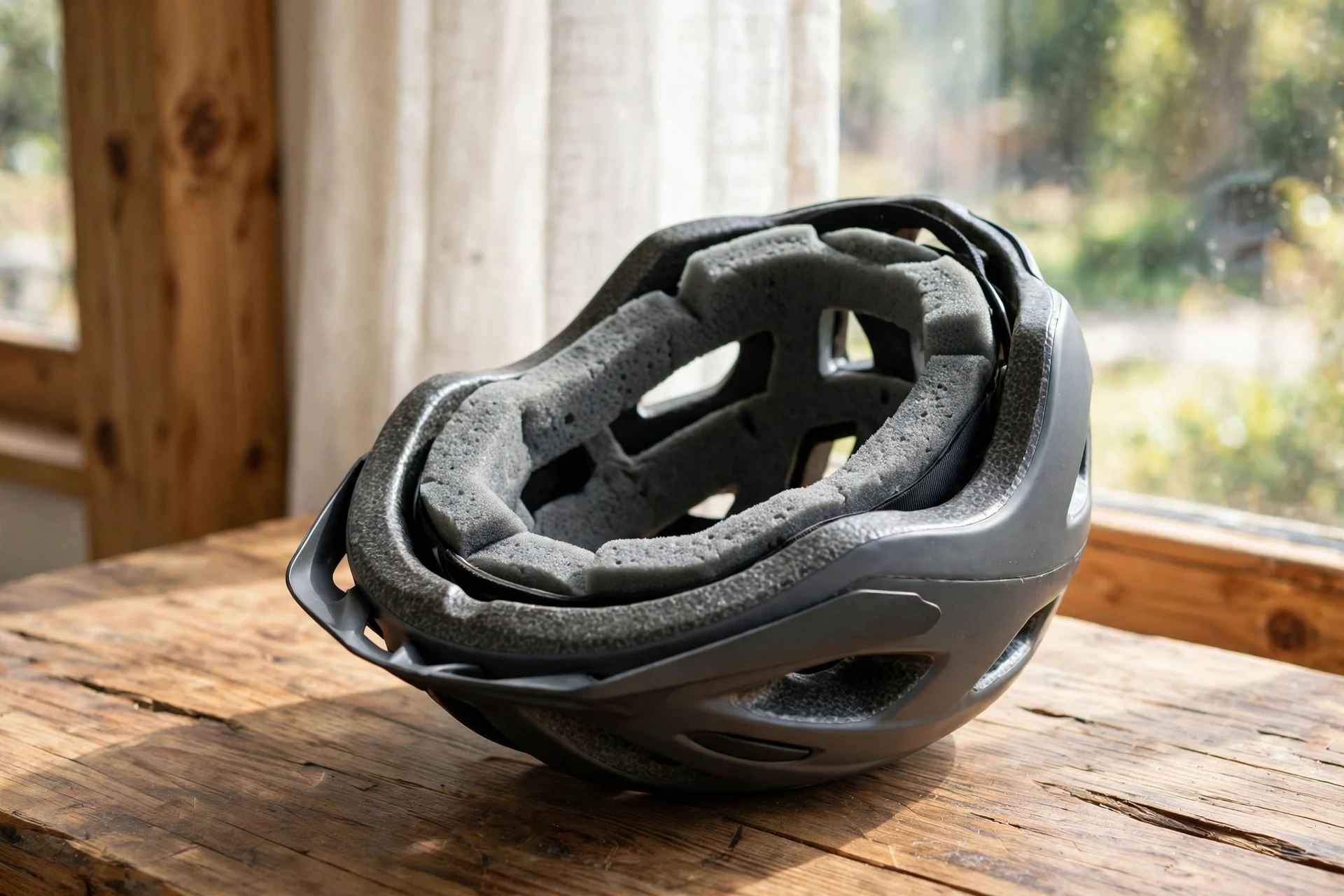
Helmet foam feels soft but firm because it has to be comfortable against the head while still being stiff enough to absorb a hard impact. If the foam were too soft, it would squash flat at the slightest knock and offer no protection, while if it were too hard, it would pass the force straight through to the head without absorbing any of it. The foam is made to a careful balance, firm enough to hold its shape and soft enough to crush slowly under a strong blow.
The foam is also light, which matters because a heavy helmet would be tiring to wear and could strain the neck. In general terms, the foam is tuned by the maker for the type of helmet: foam in a cycling helmet is made to deal with a fall onto a road, while foam in a motorcycle helmet is made for higher-speed impacts. The balance of softness and firmness is what makes the foam work.
How Does Foam Help a Helmet Fit?
Foam helps a helmet fit because it is moulded to the shape of the head and fills the space inside the shell evenly, so the helmet sits level and stable. The foam layer gives the helmet its inner shape, and the comfort pads sit on top of it to fine-tune the fit. Without the foam, the shell would be too large and too hard, and the helmet would wobble and shift every time the rider moved.
A foam layer that fits well also keeps the helmet in the right position during a fall, so that the protective layer is where it needs to be when it is hit. If you want to understand one of the safety technologies used in modern helmets, reading about MIPS is a good place to start, since it works inside the helmet alongside the foam. In general terms, the foam is both a safety layer and a fitting layer, and a helmet that fits well because of its foam is more comfortable and more protective.
Why Does Helmet Foam Wear Out?
Helmet foam wears out slowly over time, because heat, sunlight, sweat, and everyday use gradually change its structure. The foam can become brittle or compressed with age, which means it crushes more easily and absorbs less energy than it did when it was new. Sweat and skin oils can also seep into the foam and soften it, while being left in a hot car or in strong sunlight can speed up the ageing process.
Foam also wears out from the small knocks of daily life, such as being dropped on the floor or banged against a wall. In general terms, foam does not last forever, and most makers suggest replacing a helmet after several years of regular use, even if it has never been in a crash. A helmet whose foam feels loose, cracked, or compressed has lost some of its protective ability and should be replaced.
What Happens if the Foam Inside a Helmet Is Damaged?
If the foam inside a helmet is damaged, the helmet cannot protect the head as well as it should, because the foam can only crush once. A crack, a dent, or a compressed patch in the foam means that part of the helmet has already used up its ability to absorb energy, so a second impact in the same place would pass far more force through to the head. Damage to the foam is not always visible from the outside, since the shell can hide it.
That is why any helmet that has taken a hard knock should be replaced, even if the shell looks undamaged and the foam cannot be seen. In general terms, the foam is the part of the helmet that does the most protective work, and it cannot be repaired or restored once it is damaged. Checking the foam by looking inside the helmet and feeling for cracks or soft spots is a good habit, especially after a fall.
Can you see the foam inside a helmet?
In general terms, yes. The foam is the thick, firm layer under the thin comfort padding, and it can usually be seen by lifting the pads or looking inside the shell. It often has a smooth, slightly shiny surface with air channels moulded into it.
Does foam make a helmet hot?
In general terms, foam can trap warmth, which is why helmets have vents and air channels moulded into the foam. The channels let air flow over the head, so a well-vented helmet stays cool even though it has a thick foam layer.
Can helmet foam be replaced?
In general terms, no. The foam is bonded to the shell and is part of the helmet’s safety structure, so it cannot be swapped out like a comfort pad. If the foam is damaged or worn out, the whole helmet should be replaced.

Olivia
Writer at Helmet Today, covering helmet reviews, fit and riding safety.