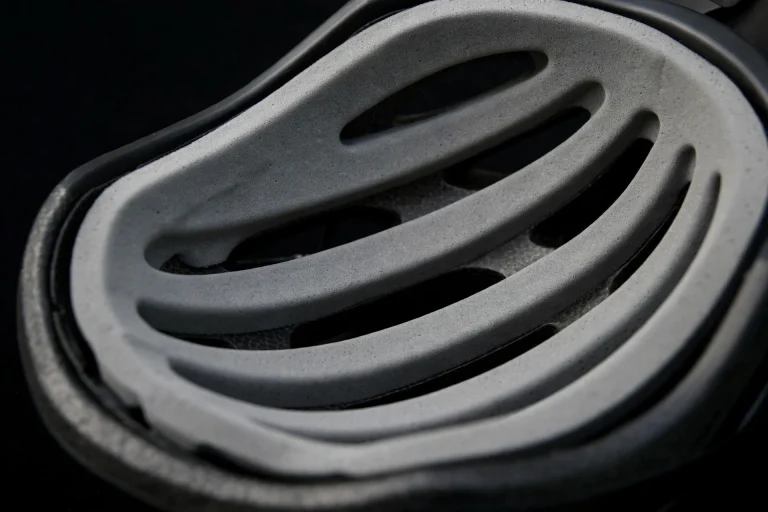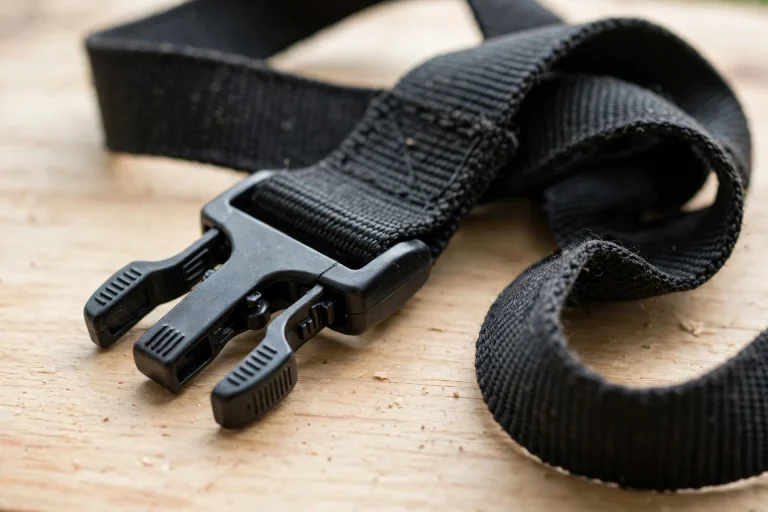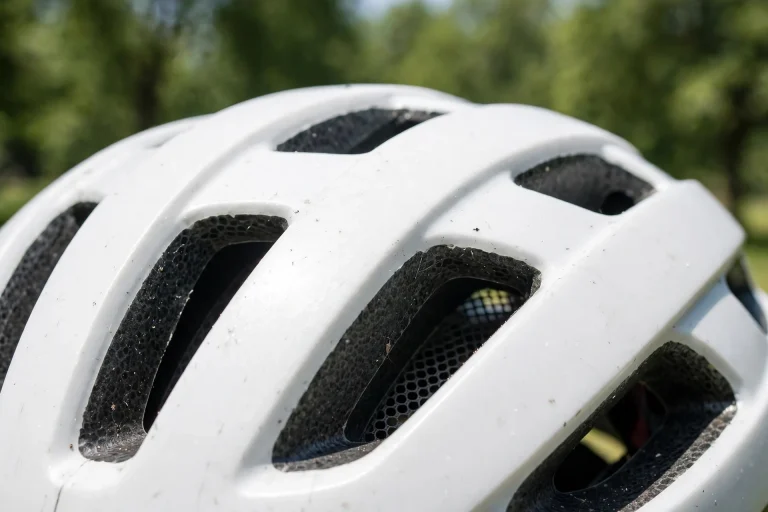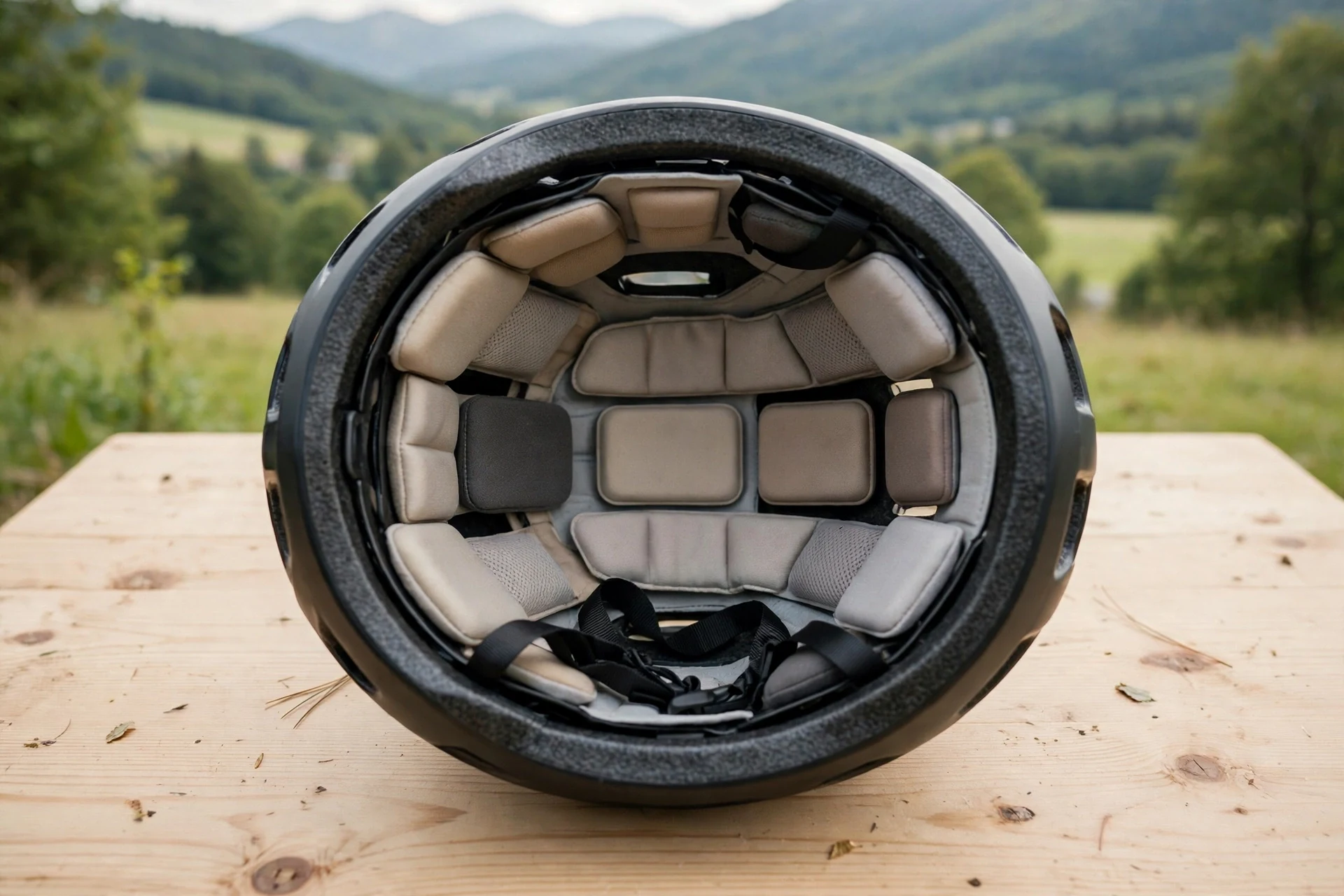
Helmets have liners so that the hard shell sits comfortably on the head, fits snugly without pressure points, and can absorb sweat, while also adding a layer that helps spread the force of an impact. In general terms, the liner is the soft, padded layer inside the shell, and without it a helmet would be hard, uncomfortable, and loose, and it would not stay in the right place on the head. Every modern helmet has a liner of some kind, and it is one of the parts that most affects how a helmet feels when it is worn.
What Does a Helmet Liner Do?
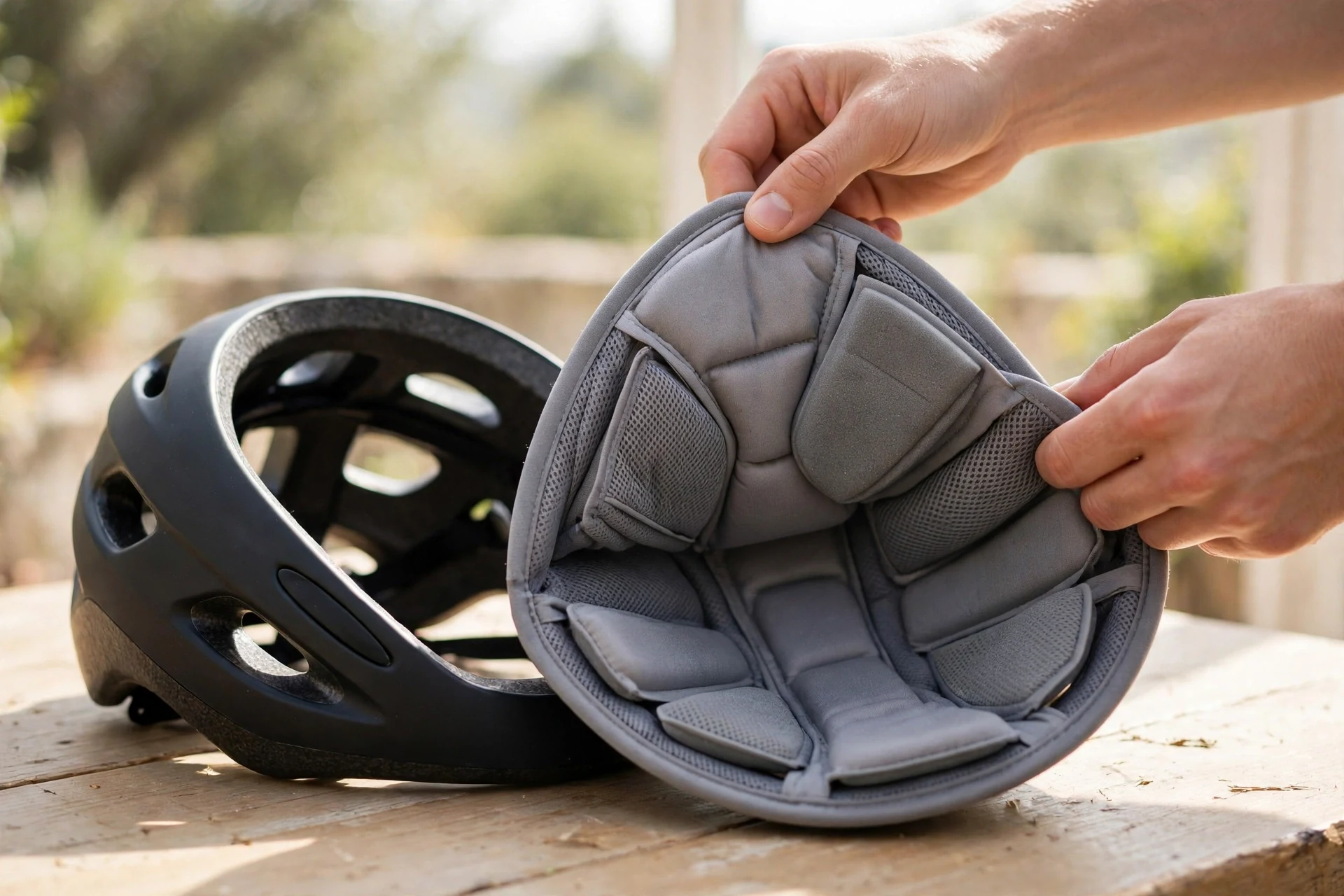
A helmet liner is the padded layer that sits between the hard outer shell and the rider’s head, and it has several jobs at once. Its first job is comfort: it cushions the head against the hard shell, so the helmet feels soft rather than rigid when it is put on. Its second job is fit: the liner fills the space between the shell and the head, so the helmet sits snugly and does not wobble or slide around.
The liner also absorbs sweat and keeps it away from the skin, and it adds a layer of material that helps spread the force of a knock across a wider area of the head. In general terms, the liner is what turns a hard shell into a wearable helmet, and a helmet with a good liner feels comfortable from the first minute, while a helmet with a poor liner can feel hard and awkward even if the shell is well made.
How Does a Liner Improve the Fit of a Helmet?
A liner improves the fit of a helmet by filling the gaps between the shell and the head with soft, shaped padding that moulds gently to the shape of the skull. Heads are not all the same shape, so the liner lets one shell size fit a range of head shapes, with thicker padding in some places and thinner padding in others. Many helmets also have liners in different thicknesses, so the fit can be fine-tuned by swapping pads.
A well-fitted liner keeps the helmet stable, so it does not tip forward over the eyes or slide back when the rider moves. It also stops the helmet from rocking from side to side, which matters because a helmet that moves around cannot protect the head properly. In general terms, the liner is the part that makes the fit personal: the shell gives the shape, but the liner gives the snug, even contact that holds the helmet in place.
Why Do Liners Absorb Sweat?
Liners absorb sweat because they are made from foam and fabric that soak up moisture and pull it away from the skin, which keeps the rider drier and more comfortable. During exercise the head sweats a lot, and without a liner that moisture would run down the face and into the eyes, or pool inside the shell and make the helmet feel damp and heavy. The liner’s foam and its fabric cover work together to soak up that sweat and let it dry out gradually.
Many liners use fabrics that wick moisture away from the skin, spreading it across a wider area so that it dries faster. In general terms, a liner that absorbs sweat well keeps the rider cooler and stops the helmet from smelling stale, though the liner still needs to be washed or aired out regularly. A liner that is soaked with old sweat feels damp, smells unpleasant, and can irritate the skin.
How Do Liners Help in a Crash?
Liners help in a crash by adding a layer of soft material between the shell and the head that spreads the force of an impact over a wider area. The main impact protection in a helmet comes from the foam liner that sits under the comfort padding, which crushes slowly and absorbs energy, but the comfort liner plays a supporting role by holding the helmet in the right position so that the protective foam can do its work. A helmet that fits well because of its liner is more likely to stay in place during a fall.
The liner also stops the hard shell from pressing directly onto the skull, which would concentrate the force on a small area. In general terms, the liner is not the main safety layer, but it helps the safety layers work properly by keeping the helmet stable and evenly seated. If you want to understand one of the safety technologies used in modern helmets, reading about MIPS is a good place to start, since it works together with the liner system.
Why Are Helmet Liners Removable?
Helmet liners are often removable so that they can be washed, replaced, or swapped for a different thickness. Because the liner sits against the skin and absorbs sweat, it gets dirty faster than any other part of the helmet, and being able to take it out makes it easy to wash and dry. A clean liner feels softer, smells fresher, and lasts longer than one that is never cleaned.
Removable liners also let the rider fine-tune the fit, since a thicker liner makes the helmet feel tighter and a thinner liner makes it feel looser. If a liner wears out or becomes flat, it can be replaced without buying a whole new helmet, which keeps the helmet feeling like new. In general terms, a removable liner is a practical feature that makes a helmet easier to look after and easier to fit well.
How Do You Care for a Helmet Liner?
Caring for a helmet liner is mostly a matter of washing it gently and letting it dry fully before putting it back in the helmet. Most removable liners can be hand-washed in warm water with a mild soap, then rinsed and left to air-dry away from direct heat. It is best not to use harsh detergents or a tumble dryer, since heat and strong chemicals can damage the foam and make the fabric stiff.
Between washes, the liner should be aired out after each ride, so that sweat can dry and the padding does not stay damp. In general terms, a liner that is washed regularly and dried properly stays soft, fresh, and comfortable for a long time, while a liner that is left damp can develop smells and can wear out sooner. Checking the maker’s instructions before washing is always wise, since some liners need gentler care than others.
Do all helmets have a liner?
In general terms, yes. Every modern helmet has a liner of some kind, though it may be a simple padded layer on a basic helmet or a thick, removable, washable liner on a more expensive one. The liner is part of what makes a helmet wearable.
Can I wear a helmet without its liner?
In general terms, no. A helmet without its liner would fit loosely, feel hard against the head, and would not stay in the right place. The liner should always be in place when the helmet is worn.
How often should I wash my helmet liner?
In general terms, a liner should be washed whenever it starts to smell or feel damp and stiff, which for a regular rider is often every few weeks. Airing it out after each ride helps it stay fresh between washes.

Olivia
Writer at Helmet Today, covering helmet reviews, fit and riding safety.