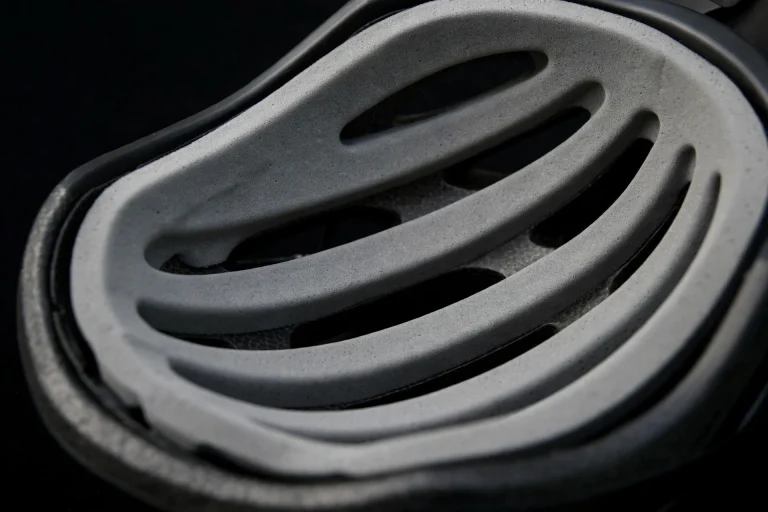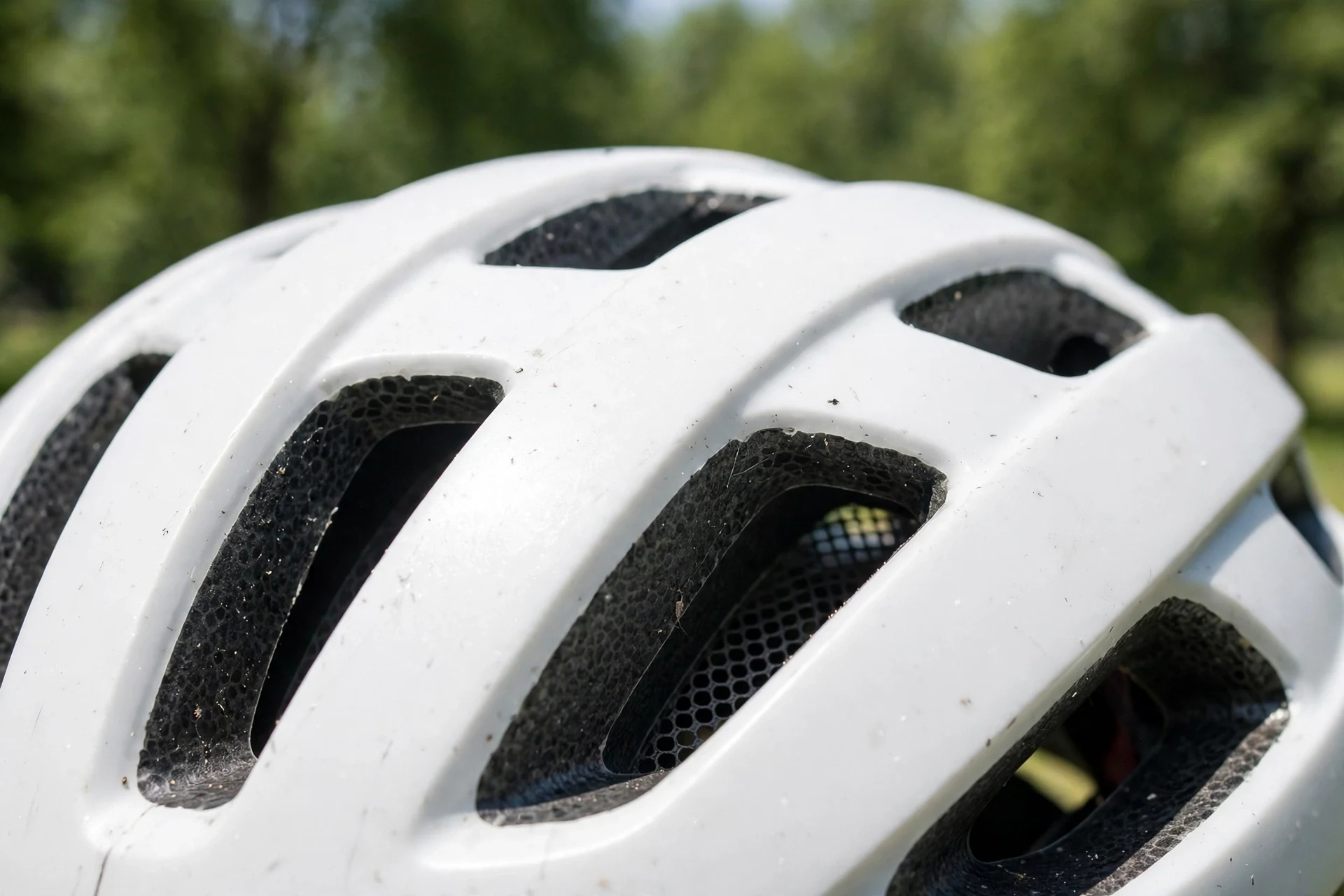
Helmets have vents so that air can flow through the helmet and carry heat and sweat away from the rider’s head, keeping the rider cool and comfortable while riding. In general terms, a helmet without vents would trap warm air inside, so the head would soon feel hot and sweaty, while vents let fresh air in through the front and warm air out through the back. Vents are found on most cycling, motorcycle, ski, and sports helmets, and they are one of the main reasons a helmet feels comfortable on a long, active ride.
What Do Helmet Vents Do?
Helmet vents are openings in the shell and the foam liner that let air move through the helmet while the rider is moving. Air enters through vents at the front, travels along channels inside the liner, and leaves through vents at the back, carrying heat and moisture with it. This steady flow of air stops warm air from building up inside the helmet and helps sweat evaporate from the scalp, which cools the head.
Vents also help fresh air reach the rider’s face, which can feel refreshing on a hot day and can help keep a visor clear. In general terms, vents are a cooling system built into the helmet: they do not protect the head in a crash, but they make the helmet far more comfortable to wear, especially during hard exercise or in warm weather.
How Do Vents Keep Your Head Cool?
Vents keep the head cool by letting moving air pass over the scalp and take heat away. When a rider moves forward, air is pushed into the front vents and flows along the channels in the liner, brushing over the head before it leaves through the rear vents. As the air moves, it picks up warmth from the scalp and carries it out of the helmet, and it also helps sweat dry, which cools the skin further.
The cooling effect depends on how fast the rider is moving and on how well the vents are placed. At riding speed, the flow of air is strong and the cooling is easy to feel, while at a standstill the air barely moves and the helmet feels much warmer. In general terms, vents work best when the rider is moving, which is why a helmet that feels cool on the road can feel hot when the rider stops at a junction.

Why Do Vents Matter for Comfort?
Vents matter for comfort because a hot, sweaty head is distracting and tiring, and it can make a long ride feel much harder than it needs to be. When heat builds up inside a helmet, sweat runs into the eyes, the padding becomes damp, and the rider starts to feel uncomfortable and lose focus. Good ventilation keeps the head drier and cooler, so the rider can concentrate on the road or the trail instead of on the heat.
Comfort also affects safety in an indirect way, since a rider who is comfortable is more likely to keep the helmet on and fastened properly. A helmet that feels hot and stuffy is tempting to loosen or take off, which leaves the head unprotected. In general terms, vents are what make a helmet wearable for hours at a time, and that is why makers spend so much effort on getting the airflow right.
Do Vents Help With Visor Fog?
Vents can help with visor fog, because fog forms when warm, moist air from the rider’s breath meets a cold visor, and moving air carries that moisture away before it can settle. Many motorcycle helmets have a vent near the chin or the brow that directs fresh air across the inside of the visor, which keeps it clearer in cold or damp weather. The airflow from the vents lowers the moisture inside the helmet, so the visor stays clear for longer.
Vents alone do not always stop fogging, especially on a cold, still morning, which is why many helmets also use anti-fog coatings or inserts on the visor. In general terms, vents help by keeping the air inside the helmet moving and by bringing in drier air from outside, and a rider can often clear a fogged visor simply by opening the vents and letting the airflow do its work.
Why Do Some Helmets Have More Vents Than Others?
Some helmets have more vents than others because different activities create different amounts of heat and need different levels of airflow. A road cycling helmet is worn during hard exercise in warm weather, so it needs plenty of vents to keep the rider cool, while a ski helmet is worn in the cold, so it needs fewer vents to avoid letting in too much cold air. A motorcycle helmet sits between the two, with enough vents for cooling but with covers to close them in the rain.
The design of the helmet also plays a part, since vents have to be balanced against the strength of the shell. If you want to understand one of the safety technologies used in modern helmets, reading about MIPS is a good place to start, though the number of vents is a comfort choice rather than a safety feature. In general terms, more vents usually mean more cooling, but the placement and the channels inside matter just as much as the number of openings.
Can Helmet Vents Be Closed?
Many helmets have vents that can be closed, usually with a small slider or a cover that moves across the opening. This is useful in cold weather, when the rider wants to keep warm air inside the helmet, and in heavy rain, when open vents would let water in. Some helmets have a single slider that closes several vents at once, while others let the rider close the front and rear vents separately.
Closing the vents makes the helmet warmer and quieter, but it also stops the cooling airflow, so the head can become sweaty on a climb or in mild weather. In general terms, closable vents give the rider control over the airflow, so the helmet can be adjusted to suit the weather and the effort. It is worth checking that the sliders move easily, since they often need to be worked with gloved hands.
Do more vents make a helmet safer?
In general terms, no. Vents are for cooling, not for protection, and a helmet with many vents is not safer than one with fewer. The safety of a helmet comes from its shell, its foam liner, and its fit.
Why does my helmet feel hot even though it has vents?
In general terms, vents only work well when the rider is moving, so a helmet can feel hot at low speed or at a standstill. Blocked vents, damp padding, or very hot weather can also make a vented helmet feel warm.
Should I block my helmet vents in winter?
In general terms, closing the vents in cold weather is fine and helps keep the head warm. Just remember to open them again when the weather warms up or when riding hard, so sweat does not build up inside the helmet.

Olivia
Writer at Helmet Today, covering helmet reviews, fit and riding safety.