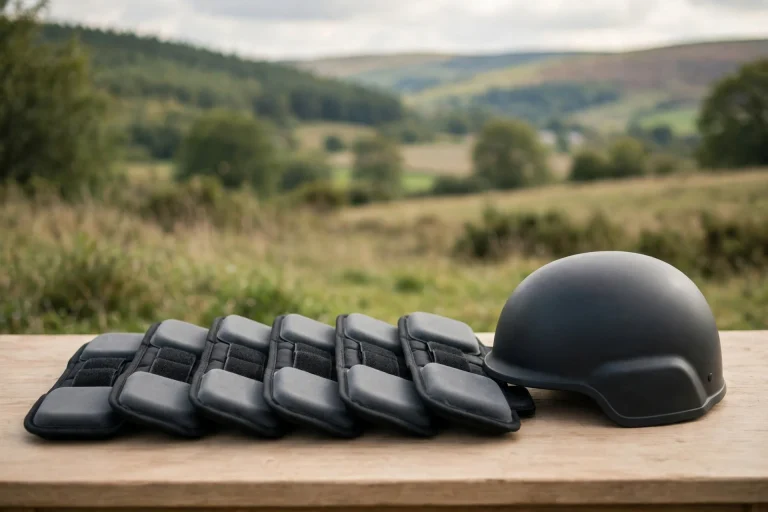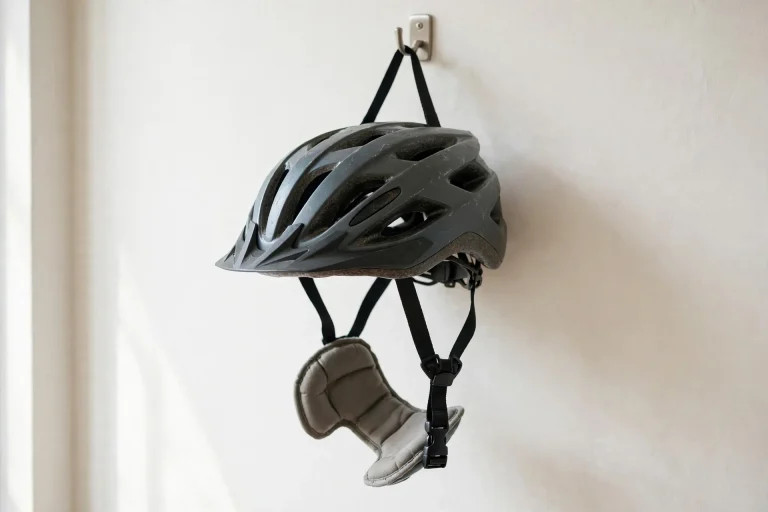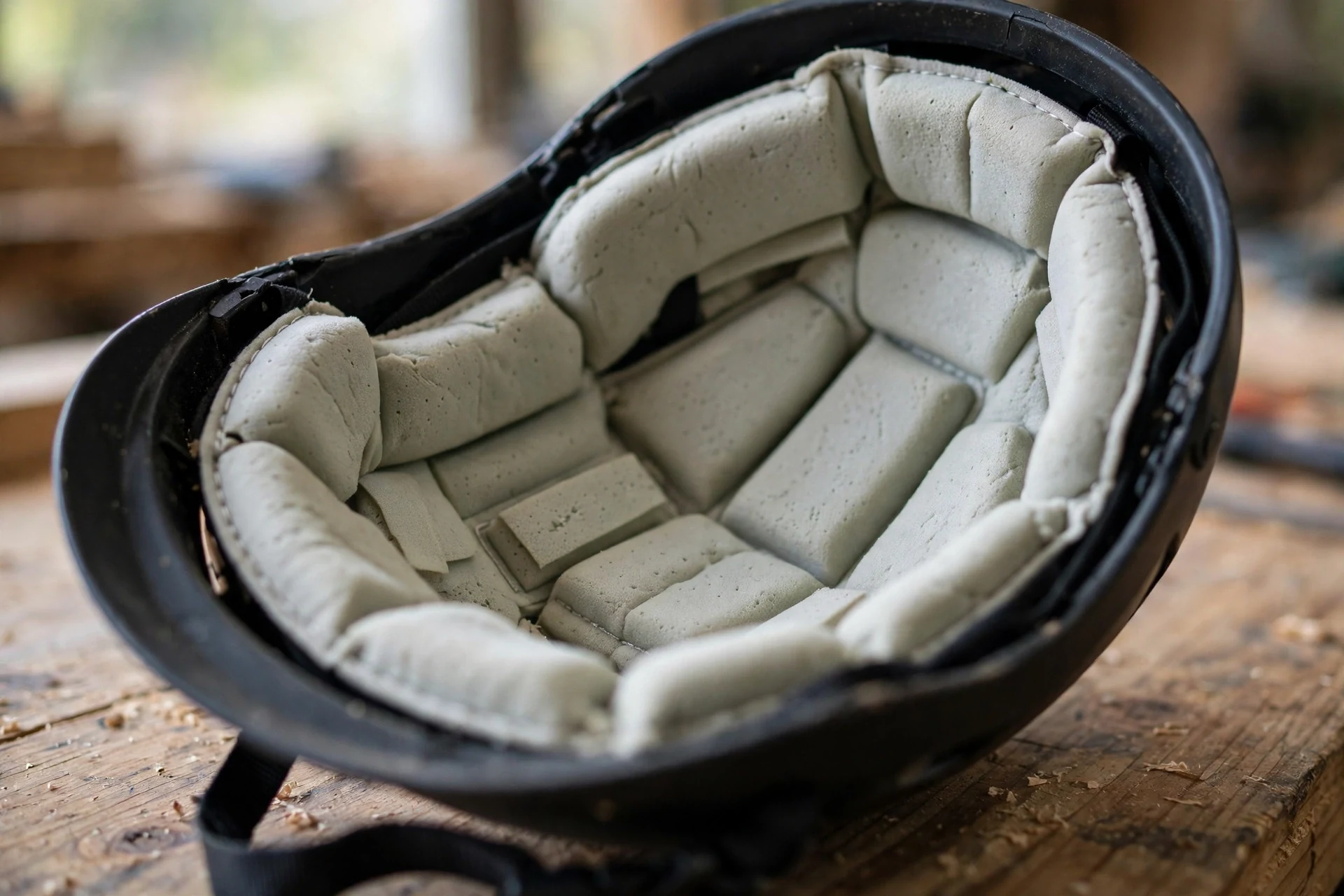
Yes, helmet foam can go hard with age, and when it does it may not cushion an impact as well as it once did. The foam liner inside a helmet is the part that absorbs energy in a knock, so its condition matters a great deal. Over time, with regular use, sweat, heat, and simple ageing, that foam can lose its spring and feel firmer to the touch. A helmet that once felt soft and snug may start to feel stiff, and that change is worth paying attention to.
Most helmets use two kinds of padding inside the shell. There is the firm impact foam, which is the main protective layer, and the soft comfort padding that sits against your head. Both can change with age, but they change in different ways. The comfort padding may flatten and go thin, while the impact foam can become harder and less springy. Understanding which part you are looking at helps you judge whether your helmet is still doing its job.
What makes helmet foam go hard over time?
Helmet foam goes hard over time for several reasons, and most of them are part of normal use. Every ride or shift exposes the foam to sweat, body heat, and pressure from your head, and over months and years that wear adds up. The foam is made to absorb one big impact by crushing, but it also takes thousands of small squeezes in everyday use, and those slowly change its structure.
Heat is another factor. A helmet left in a hot car, in strong sun, or near a radiator can age faster than one stored in a cool, dry place. Sunlight can also break down the surface of the foam and the comfort padding, making them feel brittle. Chemicals matter too: strong cleaners, solvents, and even some hair products can damage foam, so it is best to clean a helmet only with mild soap and water and to follow the maker’s guidance on care.
How can you tell if the foam in your helmet has gone hard?
The simplest check is to press the foam gently with your fingertip. Fresh impact foam has a little give and springs back when you let go. Foam that has gone hard feels stiff and unyielding, and it may not spring back in the same way. Compare the feel with a new helmet in a shop if you can, as the difference is often easy to notice side by side.
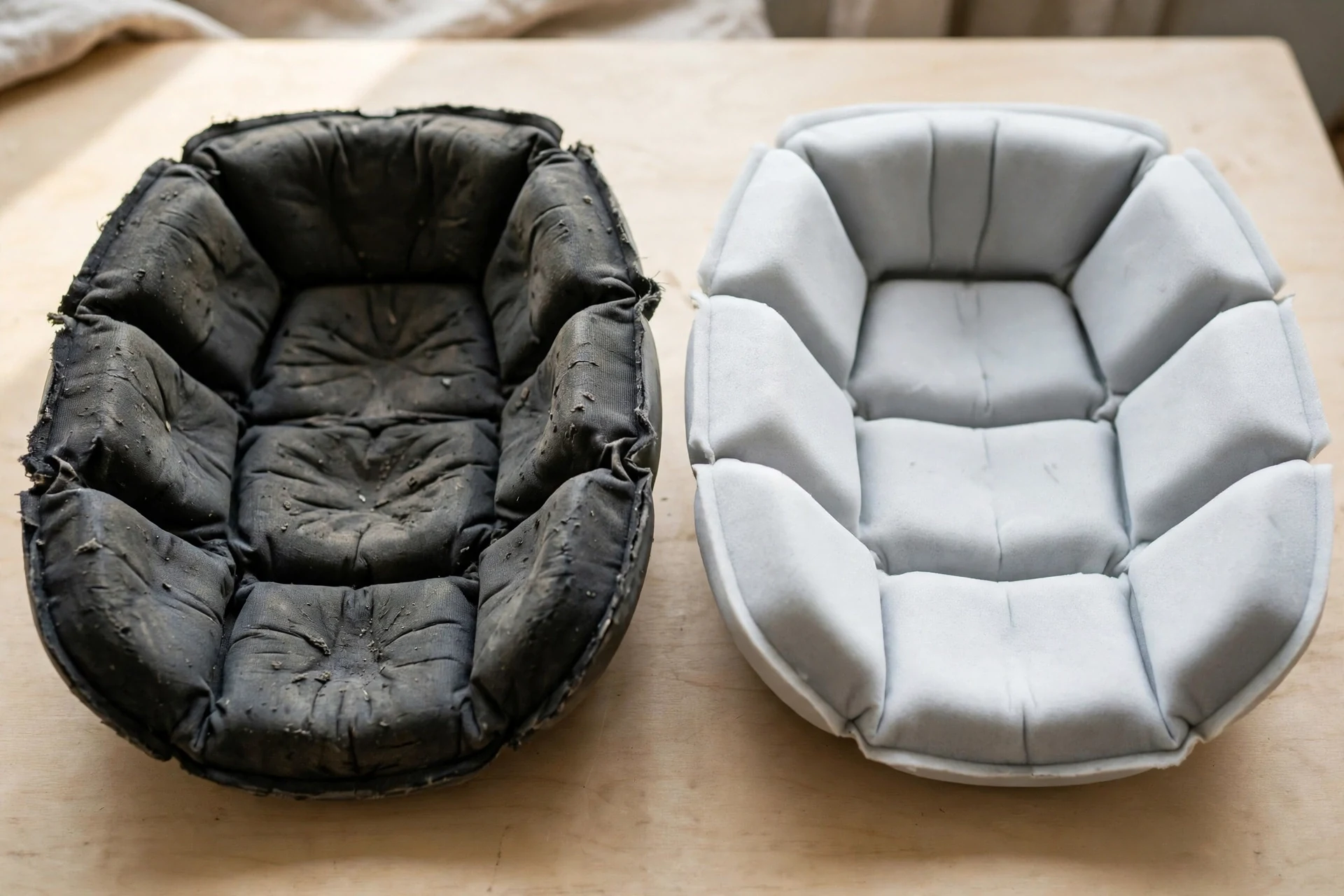
Look at the foam as well as feeling it. Check for cracks, crumbling edges, flaking, or pieces coming away from the shell. Look at the comfort padding too: if it is flattened, torn, or coming loose, the helmet will not sit as well on your head. Also pay attention to fit. If your helmet feels looser than it used to, rocks about when you move, or no longer sits level, the padding may have compressed and worn thin, and that is a sign to look at it closely.
Does hard foam still protect your head?
Hard foam may still offer some protection, but it is unlikely to work as well as foam in good condition. The job of the impact foam is to crush slowly in a crash and spread the force over a longer moment. Foam that has gone hard and brittle may crack or crush too quickly instead, and that means more of the force reaches your head.
That said, firmness alone does not always mean a helmet is useless. Some foam is firm by design, especially in helmets made for hard work or high-speed use. The question is whether the foam has changed from how it was when new. If it feels noticeably harder, shows cracks or crumbling, or no longer springs back, treat it as a warning sign. When in doubt, ask the maker or a specialist retailer to look at it, and replace the helmet if there is any doubt about its condition.
What speeds up foam going hard?
Heat is the biggest accelerator. Leaving a helmet on a car dashboard in summer, in a hot loft, or beside a heater can speed up ageing of the foam and the glues that hold it in place. Direct sunlight has a similar effect, so storing a helmet out of the sun helps it last. Sweat and damp also play a part: a helmet that is put away wet and never allowed to dry properly can develop smells, mould, and padding that breaks down sooner.
Rough handling speeds things up as well. Dropping a helmet onto a hard floor, knocking it against a wall, or throwing it into a bag with heavy tools can dent and compress the foam, even when the shell looks fine. Chemicals are another risk. Petrol, strong solvents, and harsh cleaning sprays can attack foam, so keep them away from your helmet and clean it gently. Good storage and gentle handling make a real difference to how long the foam stays in good shape.
Can you soften helmet foam again?
No, once helmet foam has gone hard you cannot soften it again, and you should not try. The foam is a single-use safety material, and its structure changes permanently as it ages and compresses. Washing it, heating it, or pressing it will not restore its spring, and some of these attempts can damage it further.
What you can do is look after the comfort padding, which is a separate part. Many helmets have removable comfort pads that can be washed or replaced, and fresh pads can make a helmet feel comfortable again. But new comfort pads do not fix hardened impact foam underneath. If the impact foam itself has gone hard, cracked, or crumbled, the only safe answer is a new helmet. Do not be tempted to add extra padding inside to take up space, as that can change how the helmet fits and how it works in a crash.
When should you replace a helmet with hard foam?
Replace a helmet when its foam has gone hard and no longer springs back, when you can see cracks or crumbling, or when the fit has become loose because the padding has worn thin. Also replace it after any hard knock or fall, even if the shell looks fine, because the foam may have been compressed by the impact. Check the maker’s guidance for your helmet, as different makers give different advice on how long a helmet should be used.
Some helmets include a system designed to reduce rotational forces in a fall, such as MIPS, and that system also relies on the foam and liner being in good condition. Regular checks are the best habit: feel the foam, look for damage, and check the fit every few months. A helmet is a safety item, and when its foam has aged past its best, replacing it is the sensible choice.
Does all helmet foam go hard with age?
Most helmet foam changes with age and use, though how quickly depends on the type of foam, how often the helmet is worn, and how it is stored. Foam kept cool, dry, and out of the sun lasts better than foam left in heat or damp.
How do I check the foam in my helmet?
Press it gently with a fingertip and see if it springs back, then look for cracks, crumbling, or loose pieces. Also check that the helmet still fits snugly and sits level on your head.
Should I replace a helmet just because the foam feels firm?
Not always, as some foam is firm by design. Replace it when the foam has clearly changed from new, feels brittle, shows damage, or the helmet no longer fits well. When in doubt, ask the maker or a specialist to check it.

Olivia
Writer at Helmet Today, covering helmet reviews, fit and riding safety.