A helmet is worn out when it no longer fits properly, shows damage to the shell, foam, or straps, or has taken a hard knock, even if it still looks fine from the outside. Helmets wear out slowly, so the change is easy to miss. The padding flattens, the straps stretch, and the foam inside ages, all a little at a time. Knowing what to look for means you can spot a worn-out helmet before you rely on it in a fall.
A worn-out helmet is not just an old helmet. Age alone does not tell the whole story, because a helmet worn every day will wear faster than one used now and then, and a helmet stored well will last better than one left in heat and sun. The real test is condition: how the shell, the foam, the padding, and the straps look and feel today, and whether the helmet still sits snugly and securely on your head.
What are the signs that a helmet is worn out?
The first signs are often in the fit. A helmet that once sat snugly may start to feel loose, rock from side to side, or slide forward over your eyes. This usually means the comfort padding has flattened or the foam has compressed, and the helmet can no longer hold its position. A helmet that moves about on your head will not protect as well in a fall, because it may shift at the moment you need it most.
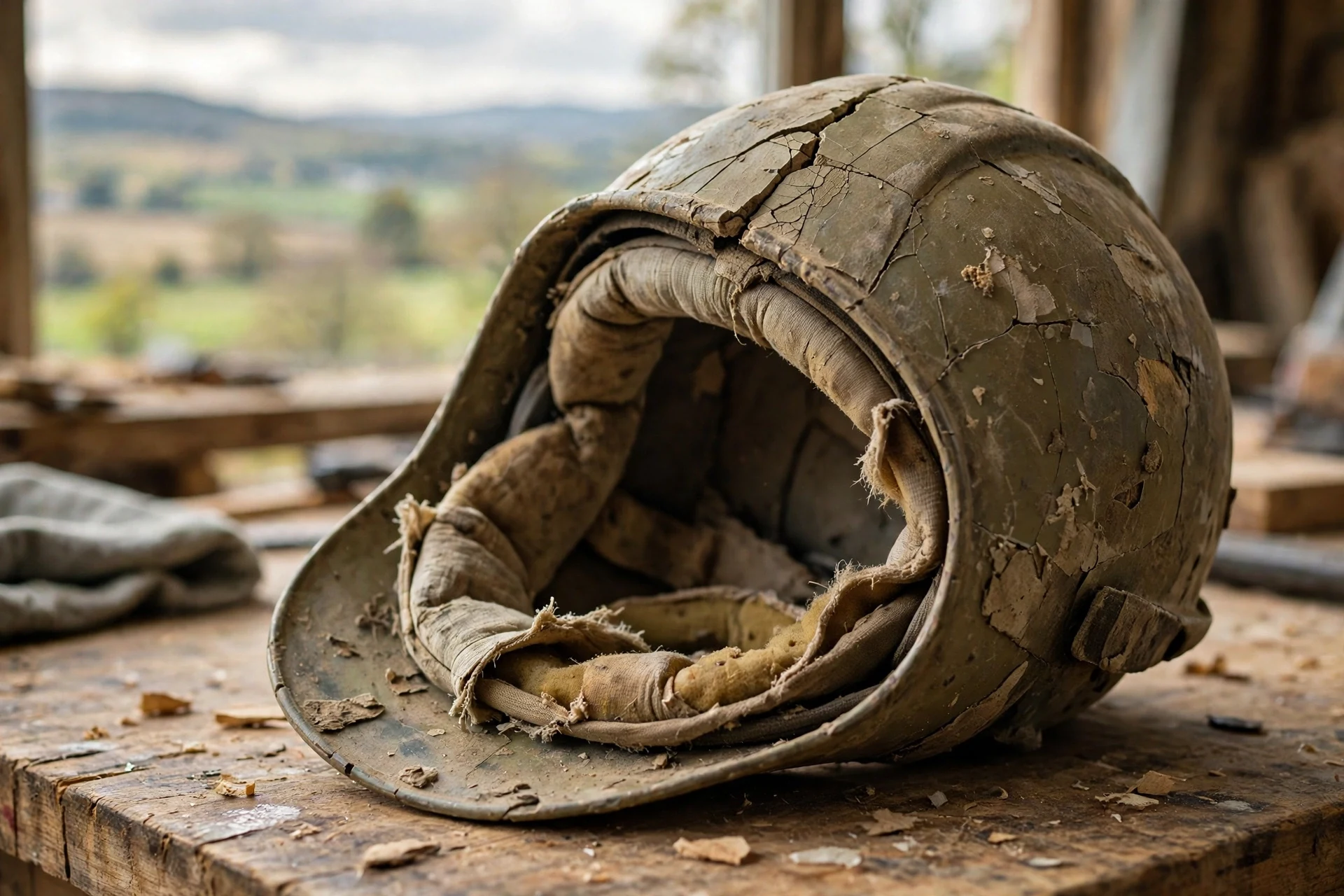
Other signs are visible. Look for cracks or dents in the shell, scuffs that go deep into the surface, and any part that is bent or broken. Check the straps for fraying, fading, or stretched webbing, and check the buckle to see if it still clicks shut firmly. Inside, look for foam that is cracked, crumbling, or coming away from the shell, and padding that is torn or flattened. A smell that will not wash out can also point to padding that has broken down.
How do you check a helmet for wear?
Start with a look over the whole helmet in good light. Turn it in your hands and check the shell from every angle, including around the vents and the edges, where cracks often start. Run a fingertip over the surface and feel for rough patches, splits, or dents that you might not see at first glance. Check the inside too, pressing the foam gently to see if it still springs back.
Next, try the helmet on and check the fit. It should sit level on your head, low enough to cover your forehead, and feel snug all round without pressing painfully. Fasten the chin strap and shake your head gently: the helmet should stay put and not slide about. Then check the strap and buckle. Pull the strap firmly to see if it slips, and make sure the buckle fastens and releases cleanly. If anything feels loose, worn, or unreliable, the helmet needs a closer look.
Does a worn-out helmet still protect you?
A worn-out helmet may still offer some protection, but it is unlikely to protect as well as a helmet in good condition. The shell spreads the force of an impact, and the foam inside absorbs it, and both need to be in good shape to work together. A cracked shell may split instead of spreading the force, and tired foam may crush too quickly or not at all.
Fit matters just as much. A helmet that is loose because its padding has worn thin can shift in a fall, leaving part of your head exposed or letting the helmet twist on impact. Straps that have stretched or a buckle that no longer holds firmly can let the helmet come off altogether. Some helmets include a system designed to reduce rotational forces in a fall, such as MIPS, and that system also needs the liner and foam to be in good condition. When any part of the helmet is worn out, the whole helmet is less reliable.
What wears a helmet out fastest?
Hard knocks wear a helmet out fastest. A fall, a drop onto a hard floor, or a heavy blow can damage the foam inside even when the shell looks fine. That is why any helmet that has taken a hard knock should be replaced, whatever its age. Everyday wear comes next: sweat, heat, and constant pressure slowly flatten the padding and age the foam.
Rough handling, such as throwing a helmet into a bag with heavy tools or hanging it by its strap, can stretch the straps and dent the shell. Gentle use and good storage slow the wear down a great deal.
Can a worn-out helmet be repaired?
In general terms, a worn-out helmet cannot be repaired back to full safety, and it should not be patched up and kept in use. Comfort padding can often be replaced, and a new set of pads can make a helmet feel better and fit more snugly. Straps and buckles can sometimes be replaced too, if the maker supplies the parts. But the shell and the impact foam cannot be repaired: once they are cracked, dented, or compressed, their protective ability is gone.
Do not try to fix a cracked shell with glue or tape, and do not add extra padding inside a loose helmet to take up space, as that can change how the helmet sits and how it works in a crash. If the shell or the foam is damaged, or the helmet has taken a hard knock, the safe choice is a new helmet. A repair that looks tidy on the outside can hide damage that matters on the inside.
When should you replace a worn-out helmet?
Replace a helmet as soon as you find clear signs of wear: a loose fit that cannot be fixed with new pads, cracks or dents in the shell, foam that is hard or crumbling, or straps and a buckle that no longer hold firmly. Also replace it straight after any hard knock or fall, even if you cannot see any damage. Check the maker’s guidance for your helmet, as different makers give different advice on how long a helmet should be used and when it should be retired.
It helps to check your helmet on a regular schedule, for example every few months, and always after a fall or a drop. Keep a note of when you bought the helmet and how much you have used it, so you can judge its condition in context. A helmet is a safety item, and replacing a worn-out one is a small cost compared with the protection a sound helmet gives you.
How often should I check my helmet for wear?
Check it every few months, and always after a fall, a hard knock, or a drop onto a hard surface. Look at the shell, press the foam, check the straps and buckle, and try the fit on.
Can I keep using a helmet with a small crack in the shell?
No, a crack in the shell means the helmet should be replaced. Even a small crack can weaken the shell and let it fail in a fall, and it may point to damage in the foam underneath.
Does a worn-out helmet look worn out?
Not always. Some wear is easy to see, like cracks and frayed straps, but foam can age and compress without any obvious change on the outside. That is why you should check the fit and feel of the foam as well as looking at the shell.

Olivia
Writer at Helmet Today, covering helmet reviews, fit and riding safety.