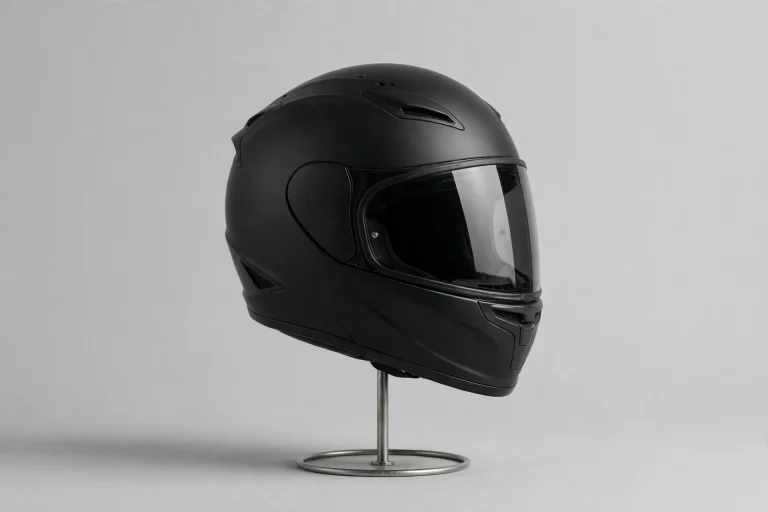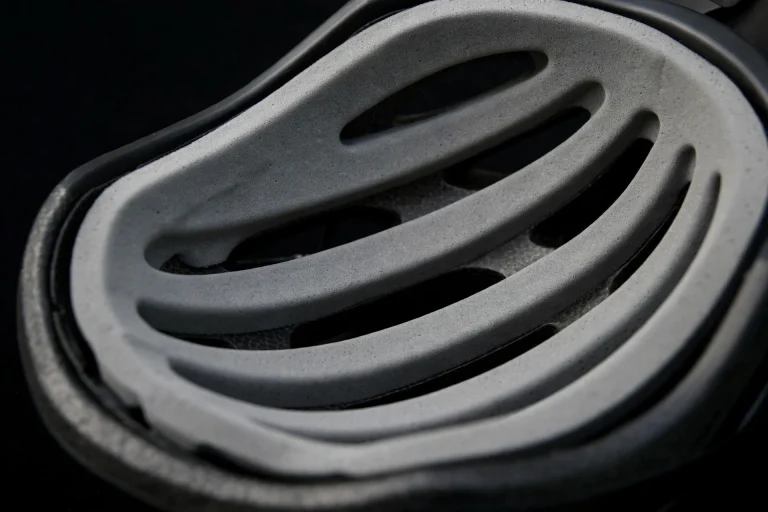
Air flows through a helmet from the front to the back, entering through intake vents at the front, travelling along channels moulded into the foam liner over the top of the head, and leaving through exhaust vents at the rear. In general terms, the rider’s forward movement drives the flow: air is pushed into the front vents, guided across the scalp by the channels, and drawn out at the back, carrying heat and sweat away with it. This front-to-back path is the basic pattern of airflow in almost every vented helmet, from cycling helmets to motorcycle helmets.
Where Does Air Enter a Helmet?
Air enters a helmet through the intake vents, which are the openings at the front of the shell and along the top. The most important intake vents sit above the brow and on the forehead area, where the air meets the helmet first as the rider moves forward. These vents are shaped to catch the oncoming air and funnel it inside, and they are usually the largest openings on the helmet because they have to take in enough air to cool the whole head.
Some helmets also have intake vents on the sides or under the chin, which bring in extra air or direct it across the face and the visor. In general terms, the intake vents are placed where the airflow is strongest, and their job is to gather as much fresh air as possible and send it into the channels inside the liner.
Which Way Does Air Travel Inside a Helmet?
Inside a helmet, air travels from the front toward the back, following the channels that are moulded into the foam liner. The air enters at the forehead, flows back over the top of the head, and then curves down toward the rear vents, passing over the scalp along the way. This front-to-back direction is set by the rider’s movement: the air is always pushed in at the front and pulled out at the back, so it follows the same path every time.
The channels keep the air moving in that direction instead of letting it swirl around or stall in one spot. In general terms, the path is simple and direct, which is what makes it effective: fresh air comes in, picks up heat and moisture from the head, and leaves through the rear vents, so the air inside the helmet is constantly being replaced.
What Guides the Air Through a Helmet?
The air inside a helmet is guided by the channels moulded into the foam liner, which act like shallow tunnels running from the front vents to the rear vents. These channels are shaped and positioned so that the air spreads evenly across the head instead of rushing through one narrow path and leaving other areas warm. The padding is placed around the channels rather than over them, so that nothing blocks the flow.
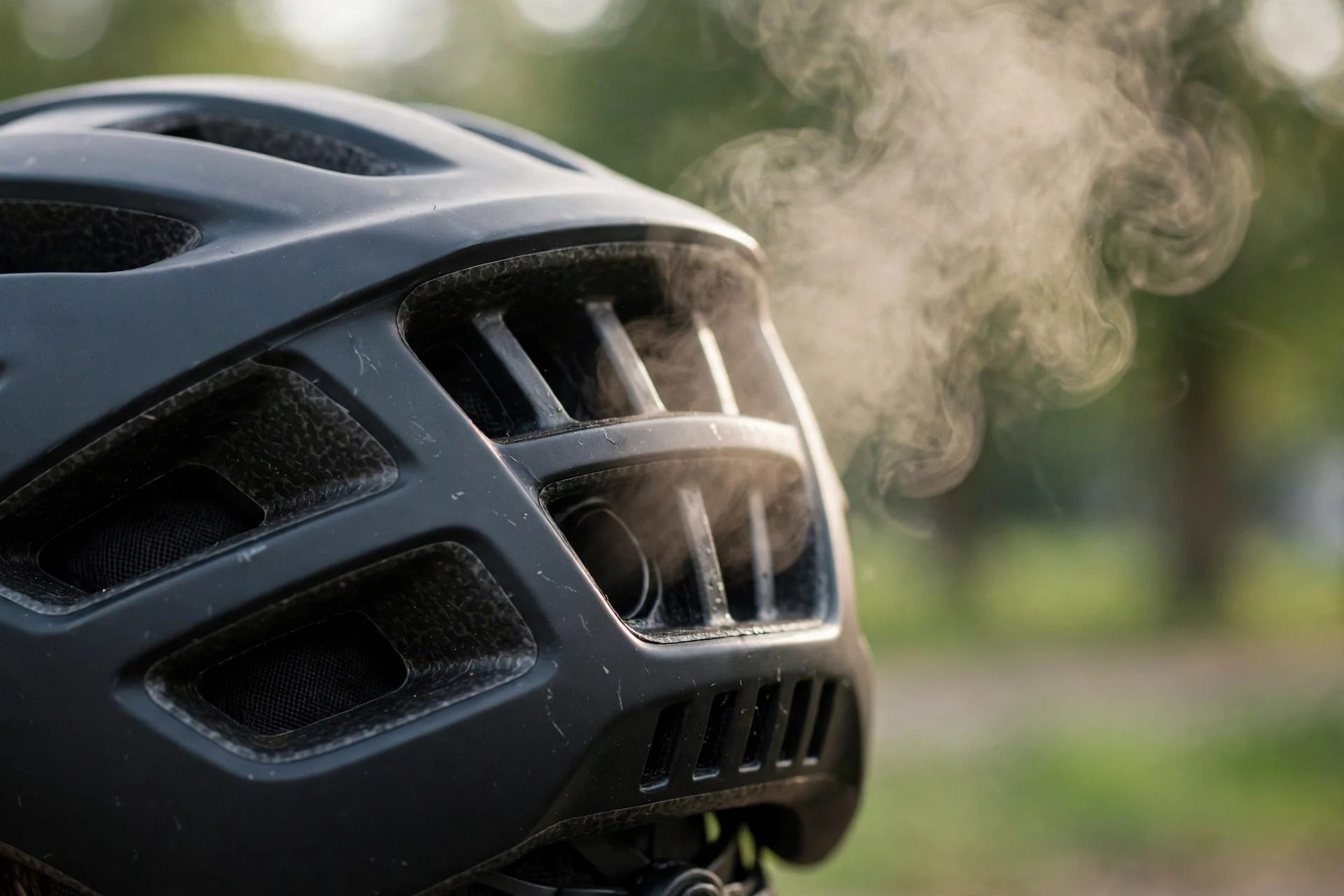
The shape of the shell helps too, since the vents are lined up with the channels so that air passes smoothly from the outside into the liner. In general terms, the channels are the steering system of the airflow: without them, air entering the front vents would have no clear route to the back, and much of it would simply sit inside the helmet without cooling the head.
Why Does Air Flow Faster When You Move?
Air flows faster through a helmet when the rider moves faster, because the rider’s speed is what pushes air into the front vents and pulls it out of the rear vents. At higher speeds, more air is forced into the intake vents every second, and the fast-moving air passing the back of the helmet creates a stronger pull at the exhaust vents. Together, these two effects make the whole flow-through system stronger, so the cooling is easy to feel.
At low speeds or at a standstill, the push and the pull both weaken, and the airflow inside the helmet slows to a trickle. In general terms, this is why a helmet feels cool on a fast descent and warm when climbing slowly uphill: the airflow depends on the rider’s speed, and the helmet can only move as much air as the rider’s motion provides.
What Slows Airflow Down Inside a Helmet?
Airflow inside a helmet can be slowed by anything that blocks the vents or the channels, such as mud, insects, or padding that has slipped out of place. Dirt packed into the front vents stops air from getting in, while a liner that has bunched up over a channel stops air from flowing across the head. Even a thick hat or a head covering worn under the helmet can block the channels and reduce the cooling effect.
Closed vent covers also slow the airflow, since they shut the intake vents and stop fresh air from entering. If you want to understand one of the safety technologies used in modern helmets, reading about MIPS is a good place to start, though the airflow path is separate from the liner system. In general terms, anything that narrows or blocks the path from the front vents to the rear vents will make the helmet feel warmer.
How Does Airflow Keep You Cool?
Airflow keeps the rider cool by carrying heat and sweat away from the head as it passes over the scalp. The moving air picks up warmth from the skin and takes it out through the rear vents, and it also helps sweat evaporate, which cools the skin further. This is the same cooling effect as a breeze on a hot day: still air lets heat build up, while moving air carries it away.
The steady replacement of warm air with fresh air is what makes the difference, since the air inside the helmet never gets a chance to grow hot and stale. In general terms, airflow works best when the rider is moving and the vents are open and clear, and it is the main reason a vented helmet feels so much more comfortable than a helmet with no vents at all.
Does air flow through a helmet when you are standing still?
In general terms, very little. Without forward movement there is almost no push into the front vents and no pull at the rear vents, so the air inside the helmet barely moves and the head soon feels warm.
Why do some helmets have vents on top?
In general terms, top vents catch the air flowing over the helmet and feed it into the channels, while also letting warm air rise and escape. They help cool the crown of the head, which is often the warmest part.
Can a helmet have too much airflow?
In general terms, very open helmets can feel cold and noisy in cool weather, which is why many have closable vents. In warm weather, though, more airflow usually means more comfort, so the rider can adjust the vents to suit the conditions.

Olivia
Writer at Helmet Today, covering helmet reviews, fit and riding safety.