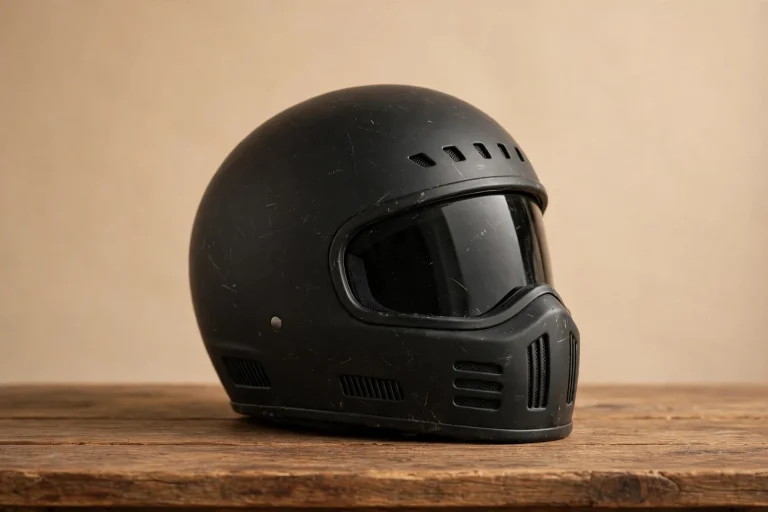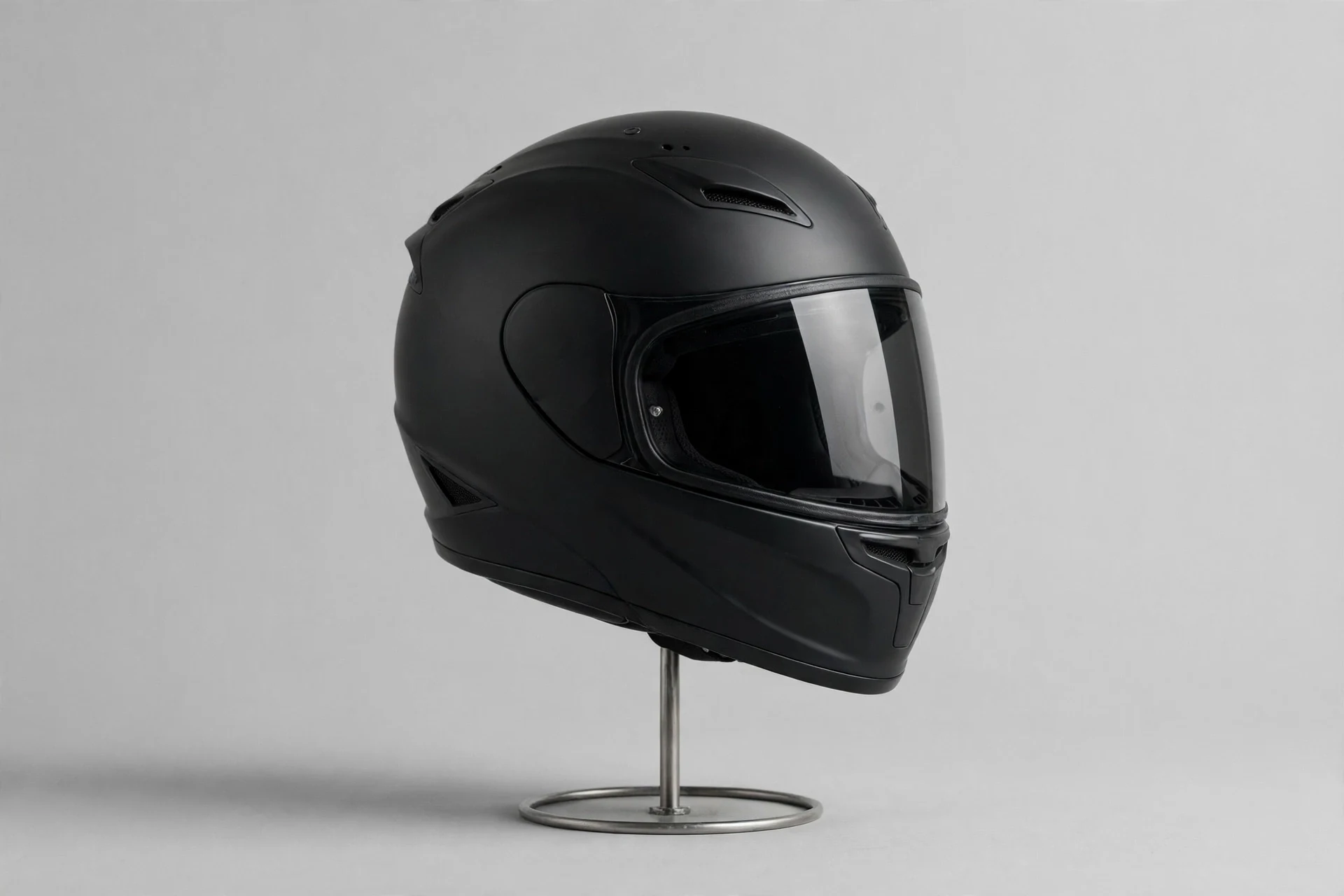
Helmet weight distribution is the way a helmet’s weight is spread across the head, and how balanced it feels when it is worn, rather than just how heavy it is on its own. In general terms, a helmet with good weight distribution feels even and stable, with no part pulling forward, backward, or to one side, while a helmet with poor distribution can feel heavy and tiring even if it weighs the same as another helmet. Weight distribution matters because the head and neck carry the helmet for hours, and an unbalanced helmet strains the neck far more than a balanced one.
What Is Helmet Weight Distribution?
Helmet weight distribution describes where the weight of a helmet sits in relation to the head and the neck. A helmet is not a single lump of weight: its shell, its foam liner, its padding, its visor, and its fittings all add weight in different places, and how those parts are arranged decides whether the helmet feels balanced or lopsided. If most of the weight sits above the head, the helmet feels stable, while if it hangs forward or backward, it pulls on the neck.
The centre of gravity is the key idea: it is the point where the helmet’s weight balances, and a helmet feels best when that point sits close to the centre of the head. In general terms, good weight distribution means the helmet’s weight is spread evenly around the head, so no single direction pulls harder than the others and the neck does not have to work to hold the helmet level.
Why Does Balance Matter More Than Weight?
Balance matters more than weight alone because the neck is much better at carrying a load that sits evenly than one that pulls in a single direction. A slightly heavier helmet that is well balanced can feel light and easy to wear, while a lighter helmet that is front-heavy can feel tiring after a short time, because the neck muscles have to fight the constant forward pull. The feeling of heaviness often comes from imbalance, not from the weight itself.
This is why two helmets of similar weight can feel very different on the head, and why riders often describe a helmet as feeling light when what they really mean is that it feels balanced. In general terms, the neck notices a pull in one direction far more than it notices an even load, so makers work hard to keep the helmet’s weight centred over the head.
How Does Helmet Design Spread the Weight?
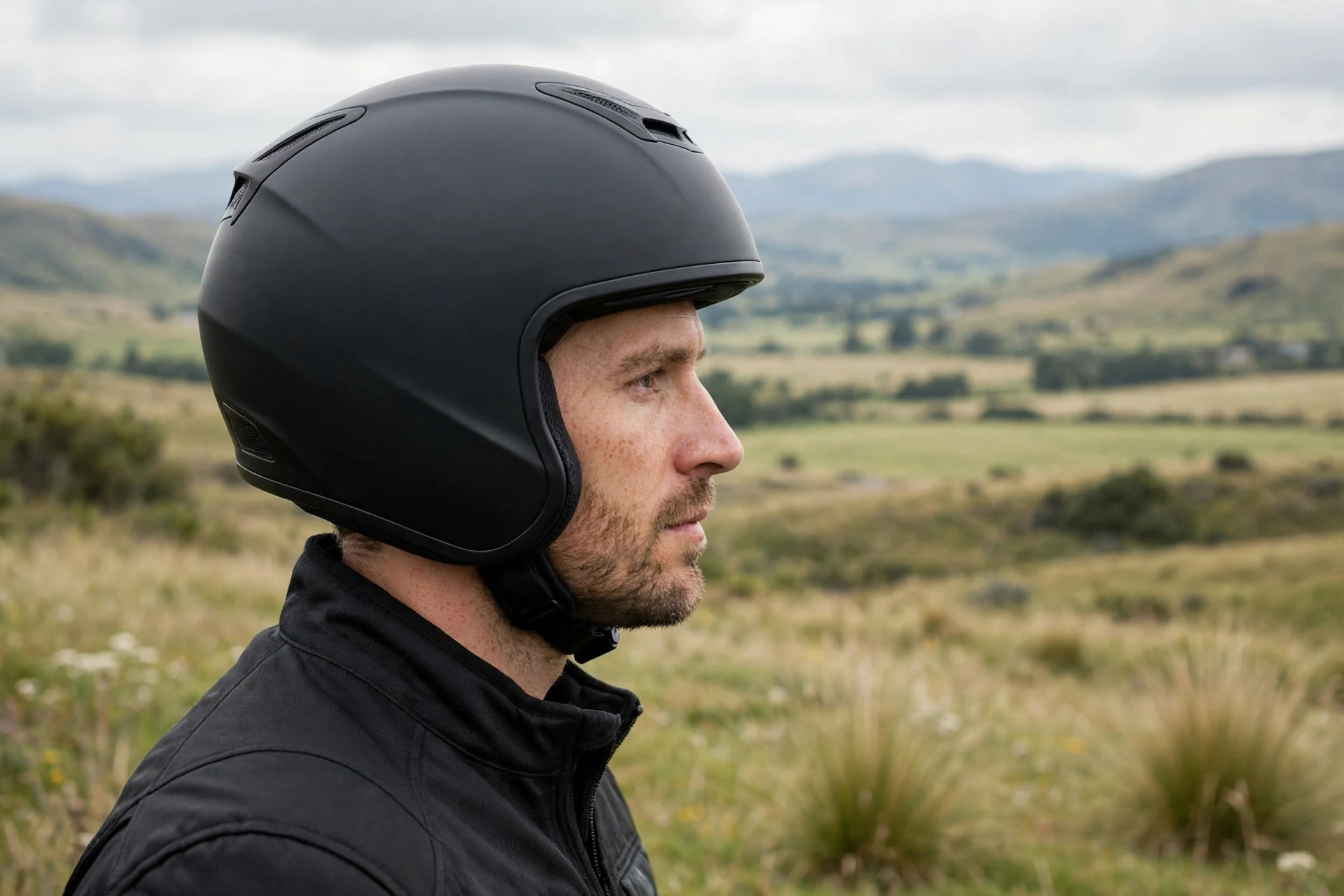
Helmet design spreads the weight by shaping the shell and placing the heavier parts so that the load is shared evenly around the head. The shell itself is the largest part, and its shape decides where most of the weight sits, while the foam liner fills the inside evenly and helps the helmet sit level. Fittings such as the visor, the peak, and the vents are placed so that they do not add too much weight to one side or to the front.
Some helmets use a shell that is slightly thicker at the back to balance a visor at the front, while others keep the front light by using a smaller visor or a lighter peak. In general terms, good design is about balance: every part that adds weight in one place is matched by the shape or the fittings elsewhere, so the helmet sits evenly and the centre of gravity stays close to the middle of the head.
Why Do Some Helmets Feel Front-Heavy?
Some helmets feel front-heavy because the parts at the front, such as a large visor, a peak, or a chin bar, add weight ahead of the head’s centre, and that weight pulls the helmet forward. A full-face motorcycle helmet with a long chin bar and a large visor carries more weight at the front than an open-face helmet, and the rider’s neck has to work to keep the helmet level. A peak on an off-road helmet can have the same effect, especially at speed when the wind catches it.
Fit also plays a part: a helmet that sits too far forward on the head will feel front-heavy even if its design is balanced. In general terms, a front-heavy feeling can come from the design, from the fittings, or from the fit, and it is worth checking all three. If you want to understand one of the safety technologies used in modern helmets, reading about MIPS is a good place to start, though weight distribution is a separate question from the liner system.
How Does Fit Change Weight Distribution?
Fit changes weight distribution because a helmet that sits in the right place spreads its weight evenly over the head, while a helmet that sits too high, too low, or tilted to one side puts its weight unevenly on the neck. A helmet that is too loose will slide around and its weight will shift with every movement, which feels tiring and unstable, while a helmet that fits snugly stays centred and its weight stays balanced.
The padding also affects how the weight is felt, since thicker padding in one area can lift the helmet slightly and change where it rests on the head. In general terms, a well-fitted helmet feels balanced because its weight is shared across the whole head, while a poorly fitted helmet concentrates its weight on one spot and feels heavier than it really is. Trying a helmet on and wearing it for a few minutes is the best way to judge its balance.
What Can You Do About a Helmet That Feels Unbalanced?
If a helmet feels unbalanced, the first step is to check the fit, since adjusting the padding or the strap can often bring the helmet back to a level, centred position. Swapping to a thinner or thicker liner pad can change how the helmet sits, and tightening the strap properly stops it from sliding forward or backward. It is also worth checking that the visor or the peak is fitted correctly, since a loose fitting can shift the weight to one side.
If the helmet still feels unbalanced after the fit is corrected, the problem may be in the design itself, and a different model may suit the rider better. In general terms, a helmet should feel even and stable from the moment it is put on, and a rider should not have to fight to keep it level. Trying several helmets and comparing how balanced each one feels is the best way to find one that suits.
Does a heavier helmet always feel heavier?
In general terms, no. A well-balanced helmet can feel lighter than a lighter helmet that is poorly balanced, because the neck notices an uneven pull far more than it notices an even load. Balance matters as much as weight.
Can accessories change weight distribution?
In general terms, yes. Adding a camera, a light, or a communication device to a helmet adds weight in one place and can make it feel unbalanced. Mounting accessories centrally and keeping them light helps preserve the helmet’s balance.
Why does my helmet feel heavier at the end of a ride?
In general terms, tired neck muscles notice the helmet’s weight more as a ride goes on, especially if the helmet is slightly unbalanced. A well-fitted, well-balanced helmet feels lighter for longer than one that pulls in one direction.

Olivia
Writer at Helmet Today, covering helmet reviews, fit and riding safety.