Historical reenactors often wear a helmet as part of their costume, but it is not always a real protective helmet: in general terms, some reenactors wear accurate replica helmets made for show, while others wear real steel helmets made for combat, and the difference matters. A medieval knight, a Roman soldier, and a Viking warrior all wore helmets in history, so a reenactor playing one of them will usually wear one too. The question is whether that helmet is there to look right, or to protect the head in a real fight.
This guide explains which reenactors wear real helmets, which wear costume replicas, what head risks reenactors do face, and how to tell a protective helmet from a prop. In general terms, the honest answer is that a helmet made for display is not the same as a helmet made for combat, and a reenactor who fights should never trust a display piece to protect them.
Do historical reenactors wear helmets?
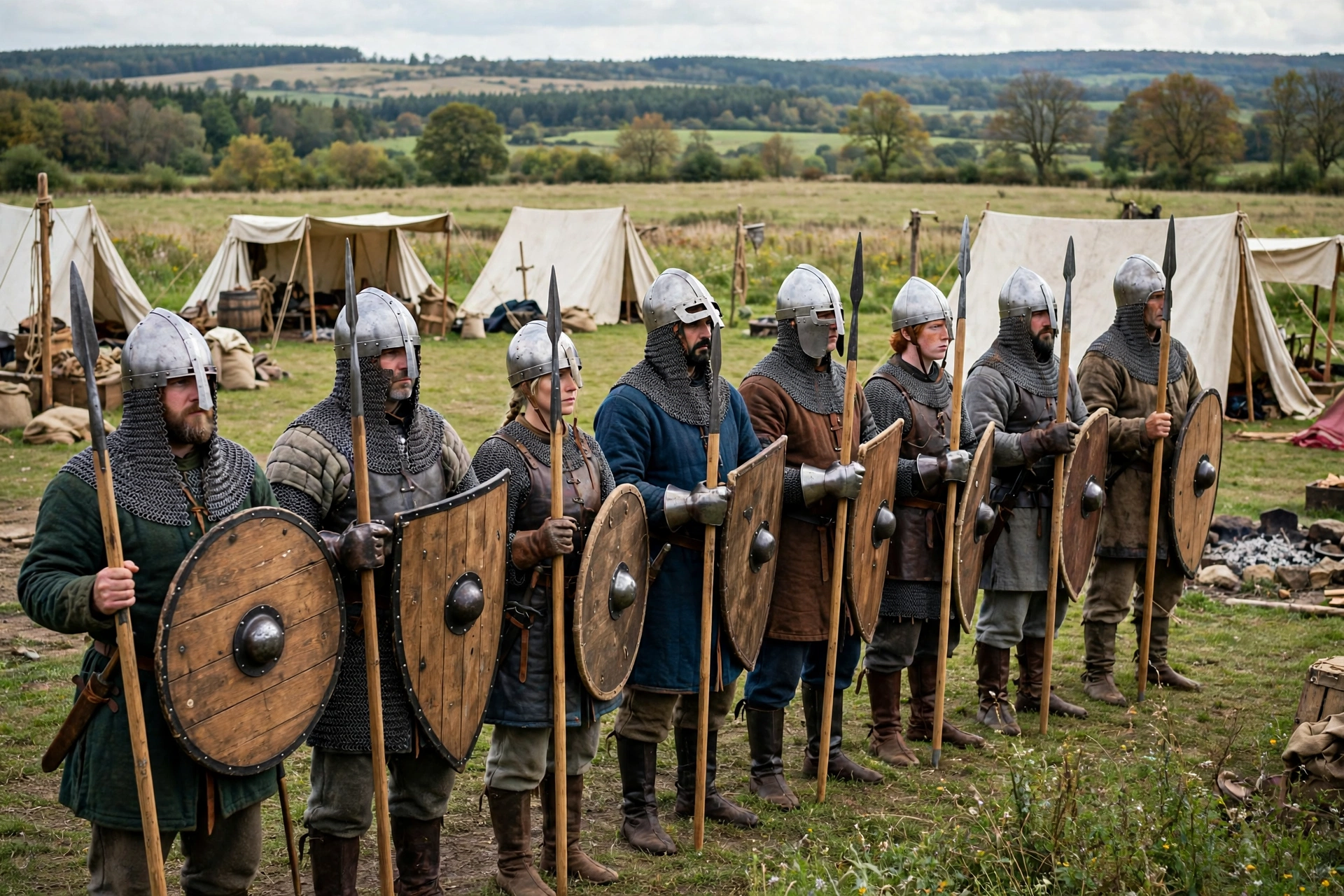
Yes, many historical reenactors wear helmets, because helmets were part of the dress of soldiers and warriors in most periods. A reenactor portraying a medieval knight will wear a great helm or a bascinet, a Roman reenactor will wear a galea, and a Viking reenactor will wear a round or pointed helm. The helmet is part of the impression, and without it the costume looks unfinished to an audience.
But the helmet a reenactor wears can be one of two very different things. A display helmet is made to look right from a few feet away, and it may be made from thin steel, aluminium, or even plastic, with little padding inside. A combat helmet is made from thicker steel, with proper padding and a secure chin strap, and it is built to take a real blow.
What head risks do historical reenactors face?
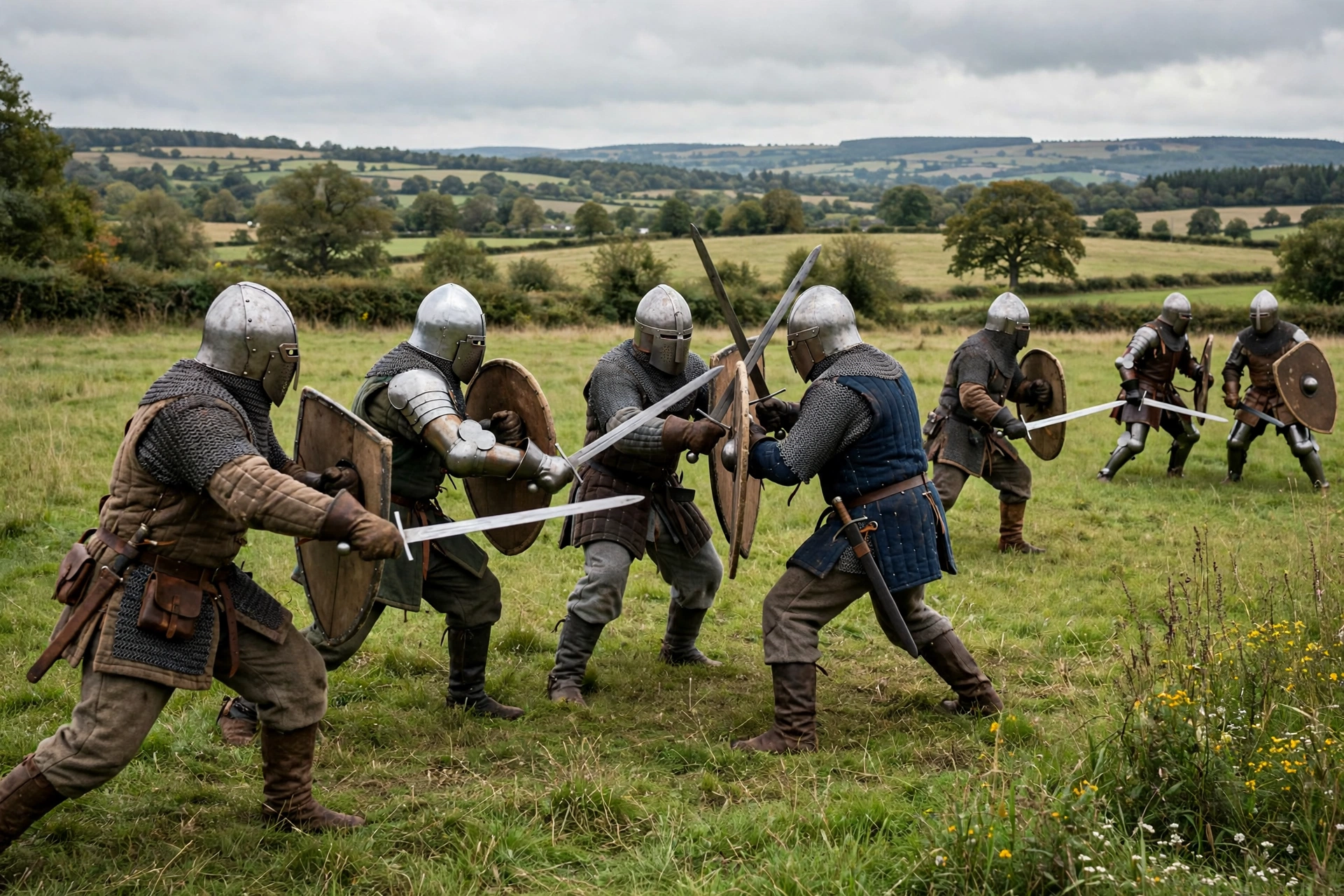
Reenactors face real head risks, mostly from combat and from the events themselves. Reenactors who take part in mock battles can be struck on the head by a sword, a spear, a mace, or a shield, even when the weapons are blunted and the blows are pulled. A blow that is meant to be light can still land hard, and a fall in armour on uneven ground can send a reenactor’s head into the earth or a stone.
Other risks come from the kit itself. A heavy helmet can strain the neck, a loose helmet can slip and block vision, and the heat inside a closed helm can cause dizziness, which makes a fall more likely. In general terms, these are the same kinds of accidents that can happen to anyone wearing heavy metal headgear outdoors, and the risk is highest in full-contact combat, where real force is used and the ground is rough.
What is the difference between a replica and a combat helmet?
A replica helmet is made for display, and it is judged on how it looks. It may be made from thin metal or a light alloy, with a simple lining and a decorative finish, and it is meant to be worn for photos, parades, and living history displays where no fighting happens. It is not tested against impacts, and it should never be worn in combat, because a thin shell can dent, split, or drive a rivet into the head.
A combat helmet is made for fighting, and it is judged on how it protects. It is made from thicker steel, with a padded liner that spreads the force of a blow, a secure chin strap, and a shape that deflects a blade rather than catching it.
How do reenactors choose the right helmet?
Reenactors choose a helmet by matching it to the period, the role, and the level of combat. A reenactor who only does living history displays can choose a lighter, more accurate replica, because the helmet will never be struck. A reenactor who fights should choose a combat-grade helmet from a maker who understands historical armour, and should check the thickness of the steel, the padding, and the strap before buying.
Fit is the most important thing. A helmet that is too loose will wobble and block vision, while a helmet that is too tight will press on the forehead and cause headaches. The liner should sit evenly around the head, with no hard spots, and the chin strap should hold the helmet in place when the wearer shakes their head. In general terms, a reenactor should try a helmet on with the rest of their kit, and should ask experienced fighters in their group what they wear before spending money.
How do reenactors stay safe without a modern helmet?
Reenactors who fight stay safe through rules, training, and the right kit. Combat is controlled, with blunted weapons, pulled blows, and marshals who watch for dangerous fighting and stop it. Fighters are trained to aim at the body and the shield, not at the head, and to stop when a blow lands. The ground is checked for holes and stones, and the fighting area is kept clear of spectators.
Reenactors also rely on the armour itself, worn as a complete set, with a padded gambeson under the mail and a proper liner inside the helmet. A helmet worn over a padded arming cap protects far better than a bare shell, and the combination is what historical fighters actually used. In general terms, the safety system for reenactors is built on rules, training, and complete kit, and a modern sports helmet would look wrong and break the impression, so the historical helmet has to do the job properly.
When might a reenactor wear a modern helmet instead?
A reenactor might wear a modern helmet underneath a historical one, or in place of it, during training or practice, when looking right matters less than staying safe. Some groups allow a modern helmet for beginners who are learning to fight, or for fighters who are recovering from a head injury. In that setting, a light sports helmet can add a little protection while the fighter builds skill and confidence.
Another case is a reenactor who takes part in a sport with its own rules, such as historical fencing or full-contact medieval combat, where the organisers set the standard for head protection. In those events, the helmet must meet the organiser’s rules, and a display replica will not pass. A modern helmet designed for the sport is the right choice there, even if it looks out of place. Some modern helmets include a system designed to reduce rotational forces in a fall, such as MIPS, and a reenactor choosing a modern helmet for training should look for one that fits well and suits the activity, rather than the cheapest option.
Do historical reenactors wear helmets?
Many do, as part of their historical impression. In general terms, a soldier or warrior from most periods wore a helmet, so a reenactor playing one of them will usually wear one too.
Is a replica helmet the same as a combat helmet?
No, a replica made for display is usually thinner and lightly padded, and it should never be worn in combat. A combat helmet is made from thicker steel with proper padding, and it is the only kind that should be worn when weapons are swung.
What should a reenactor do after a head knock in combat?
Stop fighting and get checked, just as an athlete would. In general terms, any head knock should be treated seriously, and the reenactor should not carry on if there are symptoms such as dizziness, confusion, or headache.

Olivia
Writer at Helmet Today, covering helmet reviews, fit and riding safety.