Passengers on a horse-drawn carriage ride do not normally wear a helmet: in general terms, a carriage ride is a slow, seated trip, and riders sit in an open carriage in ordinary clothes, with no head protection, and there is no rule requiring passengers to wear one. That surprises some people, because the ride involves a large animal, a moving vehicle, and open roads. But a carriage ride is closer to a slow drive than to horse riding, and the risks are different from those of riding a horse in the saddle.
This guide explains what passengers and drivers actually wear on their heads, why a helmet is not normally part of a carriage ride, what head risks riders do face, and when wearing a riding helmet might be sensible. In general terms, the honest answer is that most people enjoy a carriage ride without a helmet, and anyone who wants extra protection should understand when it helps and when it does not.
Do passengers wear helmets on a carriage ride?
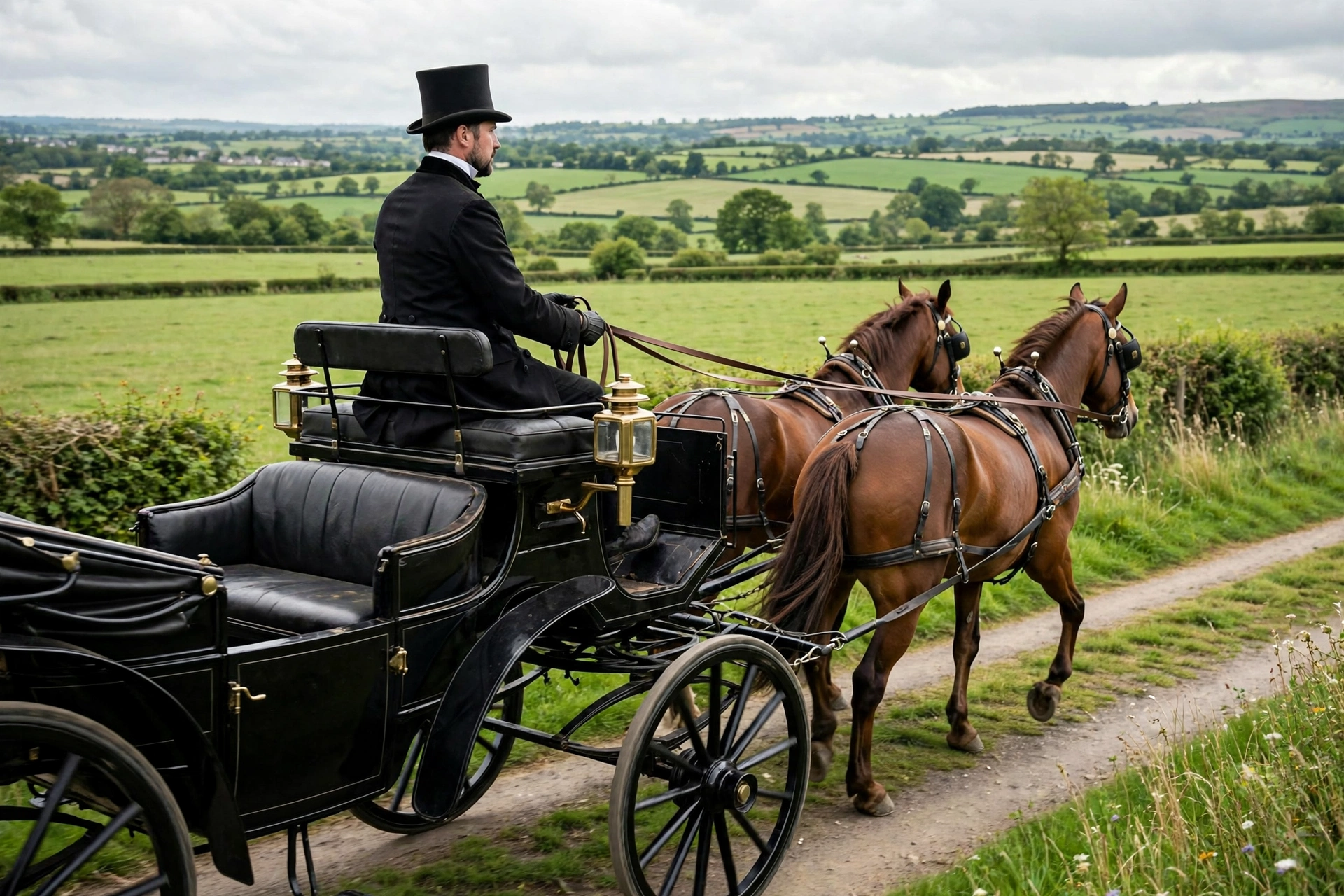
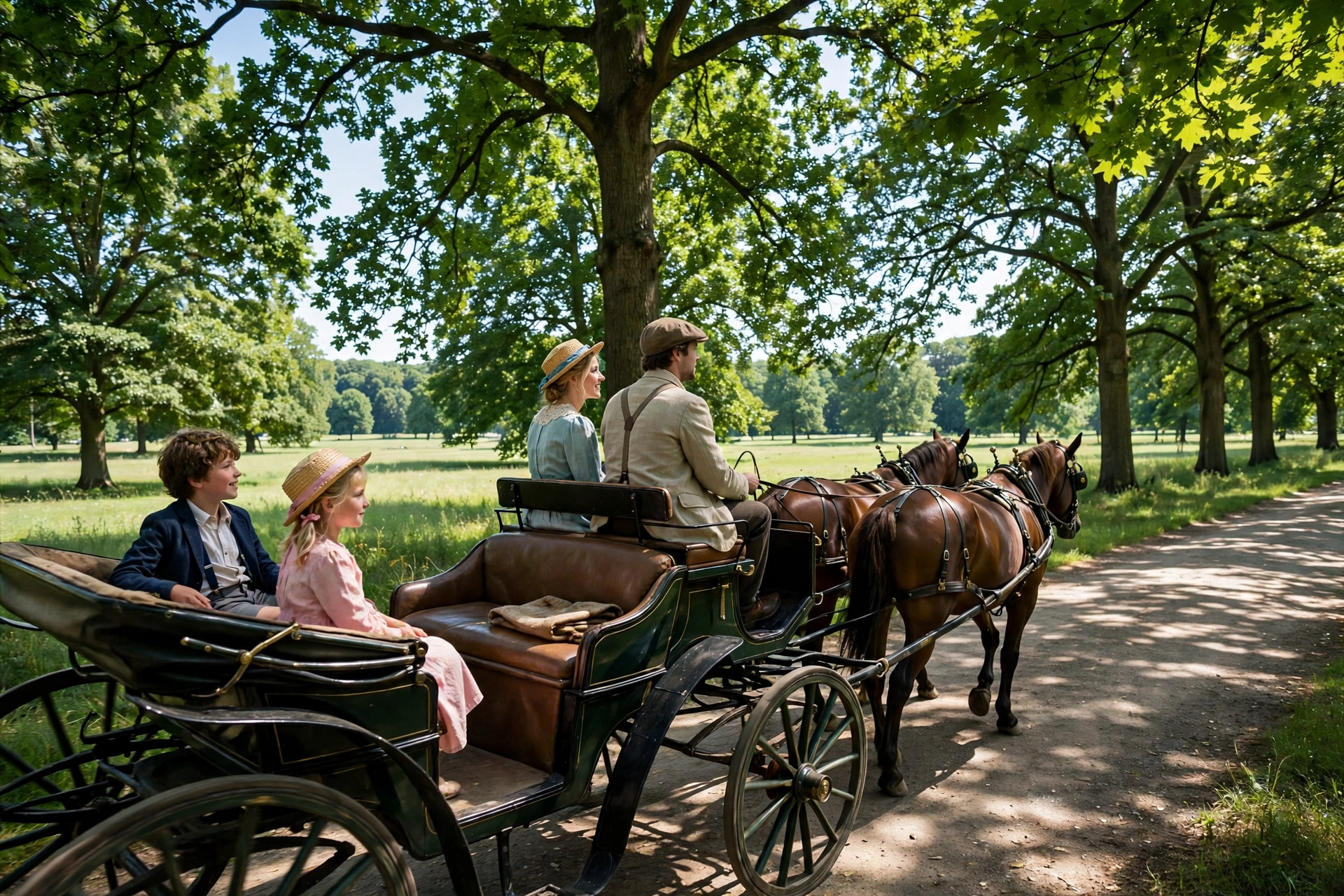
No, passengers on a horse-drawn carriage ride do not normally wear helmets. If you take a carriage tour through a park, a city, or a country estate, the passengers will be sitting on a bench seat, often under a canopy, in ordinary clothes, with their heads uncovered. The driver will usually be wearing a hat, a cap, or a period costume, and the horses will be wearing blinkers and harness, but nobody on board will be wearing a helmet.
The reason is that a carriage ride is a slow, controlled activity. The horses walk or trot at a gentle pace, the driver holds the reins, and the passengers sit still in a stable, four-wheeled vehicle.
What head risks do carriage riders face?
Carriage riders face real but limited head risks, mostly from the horse and the road rather than from the carriage itself. A horse can shy at a loud noise, a dog, or a passing vehicle, and a sudden jolt can throw a passenger against the side of the carriage or off the seat. A carriage can also hit a pothole, a kerb, or a bump, and a sharp jolt can send a passenger’s head into the frame or the canopy.
Other risks come from the road itself. A low branch, a sign, or a doorway can catch a passenger who is sitting tall in an open carriage, and a fall from a moving carriage onto a hard road can cause a cut, a bruise, or in rare cases a concussion.
Can you wear a riding helmet on a carriage ride?
Yes, there is no rule that stops a passenger from wearing a riding helmet on a carriage ride, and in practice some people do, especially parents with young children. A riding helmet is light, well ventilated, and designed for the kind of falls that can happen around horses, so it is the sensible choice if a passenger wants extra protection. Most carriage operators will be happy for a passenger to wear one.
The trade-off is comfort and the feel of the trip. A helmet is warm on a sunny day, can make a leisurely ride feel more formal than it is, and may not suit a wedding, a photoshoot, or a special occasion. Most passengers decide the benefits are not worth it for a slow, gentle ride, when they can sit still and hold on. But for a passenger who is nervous around horses, or for a child who fidgets in the seat, a riding helmet is a reasonable, honest option to consider.
What do drivers wear instead of a helmet?
Instead of a helmet, carriage drivers usually wear a hat, a cap, or a period costume that suits the occasion. A top hat, a bowler, or a flat cap is common on a formal or historical ride, and a sun hat is worn in hot weather. The driver’s headgear is part of the look of the ride, and it is chosen to match the carriage, the horses, and the occasion.
The most important protection a driver has is not something worn at all. It is skill with the horses, which means knowing how to read them, how to keep them calm, and how to stop them safely if they shy. A good driver also knows the route, avoids busy roads where possible, and checks the carriage, the harness, and the horses before setting off. In general terms, the driver’s experience and the calm of the horses are the real safety system on a carriage ride, and no helmet can replace them.
How do carriage operators keep passengers safe without helmets?
Carriage operators keep passengers safe through planning and care. The route is chosen to avoid fast traffic, rough ground, and low branches, and the pace is kept slow, with the horses walking for most of the trip. Passengers are told where to sit, to hold on when the carriage moves off, and to keep their hands and heads inside the carriage at all times.
Operators also rely on the horses themselves, which are chosen for their calm temperament and trained to cope with traffic, crowds, and noise. If a passenger is hurt, the ride stops and the injury is treated like any other head injury, with the passenger checked before they carry on. In general terms, the safety system for a carriage ride is built on calm horses, a careful driver, and a safe route, and it works well enough that helmets have never become part of the trip.
When might a riding helmet be sensible on a carriage ride?
A riding helmet might be sensible for children, who are smaller, more likely to fidget, and more likely to be hurt in a fall. Many parents already put a riding helmet on a child for a pony ride, and the same logic applies to a carriage ride, especially on a bumpy track or a busy road. A child who wears a helmet will be safer if the carriage jolts or the horse shies, and most operators will welcome it.
Another case is a ride on a rough or fast route, where the carriage may move at a trot for long stretches or the ground may be uneven. A passenger who feels nervous in that setting may choose a riding helmet for peace of mind, and nobody will object. A riding helmet is the right choice here, because it is designed for the falls that can happen around horses, and it is light enough to wear for an hour or two. Some modern riding helmets include a system designed to reduce rotational forces in a fall, such as MIPS, and a passenger choosing a helmet should look for one that fits well and suits the ride, rather than the cheapest option.
Do passengers wear helmets on a carriage ride?
No, in general terms passengers on a horse-drawn carriage ride do not wear helmets. The ride is slow and seated, and there is no rule requiring one, so most people enjoy it in ordinary clothes.
Can you wear a riding helmet on a carriage ride?
Yes, there is no rule against it, and some passengers do, especially parents with young children. A riding helmet is light and designed for falls around horses, so it is the sensible choice if you want extra protection.
What should you do after a head knock on a carriage ride?
Stop the ride and get checked, just as you would after any fall. In general terms, any head knock should be treated seriously, and the passenger should not carry on if there are symptoms such as dizziness, confusion, or headache.

Olivia
Writer at Helmet Today, covering helmet reviews, fit and riding safety.