The difference between wearing a helmet and not wearing one is simple: a helmet gives your head a layer of protection in a fall or a knock, while without one your head has no protection at all. A helmet is a hard shell with a soft lining that sits between your head and whatever you might hit, and it is designed to spread the force of an impact and absorb some of it before it reaches your skull.
In general terms, a helmet does not make you invincible, and it does not stop falls from happening. What it does is reduce the force of a knock to the head in the kinds of falls that helmets are made for, such as coming off a bike, falling from a horse, or slipping on a building site. That is why helmets are worn in so many different activities, from cycling and horse riding to climbing and construction work.
What does a helmet actually do?
A helmet works in two main ways. The hard outer shell spreads the force of a knock over a wider area, so the impact is not focused on one small spot. The soft inner lining, usually made of a foam-like material, compresses on impact, and that compression absorbs some of the energy before it reaches your head.
Together, the shell and the lining mean that a knock which might otherwise be a direct blow to the skull becomes a softer, more spread-out impact. In general terms, that is the whole point of a helmet: it does not remove the risk of a fall, but it can make the result of a fall less serious than it would have been without one.
What happens if you fall without a helmet?
If you fall without a helmet, your head has nothing between it and the ground, a wall, a kerb, or any other hard surface you might hit. The full force of the knock goes straight to your skull, and even a fall from a low height or at a low speed can cause a serious head injury, because the head is heavy and the skull is not as strong as people sometimes think.
In general terms, a fall without a helmet can lead to cuts, bruising, concussion, or worse, depending on how and where you land. The risk is greater when you are moving fast, when you fall from a height, or when the surface you land on is hard, such as tarmac or concrete. That is why a helmet is recommended even for short, familiar journeys.
What can a helmet not do?
A helmet cannot stop you from falling, and it cannot protect every part of your body. It protects your head, and only your head, and only in the kinds of impacts it was designed for. It will not protect your arms, legs, or spine, and it will not help if you are hit by a vehicle at high speed or fall from a great height.
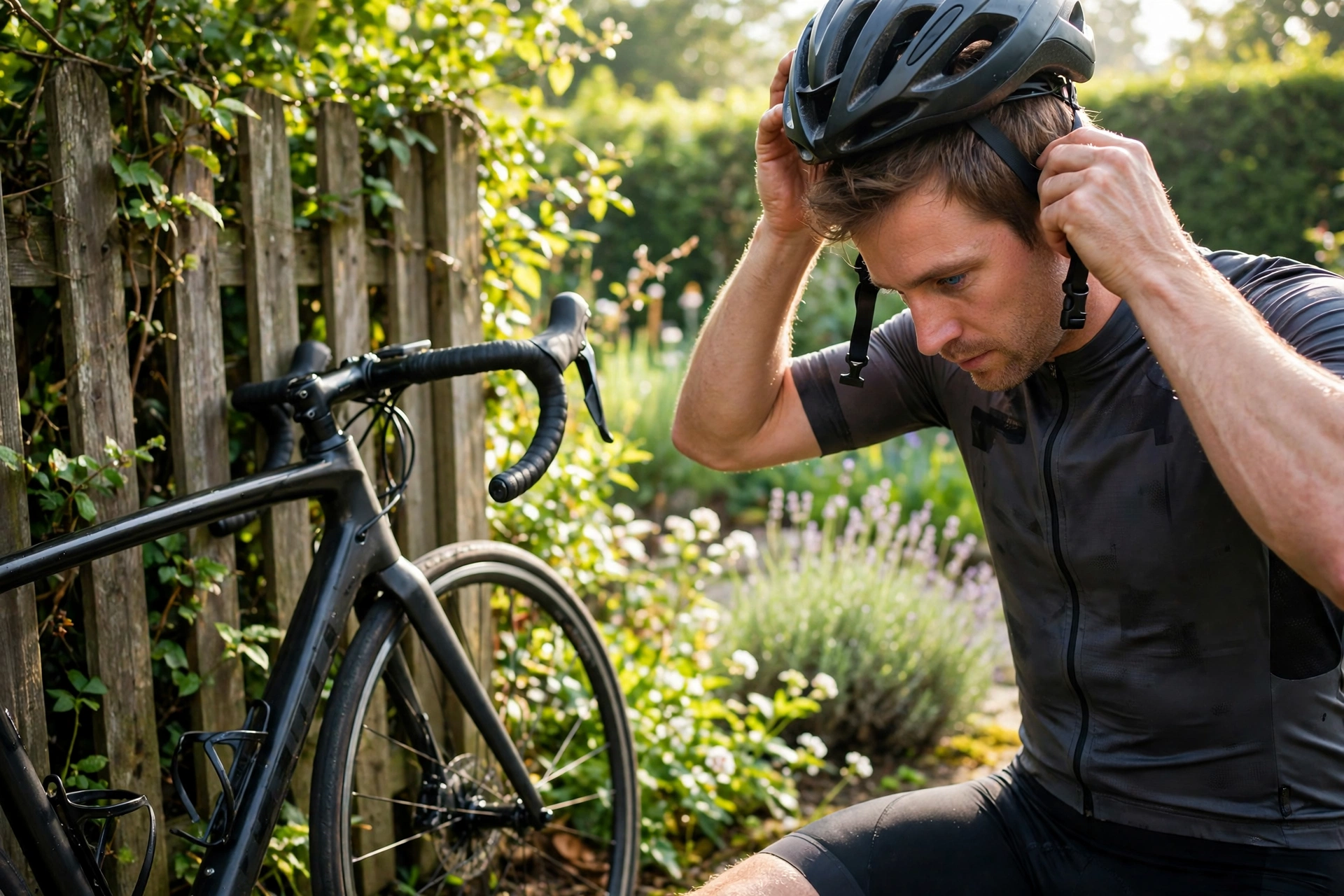
A helmet also cannot help if it is not worn correctly. A helmet that is too loose, sitting too far back on the head, or left unfastened can come off in a fall or shift out of place, and then it protects much less well. In general terms, a helmet is one part of staying safe, alongside riding or working carefully, paying attention, and following the rules of the road or the site.
Does wearing a helmet change how you ride or work?
Some people worry that wearing a helmet makes them take more risks, because they feel safer. In general terms, a helmet should not change how carefully you ride or work. It is a back-up for when something goes wrong, not a licence to take chances, and the safest rider or worker is one who rides or works carefully and wears a helmet as well.
Others find that wearing a helmet helps them feel more confident, which can be a good thing, as long as that confidence does not turn into carelessness. The practical point is simple: wear the helmet, fasten it properly, and keep riding or working with the same care you would use without one. Some helmets include a system designed to reduce rotational forces in a fall, such as MIPS, which is worth asking about when you choose one.
When is a helmet most important?
A helmet is most important when the risk of a knock to the head is highest: when you are moving fast, when you are high up, when the ground is hard, or when other people or vehicles are close by. That covers a lot of everyday situations, from cycling in traffic to riding a horse, working on a building site, or climbing a ladder.
It is also important on short trips. Many falls happen close to home, on familiar roads or in familiar places, where people are tempted to skip the helmet because the journey is short. In general terms, the length of the trip does not change the risk of a fall, so the helmet is worth wearing even for a quick ride to the shops or a short job up a ladder.
How do you choose between wearing a helmet and not wearing one?
The choice comes down to a simple question: would you rather have protection for your head, or not? A helmet is light, cheap compared with most other kit, and easy to wear once you are used to it, and it can make a real difference in a fall. Not wearing one saves you a few seconds and a little effort, and gives you nothing in return.
In general terms, the people who work with helmets every day, from cycling instructors to site managers, all give the same advice: wear one. If you are unsure whether a helmet is needed for a particular activity, ask someone who knows the activity, such as an instructor, a coach, or a supervisor, and wear the helmet they recommend. When in doubt, wearing a helmet is the safer choice.
What is the main difference between wearing a helmet and not wearing one?
A helmet gives your head a layer of protection that spreads and absorbs the force of a knock, while without one your head takes the full force of any impact directly.
Does a helmet stop all head injuries?
No, a helmet cannot stop every head injury. It reduces the force of a knock in the kinds of falls it is made for, but it cannot protect against every kind of accident, and it only works if it fits well and is fastened properly.
Is a helmet worth wearing on short trips?
Yes, in general terms a helmet is worth wearing even on short trips. Many falls happen close to home on familiar routes, and the length of the trip does not change the risk of falling.

Olivia
Writer at Helmet Today, covering helmet reviews, fit and riding safety.