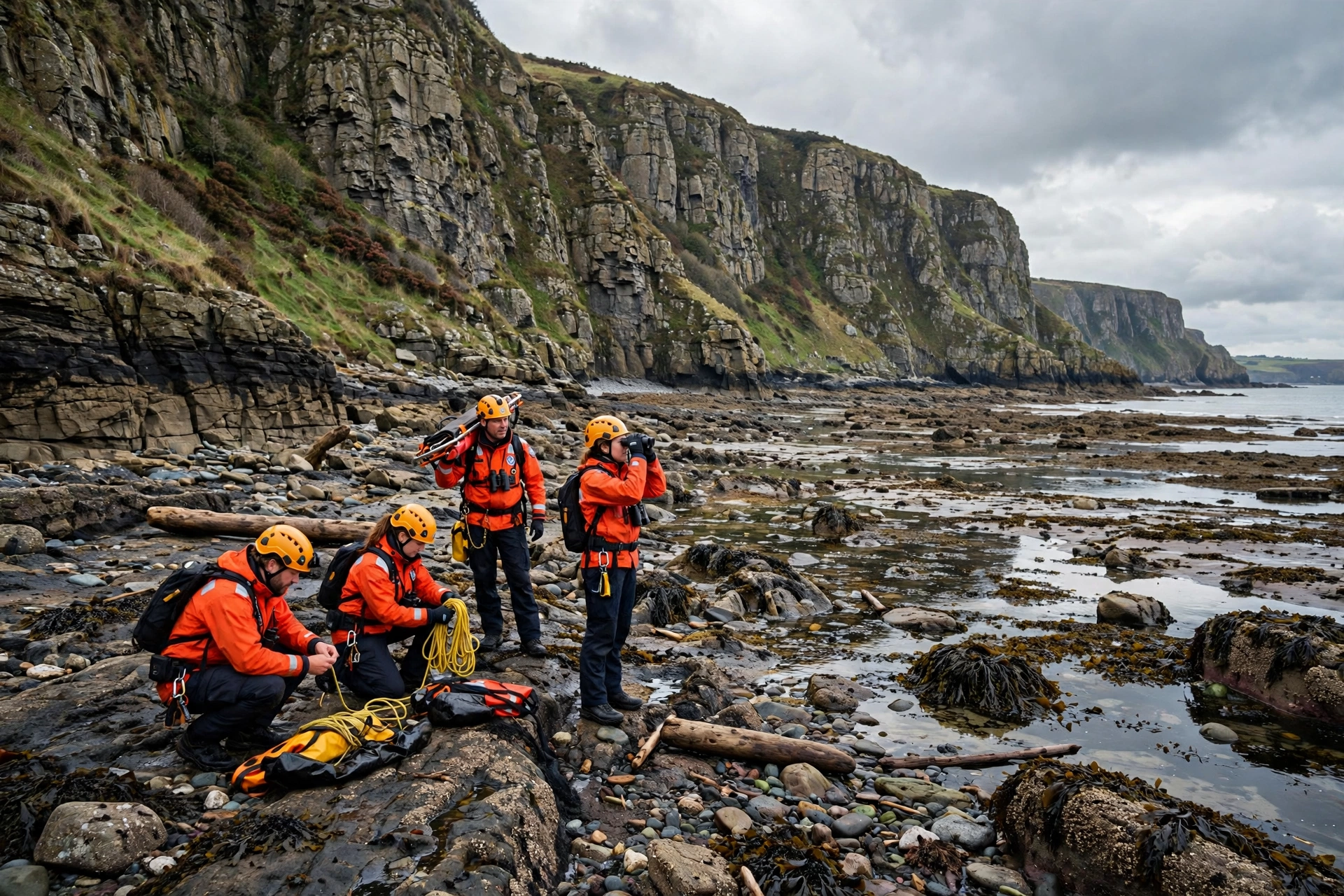
A helmet for coastguards is a protective safety helmet worn to guard the head during rescues on cliffs, beaches, and the shoreline, and in general terms a well-fitting climbing-style or water rescue helmet is what coastguard teams use. Coastguard work takes place where the land meets the sea, on slippery rocks, steep cliffs, and muddy shores, often in bad weather and in the dark, so head protection is an essential part of the kit.
Coastguards rescue people who get cut off by the tide, stuck on cliffs, or in trouble in the water. The work can mean climbing down a cliff face, wading through mud, or searching a beach in a storm. A helmet will not make that work safe on its own, but it protects the head from falling rocks, hard knocks, and slips on wet ground, and it is worn alongside the rest of the team’s safety kit.
What do coastguards do?
Coastguards are the rescue service for the coast, the cliffs, and the shoreline. They are called out when someone is cut off by the tide, stuck on a cliff, lost on the beach, or in trouble in the water. They also help with searches for missing people along the coast and support other emergency services during incidents at sea.
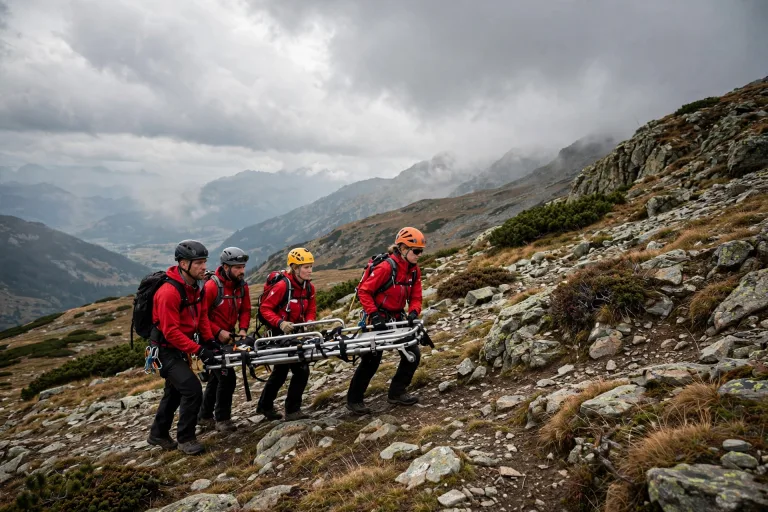
The work is varied and often urgent. One call might be a family cut off by a rising tide, another might be a climber stuck partway down a cliff, and another might be a search along a muddy estuary in the dark. Coastguard teams use ropes, stretchers, boats, and helicopters, and they work in all weathers, often at night, on ground that is slippery, steep, and exposed.
What kind of helmet do coastguards wear?
In general terms, coastguards wear a climbing-style helmet for cliff work, and a water rescue helmet for work in or near the water. A climbing helmet is a light, hard-shell helmet that protects against falling rocks and knocks from above, while a water helmet is designed to drain quickly and to protect the head in moving water.
Many coastguard teams use a helmet with a mount for a head torch, because so much of the work happens in the dark, and some use a helmet in a bright colour or with reflective markings so team members can be seen easily. The helmet should fit well, fasten securely, and be in good condition, with no cracks or damage to the shell or the lining inside.
Why do coastguards need a helmet?
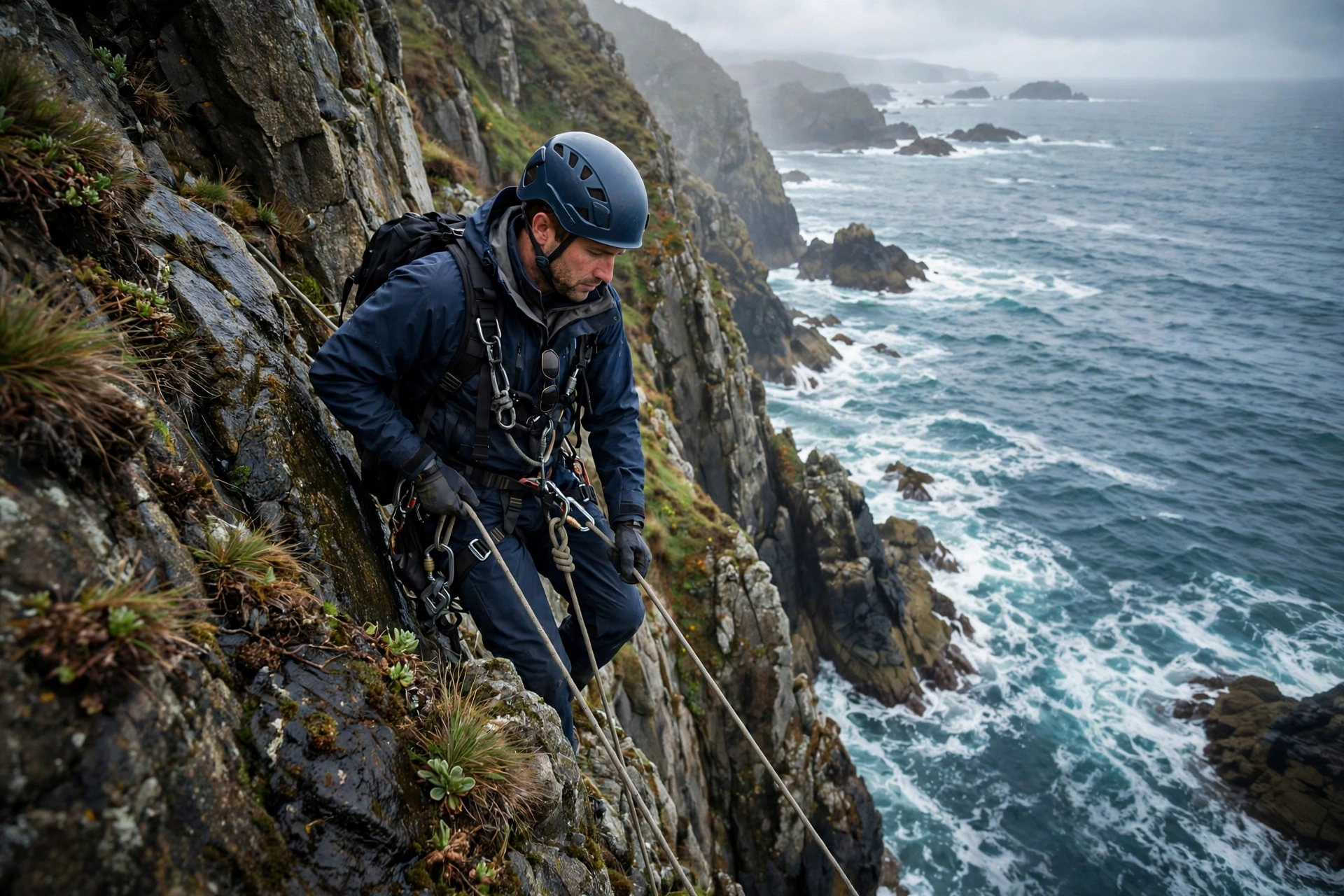
A helmet protects a coastguard from falling rocks, which are one of the biggest risks on a cliff. Loose rock can fall from above without warning, especially after rain or in windy weather, and a stone falling from a cliff can cause a serious head injury. The helmet takes the force of that kind of knock.
The helmet also protects against slips and falls on wet, slippery ground. Rocks, mud, and seaweed are treacherous underfoot, and a coastguard carrying a stretcher or climbing down a cliff can easily slip. In general terms, the helmet is one part of a system of safety that also includes ropes, lifejackets, good boots, and careful teamwork.
What features matter in a coastguard helmet?
Fit and stability matter most of all. The helmet must stay in place when the coastguard is climbing, bending, wading, or carrying a stretcher, so a good chin strap and an adjustable fit system at the back are essential. A mount for a head torch is very useful, because so much coastguard work happens at night or in poor light.
Ventilation matters too, because rescue work is hard physical work and coastguards get warm even in cold, wet weather. A helmet that can be rinsed clean after work in salt water will last longer, and a lining that can be removed and washed is a help. Some helmets include a system designed to reduce rotational forces in a fall, such as MIPS, and it is worth asking about when a team chooses its kit.
How should a coastguard helmet fit?
A coastguard helmet should sit level on the head, low enough to cover the forehead, and snug all round without pressing painfully on the temples. It should not tip forward over the eyes or slide back when you nod, and it should stay in place when you shake your head gently from side to side.
The chin strap should be snug enough that you can fit only a finger or two between the strap and your chin, and the fit system at the back should be adjusted so the helmet stays put during hard work. Try the helmet on with a head torch fitted, and with any hood or warm hat you might wear underneath in winter, and make sure nothing pushes it out of position.
How do you look after a coastguard helmet?
After a call-out, the helmet will often be covered in salt water, mud, and sand, so give it a proper clean before you put it away. Rinse it in fresh water, wipe the shell with a damp cloth, and wash the lining following the maker’s instructions. Let the helmet dry naturally, away from direct heat, and do not leave it in a hot vehicle or next to a radiator, as heat can damage the materials inside.
Check the helmet regularly for cracks, dents, or loose parts, and check the chin strap and buckle for wear. Salt water can wear fittings out over time, so pay attention to the buckle and the adjustment system. In general terms, a helmet that has taken a hard knock should be replaced, even if it looks fine on the outside, because the inner lining may have been compressed. When in doubt, replace it.
Do coastguards need to wear a helmet?
Yes, in general terms a helmet is essential for coastguard work. It protects the team from falling rocks, slips on wet ground, and knocks during cliff and shoreline rescues, in conditions where a head injury would be very serious.
What kind of helmet is best for coastguards?
A light climbing-style helmet is the usual choice for cliff work, and a water rescue helmet for work in or near the water. A secure chin strap and a head torch mount are both very useful.
When should a coastguard helmet be replaced?
Replace it after a hard knock or a bad fall, if the shell or lining is damaged, or if the strap and buckle are worn. Salt water and hard use wear a helmet out, so teams usually replace them on a regular schedule as well.

Olivia
Writer at Helmet Today, covering helmet reviews, fit and riding safety.