We may earn a commission when you buy through links on this page, at no extra cost to you. Learn more
A helmet for asbestos removal workers is a protective safety helmet worn as part of the protective kit used when removing asbestos, and in general terms asbestos work is specialist work that should only be done by trained people with the right equipment and controls in place. Asbestos is a hazardous material, and removing it is not a job for an untrained person or a quick do-it-yourself task, so the helmet is only one part of a much bigger set of safety measures.
Asbestos was used for many years in building materials such as insulation, roofing, floor tiles, and pipe lagging, and it can still be found in older buildings today. When asbestos materials are disturbed, they can release tiny fibres into the air, and breathing those fibres in is harmful to health. That is why removal work is done by trained workers, wearing protective clothing and breathing protection, and following strict working methods.
What is asbestos removal work?
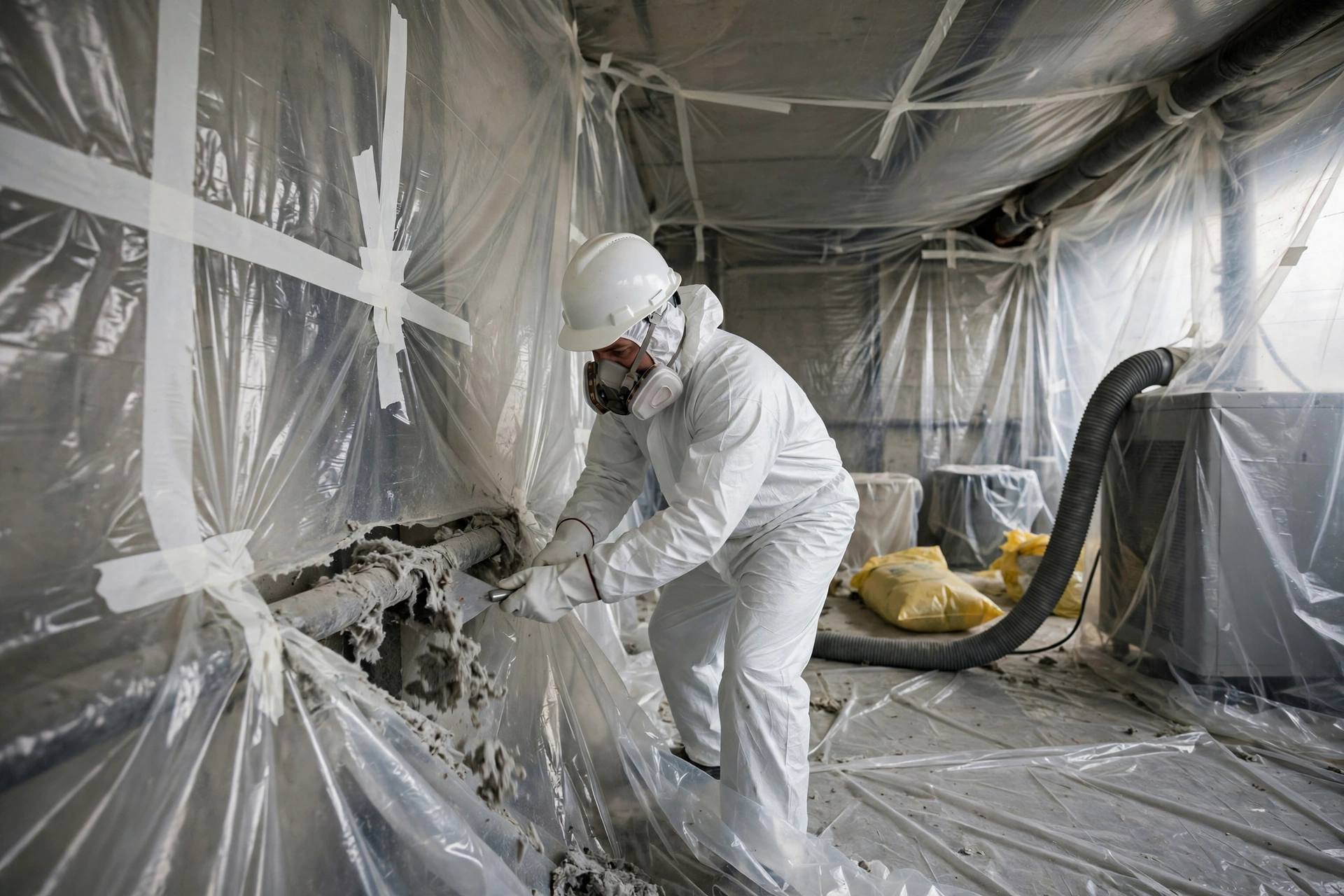
Asbestos removal work means taking out building materials that contain asbestos, in a controlled and careful way, so that the fibres are not released into the air. The work is usually done inside a sealed-off area, with the material kept damp, wrapped carefully, and disposed of through the proper channels.
Before any removal starts, the asbestos is surveyed and identified, and a plan is made for how the work will be done safely. The area is sealed, warning signs are put up, and only trained workers in the right protective kit are allowed in. In general terms, the work is slow and careful, because rushing it would put the workers and everyone nearby at risk.
What protective kit do asbestos removal workers wear?
Asbestos removal workers wear a full set of protective kit, including a disposable coverall suit, gloves, and breathing protection, usually a mask or a powered respirator that filters the air they breathe. Eye protection is also worn, and the kit is put on and taken off in a set order, so that fibres are not carried out of the work area on clothing or skin.
The helmet is worn as part of this kit when there is a risk of knocks to the head, for example when working on a building site, in a roof space, or around scaffolding. In general terms, the helmet is a standard safety helmet, light and well-fitting, that can be worn comfortably with the rest of the kit. It should fit well, fasten securely, and be in good condition.
What kind of helmet do asbestos removal workers wear?
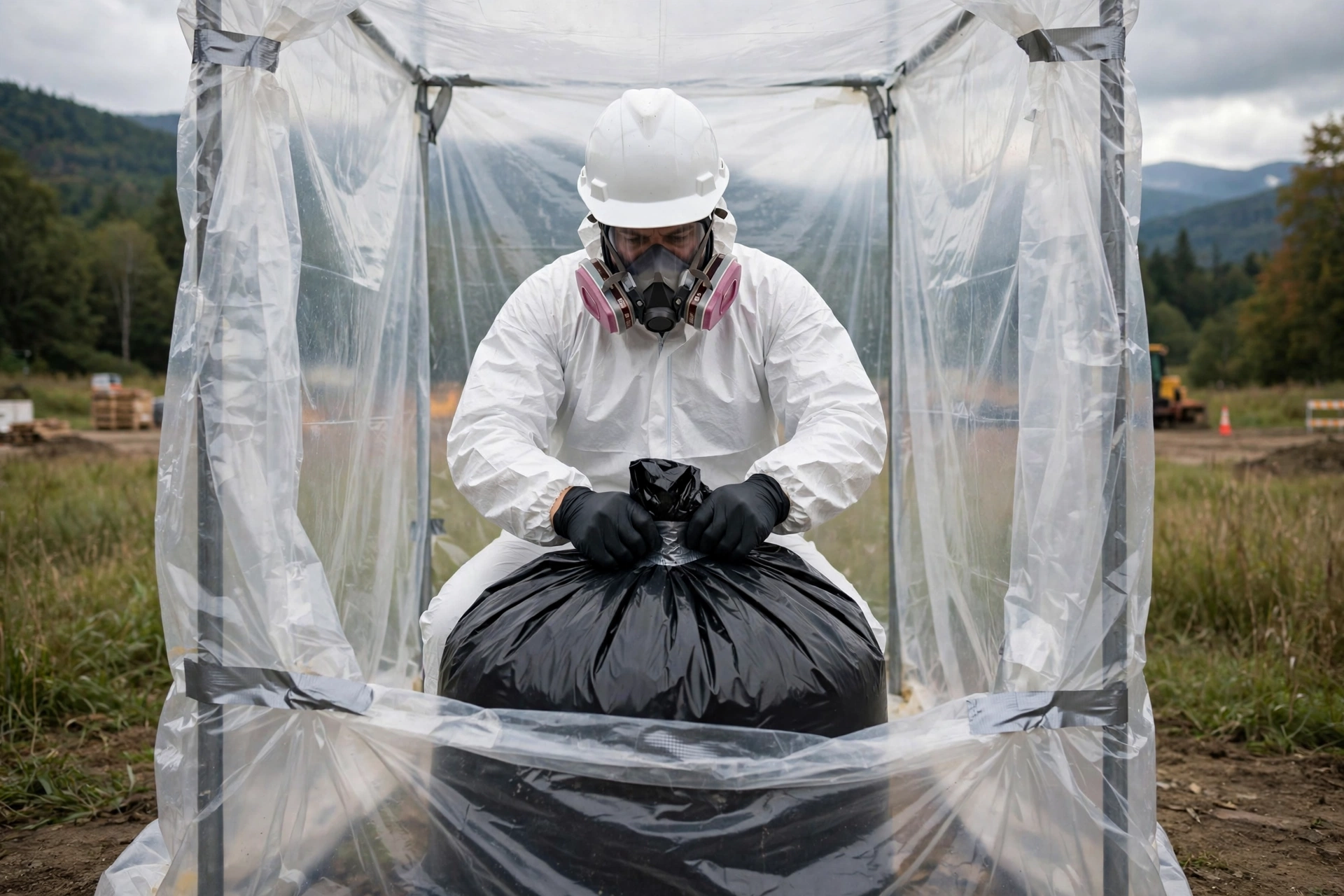
In general terms, asbestos removal workers wear a standard safety helmet when the work calls for head protection, the same kind of hard hat used on building sites. A light, well-ventilated helmet suits the work, because the full protective suit is already hot to wear, and the worker will get warm quickly.
The helmet needs to fit well with the breathing protection, and it must not push the mask out of place or break its seal against the face. Some workers wear a helmet with a mount for a head torch for work in dark roof spaces or basements. Whatever style is used, the helmet should be checked before each job, and it should be cleaned or disposed of following the team’s own procedures for contaminated kit.
How should an asbestos removal helmet fit?
A helmet for asbestos removal work should sit level on the head, low enough to cover the forehead, and snug all round without pressing painfully on the temples. It should not tip forward over the eyes or slide back when you nod, and it should stay in place when you shake your head gently from side to side.
The chin strap should be snug enough that you can fit only a finger or two between the strap and your chin, and the fit system at the back should be adjusted so the helmet stays put. Most importantly, the helmet must be tried on together with the breathing protection, because the mask seal matters more than anything. If the helmet moves the mask or makes it leak, the fit is wrong and the combination should be changed. Some helmets include a system designed to reduce rotational forces in a fall, such as MIPS, and it is worth asking about when a team chooses its kit.
How do you look after a helmet used for asbestos removal?
A helmet used in asbestos removal work needs care, because it may have been in an area where asbestos fibres were present. In general terms, the helmet should be cleaned following the team’s own procedures for contaminated equipment, and if the team says the helmet should be disposed of, it should be disposed of through the proper channels, not thrown away with ordinary waste.
If the helmet is to be kept and reused, it should be wiped down, checked for cracks, dents, or loose parts, and stored away from direct heat. The chin strap and buckle should be checked for wear. In general terms, a helmet that has taken a hard knock should be replaced, even if it looks fine on the outside, because the inner lining may have been compressed. When in doubt, ask the supervisor, and when in doubt, replace it.
Who should do asbestos removal work?
In general terms, asbestos removal work should only be done by trained people who know how to do it safely. It is specialist work, and the people who do it have training in how to identify asbestos, how to set up a safe work area, what protective kit to wear, and how to dispose of the waste properly.
If you think your home or workplace contains asbestos, do not try to remove it yourself. Leave it alone, do not drill into it or break it up, and get advice from a qualified surveyor or a licensed removal company. They can tell you whether the material needs to be removed at all, or whether it can be left safely in place and managed. In general terms, leaving asbestos undisturbed is often the safest option, and removal is only done when it is needed.
Do asbestos removal workers wear a helmet?
Yes, in general terms asbestos removal workers wear a standard safety helmet when there is a risk of knocks to the head, as part of their full protective kit, which also includes a coverall suit, gloves, and breathing protection.
Can anyone remove asbestos?
No, asbestos removal is specialist work that should only be done by trained people with the right equipment and controls. If you think you have asbestos at home, get advice from a qualified surveyor or a licensed removal company.
What should you do if you find asbestos in your home?
Leave it alone, do not drill into it or break it up, and get professional advice. In general terms, undisturbed asbestos is often managed safely in place, and removal is only done when it is needed.

Olivia
Writer at Helmet Today, covering helmet reviews, fit and riding safety.