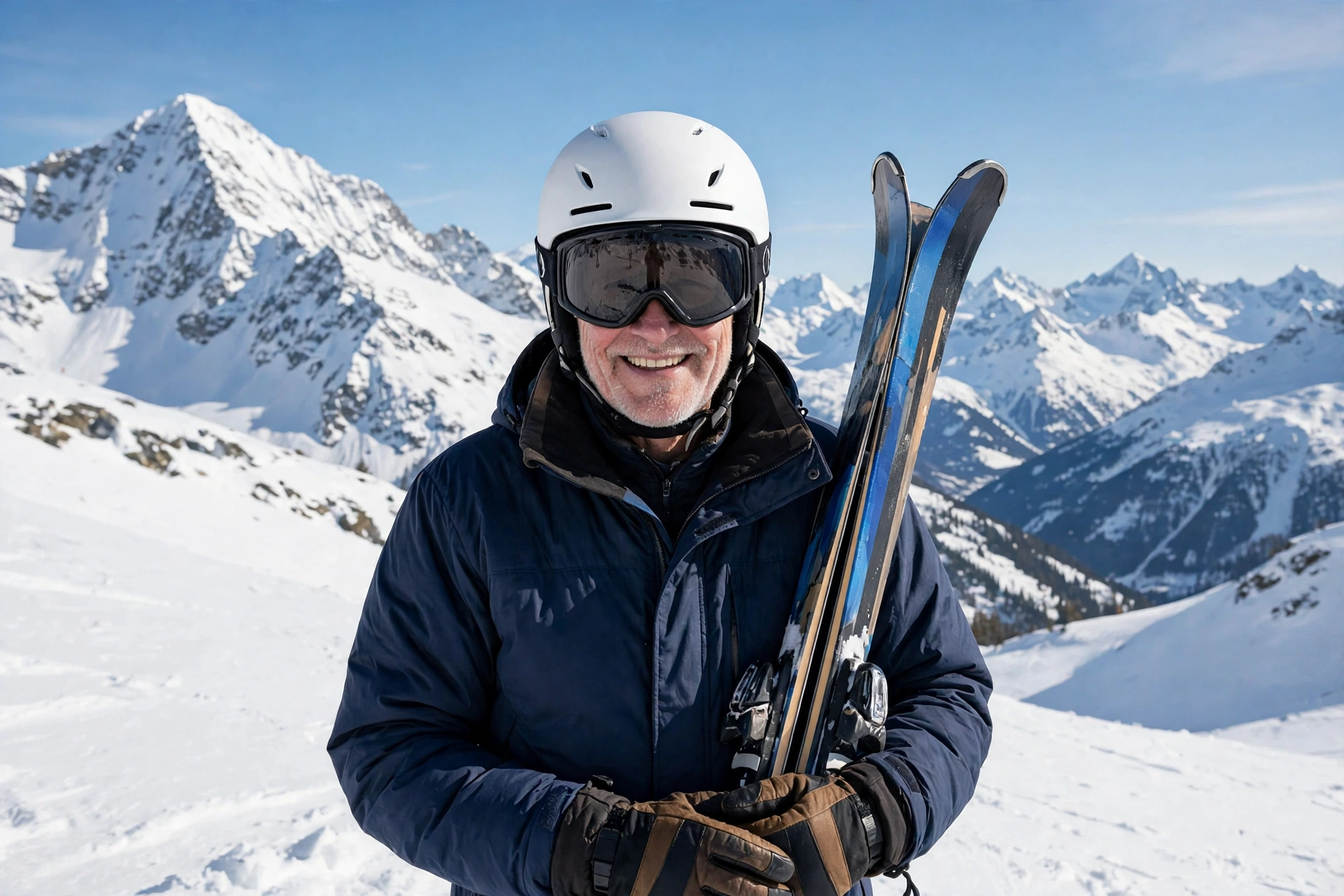
A helmet for senior skiers is a ski helmet chosen for an older skier, with a light weight, a warm and comfortable fit, easy fastenings, and a clear field of vision. In general terms, it is not a separate type of helmet, but a normal ski helmet picked with the needs of an older skier in mind.
Skiing is a sport that many people enjoy well into later life, and a good helmet is part of staying safe on the slopes at any age. As skiers get older, though, their priorities often change. Comfort matters more, a heavy helmet feels heavier than it used to, and fiddly straps or buckles become harder to manage with cold hands or stiff fingers. A helmet that suits a senior skier takes those things into account, without giving up any protection.
What makes a ski helmet suit a senior skier?
Weight is often the first thing senior skiers notice. A light helmet puts less strain on the neck and shoulders over a long day on the slopes, and it is easier to carry when you are walking to the lift. In general terms, a modern ski helmet made with a light shell and a foam lining will feel much lighter than the heavier helmets of years ago, so it is worth trying a few to feel the difference.
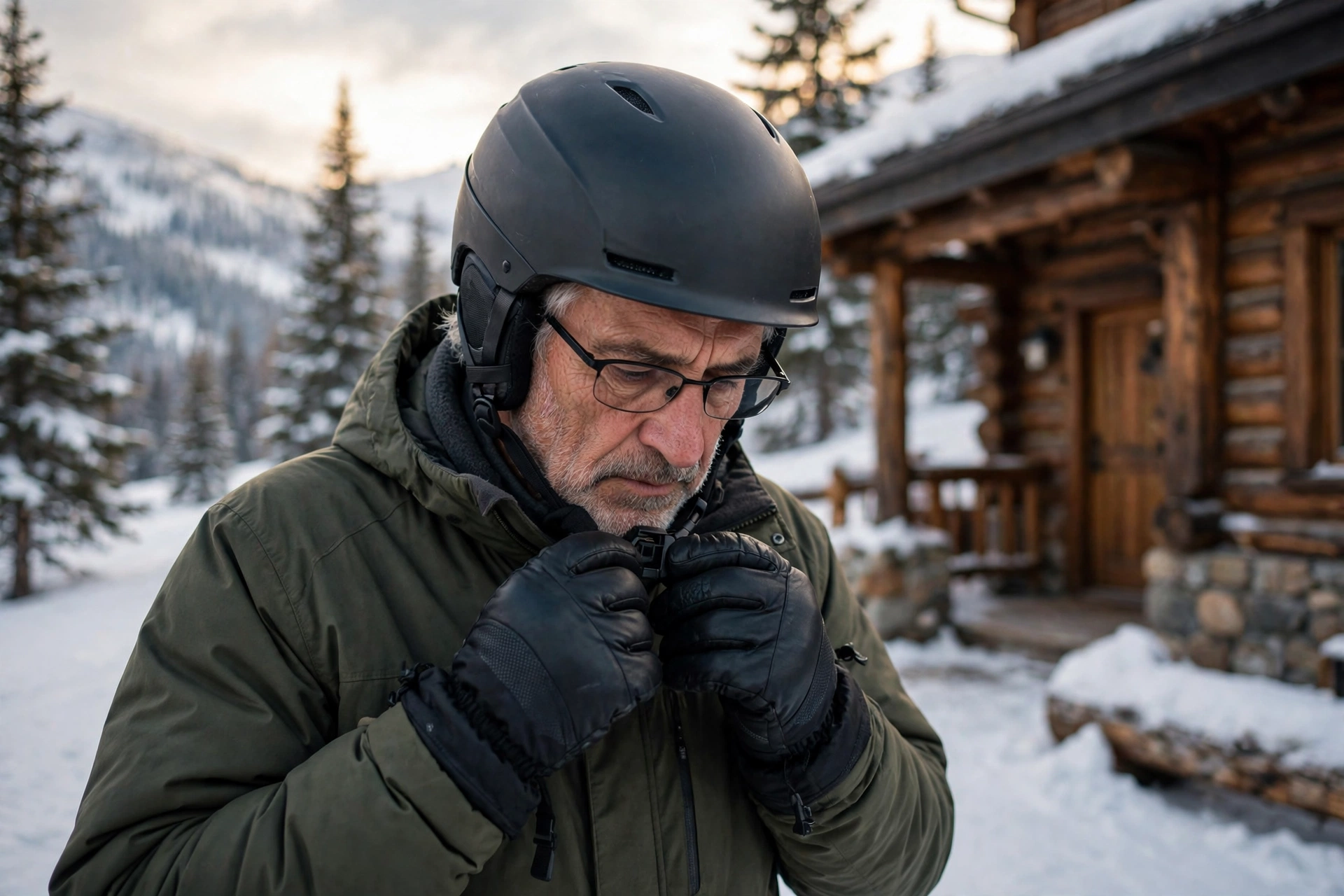
Warmth matters too. Older skiers often feel the cold more, and a helmet that keeps the head warm without overheating makes a long day far more pleasant. Look for ear pads that cover the ears fully, vents that open and close, and a buckle and size dial that work with gloves on.
How should a helmet for a senior skier fit?
A ski helmet should sit level on your head, low enough at the front to cover your forehead, and snug all round without pressing painfully on your temples. It should not tip forward over your eyes or slide back when you nod, and it should stay in place when you shake your head gently from side to side. In general terms, that is the fit to aim for at any age, but it matters even more for older skiers, who may be less able to adjust a poor fit on the move.
Try the helmet on with the goggles you plan to wear, and with any glasses, hearing aid, or head covering you will use underneath. The helmet should sit neatly over the top of the goggles with no gap at the forehead, and it should not press on the arms of your glasses or on a hearing aid. Use the size adjuster to fine-tune the fit, and walk around the shop in the helmet for a few minutes before you decide. A helmet that feels fine for a few seconds can start to press after a while, so give it time. The chin strap should be snug enough that you can fit only a finger or two between the strap and your chin.
What features are worth looking for?
Good vision is one of the most useful features for a senior skier. A helmet with a wide opening at the front gives a clear view to the sides, which helps when checking for other skiers or judging a turn. In general terms, a helmet that sits well with your goggles, with no gap and no pressure on the goggles’ frame, will give you the clearest view and the least fogging.
Ventilation that you can control is also worth having. Vents that open and close let you manage warmth through the day, and they help keep goggles clear by letting moist air out. Look for vents that are easy to work with gloves on, rather than small sliders that need bare fingers. A removable, washable lining is another practical feature, since it keeps the helmet fresh and comfortable over a season of use. Some helmets include a system designed to reduce rotational forces in a fall, such as MIPS, and it is worth asking about when you choose.
Do senior skiers need a different kind of helmet?
In general terms, no. A senior skier does not need a special category of helmet, and there is no separate safety standard for older skiers. The same ski helmets that are sold to skiers of all ages are the right choice, and the difference is in which one you pick, not in the type. A light, warm, well-fitting helmet with easy fastenings is simply a good ski helmet, and it suits a senior skier for the same reasons it suits anyone.
What can change with age is how you ski. Many senior skiers ski at a gentler pace, stick to groomed runs, and take more breaks, and their helmet choice can reflect that. A helmet built for high-speed racing, with a hard, aerodynamic shell and little ventilation, is probably not the best pick for a relaxed day on blue runs. A comfortable all-mountain helmet, with good warmth and a clear view, is usually a better match. One thing worth thinking about is hearing: if you wear hearing aids, make sure the helmet’s ear pads do not press on them or cause feedback, and try the helmet on with the aids in place.
How do you look after a ski helmet?
After a day on the slopes, wipe the shell clean and let the helmet dry naturally at room temperature, away from direct heat. Do not leave it on a radiator or in a hot car, as heat can damage the foam lining inside over time. If the lining is removable, take it out and wash it following the maker’s instructions, and let it dry fully before you put it back.
Store the helmet in a cool, dry place, ideally in its bag or box, so it does not get knocked about in the off-season. Check it before the first trip of each winter for cracks, dents, or loose parts, and check the chin strap, buckle, and size adjuster for wear. In general terms, a helmet that has taken a hard knock in a fall should be replaced, even if it looks fine on the outside, because the inner lining may have been compressed. Also check the fit at the start of each season, since your hair, headwear, and goggles can all change from year to year.
What is the best helmet for a senior skier?
In general terms, the best helmet for a senior skier is a light, warm, well-fitting ski helmet with easy fastenings and a clear view. There is no separate category; comfort and fit are what matter most.
Should senior skiers wear a ski helmet?
Yes, a helmet is sensible for skiers of any age. It protects the head in a fall or a collision, and many ski resorts and ski schools expect skiers to wear one.
Can I wear glasses or hearing aids with a ski helmet?
Yes, as long as the helmet fits over them without pressing. Try the helmet on with your glasses and hearing aids in place before you buy, and look for a model with room at the sides and ear pads that do not cause feedback.

Olivia
Writer at Helmet Today, covering helmet reviews, fit and riding safety.