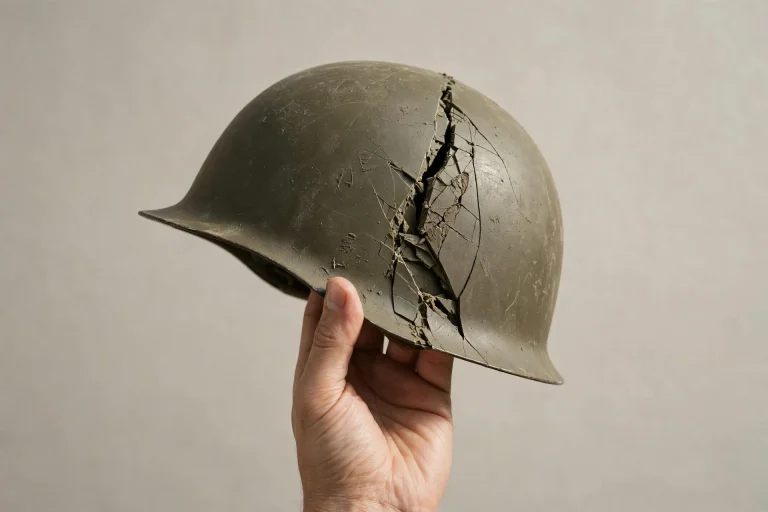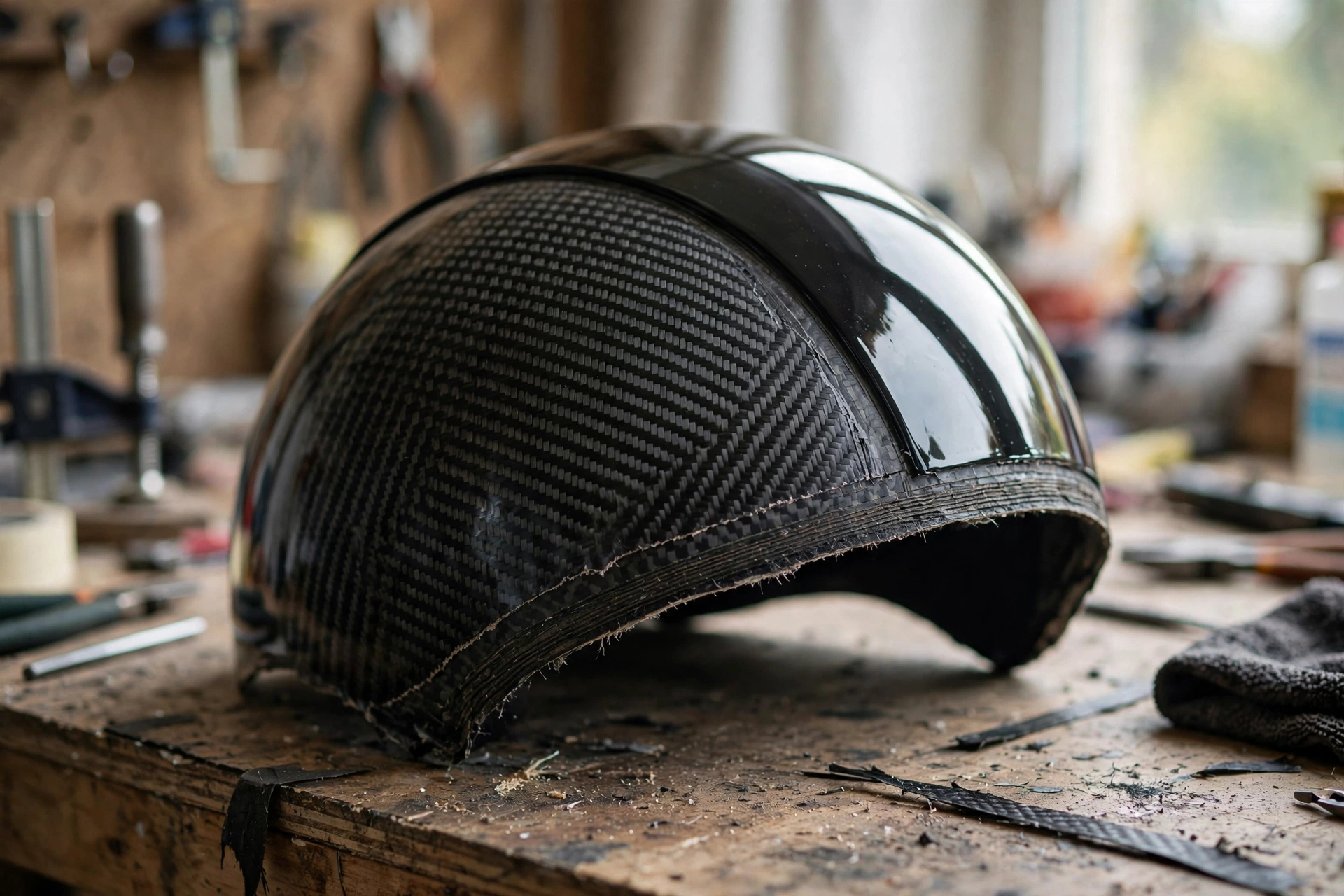
Dyneema in a helmet is a very strong, light fiber used in some helmet shells and liners to add strength without adding much weight, and in general terms it is a man-made fiber that is stronger, weight for weight, than steel. You may see the Dyneema name on the label of a high-end helmet, and it is there because the maker has used the fiber to make part of the helmet tougher while keeping it light.
Dyneema is a brand name for a fiber made from ultra-high molecular weight polyethylene, which is a type of plastic drawn out into very long, very strong threads. Those threads are woven into fabric or mixed into a composite, and the result is a material that can take a lot of force for its weight. In helmets it is used sparingly, usually in the shell or in a reinforcing layer, rather than as the whole helmet.
What is Dyneema made from?
Dyneema is made from ultra-high molecular weight polyethylene, a plastic whose molecules are very long chains that line up in the same direction when the fiber is drawn out. That alignment is what gives the fiber its strength, because the long chains share the load evenly when the fiber is pulled, instead of snapping one by one.
The fiber is produced as a fine white thread, which is then woven into cloth or laid into sheets for use in composites. In general terms, the same fiber is used in ropes, in cut-resistant gloves, in body armor, and in sails, because in each of those uses the aim is the same: a lot of strength with very little weight. Helmets borrow the same idea for the shell.
How is Dyneema used in a helmet?
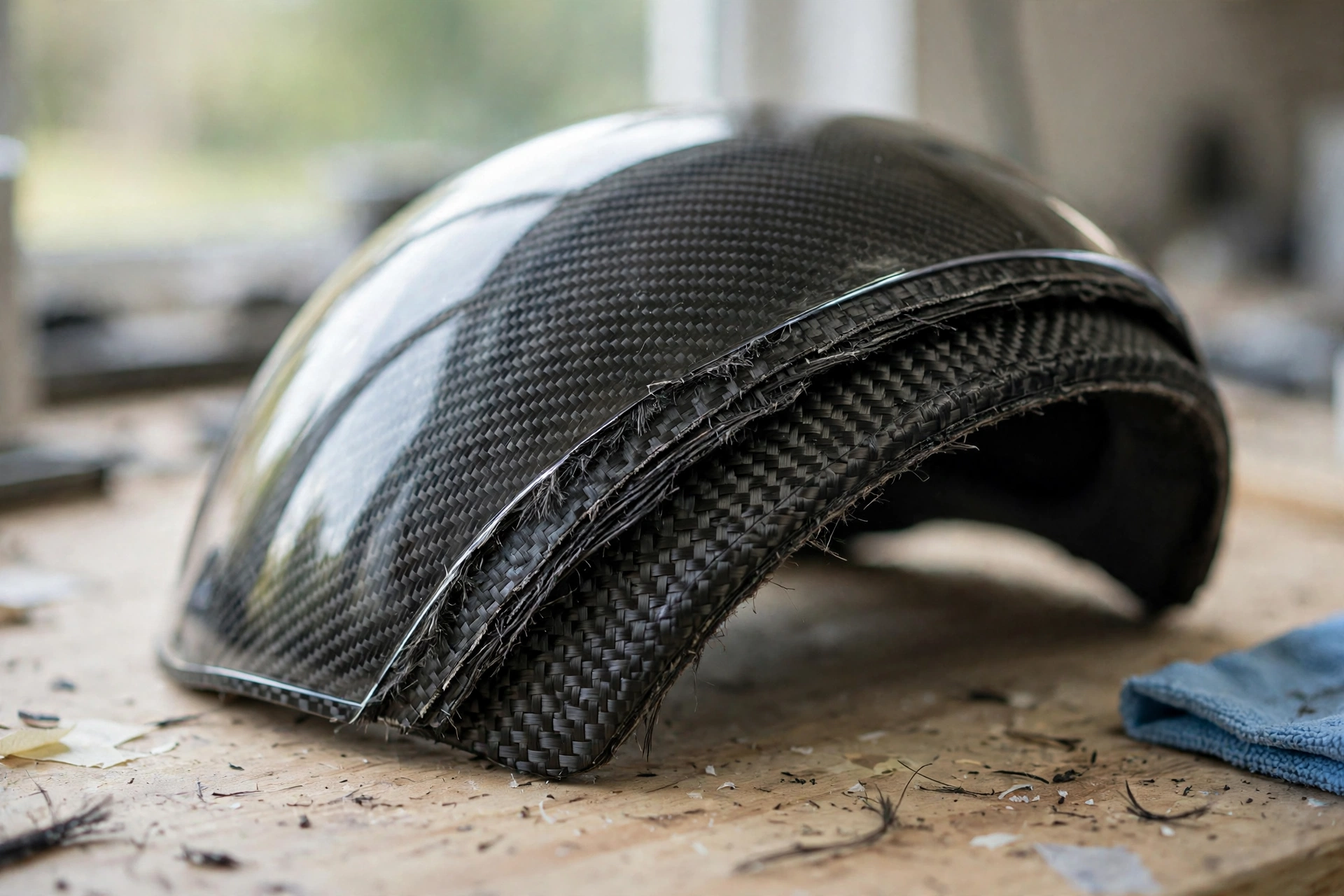
In a helmet, Dyneema is usually used as a layer in the outer shell, or as a reinforcement in the composite that forms the shell. It may be combined with other fibers, such as carbon fiber or fiberglass, to make a shell that is stiff, tough, and light. The Dyneema layer helps the shell hold together and spread the force of an impact over a wider area.
Some helmets also use Dyneema in the liner or in straps, where its strength and light weight are useful, but the shell is the most common place to find it. In general terms, a helmet that uses Dyneema will still have the usual impact-absorbing foam lining inside, because the fiber layer and the foam do different jobs: the shell spreads the force and resists penetration, while the foam absorbs it.
Why do helmet makers use Dyneema?
Helmet makers use Dyneema because it lets them make a shell that is strong without being heavy, and weight matters a great deal in a helmet you wear for hours at a time. A lighter helmet is easier on the neck, it is more comfortable on a long ride, and it is less tiring on the head and shoulders, so a fiber that adds strength without adding weight is very attractive.
Dyneema also resists cuts and abrasion well, which helps the shell survive being scraped along the ground in a slide. In general terms, that toughness is useful in a crash, but it is worth remembering that no shell material makes a helmet unbreakable. The helmet still needs to be replaced after a hard knock, because the foam lining inside may have been compressed even if the shell looks undamaged.
Is a Dyneema helmet stronger than a normal helmet?
A helmet with Dyneema can be stronger and lighter than a similar helmet without it, but the fiber alone does not tell you how well the helmet protects you. What matters is the helmet as a whole: the shell, the foam lining, the fit, and the safety standard the helmet has been tested to. A helmet that meets a recognised standard has passed the tests for that standard, whether or not it contains Dyneema.
Some helmets include a system designed to reduce rotational forces in a fall, such as MIPS, and that is a separate feature from the shell material. In general terms, Dyneema is a sign that the maker has put effort into the shell, but it should not be the only reason you choose a helmet, and a well-fitting standard helmet without Dyneema is still a good helmet.
What are the downsides of Dyneema in a helmet?
The main downside of Dyneema in a helmet is cost, because the fiber is more expensive to make and to work with than fiberglass, so helmets that use it tend to cost more. The shell can also be harder to repair if it is damaged, and in general terms a damaged shell means the helmet should be replaced rather than repaired, whatever it is made from.
Dyneema can also be affected by heat, so a helmet with a Dyneema shell should not be left in a hot car or next to a radiator for long periods, just like any other helmet. The fiber itself is very strong, but the resins that hold it in the composite can soften with heat, so keeping the helmet out of extreme heat helps it last longer and keeps the shell in good condition.
How do you look after a helmet with Dyneema?
Look after a helmet with Dyneema in the same way as any other helmet: wipe the shell clean with a soft cloth, let it dry naturally away from direct heat, and wash the removable lining following the maker’s instructions. Do not use harsh solvents on the shell, because they can damage the finish and the materials underneath.
Check the helmet regularly for cracks, dents, or loose parts, and check the chin strap and buckle for wear. In general terms, a helmet that has taken a hard knock in a fall should be replaced, even if the Dyneema shell looks fine on the outside, because the inner lining may have been compressed and may not protect you properly a second time.
What is Dyneema in a helmet?
Dyneema in a helmet is a very strong, light fiber used in the shell or in a reinforcing layer, and in general terms it adds strength and toughness without adding much weight.
Is Dyneema stronger than steel?
Weight for weight, Dyneema fiber is stronger than steel, which is why it is used where strength and low weight both matter, including in some helmet shells.
Do I need a Dyneema helmet?
Not necessarily. A well-fitting helmet that meets a recognised safety standard is a good choice, and Dyneema is an extra that can make the shell stronger and lighter rather than a must-have.

Olivia
Writer at Helmet Today, covering helmet reviews, fit and riding safety.