A helmet leaves a red mark on your forehead when it presses too firmly on one spot, and in general terms the cause is usually a fit that is too tight, a front pad pressing on the skin, or a helmet that sits too low. The mark is usually harmless and fades within an hour or so, but if it keeps happening, or if it hurts, it is a sign that something about the fit needs adjusting.
Most riders have seen this mark at least once: a pink or red line across the forehead after a ride, right where the front of the helmet sat. It is common, it is usually nothing to worry about, and it is often easy to fix.
Why does a helmet press on your forehead?
A helmet is meant to fit snugly, because a loose helmet can shift or come off in a fall. But snug should not mean painful. If the helmet is a size too small, it will squeeze the head all round, and the forehead often shows the pressure first. The front pad can also press harder than the rest of the helmet if the shape does not match your head.
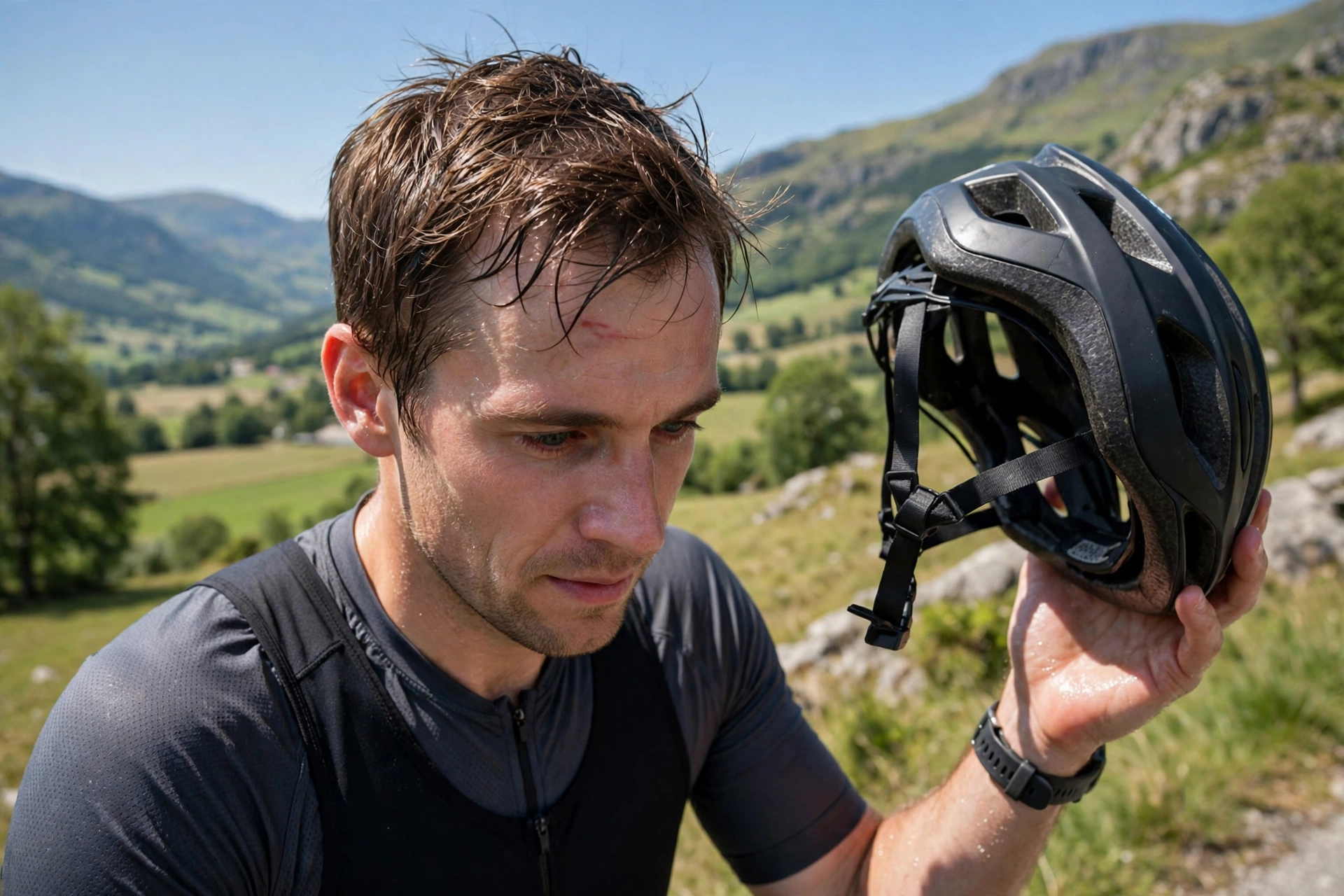
Heads come in different shapes. Some are rounder, some are longer front to back, and a helmet designed for one shape can press on the forehead of the other. That is why two helmets in the same size can feel very different. Sweat and heat can make the mark worse, because damp skin marks more easily, and a long ride in hot weather will often leave a clearer line than a short ride in the cool.
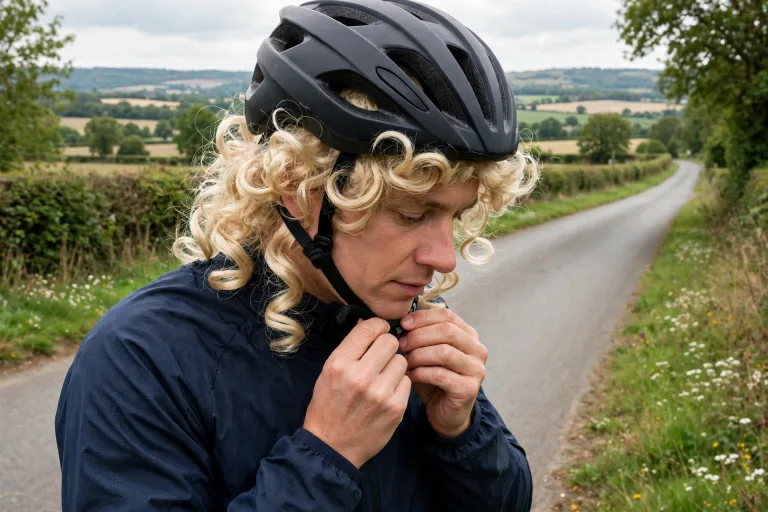
The way you wear the helmet matters too. A helmet worn too low puts the front edge and the front pad hard against the skin, and a helmet tilted forward does the same. In general terms, the front of the helmet should sit just above the eyebrows, level all round, not tipped down onto the brow.
Is a red mark on your forehead something to worry about?
In general terms, a red mark that fades within an hour or so is not a cause for worry. It is the skin’s normal response to pressure, much like the mark a tight hat or a pair of goggles can leave. It usually goes away on its own, and it does not mean the helmet has harmed you.
There are times to take it more seriously. If the mark is painful, if it stays for many hours, if the skin breaks or blisters, or if the same spot becomes sore ride after ride, then the fit needs fixing. Repeated pressure on the same spot can make the skin tender and sore, and a helmet that hurts is one you will be tempted to leave at home, which is a worse outcome than a red mark.
If the mark comes with a headache, dizziness, or a feeling of pressure that does not ease when you take the helmet off, stop and take a break. In general terms, a helmet should feel comfortable enough to forget about while you ride, and if it does not, it is worth sorting out before your next long ride.
How can you stop a helmet leaving a red mark?
The first step is to check the size. Measure around your head just above the eyebrows and compare it with the maker’s size guide. If you are between sizes, try both. A helmet that is one size up, adjusted with the fit dial or with thicker pads, often fits better than a smaller helmet squeezed onto your head.
Next, check the fit system. Most helmets have a dial or cradle at the back that tightens the fit. Loosen it, put the helmet on level, then tighten it just enough that the helmet stays in place when you shake your head gently. The chin strap should be snug, with room for a finger or two under it.
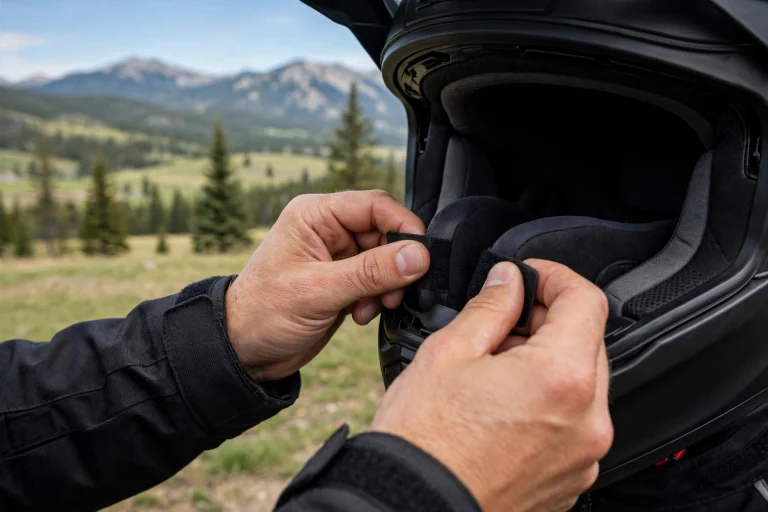
Then look at the padding. Many helmets come with pads of different thicknesses, and swapping the front pad for a thinner one can ease the pressure on the forehead. Some riders also move the pads slightly, or add a thin pad where the helmet presses. Check whether the pads are clean and in good shape: flat, worn pads can bunch up and press harder in one spot.
Finally, try a different shape. If your head is longer front to back, look for a helmet described as suiting a longer oval shape. If your head is rounder, look for one that suits a rounder shape. Trying helmets on in a shop, with your hair as you normally wear it, is the best way to find one that fits without pressing. A helmet with a system designed to reduce rotational forces in a fall, such as MIPS, is worth considering too, but only after the basic fit is right.
What if the red mark keeps coming back?
If you have tried a different size, adjusted the fit, and changed the pads, and the mark still appears on every ride, the helmet may simply be the wrong shape for your head. No amount of adjusting will fix a shape mismatch, and it is better to change the helmet than to keep riding in discomfort.
It can also help to check what you wear under the helmet. A thick cap or a headband can change how the helmet sits and push the front pad harder against the forehead. A thin skull cap or a sweatband made for cycling usually works better.
Some riders find that a helmet with a wider front pad, or a pad that spreads the pressure more evenly, leaves less of a mark. Others find that a helmet with more adjustment in the fit system helps, because it holds the helmet in place without needing the front to be so tight.
When should you get advice about a helmet mark?
Most red marks need no advice at all: they fade, and a small adjustment fixes the cause. But there are times when it is worth asking someone with experience, such as staff in a cycle shop, to look at the fit. They can watch you put the helmet on, check the size, and suggest a different model if the shape is wrong.
It is also worth getting advice if the skin on your forehead is broken, blistered, or sore for days, or if the mark appears even when the helmet feels loose. In general terms, that could mean the skin is reacting to the pad material, or that something else is going on. A shop can suggest different pads, and if the skin does not settle, a clinician can advise on the skin itself.
Why does my helmet leave a red mark on my forehead?
In general terms, it is pressure from a helmet that is too tight, the wrong shape for your head, or sitting too low, with the front pad pressing on one spot while you ride.
Is a red mark from a helmet dangerous?
In general terms, no. A mark that fades within an hour or so is a normal response to pressure. If it is painful, lasts many hours, or the skin breaks, the fit needs fixing and you should get advice.
How do I stop my helmet leaving a mark?
Check the size, wear the helmet level just above the eyebrows, loosen the fit dial so it is snug but not tight, and try a thinner front pad. If the mark keeps coming back, try a helmet with a different shape.

Olivia
Writer at Helmet Today, covering helmet reviews, fit and riding safety.