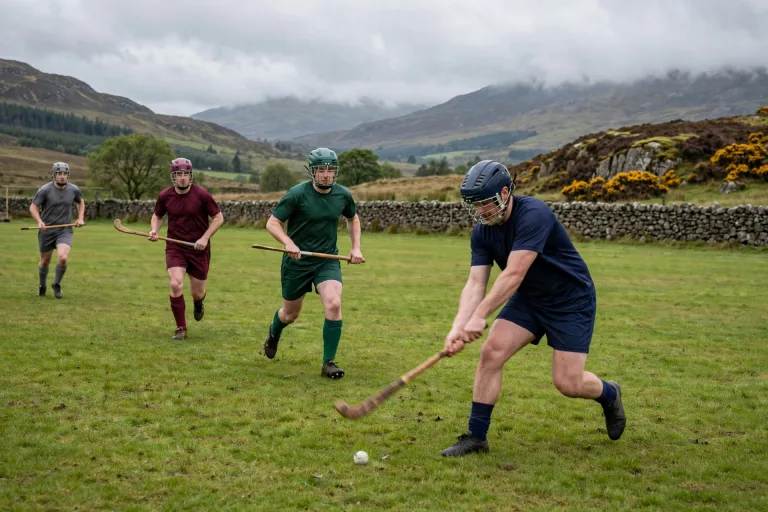
A helmet for hurling players is a protective helmet worn in the Irish sport of hurling to guard the head and face from the hurley stick and the sliotar ball, and in general terms it is a hard shell helmet with a faceguard that covers the front of the face. Hurling is a fast field sport played with a wooden stick called a hurley and a small hard ball called a sliotar, and the ball and sticks move quickly in close play, so head protection is a sensible part of a player’s kit.
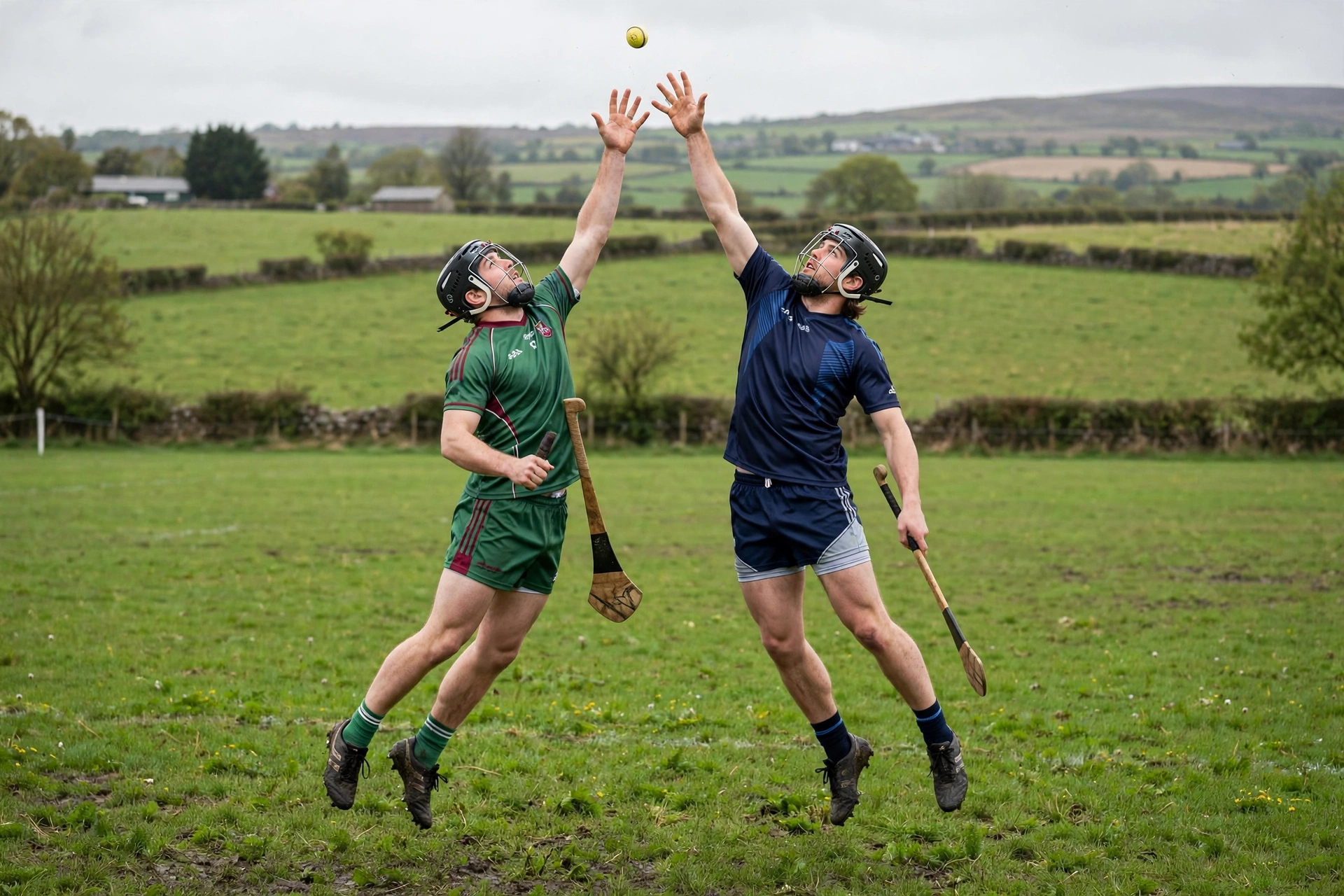
Hurling is one of the fastest field sports in the world, with players running at full speed, swinging a hurley, and striking a hard ball that can travel through the air at a great pace. Players jump for high balls, challenge for possession in a crowded space, and can be struck by a stray hurley or a ball without warning. A helmet will not stop every injury, but it can reduce the force of a knock to the head and protect the face from a direct hit. In general terms, that is why helmets are now a familiar sight in hurling at every level, from school games to senior matches.
What is hurling?
Hurling is a traditional Irish field sport played between two teams of fifteen players on a large grass pitch, with goals at each end. Players use a hurley, a wooden stick with a flat blade, to hit, catch, and carry a sliotar, a small leather ball a little larger than a tennis ball. A player can strike the ball in the air or on the ground, run with it balanced on the hurley, and pass it to a team-mate by hand or with the stick.
Points are scored by hitting the ball over the crossbar or into the goal under it, and the game is played at a very fast pace, with players tackling, blocking, and contesting high balls. Because the hurley is swung with force and the sliotar is hard, players are close to swinging sticks and a fast-moving ball for much of the game. That speed and closeness is what makes hurling so exciting to watch, and it is also what makes head protection worth thinking about for anyone who plays it.
What kind of helmet do hurling players wear?
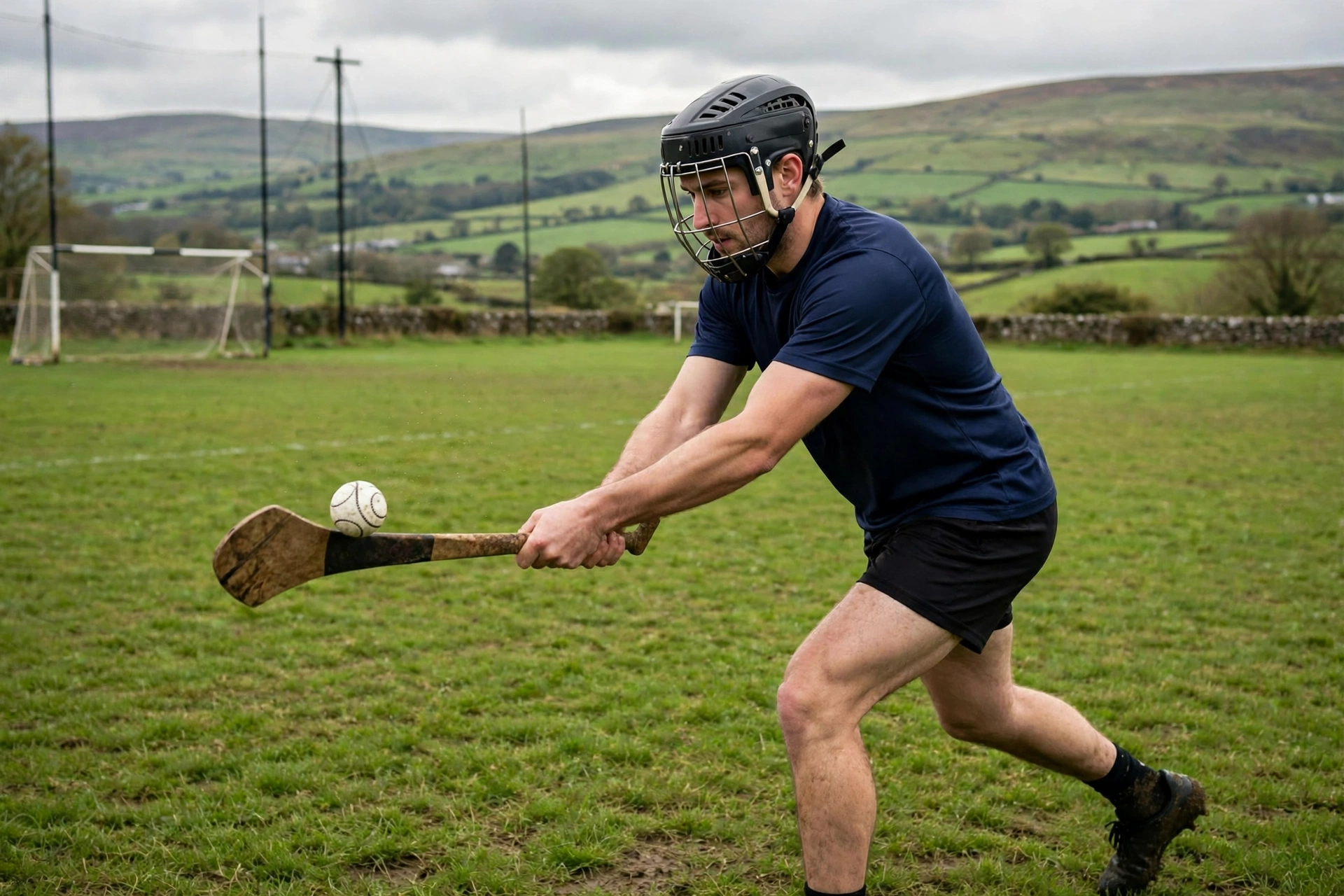
In general terms, hurling players wear a purpose-made hurling helmet, which is a hard plastic shell that covers the top, sides, and back of the head, with a metal faceguard across the front. The faceguard is made from bars that guard the eyes, nose, mouth, and chin, while still letting the player see the ball and breathe freely. The shell is usually a single piece, with padding inside and a chin strap to keep it in place.
Hurling helmets are designed for the specific risks of the game. The shell protects against a blow from a hurley or a strike from a sliotar, and the faceguard stops a stick or ball from hitting the face directly. They are lighter than many other sports helmets, because a hurling player needs to run hard for a full match, and they have vents to let air flow through and keep the player cool. Some models have extra padding around the ears and the back of the head, which some players prefer for the close challenges that happen in the game.
How should a helmet for hurling fit?
A helmet for hurling should sit level on the head, low enough at the front to cover the forehead, and snug all round without pressing painfully on the temples. It should not tip forward over the eyes or slide back when the player nods, and it should stay in place when the player shakes their head gently from side to side or jumps up for a high ball. The faceguard should sit close to the face without touching the nose, and the player should be able to see clearly in every direction, including upward when the ball is in the air.
The chin strap should be snug enough that you can fit only a finger or two between the strap and the chin, and it should be fastened for every game and training session. Young players grow quickly, so parents and coaches should check the fit regularly and move up a size when the helmet feels tight or the player has outgrown it.
What features matter in a hurling helmet?
Visibility matters a great deal in hurling, because a player needs to track a fast ball in the air and watch the play around them. Look for a faceguard with bars spaced so that you can see clearly through them, and a shell that does not block your view upward or to the sides. The faceguard should protect the face without making it hard to judge where the ball is, and it should not fog up or collect sweat in a way that blocks the view.
Ventilation matters too, because hurling is a hard-running game and a player will get warm. Look for a helmet with vents that let air flow through, and a lining that can be removed and washed. A comfortable lining also helps the helmet sit well, which matters when you are playing for a full match and need to forget about the helmet and focus on the game. Some helmets include a system designed to reduce rotational forces in a blow, such as MIPS, and it is worth asking about when you choose.
Do hurling players have to wear a helmet?
The safest approach is to check the rules of the competition you play in, and to wear a helmet even if it is not strictly required for your age group or grade. A helmet is a simple piece of kit that protects against a serious injury, and most players find that once they are used to it, they barely notice it during a game. Coaches and parents can help by making helmet-wearing normal from the start, so young players grow up expecting to wear one every time they play.
How do you look after a hurling helmet?
After a match or training session, wipe the shell clean and let the helmet dry naturally, away from direct heat. Do not leave it in a hot car or next to a radiator, as heat can damage the materials inside over time. If the lining is removable, take it out and wash it following the maker’s instructions, and let it dry fully before you put it back. Clean the faceguard too, and check the bars for bends, cracks, or loose fixings.
Do hurling players wear a helmet with a faceguard?
Yes, in general terms a hurling helmet includes a metal faceguard that protects the eyes, nose, mouth, and chin, while still letting the player see the ball and breathe freely during a match.
Can you wear a hurling helmet for camogie?
Yes, camogie players wear the same style of helmet with a faceguard, as the risks from the hurley and the sliotar are similar in both games. Choose a helmet made for hurling or camogie and make sure it fits well.
When should a hurling helmet be replaced?
Replace it if the shell is cracked, the faceguard is bent or loose, the padding is worn out, or the strap and buckle no longer hold securely. A helmet that has protected you in a hard blow has done its job and should not be relied on again if it is damaged.

Olivia
Writer at Helmet Today, covering helmet reviews, fit and riding safety.