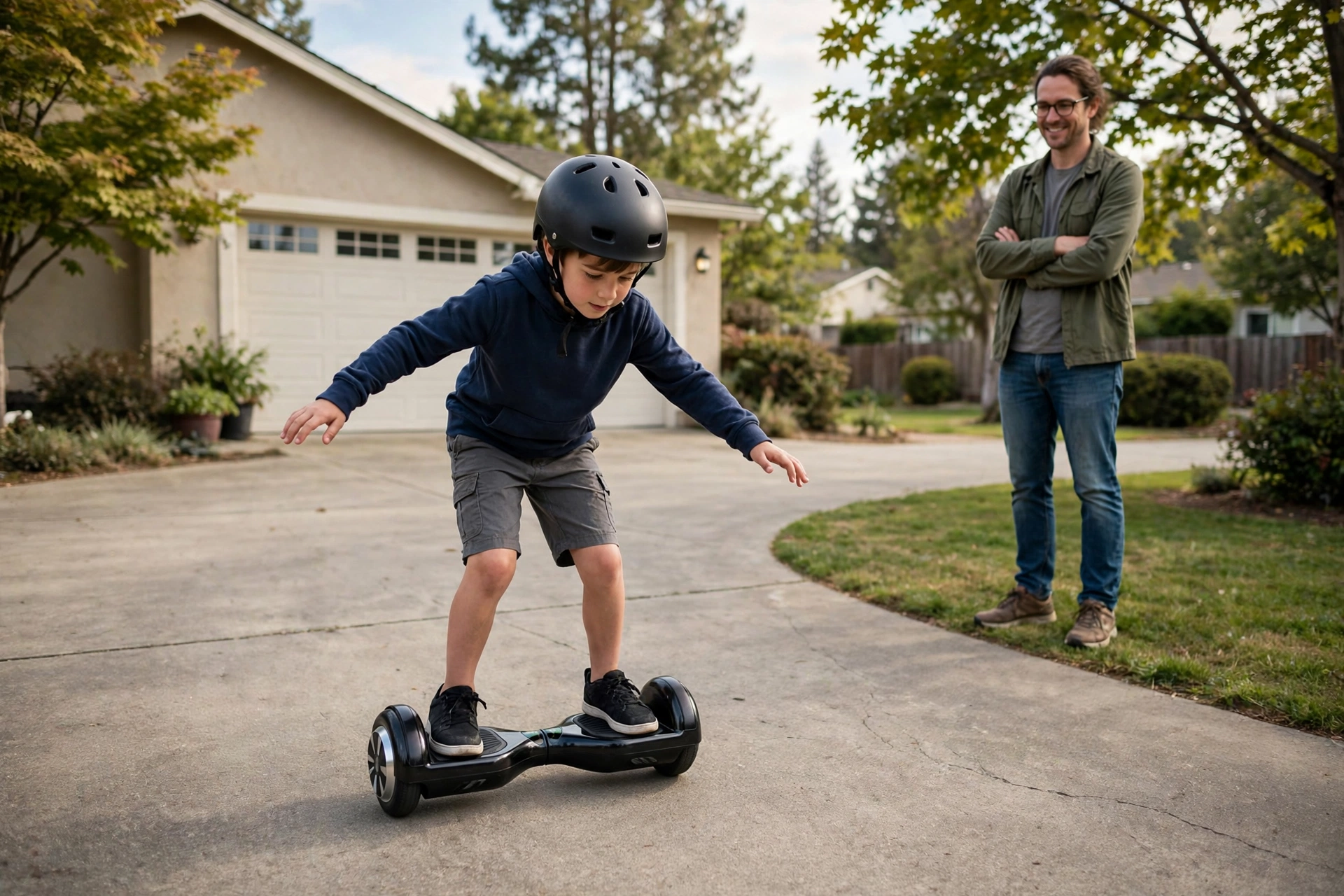
A helmet for hoverboard riders is a protective helmet worn to guard the head while riding a self-balancing hoverboard, and in general terms a well-fitting bicycle or skate-style helmet is what most riders use. A hoverboard is a two-wheeled, self-balancing board that you stand on and steer by shifting your weight, and falls can happen suddenly, so head protection is a sensible part of the kit, especially for beginners and younger riders.
Hoverboards are popular with children, teenagers, and adults, and they are often ridden in driveways, parks, and smooth pavements. The board can speed up quickly, turn sharply, and stop without warning if it hits a bump or runs out of battery, and the rider has nothing to hold on to. A fall can send you forward, backward, or sideways, and your head can hit the ground before you have time to put a hand out. A helmet will not stop a fall from happening, but it can reduce the force of a knock to the head if you come off. In general terms, that is the main reason riders wear one.
What is a hoverboard?
A hoverboard is a battery-powered personal transport device with two wheels, a flat platform for the feet, and a motor that keeps the rider balanced. You lean forward to move, lean back to slow down, and shift your weight to turn. There are no handlebars, no brakes in the usual sense, and no seat, so the rider stands upright and exposed, with nothing between them and the ground.
Most hoverboards are used for fun rather than for long journeys, and they are ridden at modest speeds on smooth, flat surfaces. Even at a modest speed, a fall can cause a serious knock to the head, particularly if the rider is caught by surprise. Children and beginners are more likely to fall, because they are still learning how to balance and how to react when the board tips or stops, and they are also more likely to ride without thinking about the risks.
What kind of helmet do hoverboard riders wear?
In general terms, most hoverboard riders wear a bicycle helmet or a skate-style helmet. A standard bicycle helmet is light and well ventilated, which suits riding outdoors in warm weather. A skate-style helmet covers more of the back and sides of the head, which some riders prefer for the sideways and backward falls that hoverboards can produce, and it is often the choice for younger riders and for those who ride on ramps or uneven ground.
Some riders wear a multi-sport helmet, which is made to be used for several activities, including cycling, skating, and scooting. These helmets are often rounder and cover more of the head than a road cycling helmet, and they can be a good choice for a child who rides a hoverboard as well as a bike or a scooter. Whatever style you choose, the helmet should fit well, fasten securely under the chin, and be in good condition, with no cracks or damage to the shell or the lining inside.
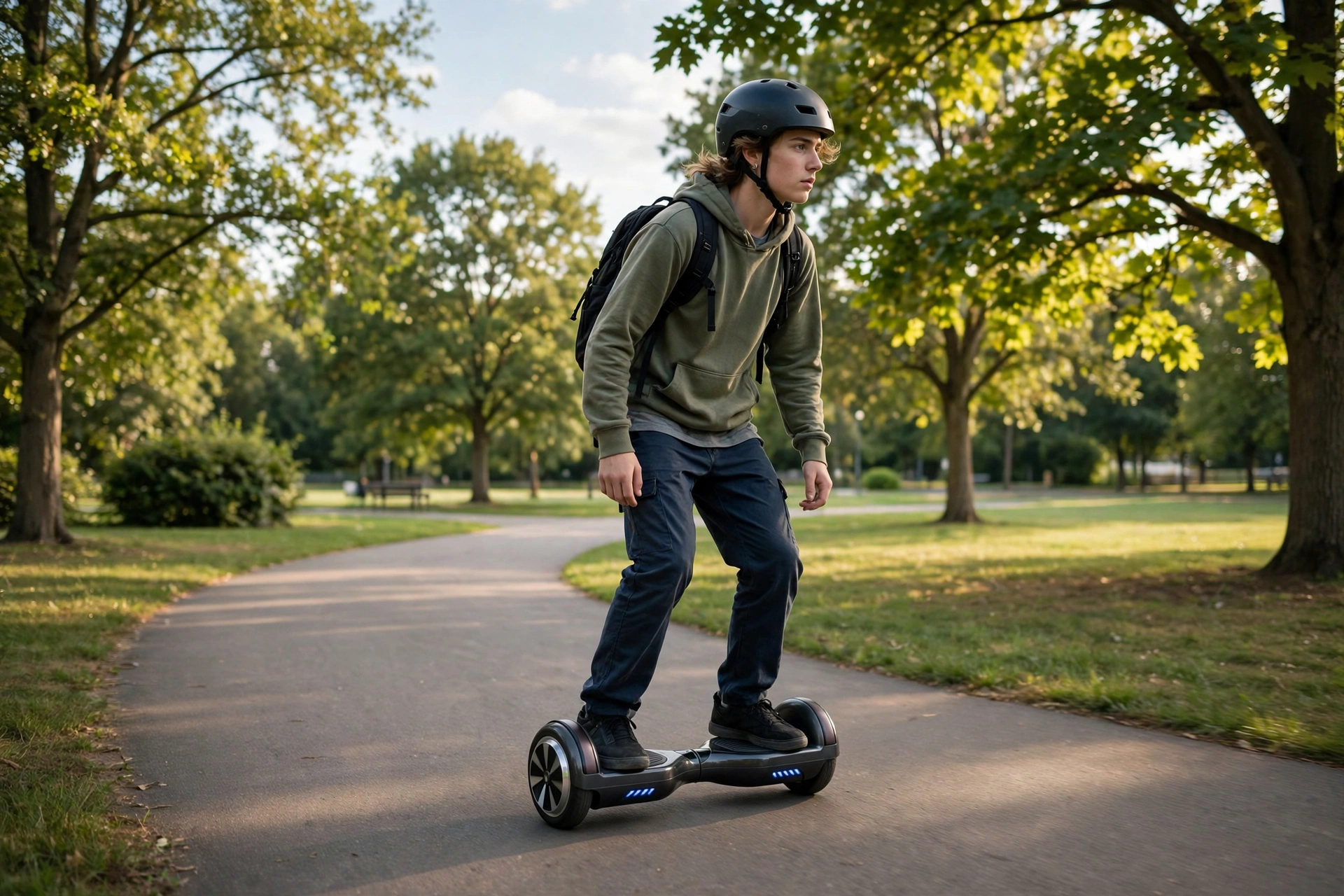
How should a helmet for hoverboard riding fit?
A helmet for hoverboard riding should sit level on your head, low enough at the front to cover your forehead, and snug all round without pressing painfully on your temples. It should not tip forward over your eyes or slide back when you nod, and it should stay in place when you shake your head gently from side to side.
The chin strap should be snug enough that you can fit only a finger or two between the strap and your chin. Check the fit while standing on the hoverboard if you can, because your posture is upright and your head moves as you balance. Try the helmet on with any glasses you plan to wear, and make sure nothing pushes the helmet out of position. For children, check the fit often, as they grow quickly and a helmet that fitted last year may be too small now.
What features matter in a helmet for hoverboard riders?
Coverage matters for hoverboard riders, because falls can send you in any direction, including backwards. A helmet that covers the back and sides of the head gives extra protection, which is one reason skate-style helmets are popular for this activity. Look for a helmet that covers the head well without blocking your view, and that sits low enough at the back to protect the base of the skull.
Ventilation matters too, because balancing on a hoverboard is physical work and you will get warm, especially on a sunny day. Look for a helmet with vents that let air flow through, and a lining that can be removed and washed. A comfortable lining also helps the helmet sit well, which matters when you are riding for a long stretch and need to focus on your balance rather than on an uncomfortable helmet. Some helmets include a system designed to reduce rotational forces in a fall, such as MIPS, and it is worth asking about when you choose.
Where should you ride a hoverboard?
In general terms, hoverboards are best ridden on smooth, flat, traffic-free surfaces, such as a driveway, a park path, or a quiet paved area. Avoid busy roads, steep slopes, and wet or uneven ground, where the board can slip or stop suddenly. Check the surface before you ride, and clear away stones, sticks, and other obstacles that could catch a wheel and throw the rider off.
Beginners should start slowly, on a flat surface with plenty of space around them, and practise stepping on and off, moving forward, turning, and stopping before they try anything faster. It helps to have someone nearby when you are learning, and to wear protective gear beyond a helmet, such as knee pads, elbow pads, and wrist guards, which can protect against scrapes and sprains in a fall. Children should be supervised, and they should ride only where an adult can see them.
How do you look after a hoverboard helmet?
After a ride, wipe the shell clean and let the helmet dry naturally, away from direct heat. Do not leave it in a hot car or next to a radiator, as heat can damage the materials inside over time. If the lining is removable, take it out and wash it following the maker’s instructions, and let it dry fully before you put it back. A clean helmet is more pleasant to wear, and a child is more likely to wear a helmet that smells fresh and feels comfortable.
Do hoverboard riders need a helmet?
Yes, in general terms a helmet is sensible for hoverboard riding. The rider stands on a moving board with nothing to hold on to, and falls can happen without warning, so a well-fitting helmet is a simple way to protect your head.
Can you wear a bicycle helmet on a hoverboard?
Yes, many riders wear a bicycle helmet, and it is a good choice for most hoverboard riding. A skate-style helmet is also popular, as it covers more of the back and sides of the head.
When should a hoverboard helmet be replaced?
Replace it after a hard fall or a heavy knock, if the shell or lining is damaged, or if the strap and buckle are worn. A helmet that has protected you in a fall has done its job and should not be relied on again.

Olivia
Writer at Helmet Today, covering helmet reviews, fit and riding safety.