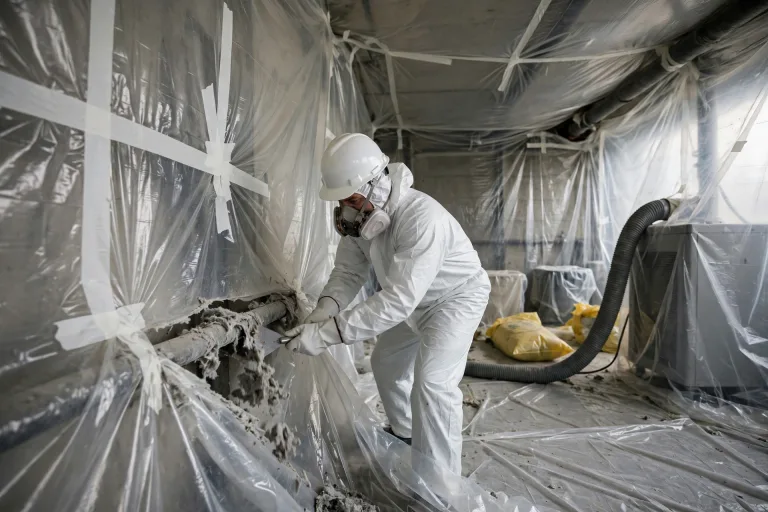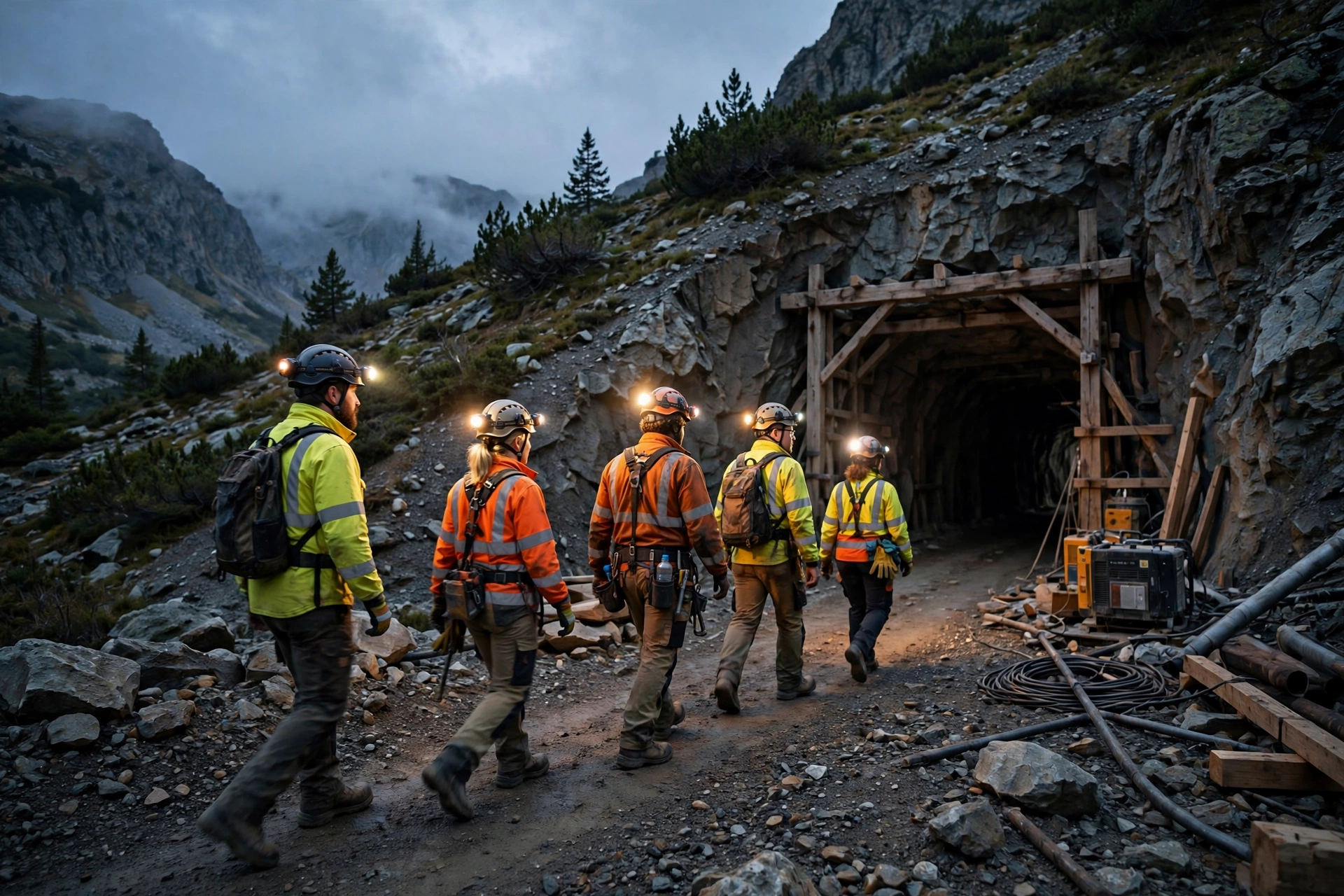
A helmet for tunnellers is a safety helmet worn by workers who build and maintain tunnels to guard the head from falling rock, tools, and low ceilings, and in general terms it is a hard industrial helmet, often with a lamp bracket and a chin strap, that is worn for the whole shift underground. Tunnelling is heavy underground work, and the risk of a knock to the head is high, so a proper safety helmet is a basic part of a tunneller’s personal protective equipment.
Tunnels are built by digging through rock and soil, often deep underground, where the roof and walls are rough, the space is tight, and heavy machines and materials are moved around in poor light. A piece of rock can fall from the roof, a tool can be dropped from above, or a worker can stand up into a low beam or a piece of steelwork. A helmet will not stop every injury, but it can spread the force of a blow and protect the head from a cut or a knock. In general terms, that is why helmets are required on tunnel sites, and why tunnellers wear them from the moment they go underground until they come back up.
What is tunnelling work?
Tunnelling is the work of building passages underground, for roads, railways, water, sewers, and other services. A tunnel may be dug by hand, by machine, or by a large tunnel boring machine, and the work often takes place in a long, narrow space with limited light, dust, noise, and water. Workers may be drilling, blasting, spraying concrete, moving spoil, or fixing steel supports, and they work in shifts around the clock until the tunnel is finished.
Tunnellers work in teams, and they rely on each other to keep the site safe. A helmet is a personal item, fitted to the wearer, and it should not be shared. Each worker should have a helmet that fits, is in good condition, and is suited to the particular risks of the tunnel they are working in, whether that is falling rock, moving plant, or work at height on a scaffold or platform.
What kind of helmet do tunnellers wear?
In general terms, tunnellers wear a hard industrial safety helmet, made from a tough plastic shell that covers the top of the head and spreads the force of a blow. The helmet has a harness or cradle inside that holds it slightly above the head, so that the force of an impact is spread and absorbed rather than passed straight to the skull. It also has a chin strap, which keeps the helmet in place when the worker bends down, looks up, or moves quickly.
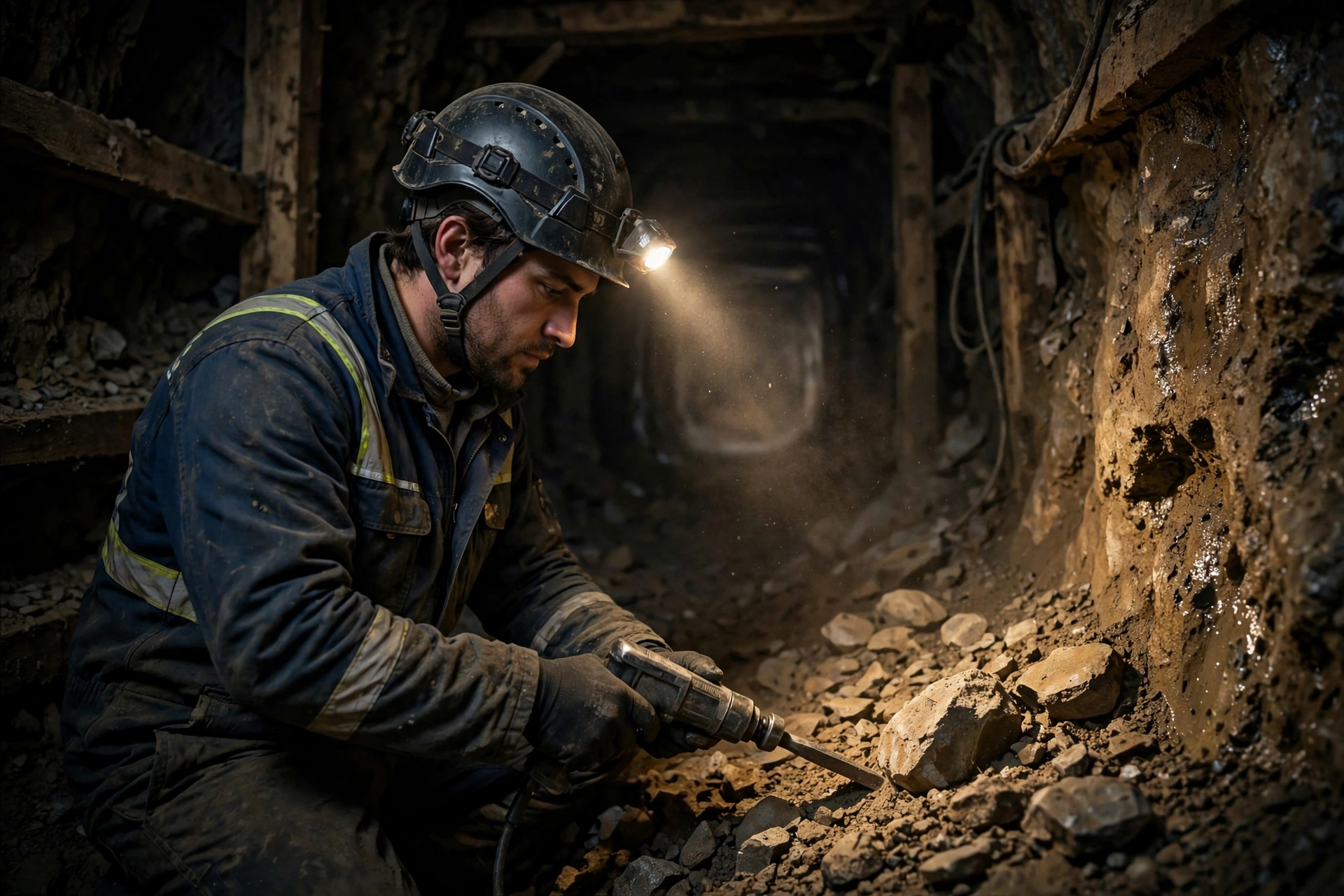
Many tunnelling helmets have a bracket or clip on the front for a cap lamp, which is the main source of light underground. Some have slots on the sides for ear defenders or a face shield, and some are fitted with a small peak or brim that shields the eyes from dripping water and falling dust. The colour of the helmet often shows the wearer’s role on site, so that supervisors, engineers, and visitors can be recognised at a glance in the dark.
How should a helmet for tunnelling fit?
A helmet for tunnelling should sit level on the head, low enough at the front to cover the forehead, and snug all round without pressing painfully on the temples. The harness inside should be adjusted so the helmet sits comfortably, with a small gap between the shell and the top of the head, and the chin strap should be fastened so the helmet stays in place when the worker moves. A helmet that is too loose can slip forward over the eyes or fall off, and a helmet that is too tight will be uncomfortable over a long shift.
Fit matters because a tunneller may wear the helmet for many hours at a time, often in hot, damp conditions. A helmet that fits well is easier to forget about, which lets the worker focus on the job. A helmet that pinches, slips, or feels heavy will be a distraction, and a worker who is distracted underground is more likely to make a mistake. In general terms, it is worth taking the time to get the fit right before you go underground.
What features matter in a tunnelling helmet?
A lamp bracket matters a great deal in tunnelling, because a cap lamp is often the main light source underground. Look for a helmet with a secure bracket that holds the lamp firmly and keeps it pointing where you look. Some helmets also have a clip at the back for the lamp cable, which keeps it out of the way and stops it from snagging on steelwork or machinery.
A chin strap matters too, as it keeps the helmet on when you bend, climb, or work overhead. A four-point strap holds the helmet more securely than a simple two-point strap, and it is worth asking about if your site allows a choice. Some helmets include a system designed to reduce rotational forces in a fall, such as MIPS, and it is worth asking about when you choose. Ventilation matters as well, because tunnels can be hot and humid, and a helmet with vents can help keep the wearer cool, although vents may not be suitable where there is a risk of falling debris or electrical hazards, so follow the site rules on this.
What other safety gear do tunnellers use?
In general terms, a helmet is only one part of a tunneller’s protective equipment. Workers also wear steel-toe boots with a good grip for wet and uneven ground, gloves to protect the hands from rough rock and steel, and high-visibility clothing so they can be seen in the dark. Eye protection guards against dust and flying chips, ear protection guards against the noise of drilling and machinery, and a dust mask or respirator protects the lungs where the air is dusty.
How do you look after a tunnelling helmet?
After a shift, clean the helmet with mild soap and water, and let it dry naturally, away from direct heat. Do not use harsh solvents or abrasive cleaners, as they can weaken the shell. Check the shell for cracks, dents, and fading, check the harness for fraying and damage, and check the chin strap and buckle for wear. If the lamp bracket is loose or damaged, have it repaired or replace the helmet.
Do tunnellers have to wear a helmet underground?
Yes, in general terms a safety helmet is required on tunnel sites, and workers wear it for the whole time they are underground. It protects against falling rock, dropped tools, and knocks against low ceilings and steelwork.
Can a tunneller wear any hard hat underground?
No, the helmet should meet the standard required for the site and the job, and it should have the fittings needed underground, such as a lamp bracket and a chin strap. Check the site rules before you start work.
When should a tunnelling helmet be replaced?
Replace it if the shell is cracked, dented, or badly faded, if the harness or strap is worn, or if it has taken a hard blow. A helmet that has protected you in an incident has done its job and should not be relied on again if it is damaged.

Olivia
Writer at Helmet Today, covering helmet reviews, fit and riding safety.