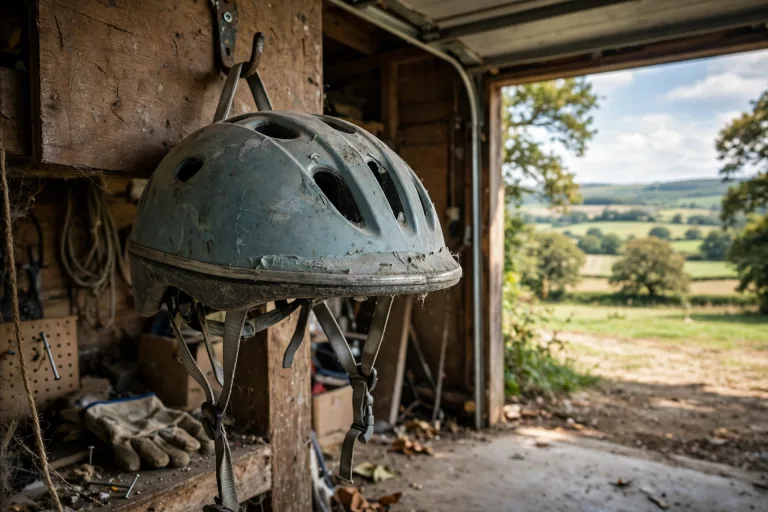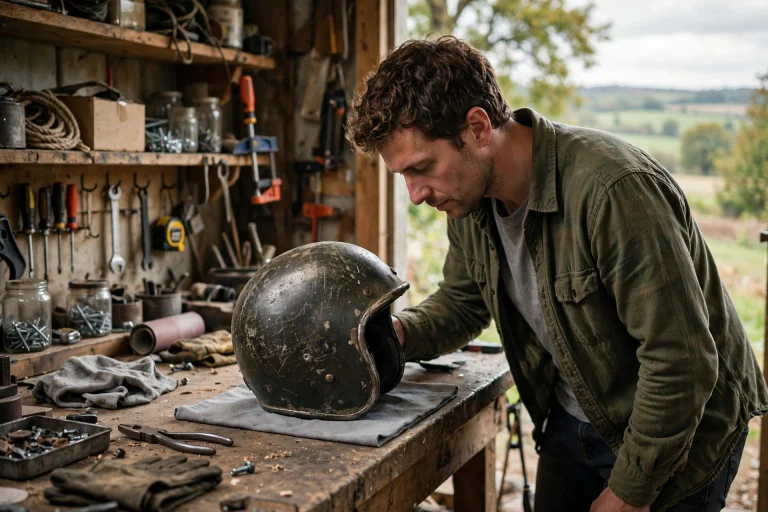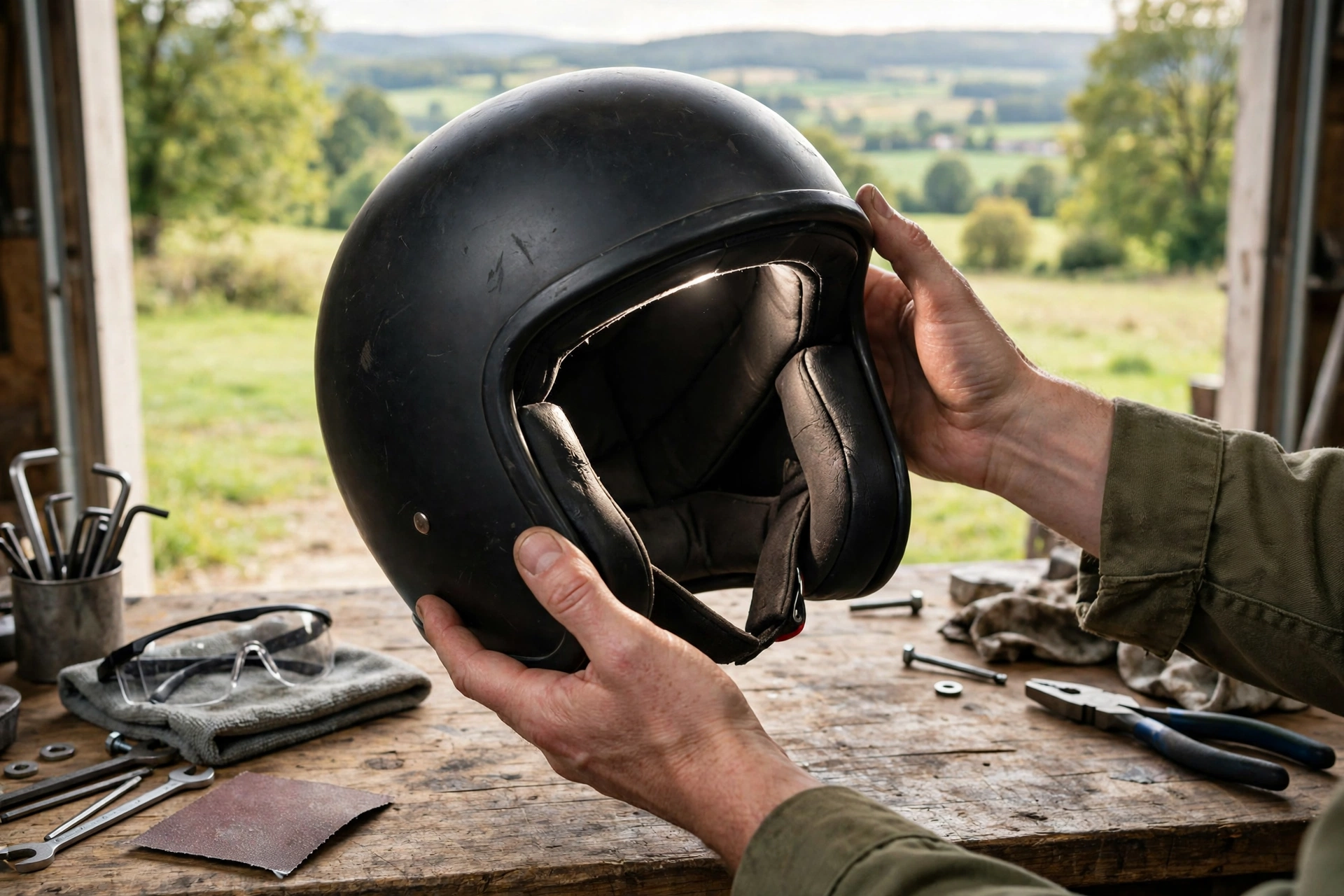
To inspect a helmet shell for dents, hold the helmet in good light, look over the whole outer surface, and run your hand slowly across it, feeling for any dip, flat spot, or soft area, and in general terms a shell with a visible dent or a soft spot should not be used. The shell is the hard outer layer of the helmet, and it is the first line of defence in a knock, so a dent can mean the helmet will not protect you as well as it should.
A dent is a place where the shell has been pushed in, usually by a knock against a hard surface. Some dents are easy to see, while others are small and can only be found by touch. A shell can also be damaged in ways that look like a dent but are not, such as a scratch or a scuff, so it helps to know what you are looking for. In general terms, a quick shell check before every ride is one of the simplest safety habits you can build.
Why should you check a helmet shell for dents?
You should check a helmet shell for dents because the shell spreads the force of a knock across the helmet, and a dented shell may not spread that force as evenly as it should. The shell also protects the foam lining underneath, which does the work of absorbing impact, so damage to the shell can mean the lining is damaged too.
A helmet can be dented in many everyday ways: dropped onto a hard floor, knocked against a wall, or caught in a fall. Some dents happen in a crash, when the helmet has done its job, and others happen quietly, when a helmet is knocked off a table and nobody notices. A regular check means you catch the damage before you rely on the helmet again.
What tools do you need to inspect a helmet shell?
You do not need special tools to inspect a helmet shell. Good light is the most important thing: bright daylight or a strong lamp makes dents and cracks much easier to see. A clean, dry cloth is useful for wiping away dust and grime so that nothing hides a dent, and a flat surface helps you set the helmet down and look at it from every angle.
Your hands are the main tool. Run your palm and your fingertips slowly over the shell, feeling for any dip or unevenness. Some people find it helps to close their eyes while feeling, so that they focus on touch rather than sight. If you want to be thorough, you can use a small torch held at a low angle across the shell, which makes even a shallow dent cast a shadow.
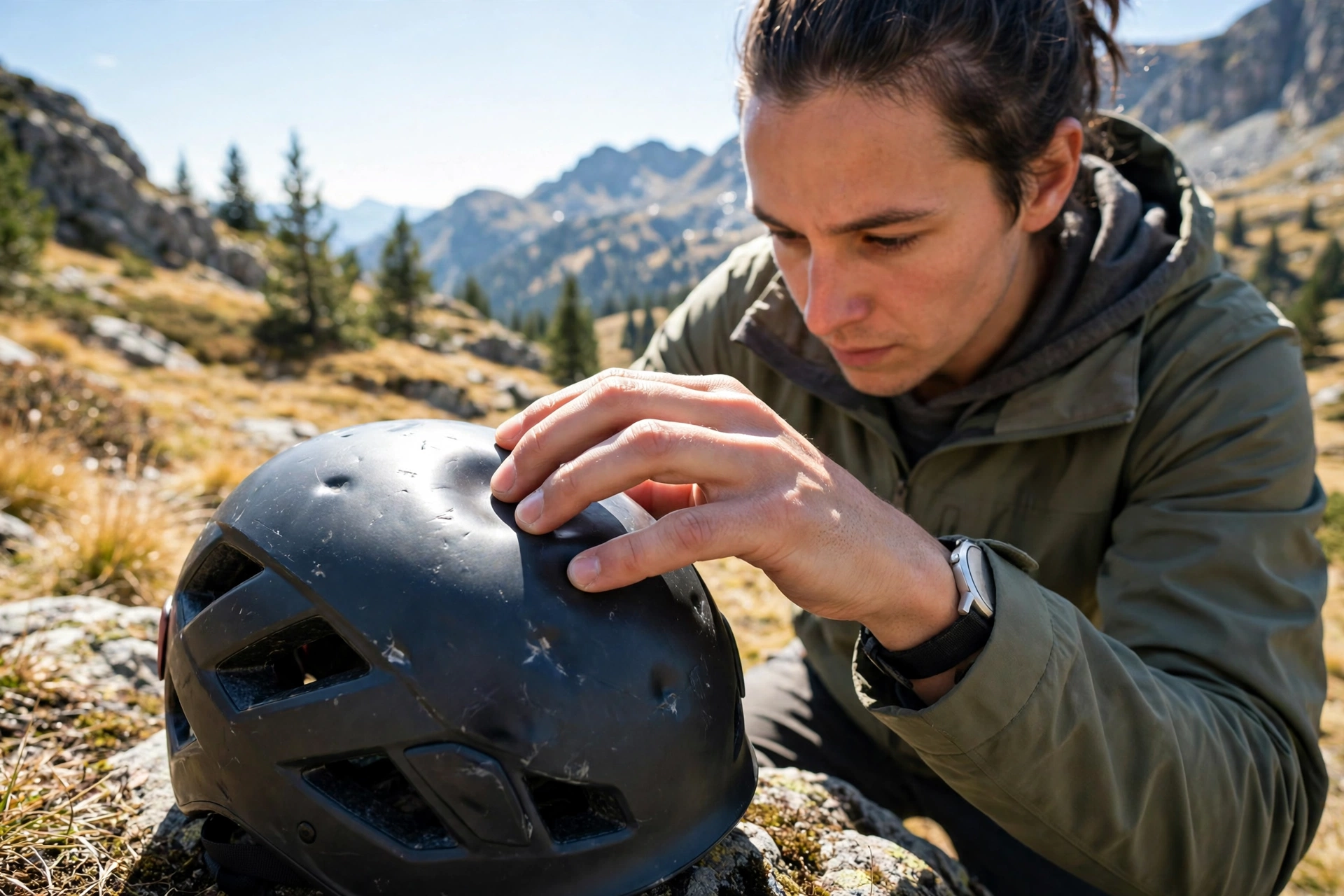
How do you inspect a helmet shell step by step?
Start by cleaning the shell with a damp cloth, so that dirt and marks do not hide damage. Then hold the helmet under a good light and turn it slowly, looking at every part of the shell: the top, the front, the back, and both sides. Look for dents, cracks, chips, and any place where the colour or the finish looks different from the rest.
Next, run your hand over the whole shell, pressing gently as you go. Feel for dips, flat spots, or soft areas where the shell gives under your fingers. Pay extra attention to the places that are most likely to take a knock, such as the front and the sides, and to any spot where you remember the helmet being dropped or hit. If you find anything that feels wrong, look at it closely and decide whether the helmet is still safe to use.
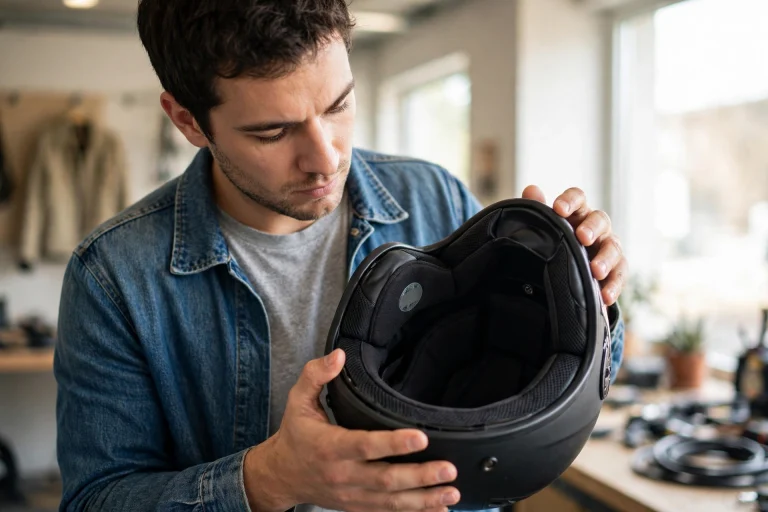
Finally, check the inside of the helmet as well. Look at the lining for cracks or compression, and check the straps and buckle for wear. Some helmets include a system designed to reduce rotational forces in a fall, such as MIPS, and if your helmet has one, check that its parts move freely and are not damaged. A shell check is only part of a full helmet check, but it is a good place to start.
What does a dent in a helmet shell look like?
A dent in a helmet shell usually looks like a shallow dip or a hollow in the surface, sometimes with a small crack or a flake of paint around it. On a glossy shell, a dent will bend the reflection of a light, so the reflected line looks wavy instead of straight. On a matt shell, a dent may be harder to see, and you may only find it by touch.
A dent is different from a scratch, which is only a mark on the surface that does not change the shape of the shell. A crack is a split in the shell, which is more serious than a dent and means the helmet should be replaced. If you are unsure what a mark is, get a second opinion from the maker or a specialist shop.
What should you do if you find a dent?
If you find a dent, do not use the helmet until you have decided whether it is safe. In general terms, a helmet with a dented shell should be replaced, because the shell may not protect you properly and the lining underneath may be damaged too, even if the dent looks small.
If the helmet took the dent in a crash or a hard fall, replace it without question, since it has already done its job. If the dent came from a drop and you are unsure how serious it is, ask the maker or a specialist for advice, but do not keep riding in a helmet you doubt. When in doubt, replace it: a new helmet costs far less than a head injury.
How often should you inspect a helmet shell?
In general terms, you should give the shell a quick look before every ride, and a full check every few weeks or after any knock. A quick check takes less than a minute: look over the shell, run your hand across it, and check the strap. A full check takes a little longer and includes the lining, the vents, and the buckle.
It is also worth checking a helmet after it has been stored for a while or travelled in a bag, so you spot a dent early, before it becomes a problem.
How do you inspect a helmet shell for dents?
Hold the helmet in good light, look over the whole outer surface, and run your hand slowly across it, feeling for any dip, flat spot, or soft area. A torch held at a low angle can help a shallow dent cast a shadow.
Can you still use a helmet with a small dent?
In general terms, no, a helmet with a dented shell should be replaced. The shell may not spread the force of a knock properly, and the lining underneath may be damaged too, even if the dent looks small.
What is the difference between a dent and a scratch?
A dent changes the shape of the shell, while a scratch is only a mark on the surface. A crack is a split in the shell and is more serious than a dent, so a cracked helmet should always be replaced.

Olivia
Writer at Helmet Today, covering helmet reviews, fit and riding safety.