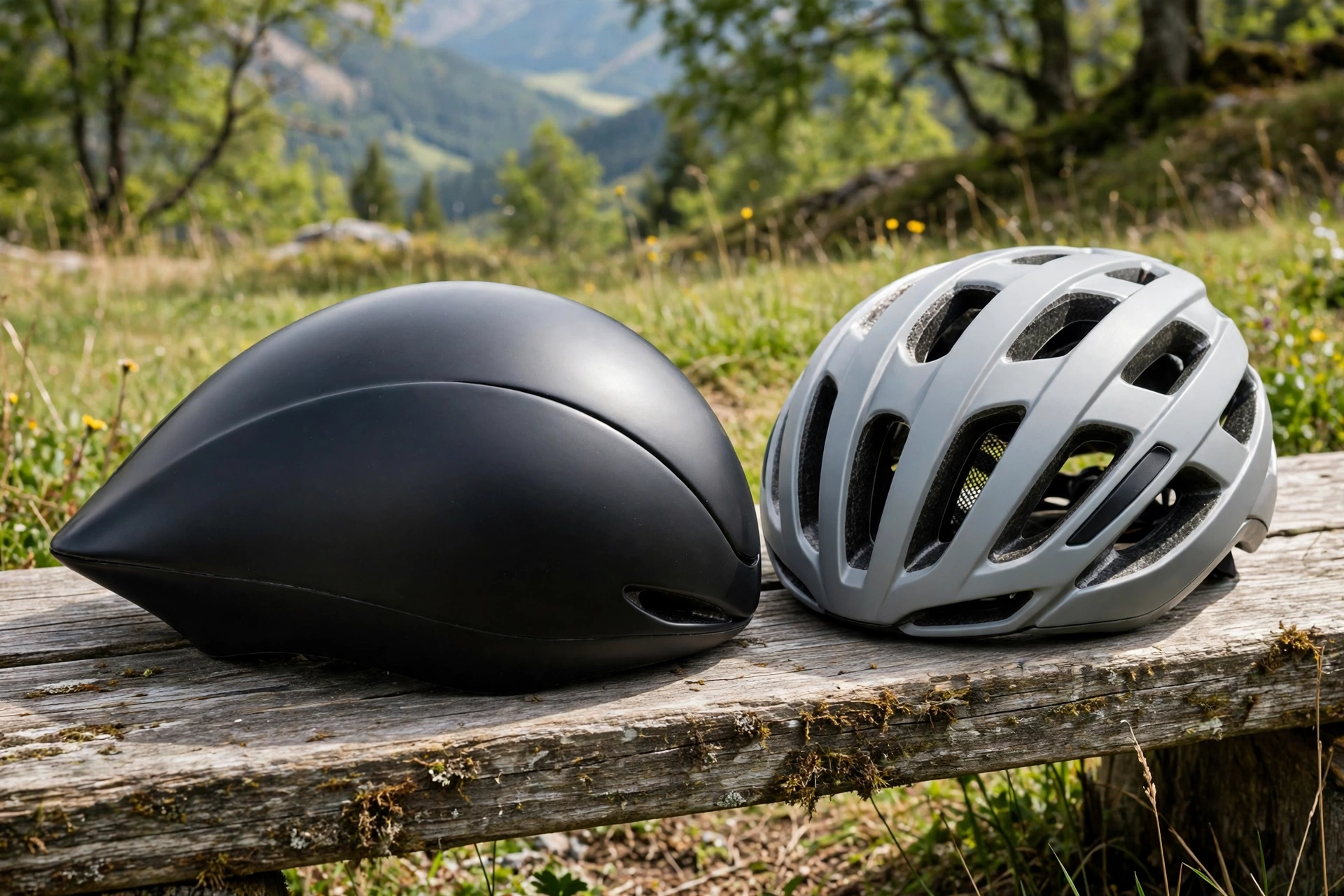
An aero road helmet trades ventilation for a smoother shell that reduces drag, while a regular road helmet trades a little speed for far better cooling. For racers chasing marginal gains at high speed, aero makes sense; for most riders — especially in hot weather or hilly terrain — the regular vented helmet is the more comfortable, and often the smarter, buy.
The two designs have been converging for years: modern regular helmets are more aerodynamic than they used to be, and modern aero helmets vent better than the original sealed shells. But the core trade-off has not changed. This comparison breaks down where the differences are real, where they are exaggerated, and which type suits your riding.
What is the real difference between aero and regular road helmets?
A regular road helmet is built around ventilation: many large vents, internal channels that pull air across the scalp, and a shape driven mainly by cooling and low weight. An aero road helmet starts from drag reduction: a smoother, more elongated shell, fewer and smaller vents — sometimes with covers — and a profile designed to keep air attached and flowing cleanly at speed.
In practice, today’s market is a spectrum. Pure climbing helmets sit at one end, all vents and minimal weight. Full aero models sit at the other. Most popular helmets live in the middle as “aero-optimised” all-rounders that borrow shaping from aero designs while keeping respectable vent counts.
Weight differences are smaller than marketing suggests, in general terms. Aero shaping and vent covers can add a little mass, while aggressively vented helmets shed it — but fit, retention systems, and safety features influence the final number as much as the aero treatment does.
How much speed does an aero helmet actually save?
Aerodynamic drag rises steeply with speed, so a helmet’s aero benefit matters most to riders who spend long stretches at higher speeds — racers, time trialists, and fast group riders. At those speeds, a smoother helmet can be one of the more cost-effective aero upgrades available, since the head sits high in the airflow.
At typical recreational speeds, the picture changes. The slower you ride, the smaller the share of your effort that goes into pushing air aside, and the smaller any helmet’s absolute time saving becomes. For a rider averaging moderate speeds on social rides, the gain from an aero helmet is real but small — usually outweighed by cooling, comfort, and price.
Also remember that wind tunnel figures are measured in controlled positions. A helmet that tests fast in a tucked racing posture may gain less for an upright rider who looks around, drinks, and sits up on climbs — which describes most real-world riding, most of the time.

Which helmet stays cooler on hot climbs?
The regular helmet, and it is not close on slow, steep terrain. Cooling airflow depends on air moving through the vents, and climbing speeds are low — exactly when a rider is producing the most heat. A vented helmet’s channels keep some air moving even then; a smoother aero shell, designed around higher speeds, has far less low-speed airflow to work with.
Many aero helmets manage heat acceptably on flat, fast roads, where their limited vents are fed by higher wind speed. The problem scenario is specific and common: a long summer climb at walking-to-jogging pace, followed by a fast descent. Riders who live in hilly, hot regions feel the aero penalty on every ride.
If you love the aero look but ride hills, look for hybrid models with genuine internal channeling and closable or generous front intake ports, and read owner reports about climbing heat rather than launch-day reviews.
Does safety differ between the two types?
Both types must pass the same certification for their market — CPSC in the US or EN 1078 in Europe — and there is no separate, weaker standard for aero helmets. A certified aero helmet and a certified vented helmet have both demonstrated the required impact performance.
Where they can differ is in optional features. Rotational-impact protection systems are available in both categories, and our explainer on MIPS and rotational protection describes how those liners work if you are comparing feature lists. Check the specific model rather than assuming the category decides it.
Fit remains the biggest safety variable in either type. A smoother aero shell that does not match your head shape, worn loose on a hot day, protects worse than a well-fitted vented helmet. Try both types on, in your size, with your sunglasses, before letting drag numbers make the decision.
Which one should most riders buy?
If you race, ride fast group rides, or live somewhere flat and cool, an aero or aero-optimised helmet earns its keep: the drag benefit is largest exactly in your conditions, and the cooling penalty is smallest.
If you ride hills, heat, or long social distances — or you own exactly one helmet — a regular vented road helmet is the better default. It will be comfortable in more conditions, and a helmet you forget you are wearing gets worn on every ride, which matters more than a small drag saving on the rides you skip because it is too hot.
The honest middle answer is the modern all-rounder: modest aero shaping, real vent channels, and a fit system you like. For the majority of riders, that category quietly delivers most of the aero benefit with most of the cooling — and no need to own two helmets.
Frequently Asked Questions
Q: Can I use an aero road helmet for everyday training?
A: Yes, if the heat is manageable for your climate and terrain. Many riders train happily in aero helmets on flatter routes. If your training involves long, slow summer climbs, you will likely be more comfortable in a vented model.
Q: Are aero helmets less safe because they have fewer vents?
A: No. Vent count is a cooling choice, not a certification category — both types must pass the same impact standards. Judge safety by the certification label, the fit on your head, and optional features such as rotational-impact systems.
Q: Will an aero helmet make me noticeably faster on club rides?
A: At typical club speeds, any saving is small, in general terms, and hard to feel in isolation. You will notice the difference in summer comfort far more than the difference on the clock — which is why most riders are better served choosing by climate and fit first.

Olivia
Writer at Helmet Today, covering helmet reviews, fit and riding safety.