We may earn a commission when you buy through links on this page, at no extra cost to you. Learn more
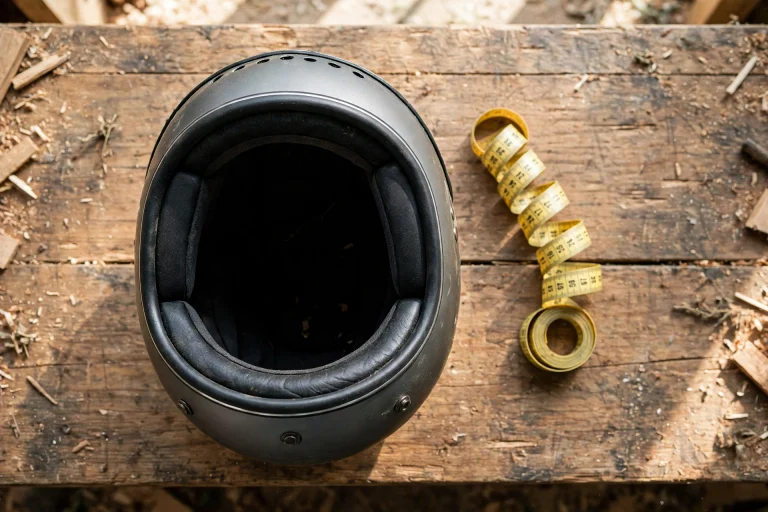
The best type of helmet for a round head shape is one with a rounder internal shape — a liner that is nearly as wide side to side as it is long front to back, with even padding at the temples instead of a narrow, elongated shell. If helmets usually squeeze your temples while feeling loose at the front and back, your head is on the round side, and choosing a round-fit model matters more than any other feature on the box.
Helmet sizes are sold in centimeters, but size is only half of fit. Two helmets in the same size can feel completely different because manufacturers build them on different internal shapes. Round heads are one of the most common shapes, yet many helmets — especially motorcycle helmets — are cut closer to an intermediate oval. Understanding that mismatch is the key to a helmet that feels comfortable for hours instead of minutes.
How Do You Know If You Have a Round Head Shape?
Look at your head from above, or ask someone to. A round head is nearly as wide across the temples as it is long from forehead to the back of the skull. An oval head, by contrast, is noticeably longer front to back than it is wide. Most people fall somewhere between the two, but if your head leans round, you will feel it in oval helmets.
The classic symptom is pressure at the sides. A helmet in your measured size pushes on your temples or the sides of your jaw area, yet you can slide a finger easily between your forehead and the liner. The helmet may also want to roll or pivot on your head, because it grips at the sides but has play front to back.
Measuring helps confirm it. Measure your head circumference just above the eyebrows and ears for your size, then — if you can — compare your head’s length and width with soft calipers or by tracing. In general terms, the closer those two numbers are, the rounder your head, and the more a round-fit helmet will help.
What Type of Helmet Fits a Round Head Best?
Look for helmets described as round, round-oval, or simply known for a wider internal fit. Within any helmet type — motorcycle, bicycle, ski, or equestrian — some models are cut rounder than others, and fit-focused shops usually know which of their lines run wide through the temples. Trying on several models in your size is the fastest way to feel the difference; a round-cut helmet settles onto your head evenly instead of clamping at the sides.
Fit systems can help a round head too. Bicycle and ski helmets with a rear adjustment dial can fine-tune overall snugness once the shape is right, and models offered in several shell sizes — rather than one shell padded up or down — tend to match head shapes more honestly, because the padding does not have to fake the shape.
What does not work is simply buying a bigger size. Sizing up to relieve temple pressure makes the helmet loose at the front and back, where it needs to stay snug, and a helmet that can rotate on your head in a fall is not protecting you as designed. Shape first, size second — in that order.

Where Do Round-Headed Riders Feel Pressure in the Wrong Helmet?
The temples are the main hot spot. An oval helmet narrows where a round head is widest, so pressure concentrates on the sides of the head, often just above and slightly behind the eyes. Riders describe it as a headache that starts at the temples within fifteen minutes and keeps building.
The second sign is odd looseness elsewhere. Because the helmet grips at the sides, it can feel secure in the shop, yet nodding or shaking your head reveals play front to back. On a motorcycle that can show up as the helmet creeping at speed; on a bicycle, as the helmet tilting forward over your eyes on rough ground.
Cheek pads in motorcycle helmets tell a similar story. If the cheeks feel crushed while the crown feels vague, the shell shape is fighting your head. Interchangeable cheek pads — thicker or thinner — can fine-tune the lower face fit, but they cannot change the fundamental crown shape, so treat them as adjustment, not a cure.
Can Padding Changes Fix a Shape Mismatch?
Sometimes, at the margins. Many helmets offer optional crown pads and cheek pads in different thicknesses. A round-headed rider in a mild oval helmet can sometimes run a thinner crown pad at the sides — where the manufacturer offers one — to relieve temple pressure. Where that option does not exist, do not carve, compress, or remove foam yourself; the impact liner is part of the certified structure, and modifying it can compromise the helmet’s protection.
It also helps to separate comfort padding from the protective liner. Soft comfort foam can be swapped between the sizes a maker offers; the hard energy-absorbing foam cannot and must never be trimmed. If a shop suggests altering the protective liner to make a helmet fit, walk away from that helmet.
Be honest about the limits. If you get a headache within twenty minutes in the shop, pads will not rescue that helmet. Helmets soften slightly as comfort padding breaks in over the first weeks of use, but shape mismatch does not break in — the hard liner underneath keeps its shape. Choose a different model instead.
What Else Should Round-Headed Buyers Check?
Once the shape feels right, run the standard checks. The helmet should sit level, move your scalp when you try to shift it, and stay put when you shake your head firmly. Wear it for at least fifteen minutes in the shop; shape problems announce themselves with time, and a good shop expects this.
Then look at the safety features you want. Certification for your activity is the baseline — every helmet should carry the label for its sport. Beyond that, rotational impact protection is increasingly common across helmet types; our explainer on how MIPS liners work covers what that extra layer does. The point is that none of these features help if the helmet hurts, so shape and fit always come first in the decision.
Finally, remember that shapes vary within brands as well as between them, and model lines change over the years. The round-fit model you loved five years ago may be replaced by something cut differently. Treat every new helmet as a fresh fitting exercise, and your round head will thank you on every ride.
Frequently Asked Questions
Q: Is a round head shape common?
A: Yes. Many riders fall between round and intermediate oval, and a large share lean noticeably round. The challenge is that many helmets are designed around an intermediate oval shape, so round-headed buyers often feel temple pressure in their correct size — that is a shape issue, not a sizing error.
Q: Should I just buy one size up if helmets squeeze my temples?
A: No. A larger size relieves the temples but leaves the helmet loose front to back, so it can shift or rotate in a fall and will likely creep at speed. A rounder-cut model in your measured size gives even pressure all around, which is what a safe fit looks like.
Q: How can I tell a helmet’s internal shape before buying?
A: Look for fit descriptions like round, round oval, intermediate oval, or long oval in the product details, and check whether the maker offers multiple shell sizes. Then try the helmet on for at least fifteen minutes. Even, hotspot-free pressure — especially at the temples — is the real test.

Olivia
Writer at Helmet Today, covering helmet reviews, fit and riding safety.