A big air snowboarding helmet is a snow sports helmet worn for big air, a freestyle discipline where the rider launches off a large jump, performs tricks in the air, and lands on a steep slope. It protects the head from hard landings, high-speed falls, and impacts on firm, groomed snow. Big air jumps send riders high into the air at speed, and the landing is the moment when most things can go wrong. A helmet is standard kit for this discipline, and riders wear one in training, in parks, and in competition.
What Is Big Air Snowboarding?
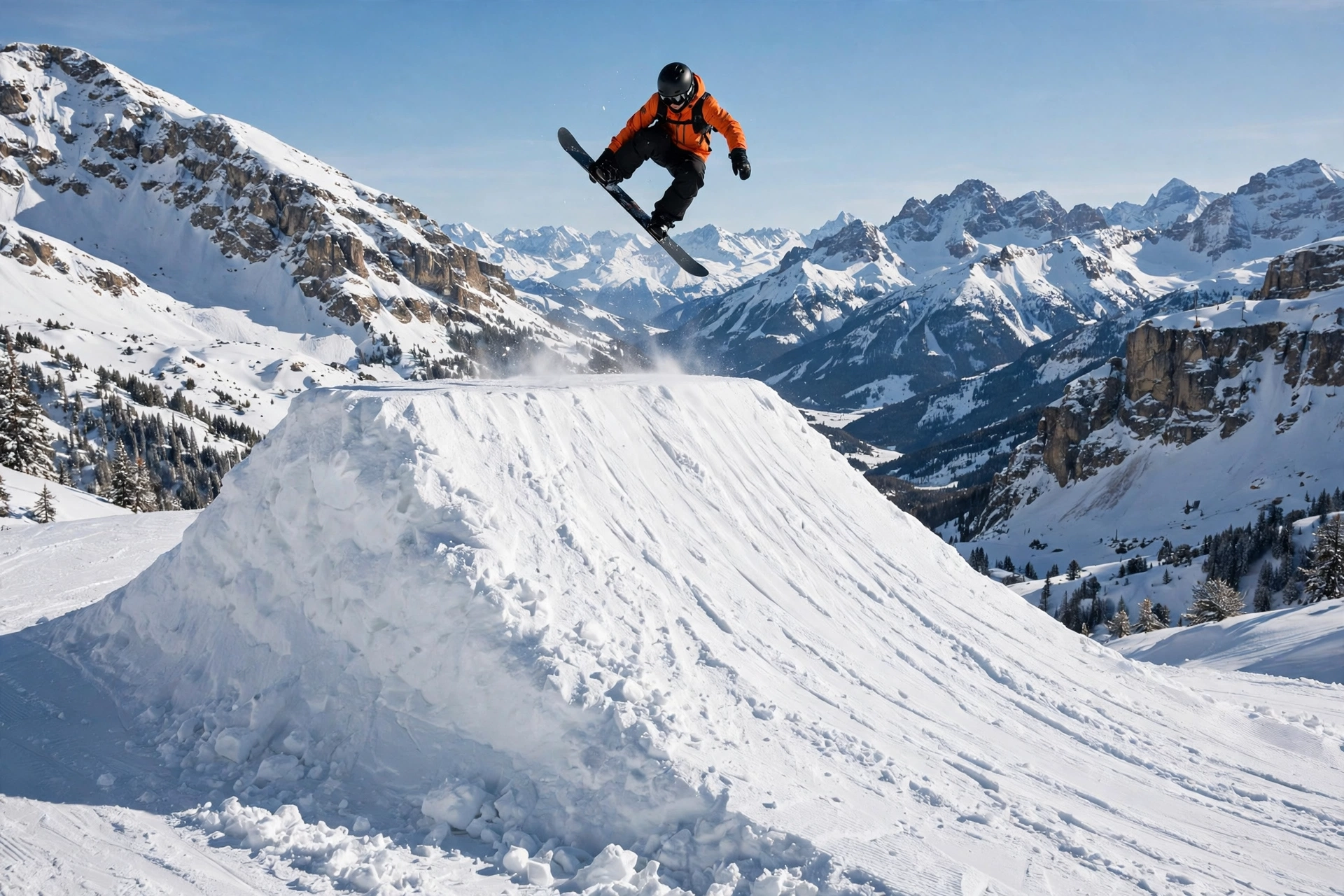
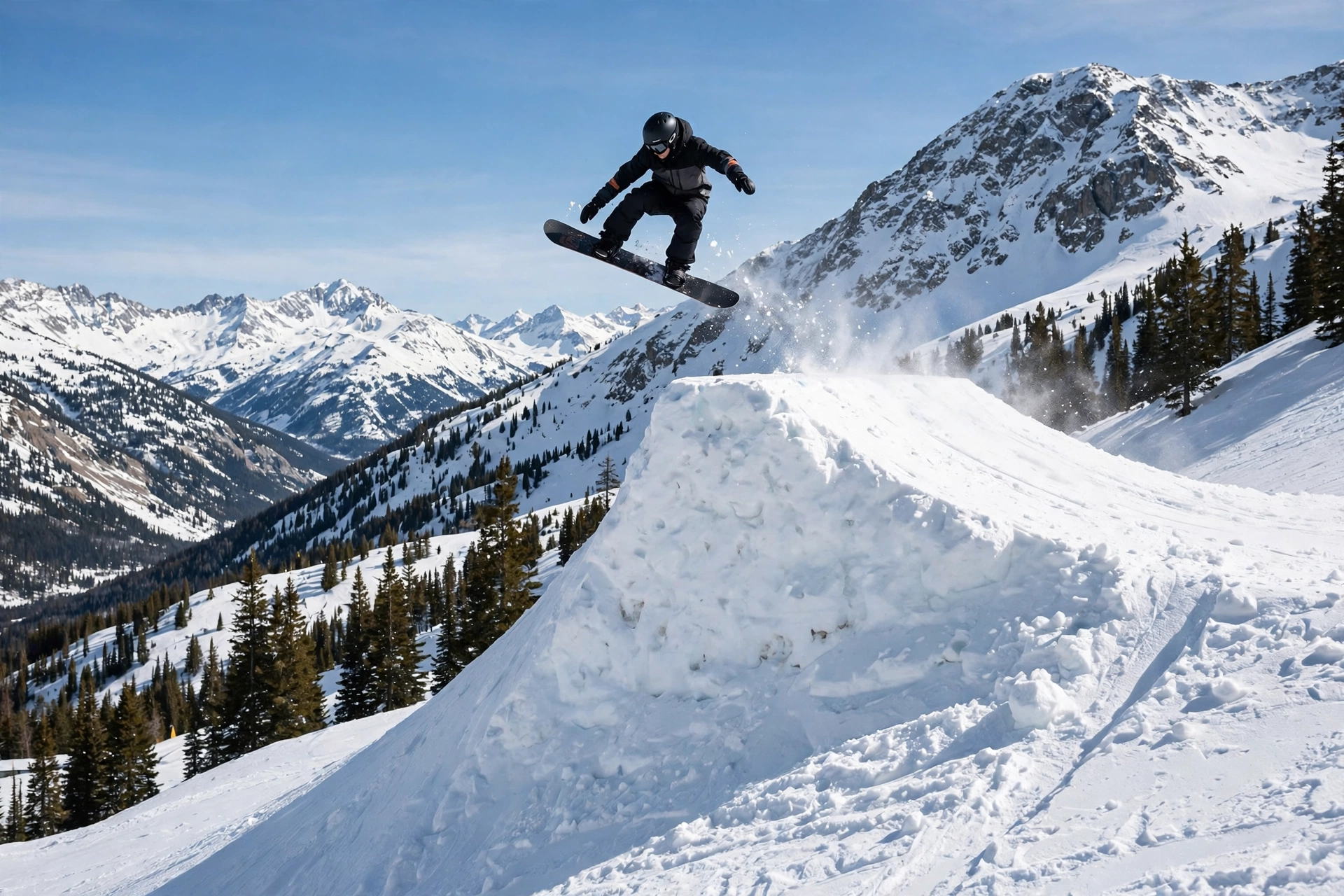
Big air snowboarding is a freestyle discipline built around a single large jump. The rider gathers speed down a steep in-run, launches off a kicker, and performs spins, flips, or grabs in the air before landing on a steep, groomed slope. The jumps are much bigger than those in a normal terrain park, and the rider can be in the air for a long time, travelling a long distance before touching down again.
The size of the jump is what makes big air both exciting and demanding. The rider needs speed, timing, and control, and a small error in the take-off or in the air can turn a planned landing into a fall from height. The landing slope is steep to soften the impact, but the snow is firm and fast, so a fall can still be hard. In general terms, the height and speed of big air make head protection an essential part of the kit.
Why Does Big Air Call for a Helmet?
Big air calls for a helmet because the rider is travelling fast and high above a hard surface, and a landing that goes wrong can bring the head down onto the snow with considerable force. The rider may over-rotate or under-rotate a spin, catch an edge on landing, or be thrown off balance by the wind, and in each case the head can strike the snow before the rider can react. A helmet spreads the force of that impact and absorbs some of it, which can reduce the severity of a head injury.
The in-run and the landing also carry risks, because a rider can fall while gathering speed or while riding away from the jump. In general terms, a helmet does not make big air safe in every case, and it cannot protect against every kind of fall, but it does lower the force that reaches the head in the kinds of impacts that are common in this discipline. That is why helmets are worn by riders at every level of big air, from park sessions to major competitions.
How Is a Big Air Helmet Different From Other Snow Helmets?
A big air snowboarding helmet is, in general terms, a snow sports helmet of the same family as other ski and snowboard helmets, and many models are sold for both skiing and snowboarding. It usually has a hard outer shell with an impact-absorbing liner, adjustable vents, and a fit system that lets the rider tune it around the head. There is no single design that is unique to big air, and the helmet’s job is the same as in any snow discipline.
What matters most for big air is a secure fit, because the helmet must stay in place through a fast in-run, a high flight, and a hard landing. A helmet that shifts in the air can block the rider’s vision or leave part of the head exposed. Many riders also want a helmet that sits well with goggles, with no gap that lets in cold air. If you want to understand one of the safety technologies used in modern helmets, reading about what MIPS is for helmets is a good place to start, since that system is found in many snow helmets.
What Should a Big Air Helmet Fit Like?
A big air helmet should fit snugly all round the head, sitting level and covering the forehead without slipping down over the eyes. It should not wobble when the rider shakes the head, and it should not press painfully on any one spot. The back of the helmet should sit low enough to protect the back of the head, and the goggles should sit neatly against the front without a gap.
The fit system should be adjusted before the first run, and the chin strap should be fastened snugly, so the helmet stays put in a fall. It is worth trying the helmet on with the goggles and any thin balaclava that will be worn underneath, because layers change how the helmet sits. A thick beanie under the helmet can make the fit loose or uneven, so a thin layer is a better choice. In general terms, a helmet that fits well is one the rider can forget about while focusing on the jump.
What Features Matter in a Big Air Helmet?
Ventilation matters in a big air helmet, because the rider is working hard and conditions can swing from cold mornings to warm spring afternoons. Adjustable vents let the rider open the helmet for airflow or close it down against the wind. Good airflow also helps keep goggles clear, which matters when the rider needs a clear view of the take-off and the landing.
Weight is worth thinking about too, because a lighter helmet is less tiring over many runs and less likely to shift in the air. A secure goggle clip at the back keeps the goggle strap in place, and removable ear pads give the rider a choice about warmth and hearing. In general terms, fit, comfort, and a recognised safety standard are the features that matter most, and the rest are useful extras rather than replacements for those basics.
When Should You Replace a Big Air Helmet?
A big air helmet should be replaced after a hard impact, even if it looks fine from the outside. The liner inside the helmet can compress or crack in a heavy fall, and that damage may be hidden under the shell. A helmet that has already absorbed a serious knock may not protect as well the next time, so it is generally sensible to retire it and use a new one.
Age and wear matter as well. Years of use, sun, cold, and knocks can wear down the liner, the straps, and the fit system, and a helmet that no longer fits snugly may not stay in place during a jump or a fall. Checking the helmet at the start of the season is a good habit: look for cracks, loose straps, worn padding, or a shell that feels brittle. If anything seems wrong, or if the helmet has taken a heavy landing, replacing it is the safer choice.
Do I need a special helmet for big air?
No, in general terms a standard snow sports helmet that fits well and meets a recognised safety standard is suitable for big air. A helmet made for snowboarding or skiing will do the job.
Is big air more dangerous than other snowboarding?
Big air involves higher speeds and greater heights than most park riding, so the falls can be harder. That is why helmets, good progression, and practising smaller jumps first all matter.
Can I wear my normal ski helmet for big air snowboarding?
Yes, in general terms a ski helmet and a snowboard helmet are the same kind of snow sports helmet. As long as it fits well with your goggles and meets a recognised standard, it is suitable.

Olivia
Writer at Helmet Today, covering helmet reviews, fit and riding safety.