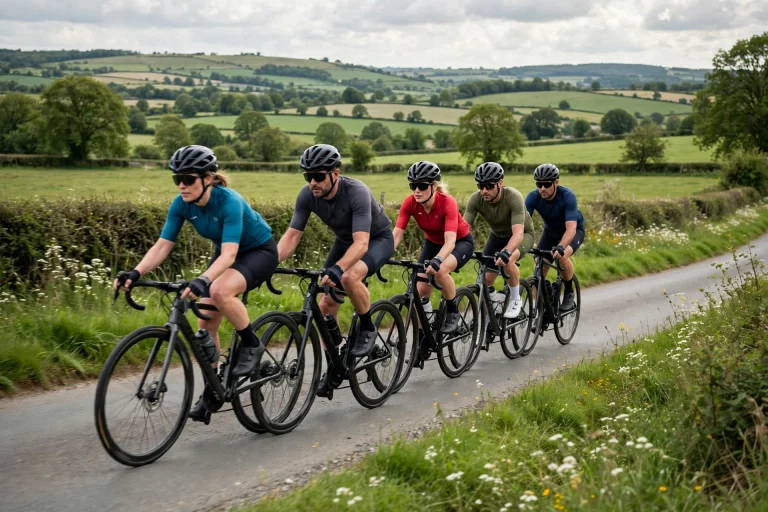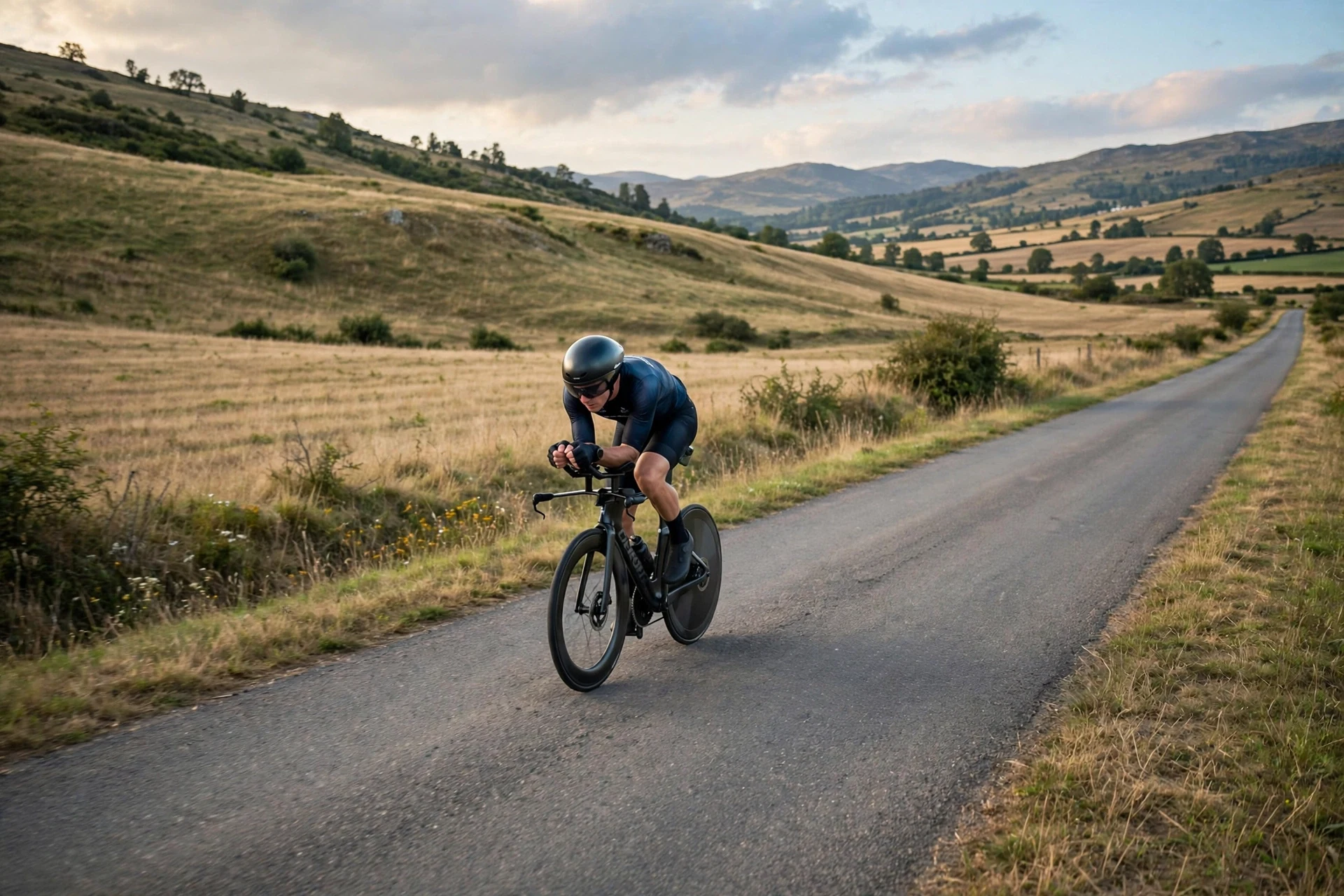
A bike helmet for riding in a time trial is usually a smooth aero helmet with a long tail or a short-tail design, chosen to cut wind resistance while you ride alone against the clock in a tucked, head-down position. A time trial is a solo race against the clock, where riders start one at a time and ride as fast as they can over a set course. There is no drafting and no group to shelter in, so aerodynamics matter more than in any other road discipline, and the helmet is part of that.
Time trial helmets look different from normal road helmets. They are smooth, with few vents, a long tail that runs down the back of the neck, or a shorter rounded shape that works better if you move your head. In general terms, they are made for speed over a short, hard effort, not for all-day comfort, so the choice involves a trade-off between aero gains and heat, vision, and comfort.
What is a time trial in cycling?
A time trial is a race where riders ride alone against the clock over a fixed distance, usually on a road course that may be flat, rolling, or hilly. Riders start at intervals, often a minute apart, and the fastest time wins. There is no pack to hide in, and drafting behind another rider is not allowed, so each rider’s speed depends on their own power and how cleanly they cut through the air.
Time trials are run by clubs, leagues, and national bodies, and they range from short ten-mile club events to longer championship courses. Riders use time trial bikes with aero bars, disc wheels or deep-section wheels, and aero helmets and skinsuits. The position is low and stretched out, with the forearms resting on the bars and the head held low.
How does a time trial helmet differ from a road helmet?
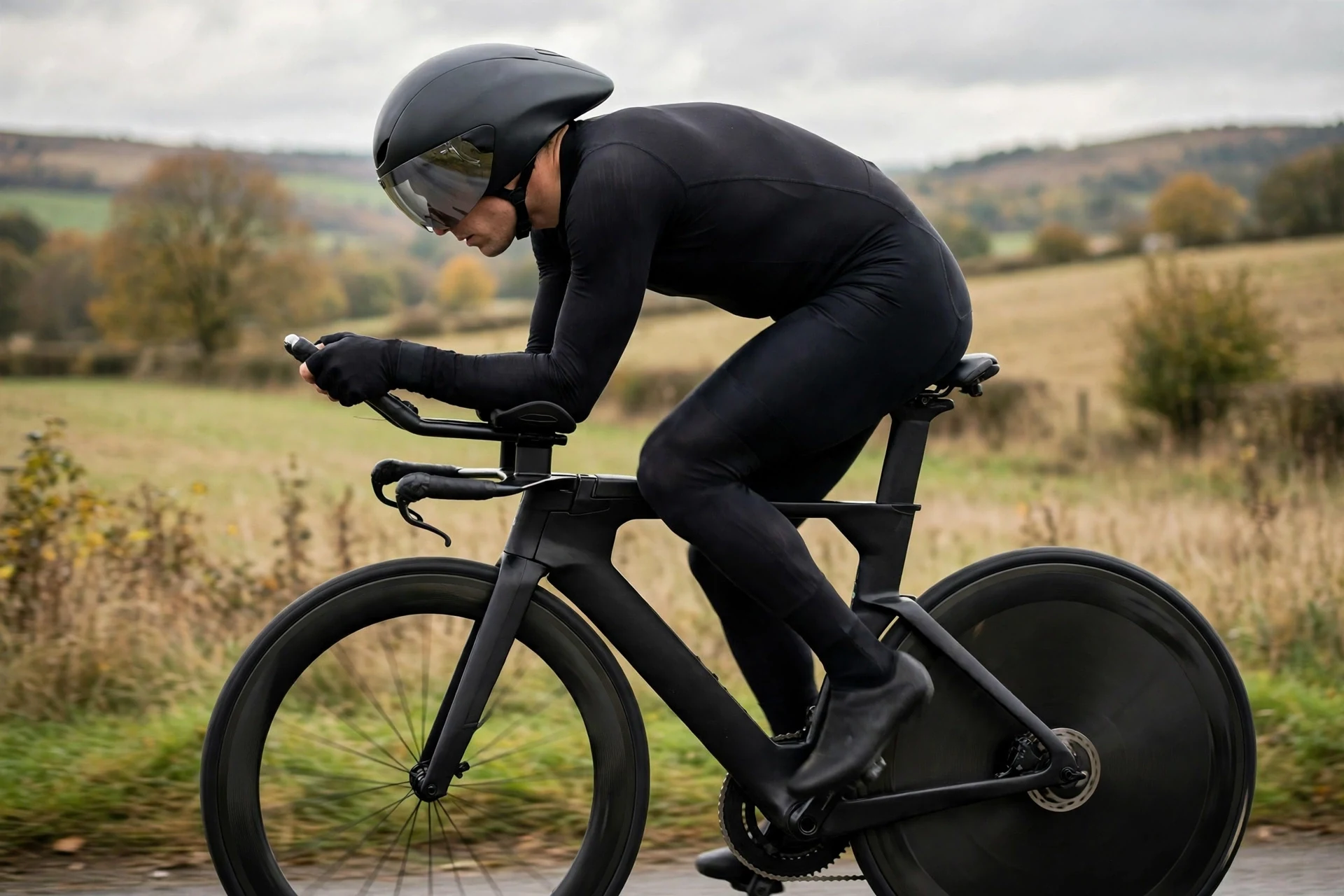
A time trial helmet is shaped to smooth the airflow over your head and down your back. A long-tail helmet extends down the neck and works best when you hold your head still in a low, tucked position. A short-tail or rounded helmet is more forgiving if you move your head to look around, check the road, or climb out of the saddle. Many riders now choose a short-tail design because it is more practical on real roads.
Time trial helmets usually have far fewer vents than road helmets, because vents disturb the airflow. That makes them warmer, especially on a hot day or a long course. Some riders accept the heat for the aero benefit, while others choose a well-ventilated aero road helmet instead, which gives most of the aero gain with much better cooling.
How do you choose between a long-tail and a short-tail helmet?
Choose a long-tail helmet if you can hold a steady, low head position for the whole course and you ride mostly on flat, fast roads. The tail needs to sit close to your back to work well; if you lift your head, the tail sticks up into the air and can actually slow you down. A long tail also makes it harder to look around at junctions and turns.
Choose a short-tail helmet if you move your head more, ride rolling or hilly courses, or want a helmet that is also useful for other rides. Short-tail helmets are easier to live with, cooler in general terms, and less likely to punish you for lifting your head. For most club time trial riders, a short-tail aero helmet is the more practical choice.
How do you stay cool in a time trial helmet?
Staying cool in a time trial helmet is hard, because the helmet is made to be smooth rather than ventilated. Keep the effort in mind: most club time trials last less than an hour, so you can manage the heat for that long if you start cool and hydrated. Drink well before the start, and keep your warm-up short on a hot day so you do not overheat before the race begins.
Pour cool water over your head and neck before the start if you can, and use a light, breathable skinsuit. Some riders use a thin, sweat-wicking cap under the helmet, but check that it does not change the fit or push the helmet up. A cap can also stop sweat running into your eyes, which is a real problem when you are head-down and cannot wipe your face.
What about vision, hearing, and safety in a time trial?
Vision is critical in a time trial, because you are riding fast, alone, and often head-down. The helmet and visor must not block your view of the road ahead, especially when you lift your head to check a junction or a turn. A visor that fogs up or a helmet that sits too low on your forehead will narrow your view at the worst moment.
Hearing matters too. Time trials are often run on open roads, and you need to hear traffic behind you. A helmet that covers your ears can muffle sound, so check that you can still hear clearly. Do not wear headphones or earphones in a time trial unless the event rules allow them, and never wear anything that blocks out traffic noise. Check that any MIPS liner in your helmet sits correctly before the start.
Is an aero helmet worth it for a club time trial?
For many club riders, an aero helmet is worth it if it fits well, suits your head position, and does not overheat you. The gains are real but small, and they matter most on flat, fast courses where you hold a steady position. On a hilly course, or if you move your head a lot, the benefit shrinks, and a good aero road helmet may be just as fast in practice.
Do not buy the most expensive helmet first. Start with a helmet that fits, is comfortable in your racing position, and keeps you cool enough to ride hard for the whole course. If you race regularly and your position is settled, then a dedicated time trial helmet is a sensible next step.
Finally, remember that the helmet is only part of the picture. A good bike position, a well-paced ride, and clean, smooth riding will save you far more time than any helmet. Use the helmet to support your riding, not to make up for a position you cannot hold or a pace you cannot sustain.
Do I need a special helmet for a time trial?
No, you can ride a time trial in a normal road helmet, and many riders do. A dedicated aero time trial helmet can help on a fast, flat course, but it is not required, and a well-fitting aero road helmet is a good middle ground.
Will a long-tail helmet slow me down if I move my head?
In general terms, yes, a long tail works best when your head stays still and low. If you lift your head often, the tail sticks up and disturbs the airflow, so a short-tail helmet is usually faster for riders who move their head more.
How do I stop a time trial visor fogging up?
Keep the visor clean, lift it slightly at the start if you can, and make sure air can move across the inside. An anti-fog treatment made for visors can help, and a thin cap under the helmet can stop sweat reaching the visor.

Olivia
Writer at Helmet Today, covering helmet reviews, fit and riding safety.