
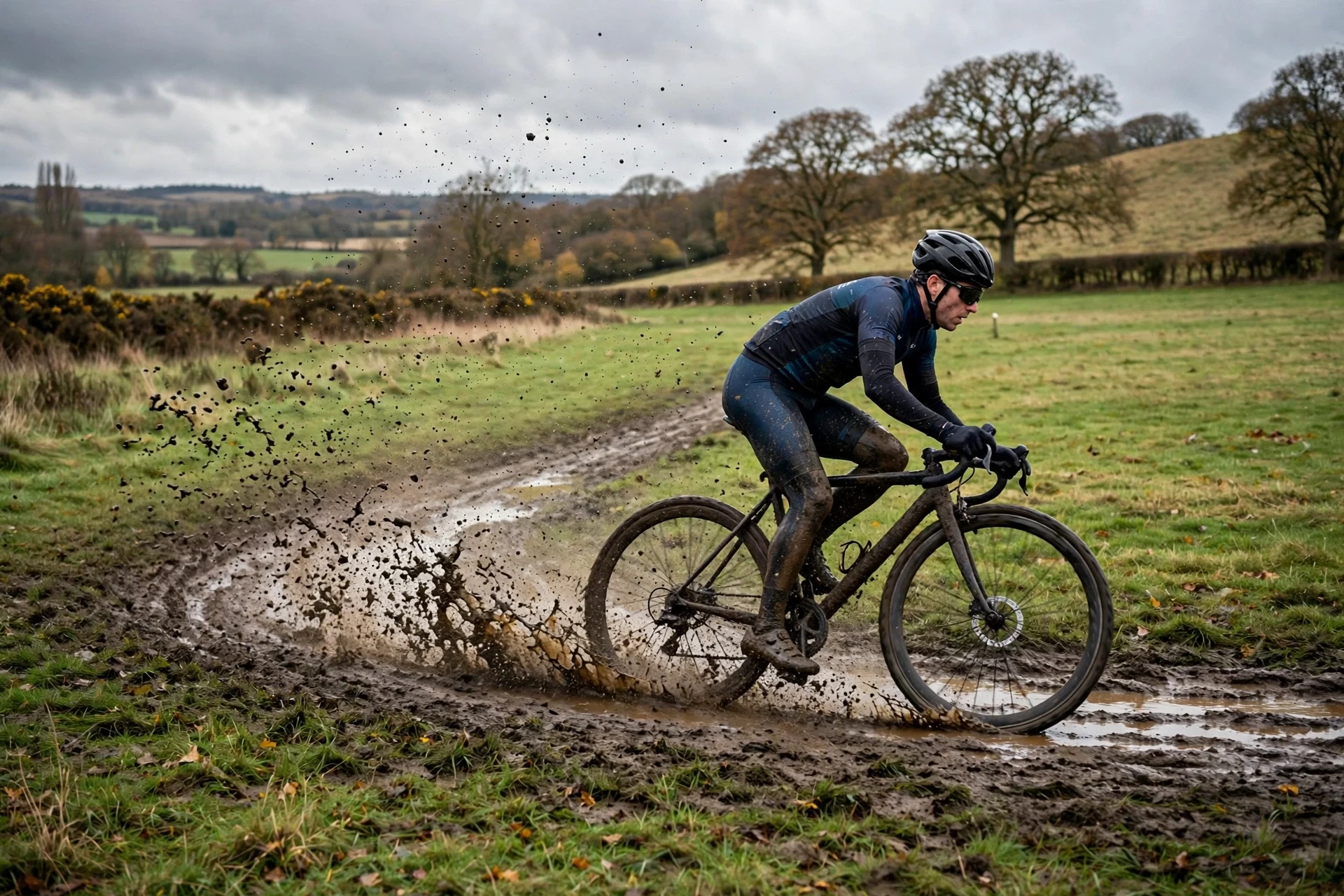
A bike helmet for riding in a cyclo-cross race is a light, well-ventilated road or cyclo-cross helmet that fits securely, stays put through bumps and off-bike running, and protects your head on muddy, technical courses. Cyclo-cross is a short, intense form of racing on a mixed course of grass, mud, sand, and short steep banks, with barriers and steps that force riders to get off and carry the bike. A helmet for this kind of racing has to stay stable when you are bouncing over rough ground, running, and remounting at speed.
Cyclo-cross races usually last under an hour, but they are hard from start to finish. Riders race in all weathers, often in rain and mud, and crashes are common on slippery corners and steep descents. In general terms, the helmet you need is a tough, well-fitting road-style helmet with good coverage and ventilation, rather than a heavy or specialised design.
What is a cyclo-cross race?
Cyclo-cross is a form of cycle racing held on a short, lapped course, usually around a park or field, with a mix of grass, mud, sand, gravel, and sometimes tarmac. The course includes tight turns, steep banks, and obstacles such as planks or barriers that riders must jump over or carry the bike over. Riders also face steps and run-ups where they shoulder the bike and run.
Races are short and intense, often lasting thirty minutes to an hour depending on the category. Riders start together in a bunch, and the pace is high from the first lap. The course changes as the race goes on: grass turns to mud, ruts form in the corners, and lines that were fast on the first lap may be slippery by the last.
Why does helmet stability matter in cyclo-cross?
Stability matters because a cyclo-cross course is rough. Bumps, ruts, roots, and off-camber corners shake the bike, and a loose helmet will bounce and shift on your head. A helmet that moves will block your vision, distract you, and leave parts of your head less protected if you fall. The helmet should sit level, fit snugly, and stay put when you shake your head hard.
Use the retention system at the back and the straps to lock the fit in place. The helmet should feel secure without pressing hard on any one spot. Try it on with the cap or headband you will wear in a race, and test it by running a few steps and jumping, not just by standing still. If it shifts when you run, it will shift on the course.
How much coverage should a cyclo-cross helmet have?
A cyclo-cross helmet should cover the top and sides of your head well, with a little extra coverage at the back and temples if you can find it. Falls in cyclo-cross are often low-speed slides on mud or grass, but they can also involve hitting a bank, a post, or a barrier. More coverage gives more protection in those falls, without the weight of a full-face helmet.
A road helmet with good side and rear coverage is usually enough. A mountain bike helmet with a peak can also work, and the peak helps to keep rain and mud out of your eyes. Just check that the peak does not block your view when you are in a low, aggressive position on the bike, and that it is fixed firmly enough not to rattle loose.
How do you cope with mud, rain, and cold?
Mud and rain are part of cyclo-cross, and your helmet has to cope with them. A helmet with large vents will let in rain and mud, but it will also let heat out, which matters when you are working hard. A thin cap under the helmet keeps rain off your head and stops mud getting into the vents and pads, and it is easy to wash after the race.
In cold weather, a thin thermal cap or headband under the helmet keeps your ears and forehead warm without changing the fit too much. Choose a thin one, because a thick cap will make the helmet tight and uncomfortable. Ear covers made for cycling helmets are another option, and they keep wind and rain off your ears.
What about glasses, mud, and vision?
Vision is a challenge in cyclo-cross, because mud, rain, and sweat all end up on your glasses or your face. Clear or light-tinted glasses with a good seal help to keep mud out of your eyes, and a helmet peak can shield them from rain. Carry a spare pair of glasses in your pit area if you have one, and swap them if yours become too muddy to see through. If your helmet has a MIPS liner, rinse it gently after the race and let it dry fully.
Some riders race without glasses, relying on the helmet peak and their own blinking to keep mud out. That works for some, but a face full of mud at speed is unpleasant and can cost you time if you have to slow down to clear your eyes. Glasses also protect your eyes if a branch or a clod of mud flies up from the wheel in front.
How do you check a helmet after a cyclo-cross crash?
Crashes are common in cyclo-cross, and you should check your helmet after every fall, even a slow one. Look for cracks in the shell, dents in the foam, loose straps, or a retention dial that no longer holds. If the helmet hit the ground hard, or if you hit your head, replace it, even if the damage is hard to see. Foam that has been compressed in a crash will not protect you as well a second time.
Check the fit again after a crash as well. A hard knock can bend the retention system or stretch the straps, and the helmet may no longer sit correctly. Put it on, adjust it, and shake your head. If it no longer feels secure, do not race in it again until it has been checked or replaced.
Keep a spare helmet if you race regularly. A spare means you can keep racing if your main helmet is damaged or still drying after a wash, and it gives you a backup if you need to replace a helmet mid-season. A spare does not need to be expensive, but it should fit you well and meet the same safety standard.
Can I use my normal road helmet for cyclo-cross?
Yes, in general terms a normal road helmet that fits securely and ventilates well is fine for cyclo-cross. You do not need a special cyclo-cross helmet, just one that stays put on rough ground and protects you well in a fall.
Should I wear a cap under my helmet in a cyclo-cross race?
A thin cap is useful in rain and cold, and it keeps mud out of the vents. Choose a thin, breathable cap that does not change the fit of the helmet, and avoid a thick cap that makes the helmet tight.
How do I clean mud out of my helmet after a race?
Rinse the shell and vents with clean water, wipe the straps, take the pads out and wash them, and let everything air-dry fully. Do not use a high-pressure hose, and do not dry the helmet with direct heat.

Olivia
Writer at Helmet Today, covering helmet reviews, fit and riding safety.