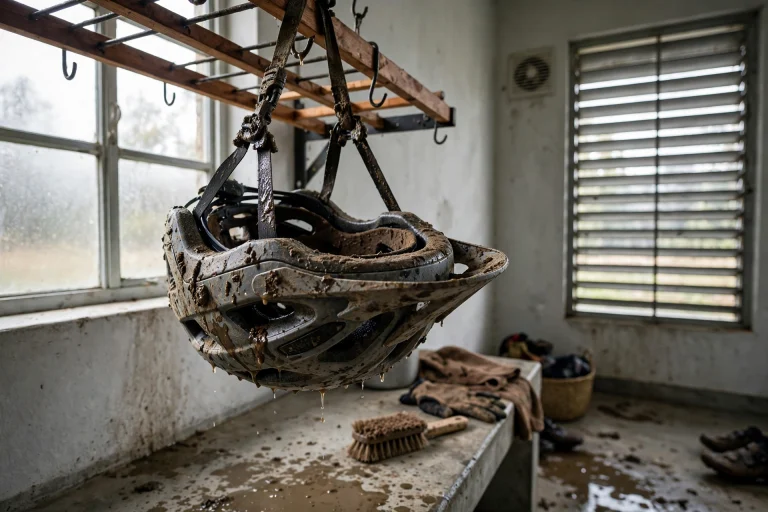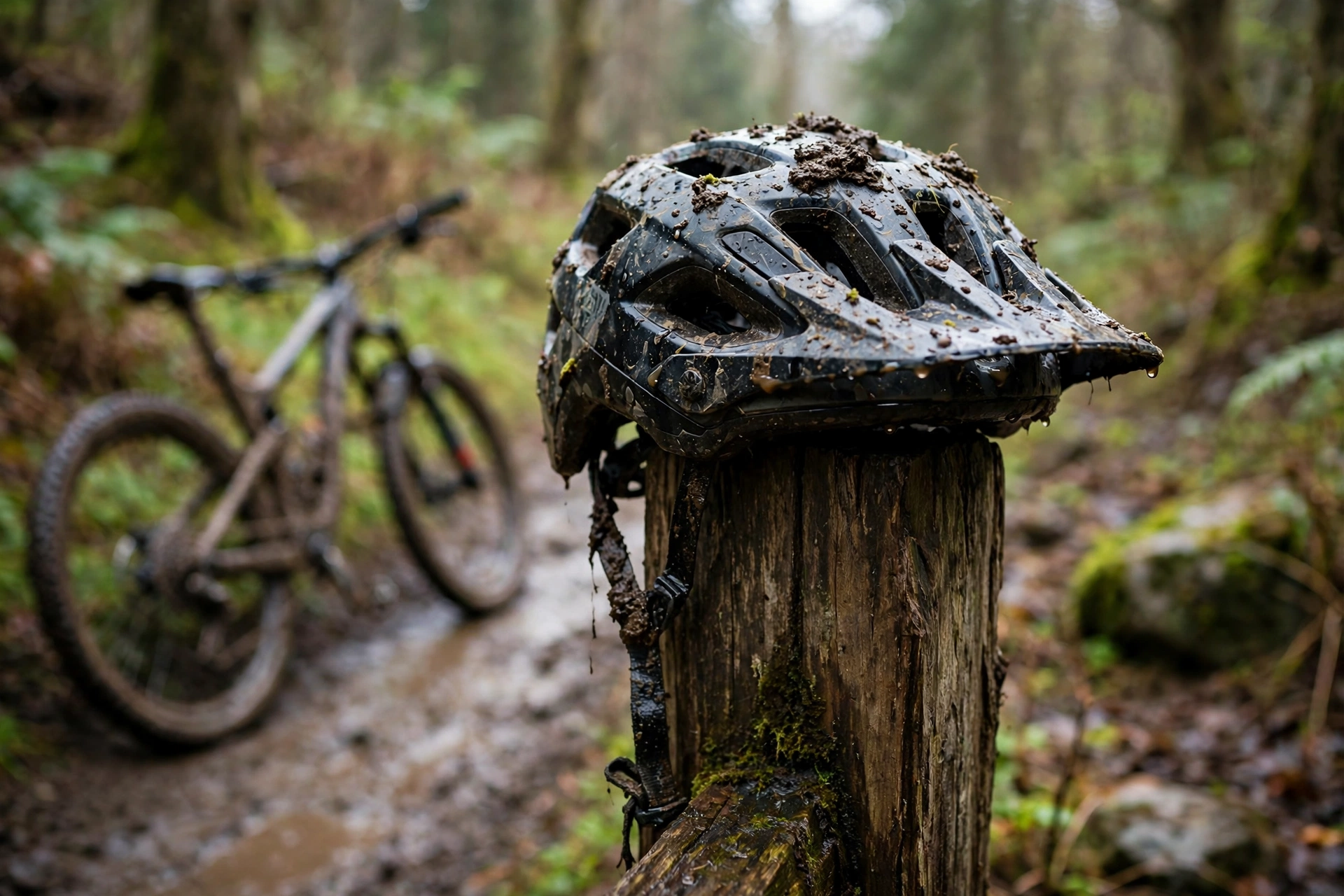
In general terms, to clean mud off an MTB helmet, let the mud dry, brush off the loose dirt, then wash the shell and pads gently with lukewarm water and mild soap — never with a pressure washer or harsh chemicals. Mud is part of mountain biking, and a helmet that has been through a wet, muddy ride needs proper cleaning: dried mud clogs vents, grit wears straps and buckles, and a dirty liner gets uncomfortable fast. Done right, cleaning takes a few minutes and extends your helmet’s life.
The key principle is gentleness. A helmet’s protective foam and shell are tough in a crash but sensitive to solvents, heat, and abrasion. The cleaning routine below keeps the helmet working properly without damaging the materials that protect you.
Should You Clean Mud Off Straight Away or Let It Dry?
Let thick mud dry first. Trying to scrub wet mud pushes grit into vents, pads, and strap webbing, where it grinds away at the material. Instead, knock off the worst of it at the trailhead, then leave the helmet somewhere airy until the mud is dry and crumbly.
Once dry, brush off the loose mud with a soft brush or an old toothbrush, working around vents, the visor mounts, and the strap adjusters. Pay attention to the areas around the fit system and buckles, where grit collects and can jam the mechanism. This dry stage removes most of the mud without any water at all.
Only then move to washing. If you are in a hurry, you can rinse light mud off straight away with gentle running water, but for a properly caked helmet the dry-first approach is kinder to the helmet and more effective overall.
How Do You Wash the Shell and Vents?
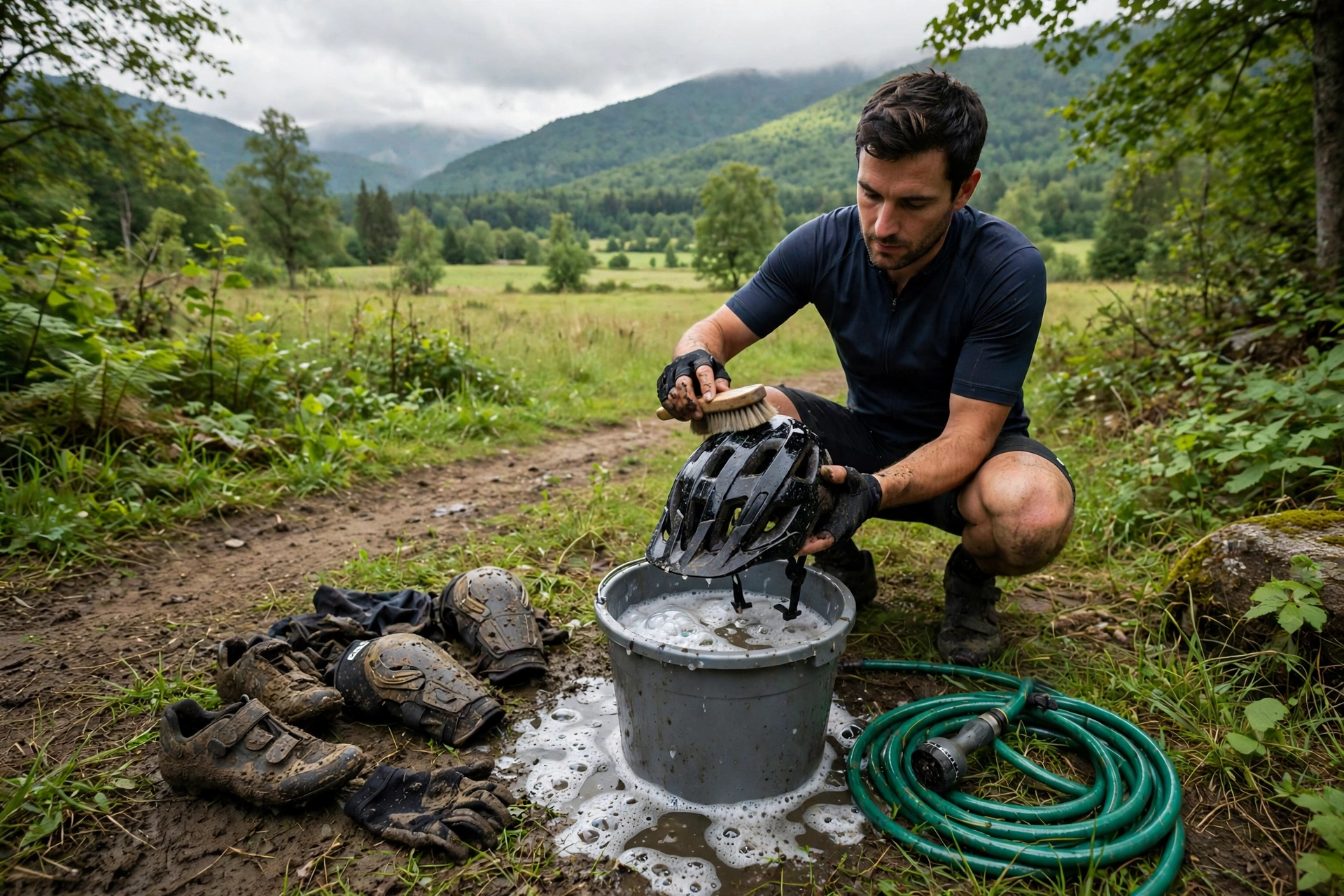
Use lukewarm water and a small amount of mild soap — washing-up liquid or a gentle hand soap is fine. Dampen a soft cloth or sponge, wipe the shell inside and out, and work around the vents with a soft brush to clear trapped mud. Rinse with clean water and wipe dry with a soft towel.
Never use a pressure washer, a jet wash, or a stiff brush on a helmet. High-pressure water can force grit into the foam and damage the shell finish, and abrasive pads can scratch the shell and weaken it. Solvents, petrol, and strong cleaning chemicals are also off limits: they can attack the foam liner and the shell material, reducing protection in ways you cannot see.
Check the shell as you clean. Look for cracks, dents, deep scratches, and any area where the shell has separated from the foam. Cleaning is a good time to inspect, because you are handling the whole helmet closely. If you find damage, or the helmet has taken a hard crash, replace it rather than continuing to ride in it.
How Do You Clean the Pads and Straps?
Most MTB helmet pads are removable. Take them out and wash them by hand in lukewarm water with mild soap, then rinse and air-dry them fully before refitting. Do not put pads in a washing machine or tumble dryer unless the manufacturer explicitly says you can — heat and agitation can distort them, and a distorted pad changes how the helmet fits.
Straps and buckles need attention too. Wipe the webbing with a damp cloth and mild soap, and work the buckles and adjusters to flush out grit. A buckle that sticks or a strap adjuster that slips is often just dirty — cleaning usually fixes it. If a strap is frayed or a buckle is cracked, replace the part or the helmet.
Rotational impact systems, where fitted, should be cleaned gently as well. This guide to what MIPS means for helmets explains how one such system works — and because it involves a moving layer inside the helmet, it is worth keeping grit out of that mechanism with a gentle rinse rather than aggressive scrubbing.
How Should You Dry an MTB Helmet?
Air-dry the helmet at room temperature, away from direct sunlight and radiators. Stuffing it with a dry towel can help absorb moisture from the liner, but do not use a hair dryer on a hot setting or leave the helmet on a heater — heat can distort the foam and degrade the shell over time.
Let the helmet dry completely before storing or riding in it. A damp helmet stored in a bag grows mould and smells, and damp pads are uncomfortable on the next ride. Drying usually takes several hours, so wash the helmet the evening after a ride rather than just before the next one.
Once dry, refit the pads, check the fit system moves freely, and give the helmet a final shake test. The helmet should feel clean, stable, and comfortable — if pads are still damp or the fit feels different, something is not fully dry or not refitted correctly.
How Often Should You Clean Your MTB Helmet?
After every muddy ride, at minimum, brush off dried mud and wipe the shell. A full wash of pads and straps is worth doing regularly through the wet season, and whenever the helmet starts to smell or the pads feel grubby. Riders who ride weekly in mud may wash pads every few rides; fair-weather riders can go longer.
Regular cleaning also helps you spot wear early: fraying straps, compressed pads, cracked mounts, and loose visors all show up when you handle the helmet. A helmet that smells or feels grubby is telling you it needs attention too — sweat and bacteria build up in pads over time, and regular washing keeps both the helmet and the rider more comfortable. Think of cleaning as a basic inspection as well as hygiene.
Finally, store the helmet somewhere cool, dry, and out of direct sunlight, ideally in a helmet bag or on a shelf where it cannot be knocked. Good storage between rides keeps a clean helmet clean and protects the shell from the knocks that shorten its life.
Frequently Asked Questions
Q: Can I put my MTB helmet in the washing machine?
A: In general terms, no — machine washing can distort pads and damage the shell and foam. Wash pads by hand in lukewarm water with mild soap, and wipe the shell with a damp cloth.
Q: Is it safe to use a pressure washer on a muddy helmet?
A: No. High-pressure water can force grit into the foam and damage the shell finish. Use gentle running water, a soft brush, and mild soap instead.
Q: How do I get the smell out of my helmet pads?
A: Hand-wash the pads in lukewarm water with mild soap, rinse well, and air-dry them fully. Regular washing prevents the build-up that causes most helmet smells.

Olivia
Writer at Helmet Today, covering helmet reviews, fit and riding safety.