In general terms, downhill MTB helmets are full-face helmets built for high-speed, high-impact riding, while trail helmets are open-face helmets built for pedalling comfort, ventilation, and all-day wear. The difference is not just the chin bar — it reflects two different kinds of riding, with different speeds, falls, and priorities.
Mountain bikers often own one helmet and use it for everything, which works up to a point. But a helmet optimised for flowing singletrack is a compromise on a steep downhill track, and a downhill helmet is overkill — and uncomfortable — on a long trail ride. This guide explains the real differences so you can choose for the riding you actually do.
What Is a Downhill MTB Helmet Built For?
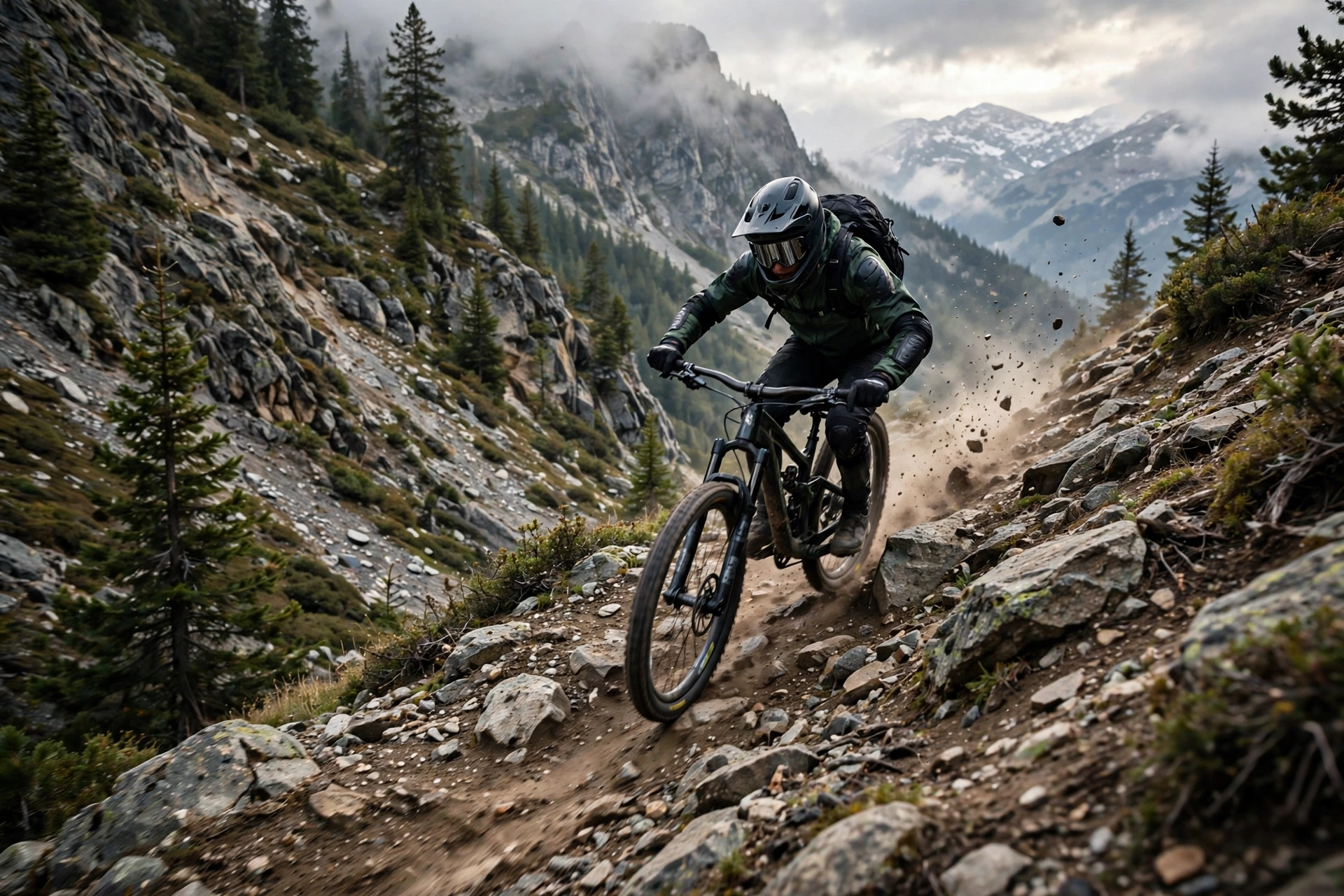
Downhill riding means steep, technical descents at high speed, often on lift-served bike parks with jumps, drops, and rock gardens. Falls at downhill speed are hard, and they frequently involve the face and jaw — a rider pitched forward over the bars, or sliding face-first, needs protection an open-face helmet cannot give.
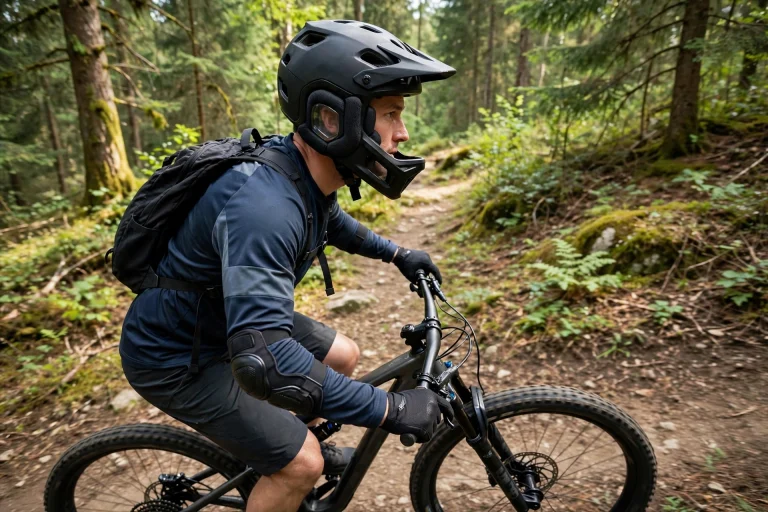
That is why downhill helmets are full-face: a chin bar wraps the jaw and lower face, the shell is built to handle higher-energy impacts, and the whole helmet is certified for downhill use. Many downhill helmets also have a visor and a goggle setup, because vision at speed matters and goggles stay put better than glasses on rough descents.
Downhill helmets accept weight and heat as the price of protection. They are heavier than trail helmets and less ventilated, but downhill riders do not pedal uphill in them — they ride the lift up and descend — so ventilation and pedalling comfort matter less than maximum protection on the way down.
What Is a Trail MTB Helmet Built For?
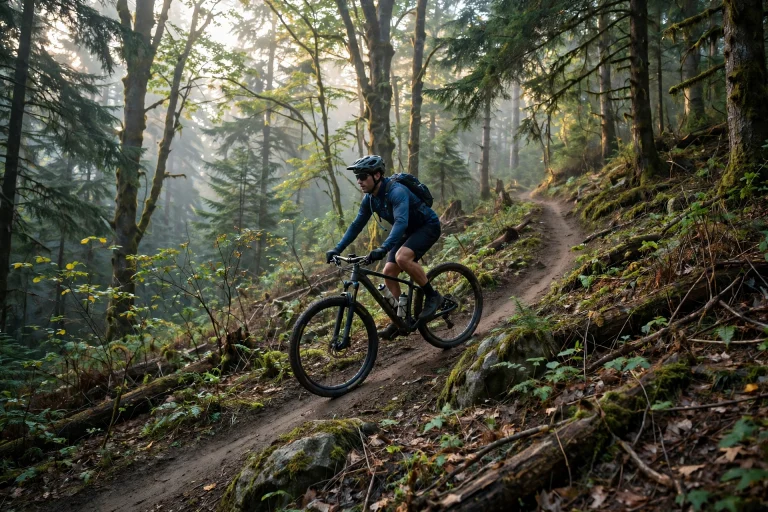
Trail riding is the all-round middle of mountain biking: climbing, descending, flowing singletrack, and long days in the saddle. A trail helmet has to be comfortable for hours, breathe well on climbs, and protect against the falls trail riders actually have — typically lower-speed tumbles, sideways falls, and the occasional over-the-bars moment on technical features.
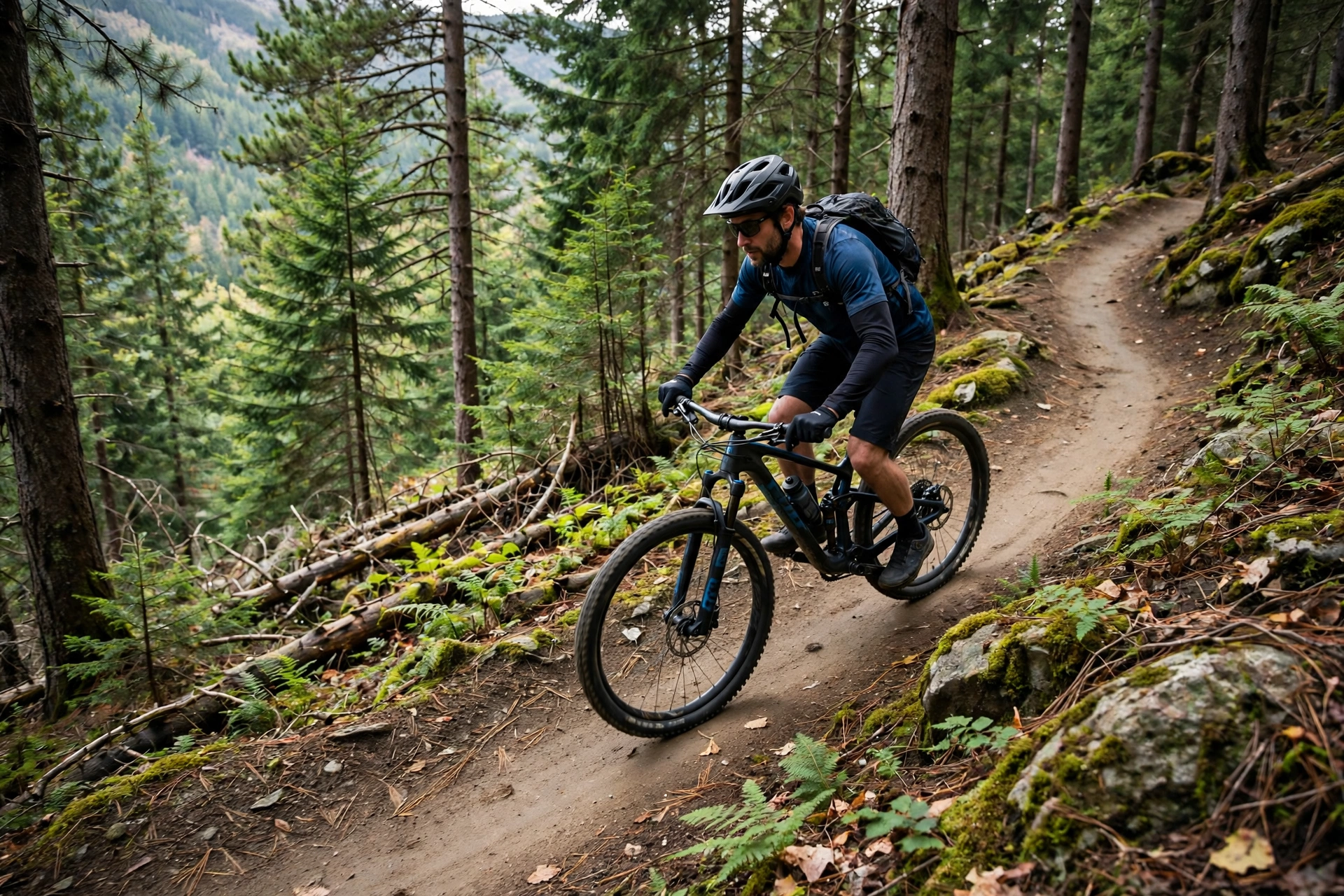
Trail helmets are open-face, with extended rear and side coverage compared with a road helmet. That extended coverage protects the back and sides of the head, which are exposed in the sideways and backward falls common on trails. Modern trail helmets also tend to include rotational impact protection, reflecting the angled nature of most trail crashes.
Ventilation is a priority on a trail helmet, because climbing generates heat and a hot helmet is a miserable one. Trail helmets use large vents and internal channelling to move air over the head, and they are light enough to forget about on a long ride. Many also have an adjustable visor to shade the eyes and deflect branches.
How Do Protection Levels Compare?
The chin bar is the headline difference. A downhill full-face helmet protects the jaw, chin, teeth, and lower face; a trail helmet leaves those areas exposed. For a trail rider, that is an accepted trade-off — face impacts are less common at trail speeds, and the comfort and ventilation gains are large. For a downhill rider, it is not a trade-off worth making.
Impact certification differs too. Downhill helmets are tested to standards that reflect higher-speed impacts, while trail helmets are certified for the impact profile of general mountain biking. A trail helmet is not a weaker downhill helmet — it is a helmet tested for a different job — but using it for downhill means relying on a helmet outside its designed use.
Coverage also differs in subtle ways. Trail helmets cover more of the back of the head than road helmets, but downhill helmets typically wrap lower and more completely, with cheek pads that hold the helmet firmly in place. That snug, enveloping fit suits high-speed riding, where a helmet must not shift in a violent crash.
Rotational protection appears on both types now. Systems designed to reduce twisting forces in angled crashes are available on trail and downhill helmets alike, and they are worth understanding whatever you ride. This guide to what MIPS means for helmets explains how one such system works.
Can One Helmet Cover Both Downhill and Trail Riding?
Many riders try, and the answer depends on which direction you compromise. A downhill full-face helmet used on trails is safe but uncomfortable: heavy, hot, and restrictive on climbs, with muffled hearing that makes group communication harder. Some riders accept that for shuttle days with short climbs, but for all-day pedalling it wears thin quickly.
A trail helmet used for downhill is comfortable but under-protective: no chin bar, lower impact rating, and a fit that may shift more in a hard crash. For gentle, low-speed downhill sections on a trail ride, that is fine — most trail rides include short descents, and a trail helmet is designed for exactly that. For a dedicated downhill track or a bike park, it is not enough.
The practical answer for riders who do both regularly is two helmets, or a convertible helmet. Convertible helmets have a removable chin bar, offering full-face protection for descents and open-face comfort for climbs. They are a genuine compromise — heavier than a pure trail helmet, less protective than a dedicated downhill helmet — but for riders who mix both in one day, they can be the best single-helmet solution.
How Should Each Helmet Fit?
A trail helmet should sit level, cover the forehead, and stay put with the straps snug — the same basic fit as any open-face helmet. The extended rear coverage should sit low on the back of the head without pressing the neck, and the visor should not block your view of the trail ahead.
A downhill helmet should fit more snugly, with cheek pads holding your cheeks gently and the chin bar close to the chin without pressing on it. It should not rock or lift, and your vision through the eyeport or goggles should be wide and clear. A downhill helmet that is loose is dangerous at speed, because it can shift or rotate in a crash.
Both types should be replaced after a hard crash, and inspected regularly for cracks, crushed foam, and worn straps. A helmet that has absorbed a serious impact has done its job once; do not rely on it a second time.
Frequently Asked Questions
Q: Can I wear a trail helmet at a bike park?
A: In general terms, bike parks often require or strongly recommend full-face helmets for downhill tracks. Check the park’s rules, and choose a full-face helmet for dedicated downhill runs.
Q: Is a convertible helmet as safe as a dedicated downhill helmet?
A: Not quite — a removable chin bar is a compromise, and a dedicated full-face helmet is generally stronger. But a convertible helmet is safer for descents than an open-face trail helmet, and more practical than carrying two helmets.
Q: Do trail helmets have enough rear coverage for mountain biking?
A: Yes, modern trail helmets are designed with extended rear and side coverage specifically for trail falls. They cover considerably more of the back of the head than a road cycling helmet.

Olivia
Writer at Helmet Today, covering helmet reviews, fit and riding safety.