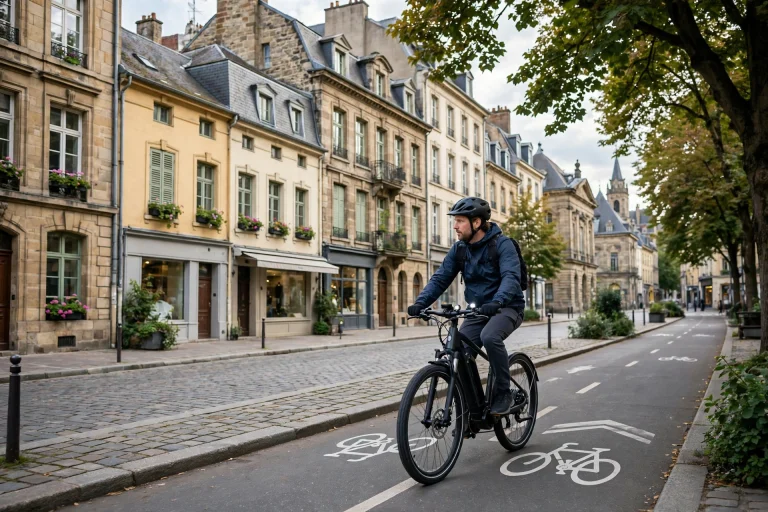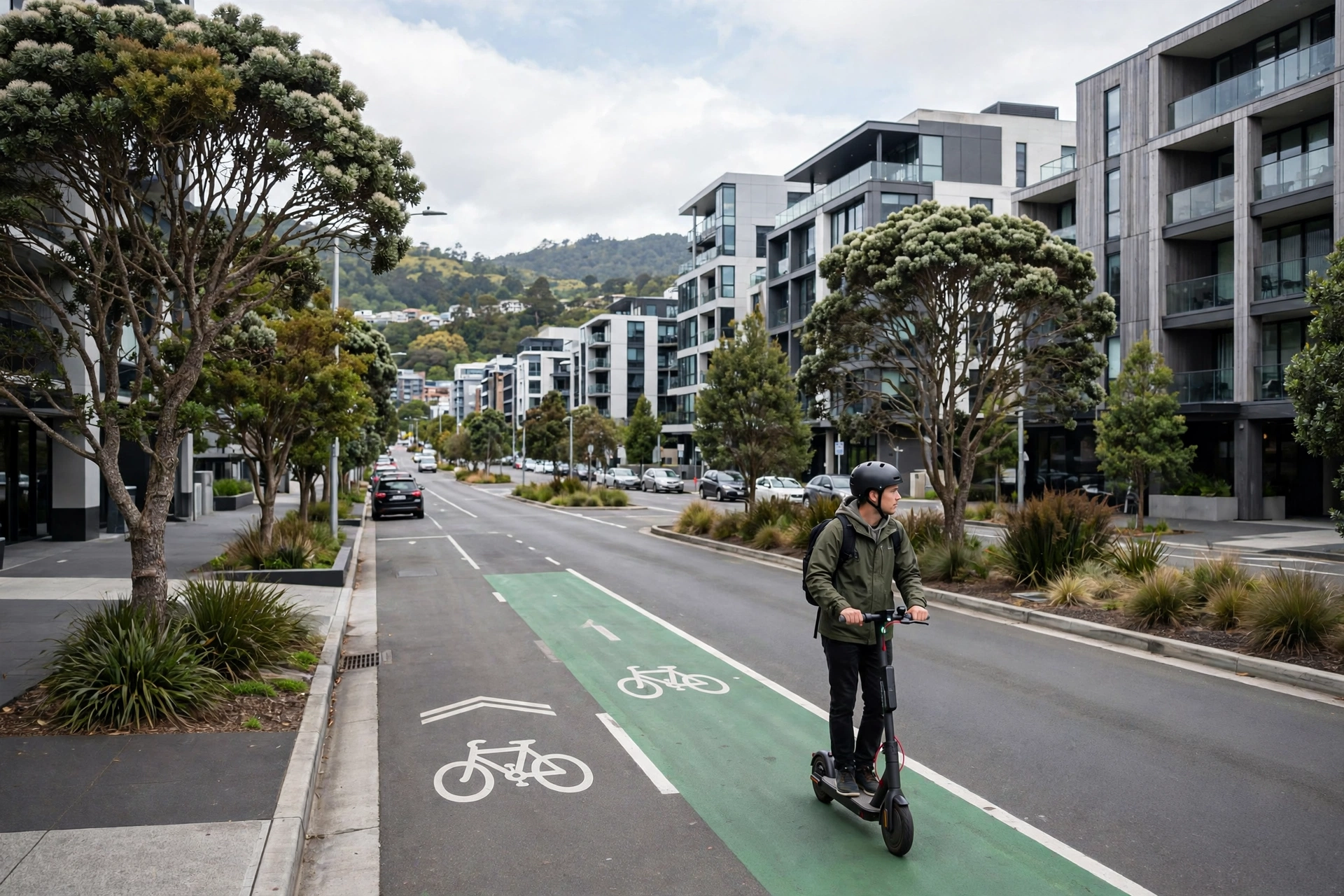
In general terms, e-scooter riders in New Zealand are expected to wear a helmet, and the rules treat e-scooters much like bicycles — but the exact requirements can depend on where and how you ride, so checking the current local rules before you set off is always wise. E-scooters have become a common sight in New Zealand cities, used for short trips, commuting, and getting around town. Because they are quick, quiet, and ridden in traffic, helmets are a central part of riding one safely.
This guide explains the e-scooter helmet rules in New Zealand in general terms: who the rules apply to, what kind of helmet is expected, where the rules are enforced, and what else riders should know. It is not legal advice, and it does not quote specific laws or penalties. Rules can change, and local councils may have their own conditions for shared scooters and riding in certain areas, so always check the current rules for the place you are riding.
Do E-Scooter Riders in New Zealand Have to Wear a Helmet?
In general terms, yes. New Zealand’s road rules require people riding devices like e-scooters to wear an approved helmet, in much the same way as cyclists. The idea is straightforward: a rider on an e-scooter travels at a speed where a fall can cause a serious head injury, and a helmet is the simplest protection available. The requirement applies whether the scooter is privately owned or rented from a shared hire scheme.
That said, the way the rules apply can feel confusing in practice, because e-scooters sit between categories. They are not cars, they are not bicycles, and they are not motorbikes, so riders sometimes assume the rules are looser than they are. In general terms, the safest approach is to treat the helmet rule as applying every time you ride, on every trip, however short. A quick ride to the shops carries the same risk of a fall as a longer journey.
What Kind of Helmet Should an E-Scooter Rider Wear?
In general terms, an e-scooter rider should wear a helmet that meets a recognised safety standard and fits properly. A standard bicycle helmet is the most common choice, and for most e-scooter riding it is a sensible one. Bicycle helmets are light, well ventilated, and designed for the kind of speeds and falls a scooter rider is likely to face. Some riders prefer a skate-style helmet, which covers more of the back of the head and can feel more robust at low speeds.
Whatever style you choose, fit matters more than looks. A helmet should sit level on your head, covering your forehead without tipping back, and the straps should form a snug fit under your chin with no more than a finger or two of slack. A helmet that wobbles, slides over your eyes, or sits high on your forehead is not doing its job, even if it carries the right label. Try it on before you buy, and adjust the fit system until it feels secure.
It is also worth thinking about visibility. E-scooter riders are small and quiet in traffic, so a brightly coloured helmet, or one with reflective details, helps other road users spot you. Some helmets include a rear light mount, which is a useful extra for evening rides. If you are learning about how different helmet technologies protect your head, reading about what MIPS is for helmets can help you understand one of the safety systems found in many modern helmets.
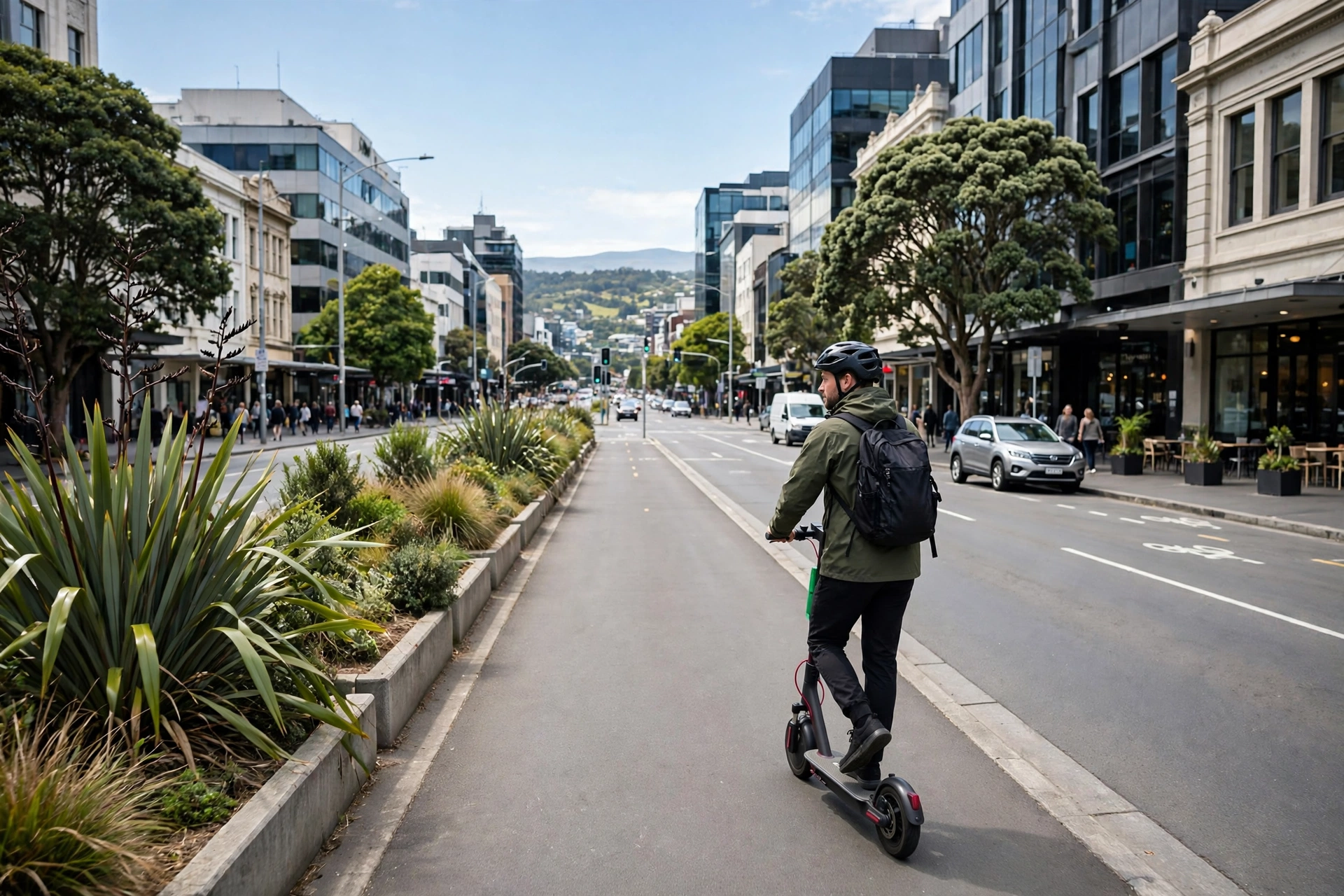
Where Can E-Scooters Be Ridden in New Zealand?
In general terms, e-scooters in New Zealand are ridden on roads, cycle lanes, and shared paths, but not on footpaths in the way pedestrians use them, and the details can vary by city. Some councils set speed limits for shared paths, or restrict scooters from busy pedestrian areas at certain times. Because e-scooters are relatively new, councils are still adjusting their rules, and what is allowed in one city may differ from what is allowed in another.
Riders should also be aware that e-scooters have speed and power limits that decide how they are classified. In general terms, a low-powered scooter used at modest speeds is treated as a light personal device, while a faster, more powerful machine may fall under different rules. If you own a high-powered scooter, check how it is classified before you ride it on public roads, because the helmet and licensing expectations may be different.
Are the Rules Enforced, and What Happens If You Ride Without a Helmet?
In general terms, the helmet rules for e-scooters can be enforced by police, in the same way as the helmet rules for cyclists. Enforcement in practice tends to focus on busy areas and on riders behaving dangerously, but riding without a helmet is still a breach of the rules, and riders should not assume they will be ignored. The point of enforcement is not to punish riders but to encourage a habit that prevents serious injuries.
It is also worth remembering that the consequences of riding without a helmet go beyond any official penalty. If you are in a crash without a helmet, the injury is likely to be worse, and insurance or compensation claims can become more complicated. Some hire schemes also have their own terms and conditions that require helmet use, so riding without one could breach the hire agreement as well as the road rules.
The practical advice is simple: wear a helmet every time, even for a two-minute trip. The trips people skip the helmet for are often the ones where a fall happens — a wet patch, a pothole, a pedestrian stepping out — because short, familiar trips are when riders relax and pay less attention. Making the helmet part of the routine, like locking the scooter when you park it, removes the decision entirely.
What Else Should E-Scooter Riders in New Zealand Know?
Beyond the helmet, there are a few other things that make e-scooter riding safer and simpler. First, ride at a speed that matches the conditions. E-scooters can feel stable, but small wheels react badly to potholes, wet leaves, and uneven surfaces, and stopping distances grow quickly as speed rises. Slowing down on shared paths and near pedestrians is both polite and safer.
Second, make yourself visible and predictable. Use lights at night, signal before turning, and avoid sudden swerves. Other road users need time to react to a scooter, especially because scooters are quiet and easy to miss in a mirror. A hi-vis vest or bright clothing helps, particularly in New Zealand’s changeable weather, when rain and low light can arrive quickly.
Frequently Asked Questions
Q: Do I need a helmet on a hire e-scooter in New Zealand?
A: In general terms, yes — the helmet requirement applies whether the scooter is privately owned or hired. Hire scooters usually do not come with a helmet, so riders are expected to bring their own.
Q: Is a bicycle helmet good enough for riding an e-scooter?
A: In general terms, yes. A bicycle helmet that meets a recognised standard and fits well is a sensible choice for most e-scooter riding. Some riders prefer a skate-style helmet for extra coverage at the back of the head.
Q: Where can I check the current e-scooter rules for my city?
A: Check your local council’s website and the national transport authority’s guidance for the latest rules. Local conditions can vary, so the current guidance for the place you are riding is the best source.

Olivia
Writer at Helmet Today, covering helmet reviews, fit and riding safety.