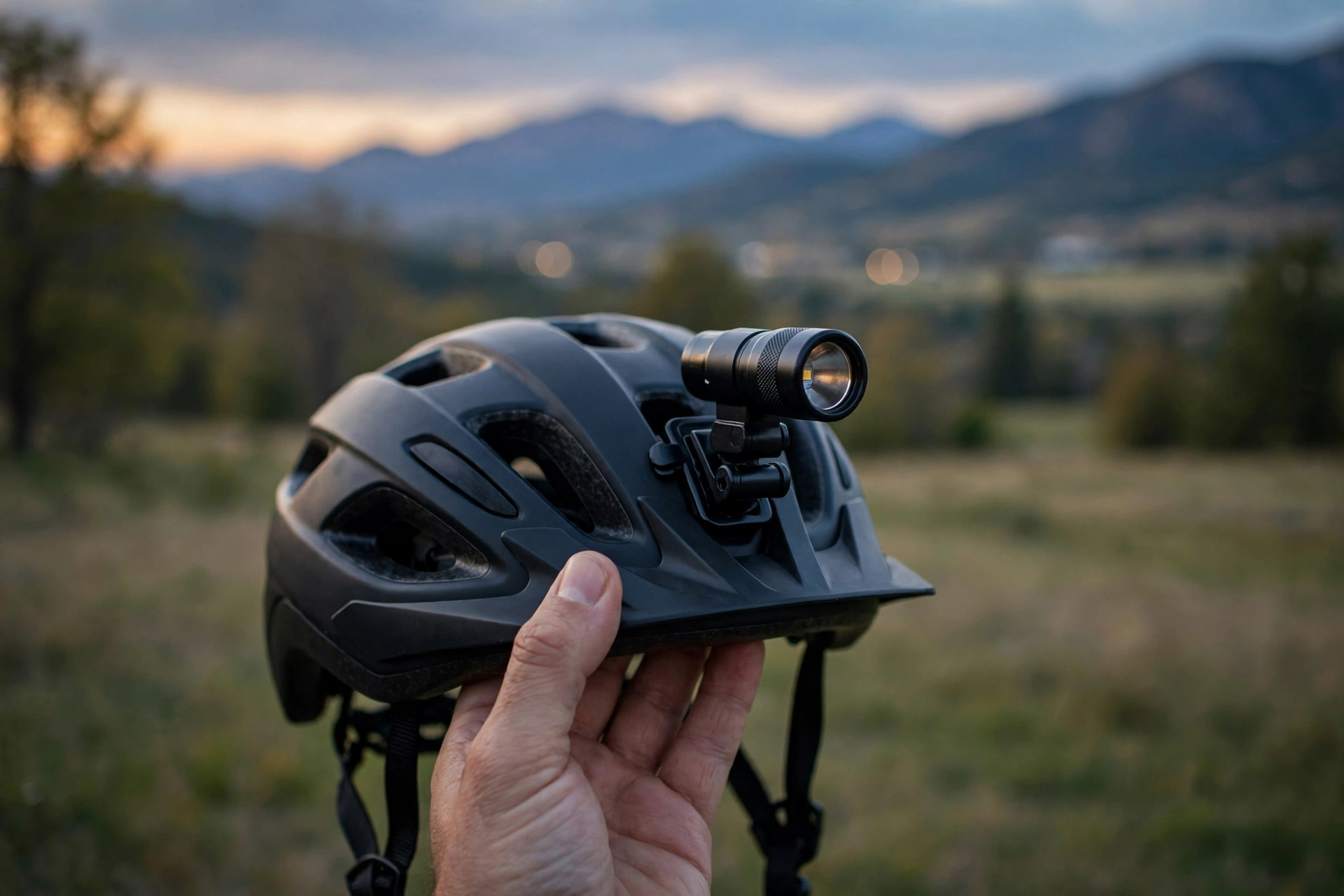
A helmet with a built-in torch mount is a helmet that has a small bracket or fitting, usually on the front or top of the shell, designed to hold a torch securely in place. It lets the rider carry a light on the head, so the beam follows where the rider looks and the hands stay free for steering, braking, or work. The mount is part of the helmet itself rather than an add-on, so the torch sits in a fixed position and is less likely to slip or wobble than a strap-on light. Torch mounts are found on some cycling, work, and outdoor helmets, and they are most useful in the dark or in low light.
How Does a Built-In Torch Mount Work?
The mount is usually a small cradle, clip, or rail that is moulded into the helmet shell or fixed to it when the helmet is made. The torch slides or clips into the cradle and is held there by friction, a clamp, or a small locking tab, so it stays put while the rider moves. It is normally set above the forehead, which puts the beam roughly in line with the rider’s eyes and points it forward in the direction the rider is facing.
Some mounts can tilt, which lets the rider aim the beam slightly up or down to suit the ground ahead. Others are fixed at one angle, so the rider aims the light simply by turning the head. In general terms, a good mount holds the torch firmly enough that it does not bounce loose on rough ground, while still letting the rider take the torch off easily. The torch itself is usually a small, light model, because a heavy torch would pull the front of the helmet down and feel uncomfortable over time.
What Is a Torch Mount For?
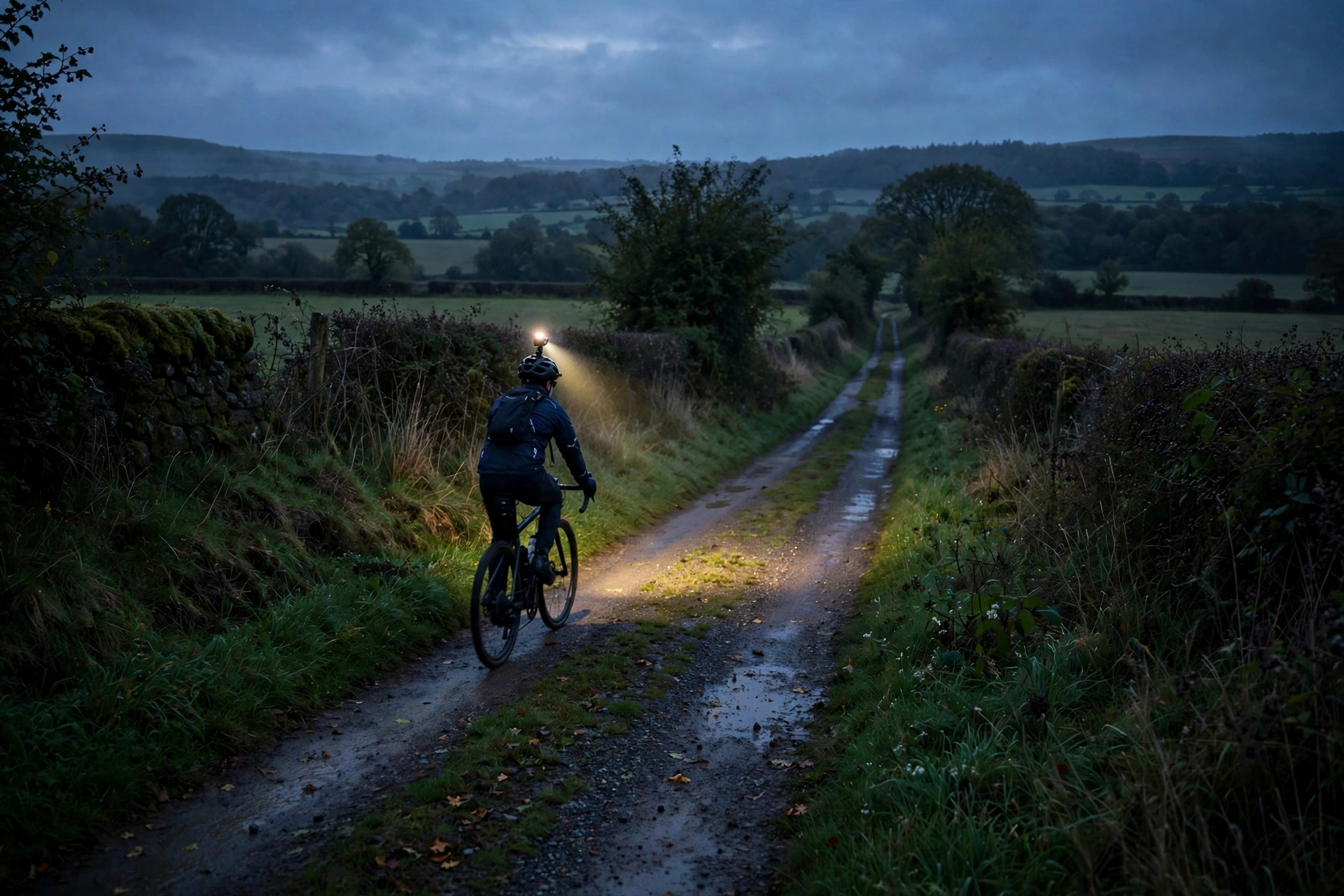
The main use of a torch mount is hands-free light for night riding. Commuters riding home after dark, mountain bikers on evening trails, and riders on unlit country lanes all benefit from a light that moves with the head. When the rider looks into a corner, checks a road sign, or glances at a junction, the beam goes where the eyes go, which a fixed handlebar light cannot do on its own.
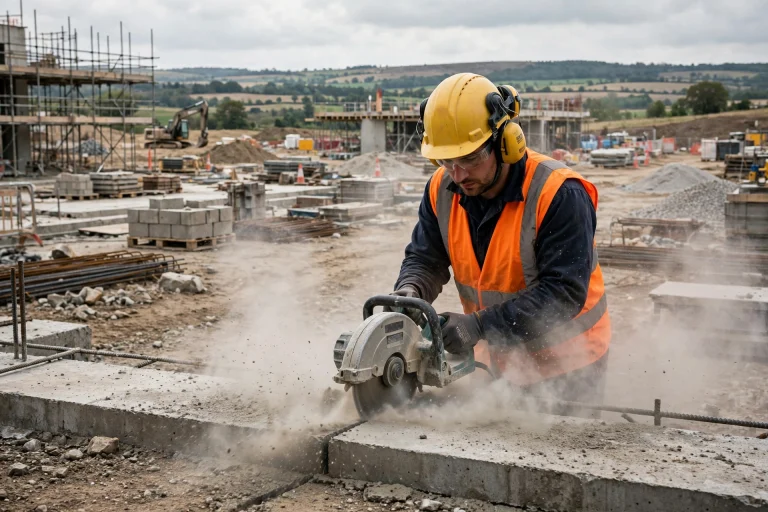
Work helmets with torch mounts serve a similar purpose for people who need both hands free in the dark, such as maintenance workers, inspectors, and rescue workers. The same idea works for camping, walking, and other outdoor activities after sunset. In all of these cases the point is the same: the light is always where the wearer is looking, and the hands are free for the job at hand, whether that is steering a bike or carrying tools.
What Kind of Torch Fits a Helmet Mount?
Which torch fits depends on the design of the mount, so it is worth checking the size before buying one. Many mounts are made for small cylindrical torches of a common diameter, and the torch simply slides into a ring or cradle and is gripped by rubber or a clamp. Some mounts are adjustable and can take torches of different sizes, while others are shaped for one particular torch and will not hold anything else properly.
Weight matters as much as size. A light, compact torch is usually the best match, because a heavy torch on the front of the helmet can make the helmet feel unbalanced and can strain the neck on a long ride. In general terms, a torch that is easy to switch on with gloves, has a simple on-off control, and runs for the length of a typical ride is a sensible choice.
Is a Helmet Torch Mount Better Than a Handlebar Light?
Each type of light has its own strengths, and many riders use both together. A handlebar light points where the bike is pointing, which gives a steady beam on the road ahead and is easy for other road users to see. A helmet light points where the rider is looking, which is better for checking side roads, reading signs, and lighting up a corner before the bike turns into it. Used together, the two lights cover more of the road than either one alone.
A torch mount does not change how the helmet protects the head in a crash, and the mount itself is a small fitting rather than a safety system. If you want to understand one of the safety technologies used in modern helmets, reading about what MIPS is for helmets is a good place to start. In general terms, a helmet light is a useful extra for night riding, but it works best as part of a wider lighting setup rather than as the only light on the bike.
What Are the Limits of a Helmet-Mounted Torch?
A helmet-mounted torch has some limits worth knowing. The extra weight sits on the front of the helmet, and on a long ride it can make the neck feel tired, especially if the torch is heavy. The beam also moves every time the rider turns the head, which can be distracting for the rider and can briefly dazzle other people if the beam sweeps across their eyes.
There is also the risk that the torch works loose or falls out if it is not seated properly in the mount, and a mount can catch on branches or low obstacles on a trail. Battery life is another limit: a small torch may only run for a few hours, so the rider needs to plan for the length of the ride. None of these limits makes a torch mount a bad idea, but they do mean it is worth checking the fit and the battery before setting off.
How Do You Look After a Helmet Torch Mount?
Looking after a torch mount is mostly a matter of keeping it clean and checking it from time to time. Mud, dust, and grit can build up in the cradle and stop the torch sitting firmly, so a quick wipe after a dirty ride helps. If the mount has screws or a clamp, it is worth checking that they are still tight, since vibration from rough roads can loosen them over time.
The torch should be taken out of the mount when it is not in use, so the helmet can be stored normally and the torch can be charged or have its batteries changed. If the mount is cracked, bent, or no longer grips the torch, it is best not to rely on it, since a torch that falls off at speed is both lost and a hazard. As with any helmet, a hard impact means the helmet itself should be replaced, even if the mount still looks fine, because damage to the shell or liner may not be visible.
Can I add a torch mount to a helmet that does not have one?
In general terms, yes. Clip-on and strap-on torch mounts are widely available, and many fit a range of helmets. They may not sit as neatly as a built-in mount, so it is worth checking that the mount is secure and the torch does not wobble before riding.
Does a helmet torch replace a bike light?
Not on its own. A helmet torch is a useful extra light, but most riders pair it with a handlebar light and a rear light so the bike is clearly visible from all sides and the road ahead is lit steadily.
Will a torch on my helmet dazzle other people?
It can if the beam points at eye level, especially on shared paths. Aiming the torch slightly downward and using a lower brightness setting when other people are near helps keep the light helpful rather than blinding.

Olivia
Writer at Helmet Today, covering helmet reviews, fit and riding safety.