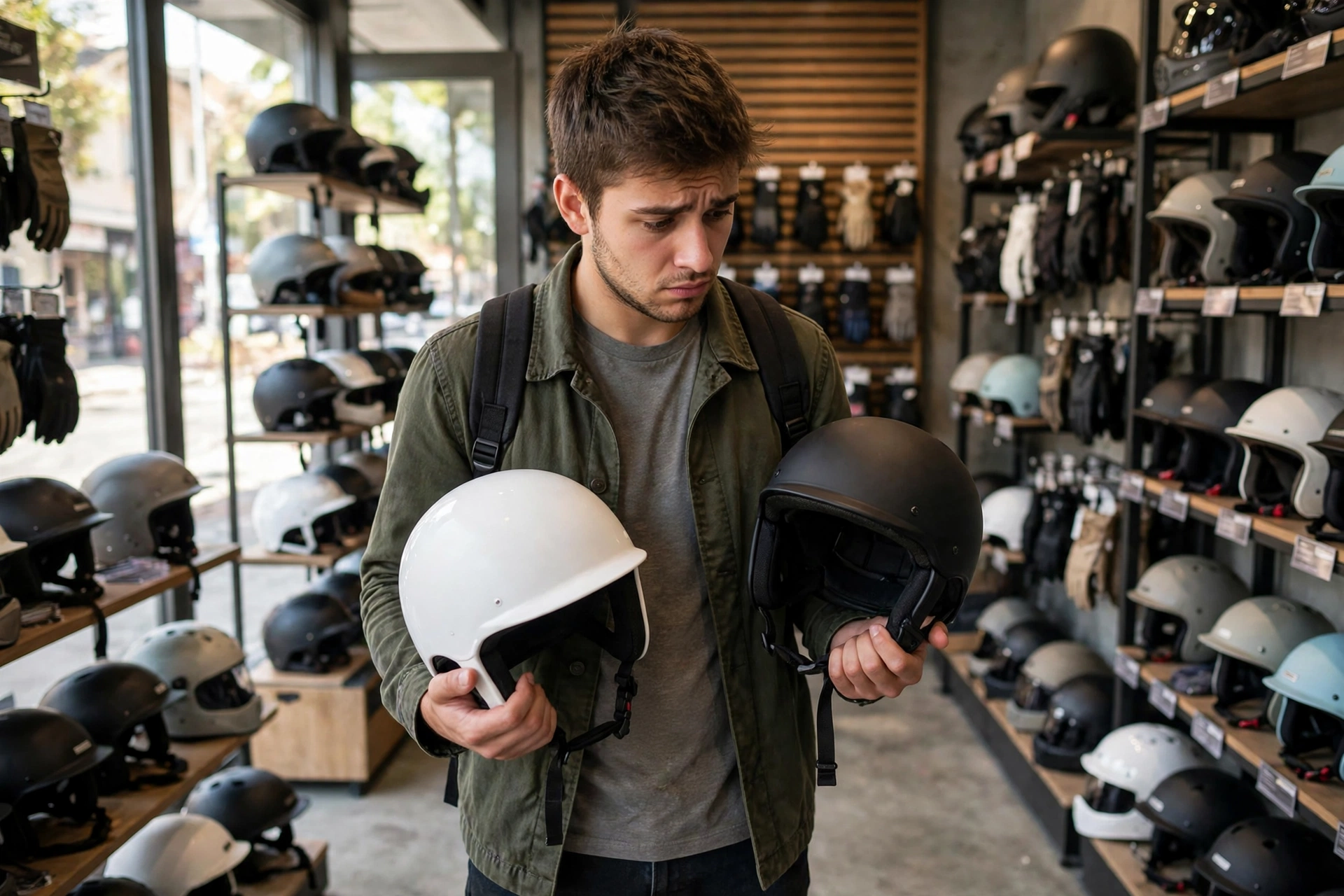
The helmet buying mistakes beginners make almost all come down to one thing: choosing with their eyes before their head — buying for looks, price, or a friend’s recommendation instead of fit and certification. A helmet only protects you if it fits your head shape, stays in position, and actually gets worn. Getting those basics right matters far more than which graphics you pick.
Every helmet shop sees the same pattern: a new rider walks in with a photo of a helmet they like, tries it for thirty seconds, and buys it — then wonders why it hurts on the first long ride. Fit, certification, sizing, and buying channel all have classic traps, and every one of them is avoidable with a few minutes of knowledge. Here are the mistakes that matter most.
What Is the Biggest Helmet Buying Mistake Beginners Make?
Buying for looks first. Color and style are the last things to choose, not the first, because the best-looking helmet in the wrong internal shape is simply an expensive headache. A helmet that hurts gets left at home, loosened, or worn unfastened — and an unworn helmet has a protection rating of exactly zero.
The fix is a simple order of operations: certification first, then shape and fit, then features, and only then graphics. You will usually find that several models pass the fit test, and you can pick the one you like the look of from that shortlist. That is the correct way around — the style choice comes from the helmets that fit, not the other way.
Beginners also over-weight other people’s opinions. A helmet that is perfect for your friend’s oval head may be miserable on your round one. Recommendations are useful for pointing you at reputable makers, but your head is the only fitting tool that counts.
Why Is Buying the Wrong Size So Common?
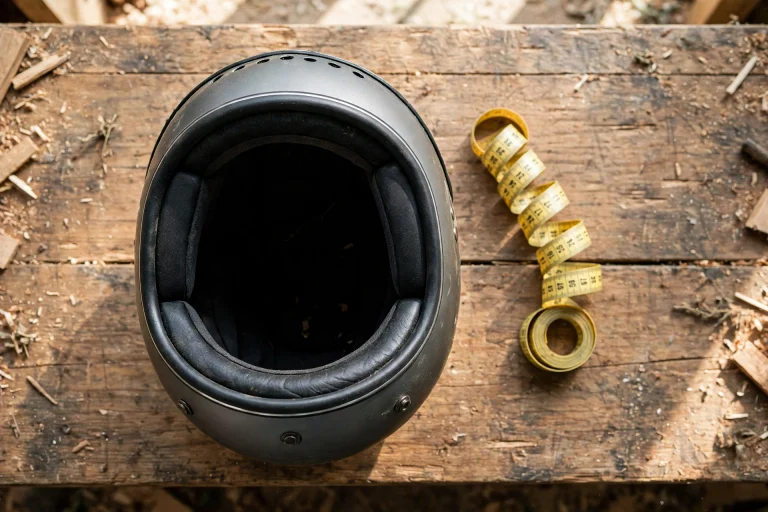
Because most beginners never measure their head. They guess from hat size, pick the size they wore years ago, or grab a medium because they are “usually a medium.” Helmet sizing starts with a tape measure: wrap it around your head just above the eyebrows and ears, take the circumference in centimeters, and match it to the size chart of the specific model you are buying — charts differ between makers.
The second sizing trap is buying room to grow into, or room for comfort. A new helmet should feel snug — firmer than most people expect — because comfort padding compresses a little over the first weeks of use. A helmet that feels perfect and roomy on day one often feels sloppy by month two, and a loose helmet can shift in exactly the moment it needs to stay put.
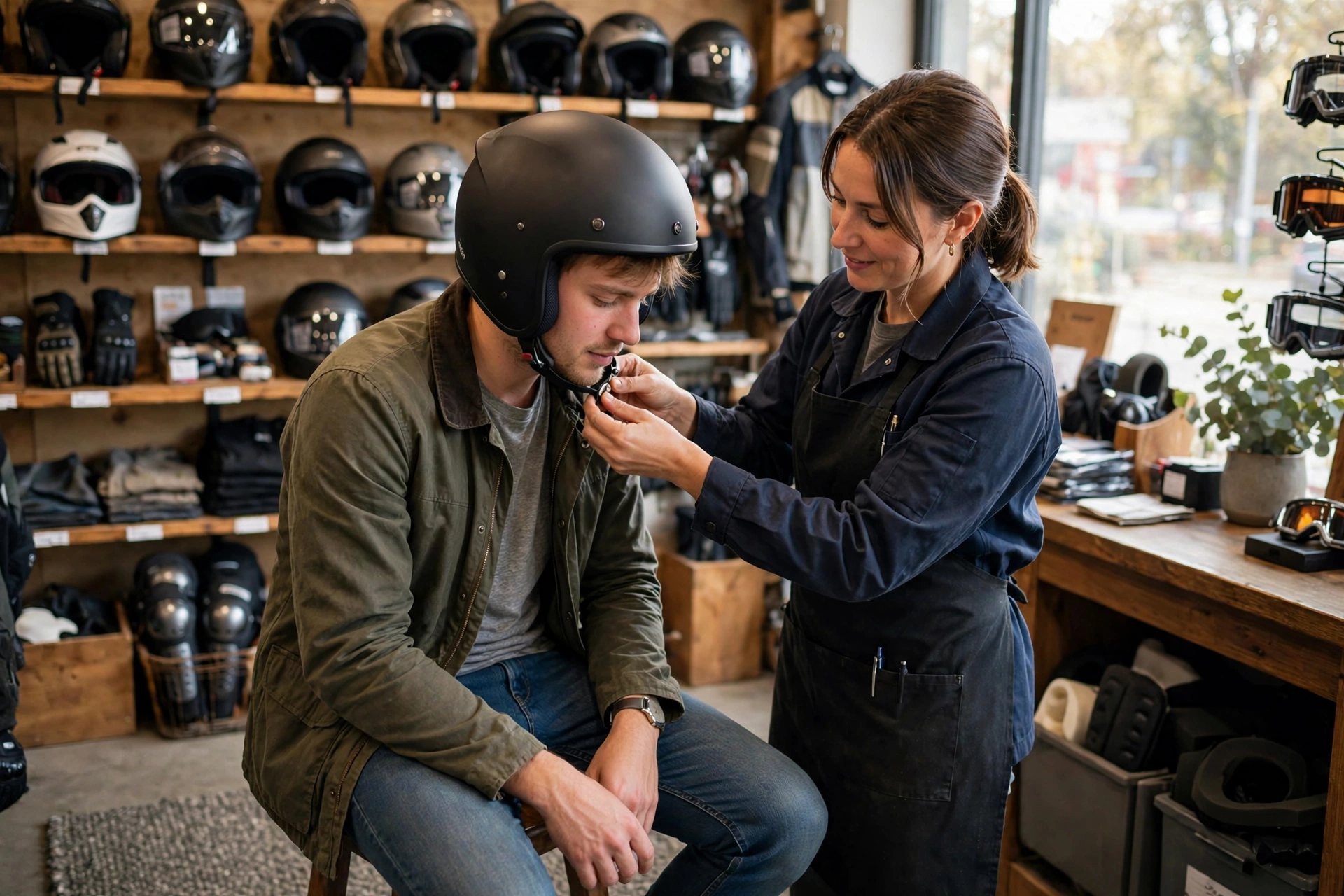
The third trap is the thirty-second try-on. Pressure points from a wrong shape take ten to twenty minutes to announce themselves. Wear any serious candidate around the shop for at least fifteen minutes. If the staff hurry you, that is the wrong shop, not the wrong process.
Should Beginners Buy a Helmet Online or In Store?
In store, at least the first time. Your first helmet purchase is really a fitting session: you need to try several shapes, learn what snug-but-right feels like, and have someone check how the helmet sits. That knowledge then makes later online purchases much safer, because you know your size in specific product lines.
Online buying has real traps for beginners. Sizing charts are only as good as your measurement, shapes are invisible in product photos, and the bargain helmet from an unknown marketplace seller carries a real risk of being a counterfeit or an uncertified novelty item with a sticker that means nothing. A suspiciously cheap “certified” helmet is a red flag, not a deal.
If you do buy online, buy from an authorized retailer with a genuine returns policy, and try the helmet on at home for a full fifteen minutes before removing any tags you are not allowed to remove. And never buy a used helmet, online or anywhere else: you cannot know its crash history, its age, or how it was stored, and foam damage is often invisible.
Why Is Ignoring Certification Such a Serious Mistake?
Because the certification label is the only evidence that a helmet was actually tested to a safety standard. In the US, bicycle helmets must meet the CPSC standard, motorcycle helmets sold for road use must meet DOT requirements, and ski helmets are commonly certified to ASTM F2040 or EN 1077 — the details differ by sport, but the principle is the same: look inside the helmet for the label for your activity.
Beginners get caught by two look-alikes. The first is the novelty helmet — a thin shell sold as a costume or fashion item, sometimes with a fake or meaningless sticker. The second is assuming a helmet certified for one sport covers another. A skate helmet, a bike helmet, and a motorcycle helmet are tested differently; in general terms, use the helmet designed and certified for the activity you are doing.
Features come after certification, not instead of it. Once a helmet is certified and fits, extras like a rotational liner — described in our guide to how MIPS protection works — better vents, or a drop-down sun visor are all legitimate reasons to step up a model. But no feature compensates for a missing certification label.
What Mistakes Do Beginners Make After Buying?
The helmet’s life after purchase is full of quiet errors. Wearing it unbuckled or with a slack strap tops the list: the helmet must stay in position during a fall, and a loose strap lets it shift or come off. The strap should be snug, with roughly two fingers of room under your chin, every single ride.
Storage mistakes come next. Helmets left baking in a hot car, hung by their straps, or tossed loose into a trunk age faster and collect hidden damage. Store yours indoors, out of direct sun and heat, and never use solvents or strong cleaners on it — mild soap and water, and maker-approved products only.
Finally, beginners keep helmets too long and replace them too late — or never. Replace a helmet after any crash, even one that leaves no visible mark, because the foam protects by crushing once. Replace it when straps fray, the fit stays loose with fresh pads, or it passes the maker’s recommended service life, which in general terms is a handful of years of regular use. A helmet is consumable safety equipment, not a lifetime purchase.
Frequently Asked Questions
Q: How tight should a new helmet feel?
A: Snug and even all around, without pain or a single sharp pressure point. It should move your scalp when you try to shift it and stay put when you shake your head. Comfortable looseness on day one is a warning sign — padding settles with use, so a slightly firm new fit is correct.
Q: Is it okay to buy a second-hand helmet to save money?
A: No. You cannot verify a used helmet’s crash history, age, or storage, and impact damage is frequently invisible under the shell. A new, certified, entry-level helmet is a far safer purchase than a premium used one of unknown history.
Q: What should a beginner check first when shopping for a helmet?
A: The certification label for your activity, then fit. Measure your head, try several models in your size for at least fifteen minutes each, and shortlist the ones with even, hotspot-free pressure. Choose style and features only from that shortlist.

Olivia
Writer at Helmet Today, covering helmet reviews, fit and riding safety.