Yes, a helmet helps in a dust storm — it protects your head from flying debris, keeps dust and grit out of your eyes and hair, and gives you a visor or goggles to see through when the air turns brown. Riding in a dust storm is one of the hardest conditions a rider can face. Visibility can drop to a few metres in seconds, the wind gusts hard enough to push you sideways, and the air is full of sand and grit that stings any exposed skin.
This guide explains how to choose and use a helmet for riding in dust storms, what to look for in a visor and ventilation system, and how to ride safely when the dust arrives. It covers motorcycle and off-road riding in general terms, because dust storms affect riders in deserts, dry farmland, and dusty outback roads alike. The advice is practical: what to wear, what to check before you ride, and when the right call is to stop altogether.
Why Is Riding in a Dust Storm So Dangerous?
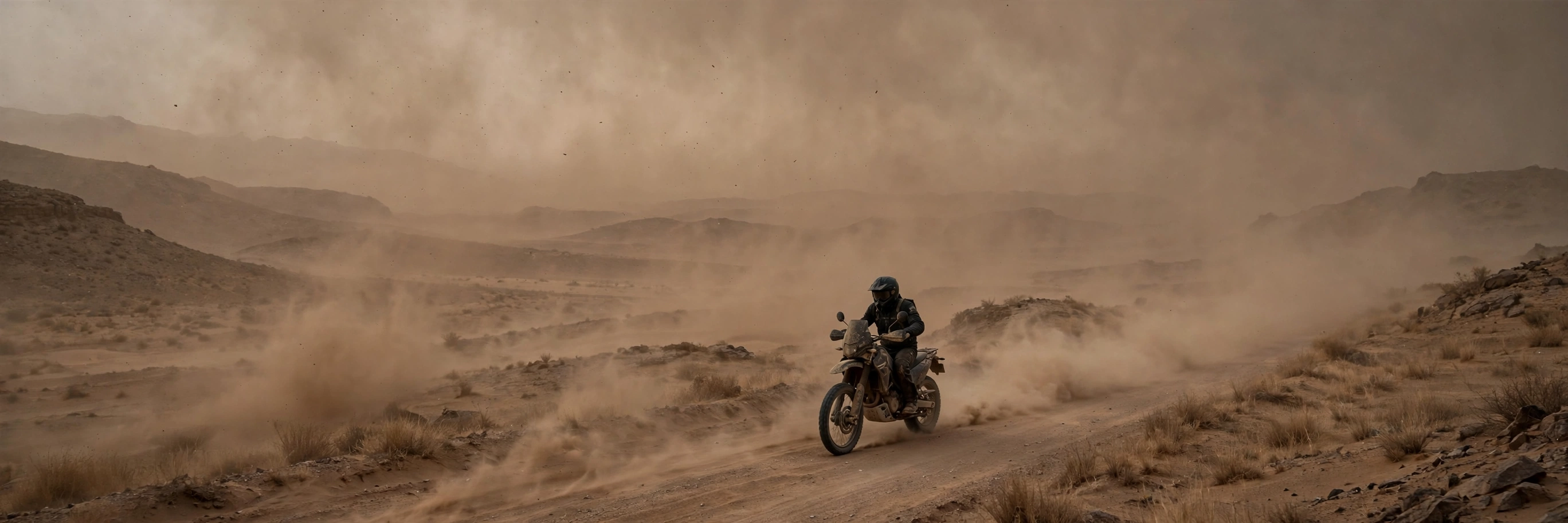
The biggest danger in a dust storm is the loss of visibility. A storm can reduce what you can see to a few metres, which means you cannot see potholes, other vehicles, or the edge of the road until you are almost on top of them. Other drivers face the same problem, so the risk is not only what you cannot see but what other road users cannot see either. A rider is small and hard to spot at the best of times; in thick dust, you can be almost invisible.
The second danger is the dust itself. Fine sand and grit get into everything: your eyes, your ears, your nose and mouth, and the moving parts of your bike. Grit in your eyes makes it impossible to keep them open, and breathing dusty air for long can leave your throat raw and your chest tight. Wind-blown sand can also sting exposed skin and, at speed, can feel like being hit with tiny pellets.
What Kind of Helmet Works Best in a Dust Storm?
In general terms, a full-face helmet is the best choice for riding in dust. It covers your whole head, seals around your face, and gives you a visor that keeps the dust out of your eyes. An open-face helmet leaves your face exposed, which means dust gets straight into your eyes and mouth, and you would need goggles and a face covering to make up for it. A modular helmet, with a chin bar that flips up, can work well too, as long as you ride with the chin bar down and locked.
The fit of the helmet matters even more in dust than in normal riding. A helmet that lets dust in around the edges is little better than no helmet at all when the air is full of grit. Look for a helmet with a good seal around the visor, a chin curtain that blocks dust coming up from below, and padding that sits snugly against your face. The seal does not need to be airtight — you still need to breathe — but it should keep the worst of the dust out.
Ventilation is a balancing act. In a dust storm you want to close the vents, because open vents let dust straight into the helmet. But a fully closed helmet can fog up and get hot quickly, so it helps to have vents you can open and close easily with gloves on. Some helmets have vents with fine mesh or filters that keep larger particles out while still letting some air through. If you are learning about the safety systems inside modern helmets, reading about what MIPS is for helmets can help you understand one of the technologies that protects your head in a fall.
How Should You Set Up Your Visor and Goggles for Dust?
Your visor is your window in a dust storm, so it needs to be clean, scratch-free, and easy to manage. Before you ride in dusty conditions, clean the visor inside and out, and check it for scratches. A scratched visor scatters light and makes visibility worse in dusty, hazy air, where the sun is already diffused and hard to judge. If the visor is badly scratched, replace it before you set off.
Anti-fog treatment is worth considering too. When you close the vents to keep dust out, warm breath can fog the inside of the visor quickly. A pinlock insert or an anti-fog coating keeps the visor clear, which matters enormously when visibility is already poor. Carry a soft cloth to wipe the visor, and avoid wiping a dusty visor with a dry cloth, because the grit can scratch it. Use water or a proper visor cleaner when you can, and wipe gently.
How Do You Ride Safely When a Dust Storm Hits?
The first rule is to slow down. In low visibility, your speed should match what you can see: if you can only see a few metres ahead, you should be riding slowly enough to stop within that distance. This feels frustratingly slow, but it is the only safe approach. Turn on your lights, even in daylight, so other road users have a better chance of spotting you through the haze.
Keep a bigger gap than usual to the vehicle in front, and avoid overtaking. In a dust storm you cannot be sure what is ahead, and an overtaking manoeuvre that would be routine in clear weather can put you into the path of oncoming traffic you never saw. Stay in your lane, keep a steady line, and be ready for gusts that push you sideways. Grip the bars firmly but not rigidly, and let the bike move a little with the wind rather than fighting every gust.
What Should You Check After Riding in Dust?
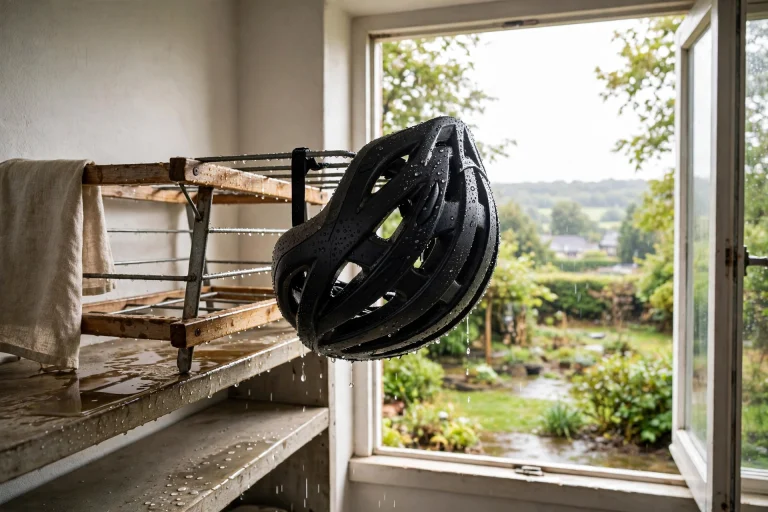
After a dusty ride, your helmet needs a proper clean. Dust gets into the vents, under the visor seal, and into the lining, and if you leave it there it will wear the moving parts and start to smell. Remove the visor if you can, and wash it gently with water and mild soap. Wipe out the vents with a damp cloth, and take out the comfort liner if it is removable so you can wash it separately.
Do not forget the rest of your gear. Dust gets into jacket zips, glove seams, and boots, and your bike’s air filter, chain, and brakes will all have collected grit. A quick clean after a dusty ride protects your gear and your bike, and it means your helmet will be ready for the next ride instead of still full of yesterday’s dust. In general terms, a helmet that is cleaned and checked after dusty conditions will last longer and protect you better.
Frequently Asked Questions
Q: Is a full-face helmet necessary for riding in a dust storm?
A: In general terms, a full-face helmet is the best choice because it seals around your face and keeps dust out of your eyes. An open-face helmet can work with good goggles and a face covering, but it gives less protection.
Q: Should I close my helmet vents in a dust storm?
A: Yes, closing the vents keeps most of the dust out. Be ready for the helmet to get warmer and the visor to fog, so use an anti-fog insert and open a vent briefly if you need fresh air.
Q: When should I stop riding in a dust storm?
A: Stop when you cannot see far enough to ride safely, or when gusts are pushing you around. Pull well off the road, away from traffic, and wait for the storm to ease before continuing.

Olivia
Writer at Helmet Today, covering helmet reviews, fit and riding safety.