Standing and seated e-scooter riders need different things from a helmet: standing riders need a light, well-ventilated helmet with a wide field of vision for traffic awareness, while seated riders need more coverage and wind protection for higher, longer rides — in general terms, a bike-style helmet suits most standing riders, while seated riders on faster machines often benefit from a fuller-coverage helmet.
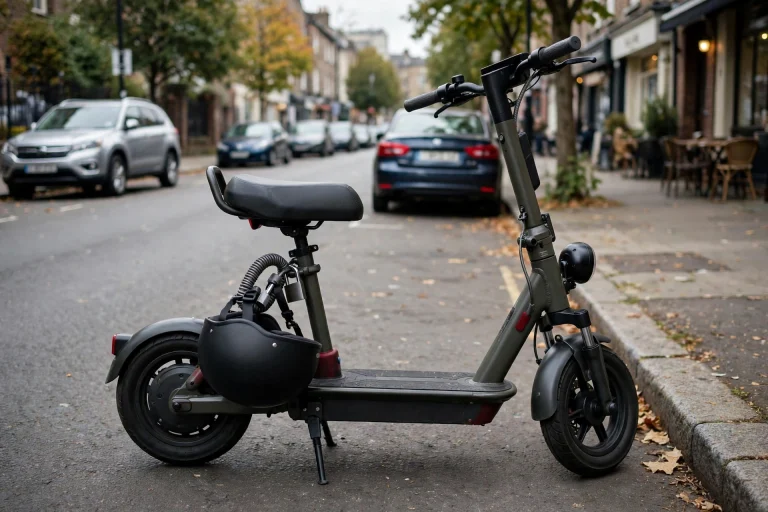
E-scooters now come in two very different forms: the standing kick-scooter style used for short city trips, and seated machines that look and ride more like small mopeds. Treating them as the same ride when choosing a helmet misses real differences in speed, posture, and exposure.
How Does Riding Posture Change What a Helmet Must Do?
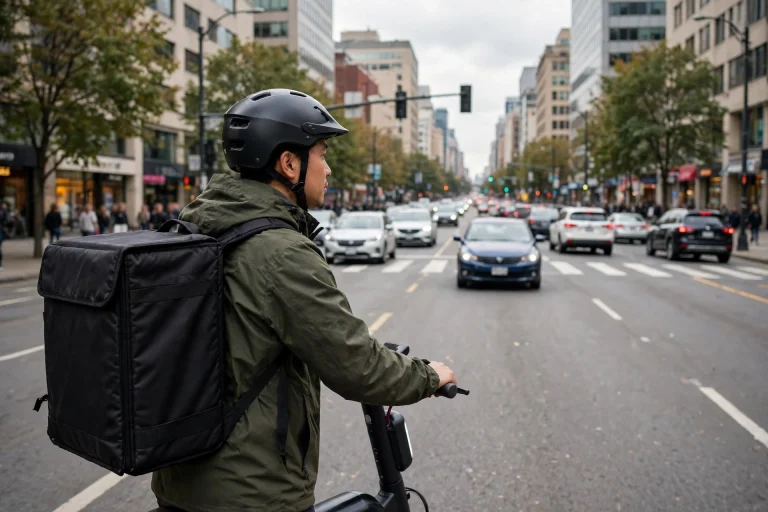
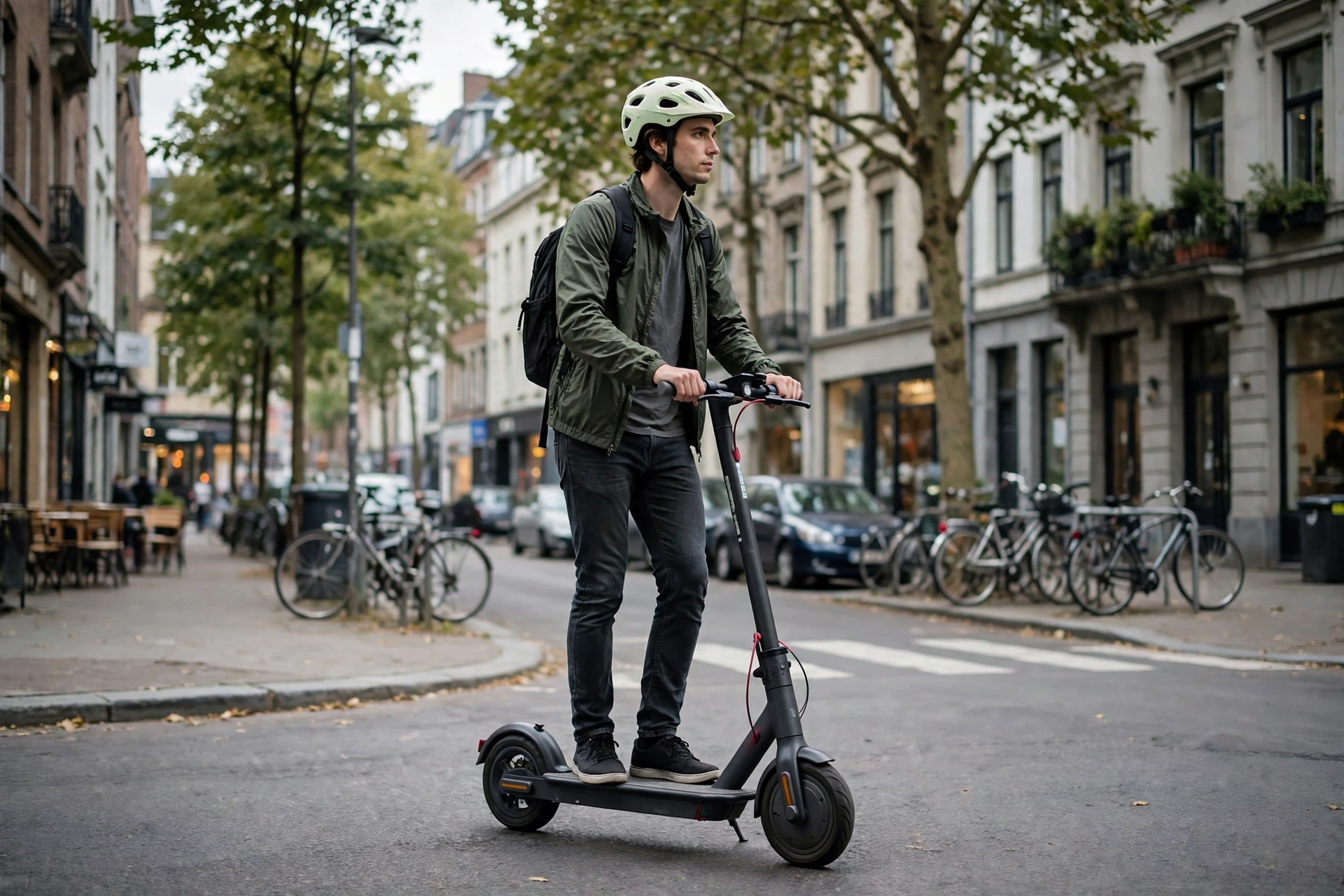
Standing riders hold their head upright and turn it constantly — checking traffic, looking over a shoulder, scanning junctions. A helmet for this posture needs a wide, unobstructed field of vision, a light weight that does not strain the neck during head turns, and ventilation that works at the low speeds of city riding.
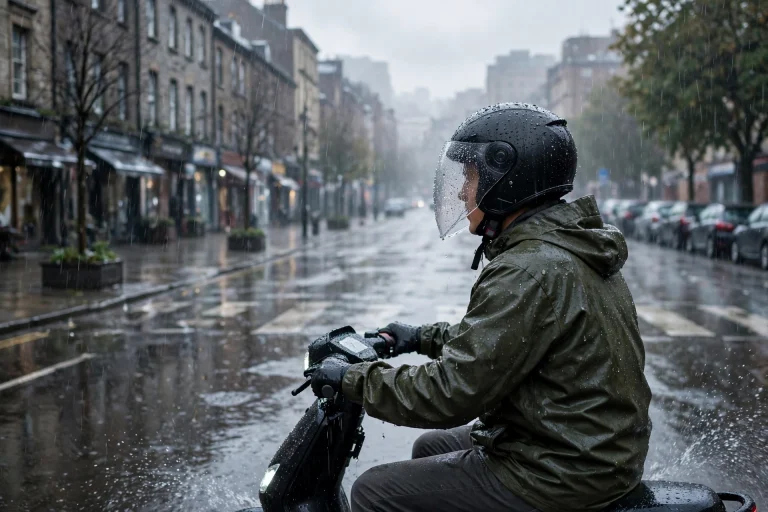
Seated riders sit in a more fixed, forward-leaning position, often at higher sustained speeds and for longer trips. Their helmet faces more continuous wind, more road vibration through the seat, and a posture where the head is less free to turn — so wind protection, stability at speed, and comfort over a longer ride matter more.
Fall dynamics differ too. A standing rider who falls tends to go forward over the handlebars or sideways from a low height; a seated rider at higher speed carries more forward momentum and may slide further. Neither difference changes the need for a certified helmet, but it does change which coverage and features make sense.
What Suits a Standing E-Scooter Rider?
A well-ventilated bike-style or urban helmet is the usual answer. These are light, open at the ears so you can hear traffic, and shaped to leave peripheral vision clear — all valuable when you are weaving through city traffic and checking over your shoulder constantly.
Ventilation matters because standing rides are stop-start: you wait at lights, ride slowly between junctions, and generate heat without much airflow. A helmet with good vents stays comfortable where a sealed, heavy helmet becomes sweaty and distracting within minutes.
Visibility features help standing riders disproportionately, since they are smaller and less visible in traffic than seated riders on bigger machines. A bright helmet colour, reflective details, or a rear light mount makes you easier for drivers to spot, which is a genuine safety gain at junctions.
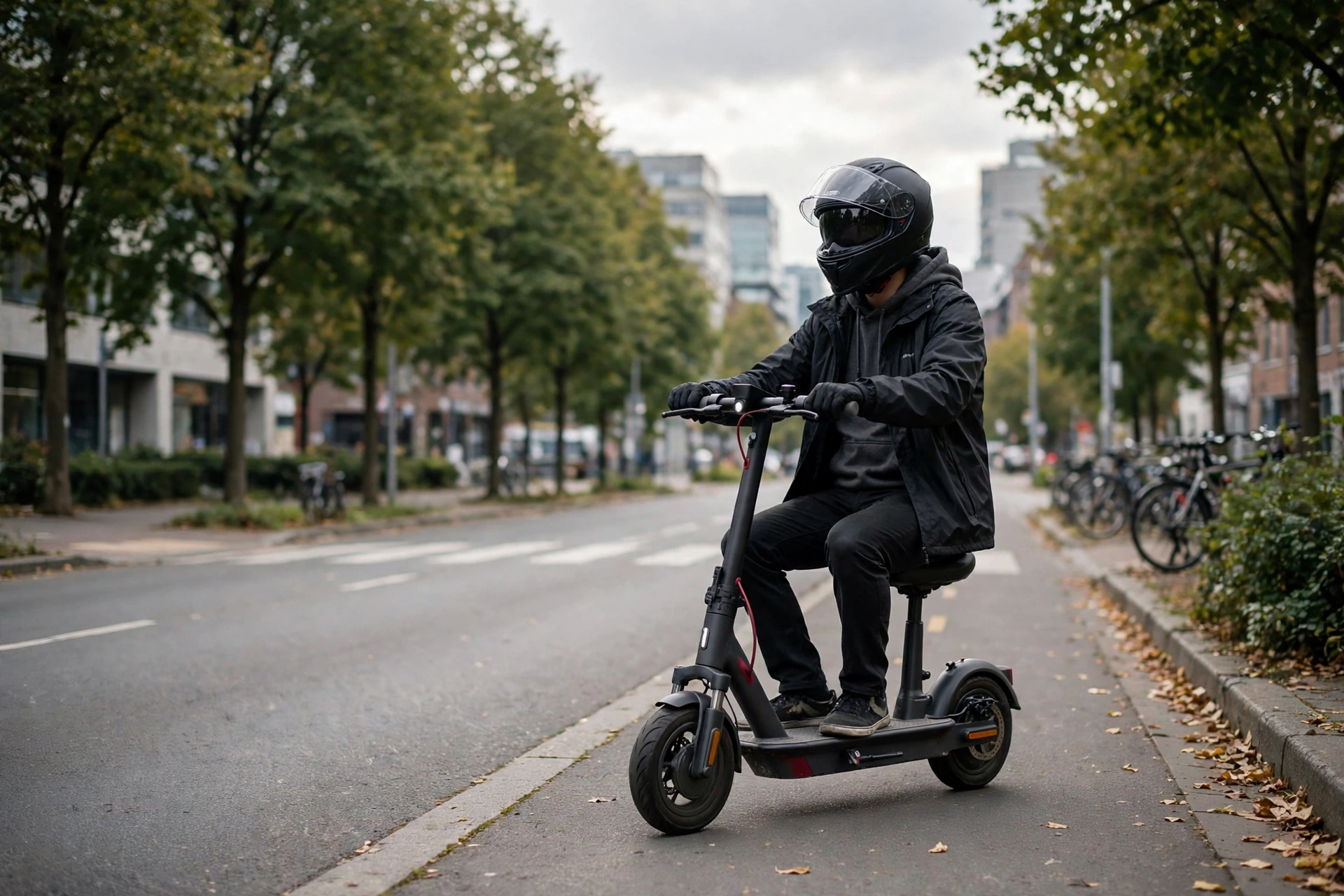
What Suits a Seated E-Scooter Rider?
A fuller-coverage helmet often makes more sense. Seated machines commonly travel faster and further, so wind protection, a visor or shield against wind and insects, and ear coverage for noise and cold all become valuable. Some seated riders choose an open-face motorcycle-style helmet, which gives that coverage without the weight and enclosure of a full-face helmet.
Stability at speed matters more here. A light, heavily vented helmet that is fine at city speeds can lift or buffet at sustained higher speeds, while a slightly heavier, more aerodynamic helmet stays planted. If your seated machine regularly reaches higher speeds, test the helmet at those speeds before committing.
Comfort over distance matters too. A seated commute of half an hour or more punishes a helmet that presses, pinches, or lets wind roar through the ears. Fit, liner quality, and ear coverage deserve more attention when the ride is longer — a helmet you forget you are wearing is the goal.
Does Speed Change the Helmet You Should Choose?
Yes, and it is the single biggest factor after posture. In general terms, the faster and further you ride, the more coverage and stability you should favour, and the more a basic lightweight helmet’s limits show. A short, slow standing trip and a fast seated commute are different risk profiles, and the helmet should reflect that.
Check your local rules as well. Some places set helmet requirements by vehicle class or speed, and a seated machine may fall under moped or motorcycle rules rather than bicycle rules. Your local regulations, not this article, decide what is legally required where you ride — and a helmet that meets the stricter standard covers both cases.
Do not assume one helmet covers every machine you ride. If you ride both a standing scooter for errands and a seated machine for commuting, the honest answer may be two helmets, each fitted to its ride, rather than one compromise that suits neither well.
What Do Both Types of Rider Need in Common?
Fit comes first for both. A helmet that rocks, slides, or lifts is wrong whatever its style, and the shake test — hard head shakes with the strap fastened — applies equally to standing and seated riders. Certification matters equally too: buy a helmet certified for the kind of riding you do, from a reputable maker, and replace it after an impact.
Both riders need hearing and vision. A helmet that blocks peripheral vision or seals off traffic sound is a hazard in the city, whatever the riding position. Open ears, a clear field of view, and a visor that does not distort or fog are common requirements, not optional extras.
And both benefit from the same impact technology: the rotational-force management explained in this guide to what MIPS is for helmets is relevant at any scooter speed, standing or seated, since a fall can twist the head in either posture. Whichever posture you ride in, the basics do not change: measure your head, try the helmet on, check the strap and retention system, and never ride in a helmet that has already taken a hard knock.
Frequently Asked Questions
Q: Can I use my bicycle helmet on a standing e-scooter?
A: In general terms, yes — a certified bicycle helmet is a reasonable choice for slower standing e-scooter riding, and its ventilation and vision suit city traffic well. Check your local rules, since some places require a specific standard for powered scooters.
Q: Do seated e-scooter riders need a motorcycle helmet?
A: It depends on the machine’s speed and your local rules. Faster seated machines may fall under moped or motorcycle helmet requirements, in which case a motorcycle-standard helmet is needed; for slower seated scooters, a fuller-coverage urban or open-face helmet may be enough. Check the rules for your machine’s class.
Q: Is a full-face helmet overkill for a standing scooter?
A: For most slow city trips, yes — it adds weight, heat, and restricted hearing and vision that work against the awareness a standing rider needs. A full-face helmet makes more sense for fast seated riding, where wind and speed justify the extra coverage.

Olivia
Writer at Helmet Today, covering helmet reviews, fit and riding safety.