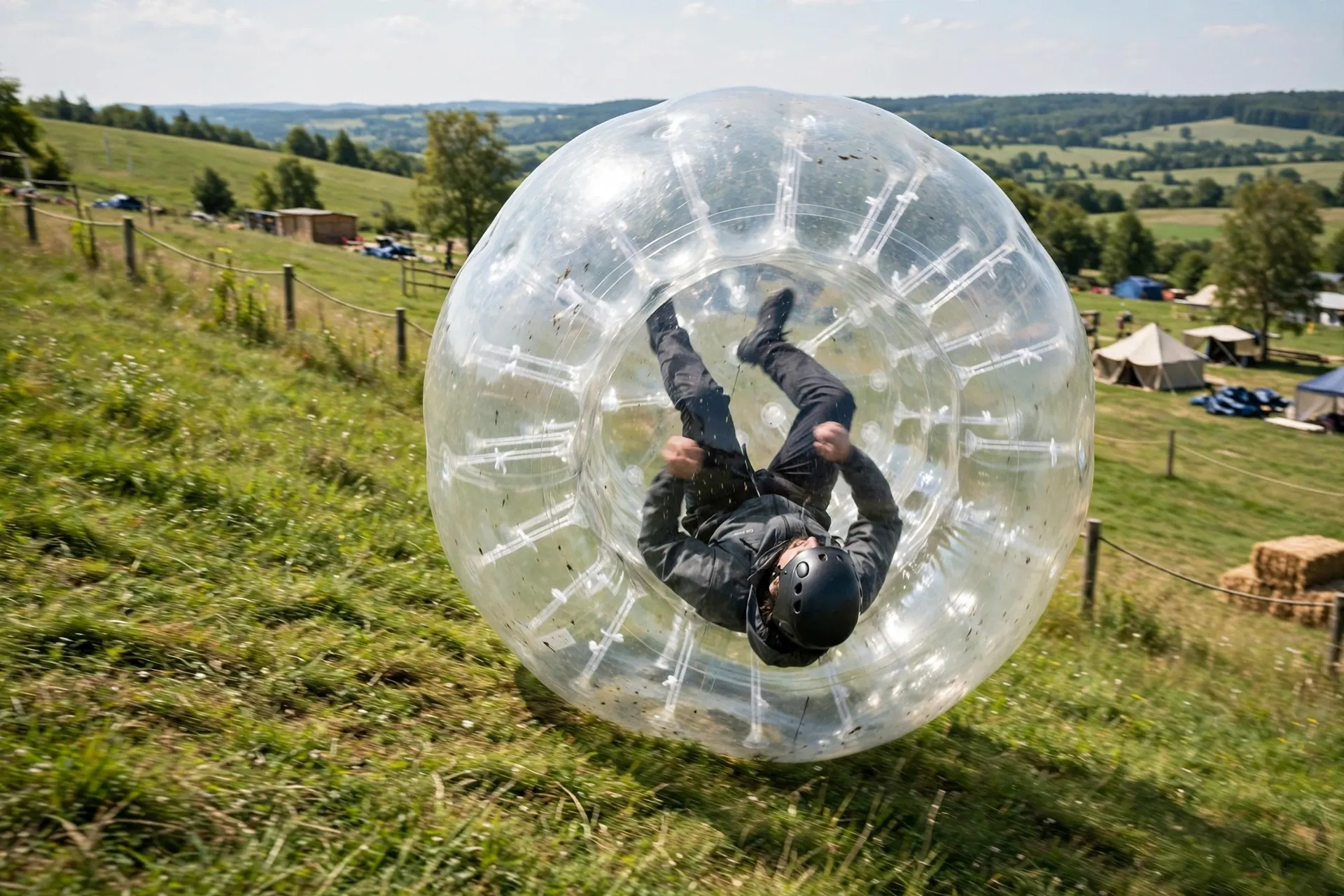
A helmet for zorbing is a protective helmet worn inside the zorb ball to guard your head against bumps and knocks as the ball rolls, bounces, and tumbles down a hill. Zorbing is an adventure activity in which you ride inside a large transparent inflatable ball, either strapped in or free to tumble, as it rolls down a slope. The ride is bumpy by design, and your head can be thrown around inside the ball, so a helmet helps protect you from the knocks that come with it.
In general terms, the helmet used for zorbing is a light, well-padded sports helmet, similar to a skate or snowboard helmet, chosen for comfort and a secure fit. Many zorbing operators provide a helmet as part of the kit, and they will help you fit it before the ride. If you are trying zorbing for the first time, listen to the operator’s safety briefing and wear the helmet they give you for the whole ride.
What is zorbing?
Zorbing is a downhill adventure activity in which a person rides inside a large inflatable ball, usually about three metres across, made of two layers of transparent plastic with air between them. The ball is pushed down a gentle slope, and it rolls, bounces, and spins on the way down. Some rides strap the rider in with a harness, while others let the rider tumble freely inside the ball.
The activity is popular at adventure parks and outdoor centres, and rides usually last less than a minute. The ball is slowed and stopped at the bottom of the slope by a run-off area or by a braking system. Because the rider is inside a soft, air-filled ball, the ride feels bumpy but the impacts are cushioned, and the helmet adds an extra layer of protection for the head.
Why wear a helmet inside a zorb ball?
You wear a helmet inside a zorb ball because the ride throws you around. As the ball rolls and bounces, your body moves with it, and your head can hit the inside of the ball, the harness fittings, or another rider if you are sharing the ball. The ball itself is soft, but a knock at speed can still hurt, and a helmet spreads the force of the impact.
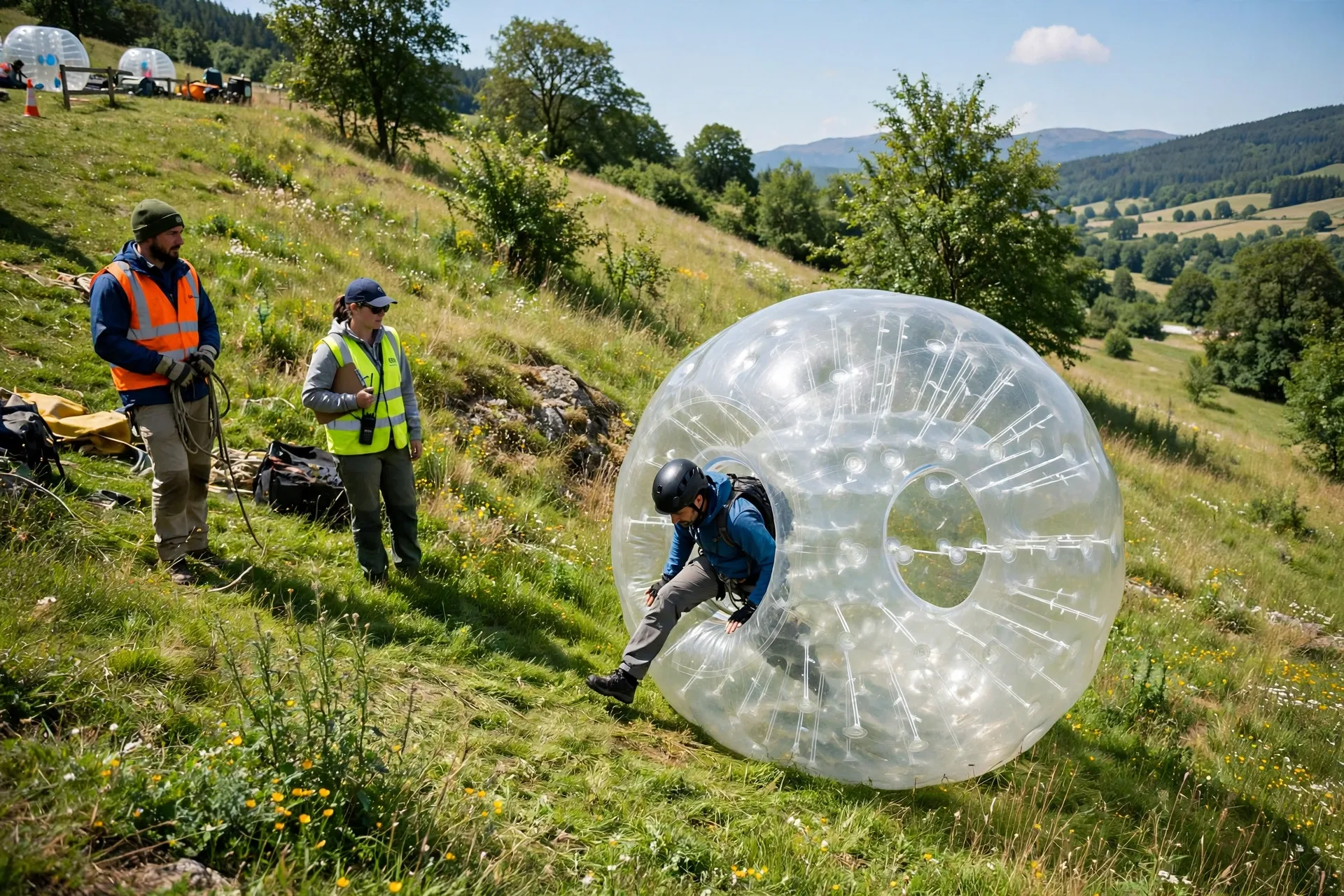
The helmet also protects you at the start and end of the ride, when you climb in and out of the ball through a small opening. These are the moments when you are most likely to bump your head on the frame or the edge of the entrance. In general terms, a helmet is a simple way to lower the risk of a head bump turning into a head injury during a fun but rough ride.
What kind of helmet is used for zorbing?
The helmet used for zorbing is usually a light multi-impact sports helmet, similar to the kind worn for skateboarding or snowboarding. It has a hard outer shell and a foam lining that absorbs bumps, and it covers the back and sides of the head well. The key features are a secure chin strap and a fit that stays put when you are tumbled around inside the ball.
Some operators use a helmet with extra padding and a full-coverage shape, because the rider is not worried about wind or aerodynamics, only about protection and comfort. A bike helmet can work in a pinch, but a skate-style helmet with more coverage around the back of the head is often a better fit for zorbing. The operator will usually choose the helmet for you, so ask if anything feels loose or uncomfortable.
How should a zorbing helmet fit?
A zorbing helmet should fit snugly all round your head, without pressing painfully on your forehead or temples. It should sit level on your head, low enough at the front to protect your forehead, and it should not tip forward over your eyes or slide back when you nod. Because you will be tumbled around, the chin strap matters more than usual: fasten it snugly so the helmet cannot come off mid-roll.
Try the helmet on before the ride and shake your head gently from side to side. If the helmet wobbles or slides, ask for a different size or adjust the fit system at the back. Long hair should be tied back and tucked away so it does not get caught in the straps or the harness. A helmet that fits well will stay comfortable even during a rough, bouncy roll.
Is zorbing safe?
Zorbing is generally run as a controlled adventure activity, with trained operators, a checked slope, and a clear run-off area at the bottom. The ball itself is built with two layers, so a puncture in the outer layer does not mean the ball collapses, and operators inspect the ball and the harness before each ride. Riders are weighed and briefed, and there are usually age and size limits, which vary from one operator to another.
Even so, zorbing is a bumpy ride, and it is not suitable for everyone. People with neck or back problems, or anyone who is pregnant, should usually sit it out, and the operator’s briefing will cover who should not ride. Wearing the helmet, following the operator’s instructions, and keeping your hands and feet inside the ball are the main ways to keep the ride as safe as it can be.
What should you wear for zorbing?
For zorbing, wear comfortable clothes that you do not mind getting damp, because the inside of the ball can be wet, especially on a grassy slope after rain. Flat, closed shoes are best, and loose items such as scarves, jewellery, and phones should be left behind or stored safely. Glasses can be a problem inside a rolling ball, so ask the operator whether you should remove them or wear a strap.
Some zorbing helmets also include a system designed to reduce rotational forces in a fall, such as MIPS, although the main protection in zorbing comes from the helmet’s shell and padding. The operator will provide the helmet, and you only need to bring suitable clothes and a willingness to be rolled downhill. After the ride, the helmet is cleaned and checked before the next rider uses it.
Do you always need a helmet for zorbing?
Yes, in general terms you should wear the helmet the operator provides for every ride. The ball rolls and bounces by design, and a helmet protects your head from knocks you cannot predict or brace for.
Can two people share a zorb ball?
Some operators offer tandem rides in a larger ball, with each rider strapped in separately. Each rider should wear their own helmet, because two heads moving around inside the ball can bump into each other.
What if the helmet feels loose before the ride?
Tell the operator straight away and ask for a different size or a tighter adjustment. A loose helmet can shift or come off during the roll, so it is better to sort the fit out before the ball starts moving.

Olivia
Writer at Helmet Today, covering helmet reviews, fit and riding safety.