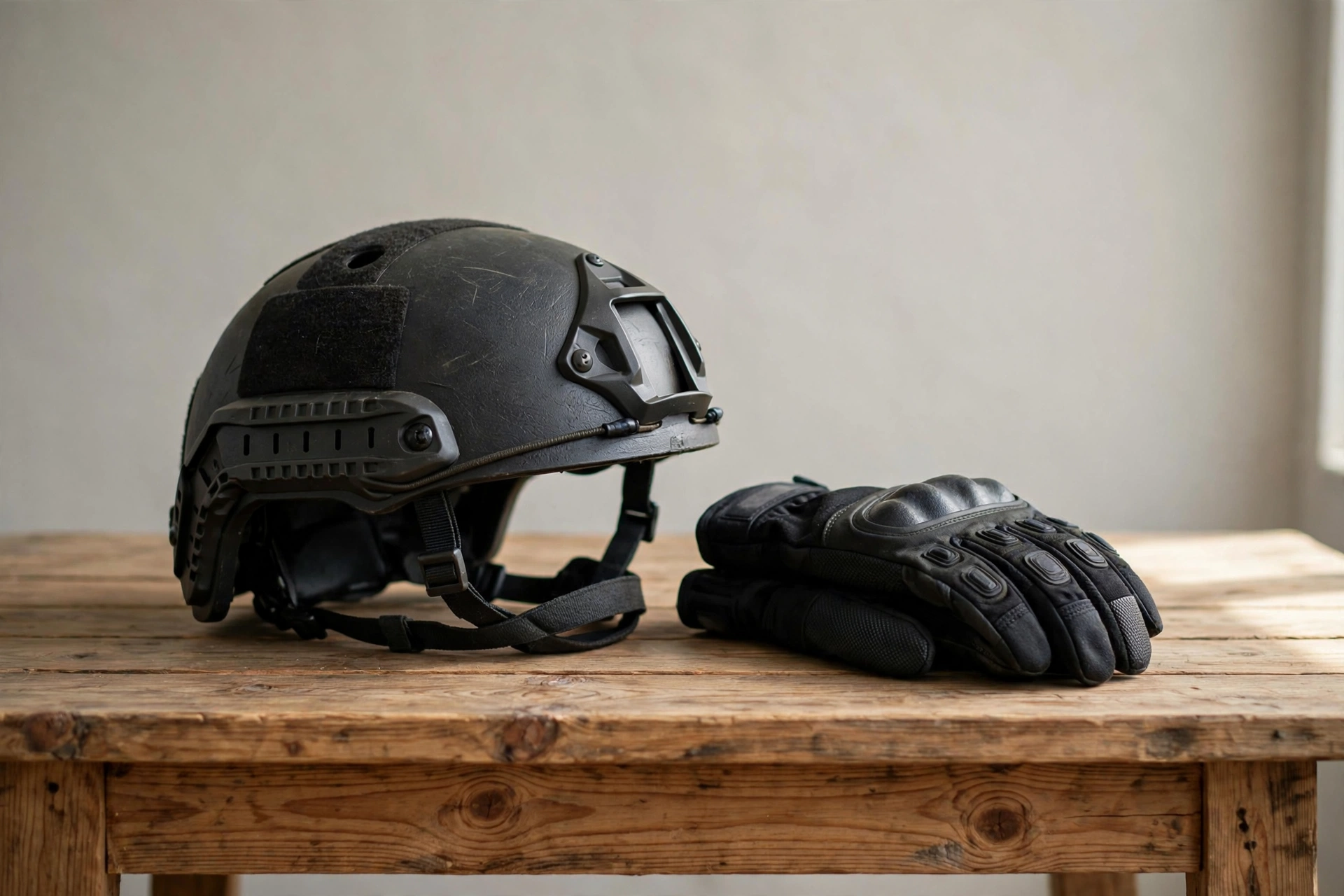
In general terms, a ballistic helmet works by spreading the energy of an impact over a wide area and absorbing it through layers of strong fibres and resin, so that less force reaches the wearer’s head than if the impact struck an unprotected head. It is not a magic shield: it is designed to reduce the risk from certain threats, such as fragments and some handgun rounds, within the limits of its design and rating.
Ballistic helmets are used by military personnel, police, and some security professionals. They look simple from the outside — a hard shell with padding inside — but the way they manage energy is the result of careful material science. This guide explains, in general terms, how the parts work together and what the limits are.
What Is a Ballistic Helmet Made Of?
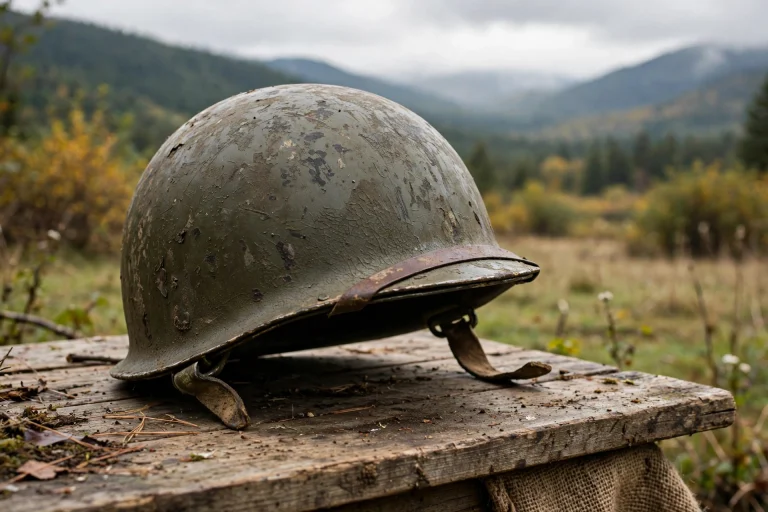
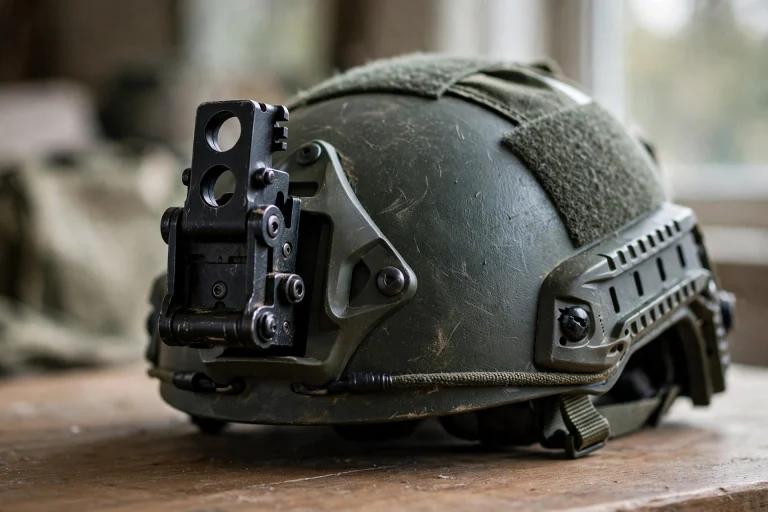
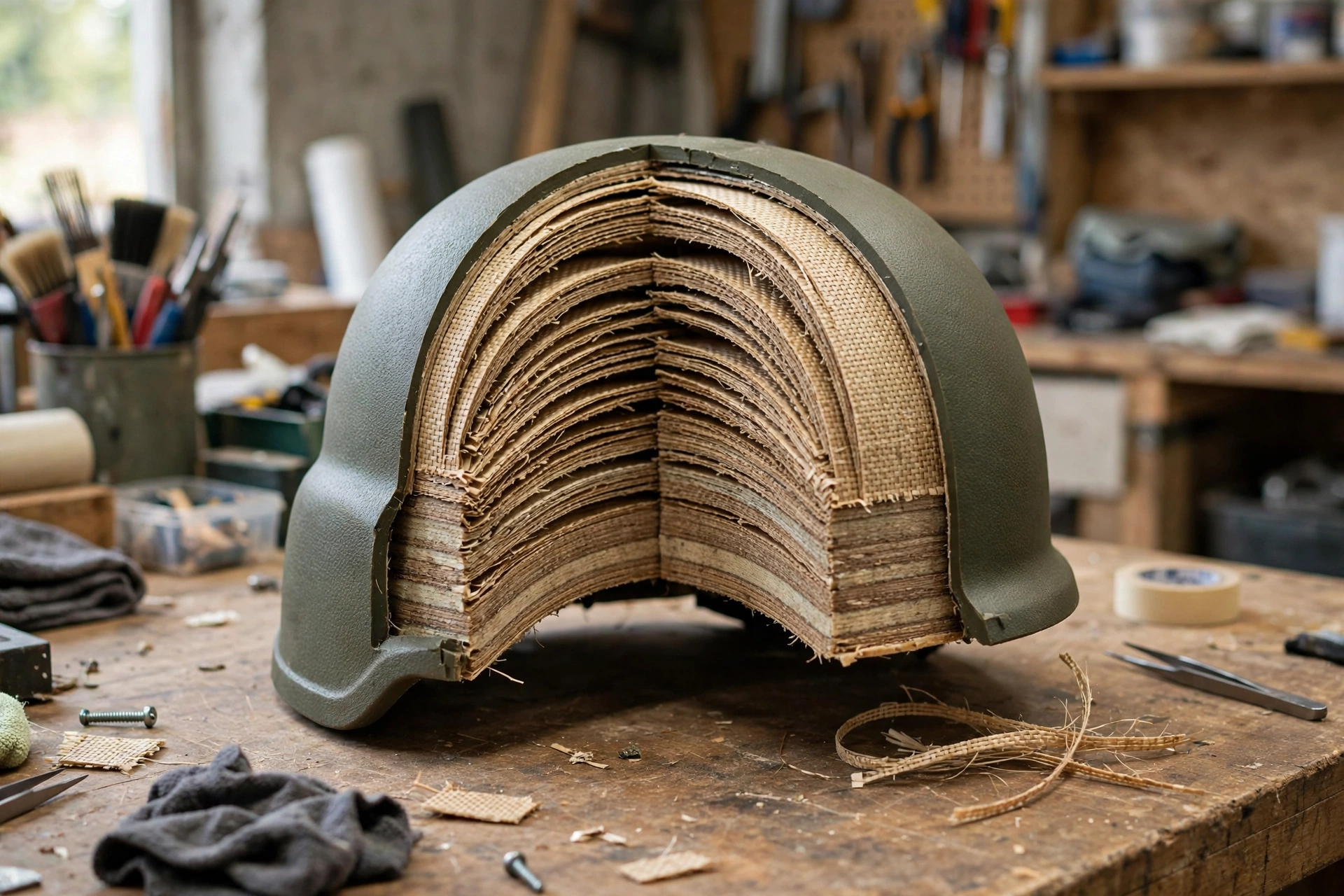
Most modern ballistic helmets are built from layers of high-strength fibres, such as aramid fibres, bonded together with resin and shaped into a shell under heat and pressure. Some designs also use ultra-high-molecular-weight polyethylene, a very light, very strong plastic fibre. The result is a rigid shell that is much lighter than steel but still very tough. Older designs used steel, and some still do, but fibre-based shells are now far more common because they offer similar protection at a lower weight.
The number and arrangement of layers matters. In general terms, more layers can stop more energetic threats, but they also add weight and bulk. Designers balance protection, weight, and wearability, because a helmet that is too heavy or uncomfortable will not be worn properly — and a helmet that is not worn correctly cannot protect anyone. That trade-off is why different helmets are rated for different threat levels, and why no single helmet is right for every situation.
How Does the Shell Stop or Slow a Projectile?
When a projectile or fragment strikes the shell, the fibres in the impact area stretch, break, and pull against their neighbours. This spreads the force sideways across a much larger area than the point of impact, and converts the projectile’s energy into fibre breakage, heat, and deformation of the shell. In general terms, the shell does not simply bounce the threat away — it absorbs energy by failing in a controlled way, layer by layer.
If the threat is within the helmet’s rating, it should be stopped before it reaches the inside of the shell. If it is beyond the rating, it may pass through. That is why ratings matter: a helmet is designed and tested against specific threats, and its performance against anything else is not guaranteed. The shell may also deform inward on impact, which is why the space between the shell and the head — and the padding inside — is an important part of the design.
What Does the Inside of the Helmet Do?
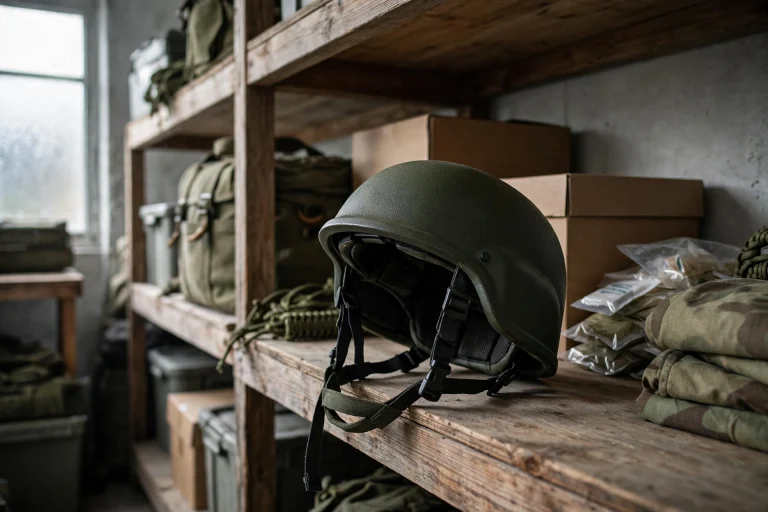
Inside the shell sits a suspension or padding system, usually foam pads or a webbing cradle, plus a retention system of straps that holds the helmet on the head. This interior has two jobs. First, it keeps the shell at the right distance from the skull, so that any inward deformation of the shell on impact does not strike the head directly. Second, it absorbs and spreads energy itself, reducing the force transmitted to the head and neck.
The padding also makes the helmet wearable for long periods and keeps it stable during movement. A helmet that wobbles or slides will not sit in the right position when it matters, and its protection depends on it being in place. Modern padding systems can be adjusted or replaced to fit different head shapes, and keeping the pads in good condition is part of keeping the helmet effective. Some helmets also include a low-friction layer intended to reduce rotational forces in angled impacts; you can read about what MIPS is for helmets to understand how that kind of layer works in general.
What Are the Limits of a Ballistic Helmet?
Every ballistic helmet has limits, and understanding them is as important as understanding how it works. A helmet is rated for certain threats at certain speeds, and threats beyond that rating may defeat it. It also protects only the area it covers: the face, neck, and lower head are generally outside the shell, and protection depends on the helmet being worn correctly, with straps fastened and the shell sitting level.
Ballistic helmets also age. The fibres and resin can degrade with sunlight, moisture, chemicals, and rough handling, and a helmet that has taken a significant impact should be inspected and usually replaced. There is no visible gauge for remaining protection, so users follow the manufacturer’s guidance on service life and inspection. In general terms, a ballistic helmet reduces risk — it does not remove it — and it is one part of a wider set of protective equipment and procedures, not a guarantee of safety on its own.
How Is a Ballistic Helmet Different From a Regular Safety Helmet?
A regular safety helmet, such as a hard hat, is designed mainly for falling objects and workplace impacts. A ballistic helmet is designed for fragments and projectiles, which arrive much faster and concentrate their energy on a small point. That difference in threat drives a different construction: layered fibres rather than a simple plastic shell, a different shape with more side and rear coverage in many designs, and a retention system built to keep the helmet in place during rapid movement.
That does not make a ballistic helmet better for every job — it makes it suited to a specific job. For construction or industrial work, a hard hat is the right tool; for the threats a ballistic helmet is designed for, a hard hat would not be adequate. Matching the helmet to the hazard is the principle that applies across all helmet types, and ballistic helmets are no exception.
Frequently Asked Questions
Q: Can a ballistic helmet stop any bullet?
A: No. In general terms, ballistic helmets are rated for specific threats, such as fragments and some handgun rounds. Rifle rounds in particular may exceed what most ballistic helmets are designed to stop.
Q: Does a ballistic helmet need to fit tightly?
A: It needs to fit snugly and sit level, with the retention system fastened, so it stays in the right position. A loose or tilted helmet may not protect the area it is meant to cover.
Q: How long does a ballistic helmet last?
A: Service life depends on the design, materials, and use, and manufacturers give guidance for their own models. In general terms, helmets exposed to heavy use, sunlight, or damage should be inspected regularly and replaced when the guidance says so.

Olivia
Writer at Helmet Today, covering helmet reviews, fit and riding safety.