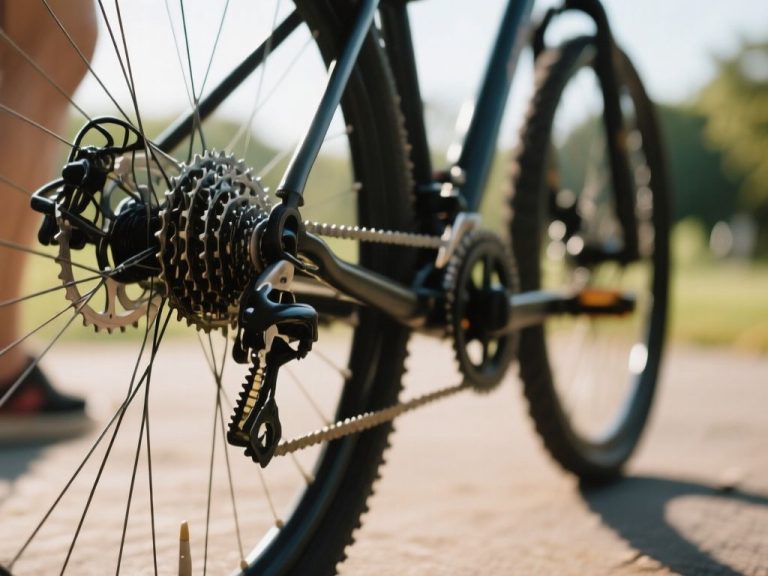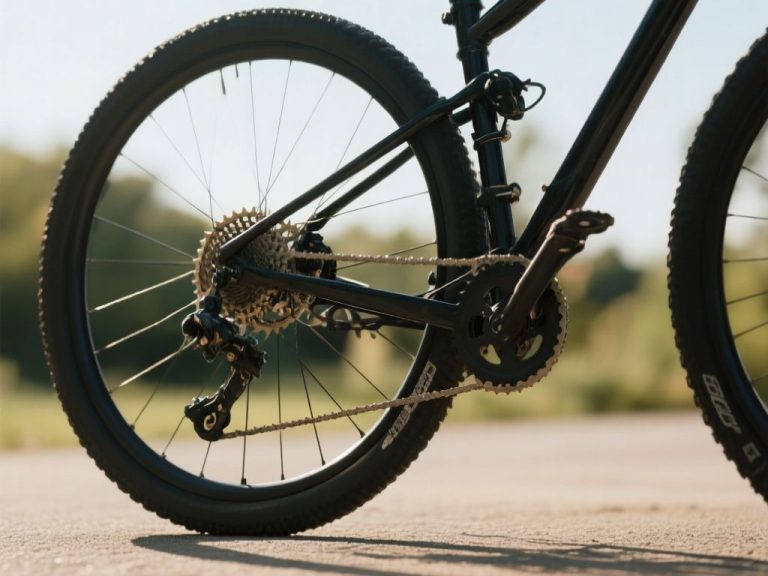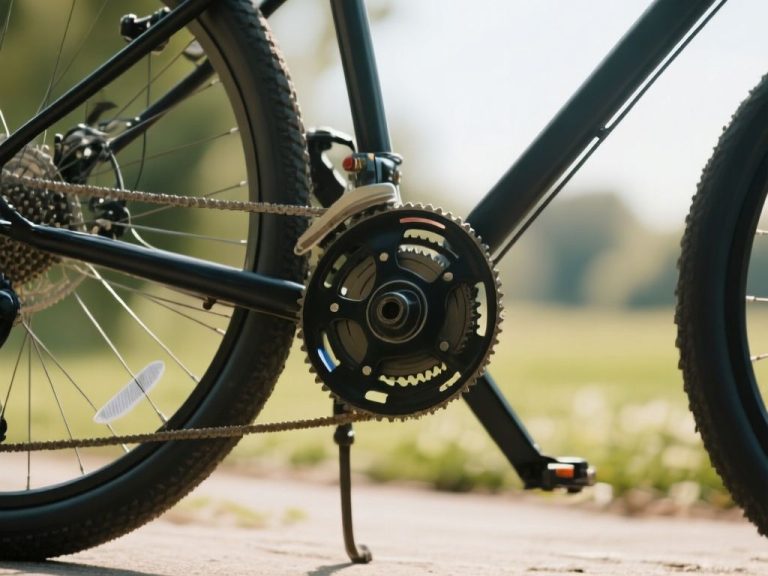

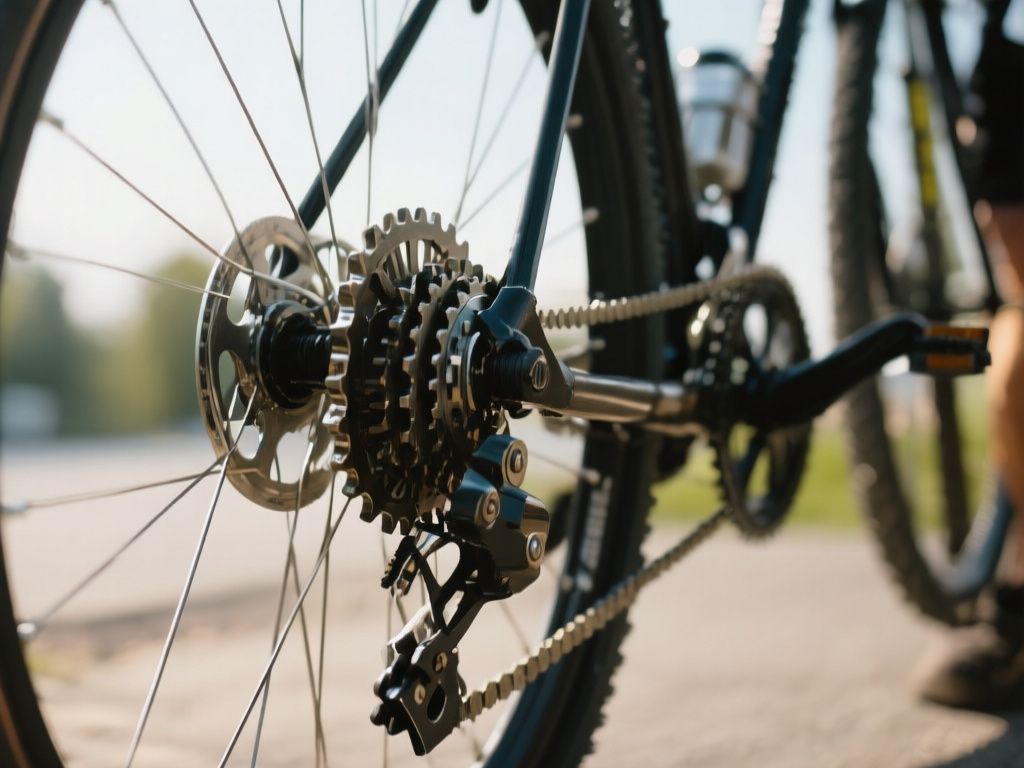
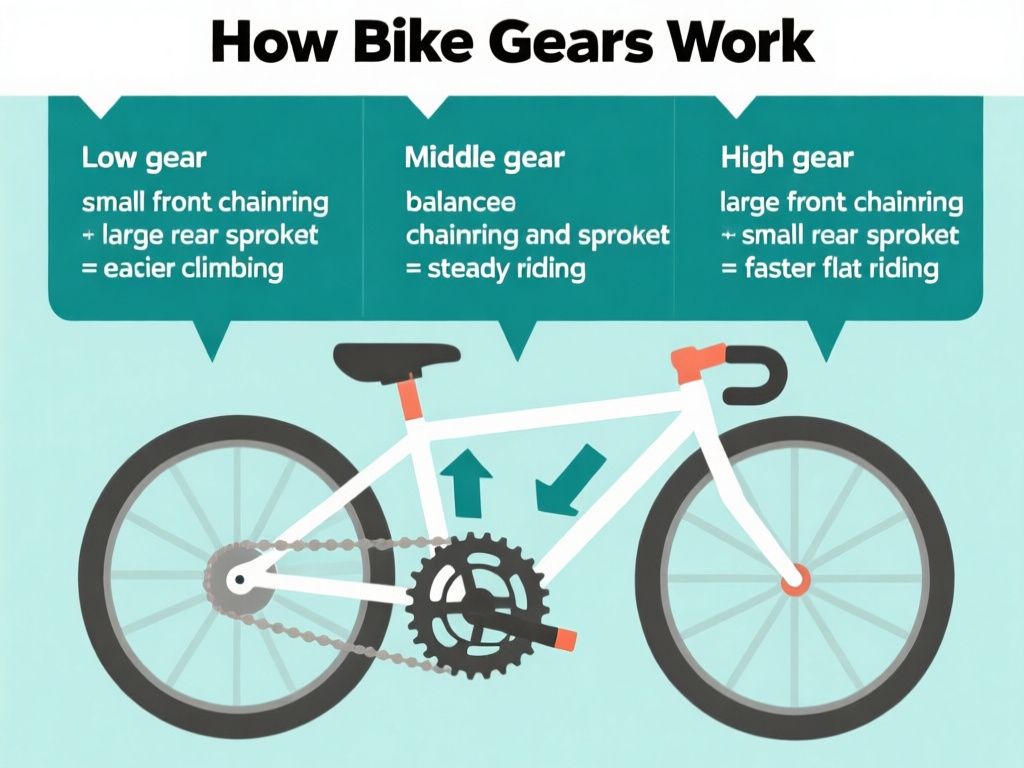
Bike gears change how hard it is to turn the pedals and how far the bike travels with each pedal stroke. Small front chainrings or large rear cogs make climbing easier; large front chainrings or small rear cogs make the bike faster on flat ground or downhill. The derailleur moves the chain between different-sized sprockets to create these changes.
What are bike gears?
Bike gears are the chainrings, cassette sprockets, and shifting parts that control the relationship between pedaling effort and wheel speed. A gear does not add energy to a rider’s legs. Instead, it trades speed for leverage, much like choosing a low gear in a car or using a small bicycle sprocket to make a hand-cranked machine easier to turn.
The main parts of a geared bicycle are the crankset, chain, cassette or freewheel, derailleurs, and shifters. The crankset is the assembly attached to the pedals. Its toothed rings are called chainrings. The cassette is the cluster of toothed sprockets attached to the rear wheel. The chain transfers the rider’s effort from the front chainring to one rear sprocket.
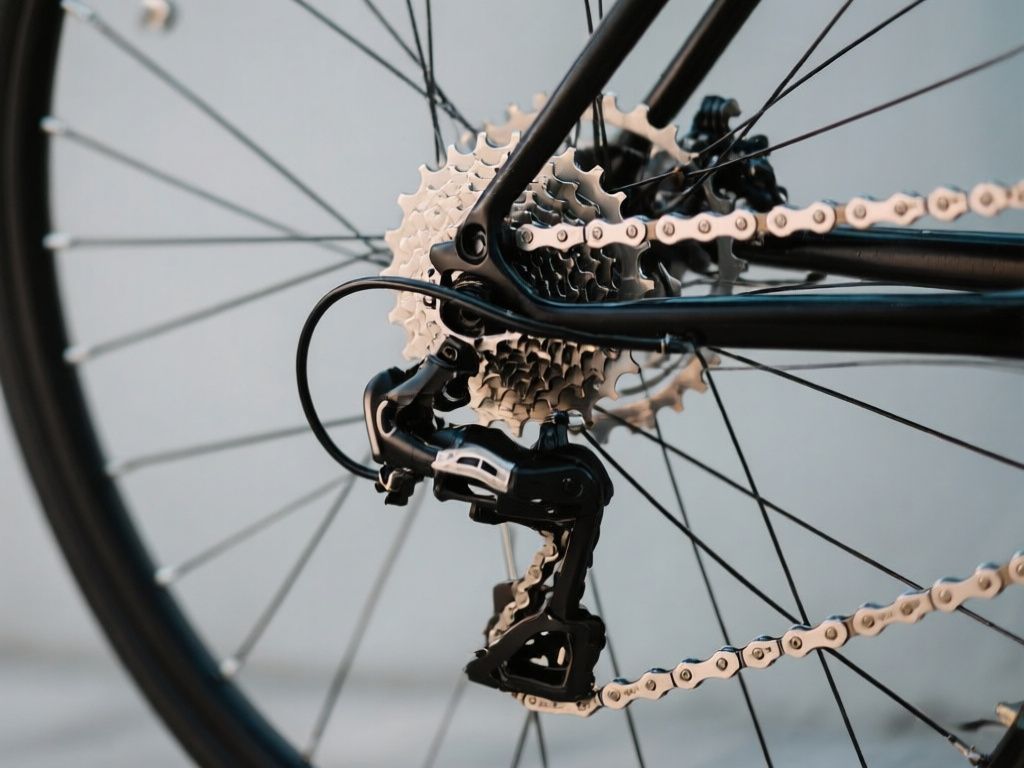
Most modern bicycles use a derailleur system. A derailleur is a spring-loaded mechanism that guides the chain from one sprocket to another. The rider operates it with a shifter mounted on the handlebar, usually by pressing a button, moving a lever, or twisting a grip.
How does a bike gear ratio work?
A bike’s gear ratio compares the number of teeth on the front chainring with the number of teeth on the rear sprocket. The basic calculation is:
Gear ratio = front chainring teeth ÷ rear sprocket teeth
For example, a 50-tooth front chainring paired with a 25-tooth rear sprocket produces a 2:1 ratio. The rear wheel turns twice for every complete turn of the crank, ignoring small losses from friction and tire deformation.
A 34-tooth chainring paired with a 34-tooth rear sprocket produces a 1:1 ratio. The wheel turns once for each crank revolution. That combination is much easier to pedal than 50/25 because the rider gets more leverage, although the bike moves a shorter distance per pedal stroke.
| Front chainring | Rear sprocket | Gear ratio | Typical feel |
|---|---|---|---|
| 50 teeth | 25 teeth | 2.00 | Fast, harder to push |
| 34 teeth | 34 teeth | 1.00 | Balanced, useful uphill |
| 30 teeth | 42 teeth | 0.71 | Very easy, useful for steep climbs |
The ratio alone does not tell the entire story because wheel size also matters. A bicycle with larger wheels travels farther per revolution than one with smaller wheels. For everyday riding, however, comparing the front and rear tooth counts gives a useful picture of whether a gear will feel easy or difficult.
Why do low gears make hills easier?
Low gears make hills easier by increasing mechanical advantage. Mechanical advantage means the bike uses more of the rider’s pedal force to turn the rear wheel, while the wheel travels a shorter distance for each pedal revolution.
A low gear usually combines a small front chainring with a large rear sprocket. For example, a 30-tooth chainring and a 42-tooth rear sprocket give a ratio of about 0.71. The rider must pedal more times to cover the same distance, but each pedal stroke requires less force.
This arrangement is useful on steep roads, loose trails, and starts from a complete stop. It also helps riders maintain a comfortable cadence, which is the number of pedal revolutions per minute. Many riders find that spinning the pedals smoothly in an easier gear is less tiring than pushing slowly in a gear that is too hard.
Low gears cannot eliminate the work required to climb. The rider still has to lift the combined weight of the bicycle and rider uphill. The gear simply spreads that work over more pedal revolutions, reducing the force required at any single moment.
Why do high gears make a bike go faster?
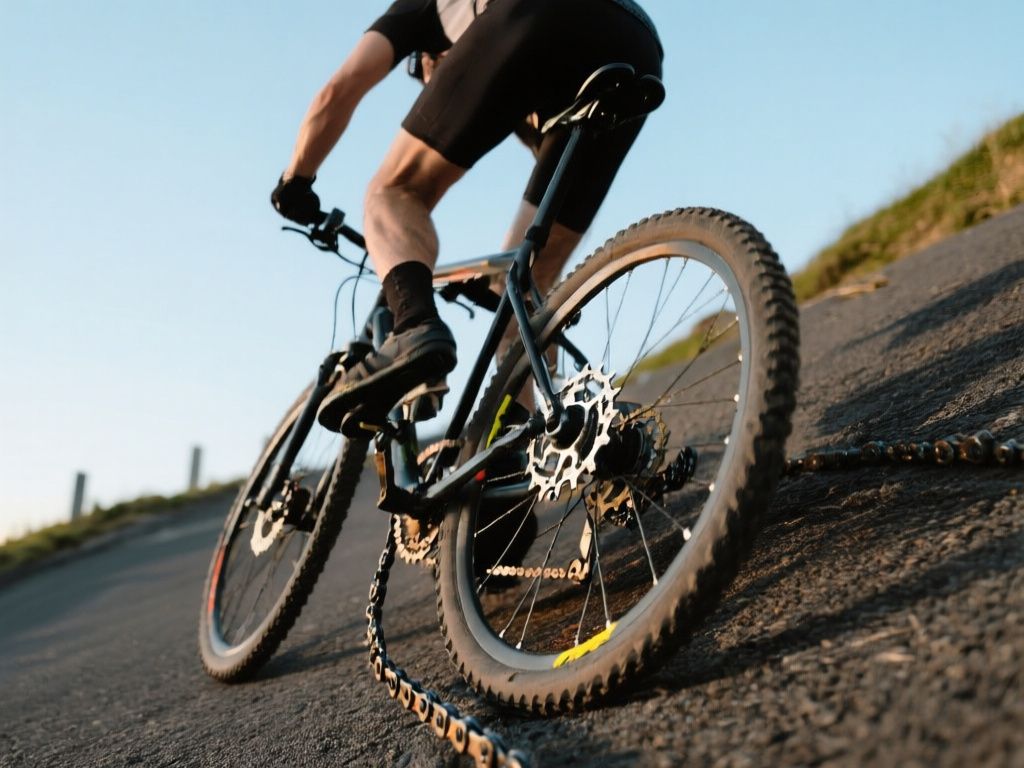
High gears make the bike travel farther with each turn of the pedals. They usually combine a large front chainring with a small rear sprocket, such as a 50-tooth chainring and an 11-tooth sprocket. That pairing gives a ratio of about 4.55, so the rear wheel turns several times for each crank revolution.
High gears are useful on flat roads, gentle descents, and stretches where the rider can produce enough force without straining. They allow a strong rider to maintain speed without spinning the pedals extremely quickly.
A high gear is not automatically faster in every situation. If the gear is too difficult, the rider may pedal slowly, lose momentum, or fatigue quickly. Speed depends on power, wind, slope, tire pressure, riding position, and cadence as well as the selected gear.
For that reason, experienced riders usually shift before a hill becomes steep or before their legs slow dramatically. Changing gear early keeps the chain moving smoothly and reduces the need to force the pedals while standing.
How do the front and rear gears differ?
The front gears create larger changes in effort, while the rear gears allow smaller adjustments. A bicycle with two front chainrings and 11 rear sprockets may have 22 theoretical combinations, but some combinations overlap and are not intended for regular use.
Shifting the front derailleur from a small chainring to a large one makes pedaling substantially harder. Moving from a large chainring to a small one makes it substantially easier. Front shifts are useful when the road changes from a climb to a flat section, or when a long change in resistance is needed.
The rear derailleur changes between the sprockets on the cassette. Shifting toward a larger rear sprocket makes the gear easier. Shifting toward a smaller rear sprocket makes the gear harder. Rear shifts are better for fine adjustments, such as responding to a short rise, a headwind, or a change in pace.
- Front shift to a smaller chainring: easier pedaling.
- Front shift to a larger chainring: harder pedaling.
- Rear shift to a larger sprocket: easier pedaling.
- Rear shift to a smaller sprocket: harder pedaling.
How does shifting actually move the chain?
The shifter pulls or releases a cable, or sends an electronic signal on some higher-end systems. That movement changes the position of the derailleur. Small guide wheels in the rear derailleur push the chain sideways until it climbs onto the neighboring sprocket.
Rear shifting works best when the chain is moving forward and the rider is applying light to moderate pressure to the pedals. Shifting under heavy force can make noise, slow the shift, or wear the chain and sprocket teeth faster. A brief easing of pedal pressure gives the chain a better chance to move cleanly.
Front shifting requires more chain movement, so it may feel slower or louder than a rear shift. The rider should generally shift the front chainring before the climb becomes extremely steep. Waiting until the pedals are nearly impossible to turn puts greater stress on the chain and drivetrain.
Indexed shifters use set clicks for individual gears. Friction shifters let the rider position the derailleur manually and are mechanically simpler. Both systems can work well when adjusted correctly, although indexed systems are more common on newer bicycles.
What does cadence have to do with bike gears?
Cadence is the speed at which the rider turns the pedals, measured in revolutions per minute. Gears let the rider keep a comfortable cadence as the terrain changes. Instead of forcing a slow, heavy pedal stroke uphill, the rider can select an easier gear and continue turning the pedals more smoothly.
There is no single ideal cadence for every rider or bicycle. A recreational cyclist may prefer a relaxed rhythm, while a racing cyclist may choose a faster cadence. The practical rule is simple: shift when the current gear makes the pedals feel either too heavy or too easy to control.
Riders can use small rear shifts to keep cadence steady. If the pedals begin to feel heavy, shift to a larger rear sprocket. If the legs are spinning too quickly with little resistance, shift to a smaller rear sprocket.
What is cross-chaining, and should it be avoided?
Cross-chaining happens when the chain runs at a sharp angle between opposite sides of the drivetrain. The most common examples are the largest front chainring with the largest rear sprocket, or the smallest front chainring with the smallest rear sprocket.
Short periods of cross-chaining will not immediately damage a bicycle, but the angled chain creates extra noise, friction, and wear. It can also make shifting less reliable. Riders with two or three front chainrings should use the small front ring with the larger rear sprockets and the large front ring with the smaller rear sprockets whenever practical.
Bicycles with a single front chainring do not have front cross-chaining to manage, although the chain can still run at an angle in the extreme rear sprockets. Modern wide-range drivetrains are designed to tolerate much of this use, so the rider does not need to obsess over every small angle.
How many gears does a bike really have?
A bicycle’s advertised gear count is the number of front chainrings multiplied by the number of rear sprockets. A bike with two chainrings and 10 rear sprockets is described as having 20 speeds. In practice, several combinations may produce nearly the same ratio, and some should be avoided because of chain angle.
A modern one-by, or 1x, drivetrain uses one front chainring and a wide-range rear cassette. A 1x system has fewer controls and no front derailleur, which makes shifting simpler and reduces some maintenance. Its trade-off is often larger jumps between rear gears compared with a system having two front chainrings.
Two-by and three-by systems can offer closer gear steps or a wider total range. They may suit touring, utility riding, or steep terrain, but they require more shifting decisions and additional parts.
How should a rider use bike gears?
- Shift into an easier gear before a hill becomes steep.
- Use the rear derailleur for small changes in resistance.
- Use the front derailleur when a larger change is needed.
- Ease pedal pressure briefly while shifting.
- Keep pedaling forward rather than shifting while coasting.
- Avoid forcing a very hard gear at low cadence.
The right gear is the one that lets the rider pedal with control and reasonable comfort. On a flat road, a rider might begin in a moderate gear, shift harder as speed builds, and shift easier when facing wind or a rise. There is no prize for staying in the hardest available gear.
What problems can bike gears develop?
Skipping, grinding, delayed shifts, and excessive chain noise usually indicate a maintenance or adjustment issue. Common causes include a stretched cable, a worn chain, dirty drivetrain parts, a bent derailleur hanger, or incorrect derailleur limit settings.
A dirty chain attracts abrasive grit, which wears the chain and sprocket teeth together. Regular cleaning and suitable bicycle chain lubricant help, but excess lubricant should be wiped away because it collects dirt. A worn chain can eventually damage the cassette and chainrings, making a small maintenance issue more expensive.
Some gear problems require professional adjustment, especially when the chain falls off repeatedly or the derailleur appears bent. Riders should not force a shifter that suddenly becomes stuck. Stopping to inspect the drivetrain is safer than continuing to pedal hard through a malfunction.
Frequently Asked Questions
Is a bigger rear sprocket easier or harder to pedal?
A bigger rear sprocket is easier to pedal because it lowers the gear ratio. It is useful for hills, strong headwinds, rough trails, and starting from a stop.
Which way should I shift when riding uphill?
Shift to a larger rear sprocket or a smaller front chainring. Make the change before the slope becomes too steep, and reduce pedal pressure briefly while the chain moves.
Can I shift gears while standing on the pedals?
Yes, but shifting under heavy force is harder on the chain and drivetrain. If possible, ease the pressure on the pedals for a moment while shifting, especially during a front-chainring change.
Why does my bike make noise after shifting?
A brief click during a shift is normal, but continued grinding or clicking may indicate poor adjustment, a dirty chain, cable problems, or worn drivetrain parts. Persistent noise deserves an inspection rather than more force on the shifter.
Do more gears make a bicycle faster?
More gears can make it easier to choose a suitable cadence across different slopes and speeds, but they do not automatically make a bicycle faster. Rider power, terrain, bike design, tires, wind, and riding position also affect speed.
What gear should I use on a flat road?
Use a moderate or moderately hard gear that lets you pedal smoothly without spinning uncontrollably or pushing heavily. Shift to a smaller rear sprocket if the pedals feel too easy, and to a larger rear sprocket if they begin to feel too heavy.

Olivia
Writer at Helmet Today, covering helmet reviews, fit and riding safety.