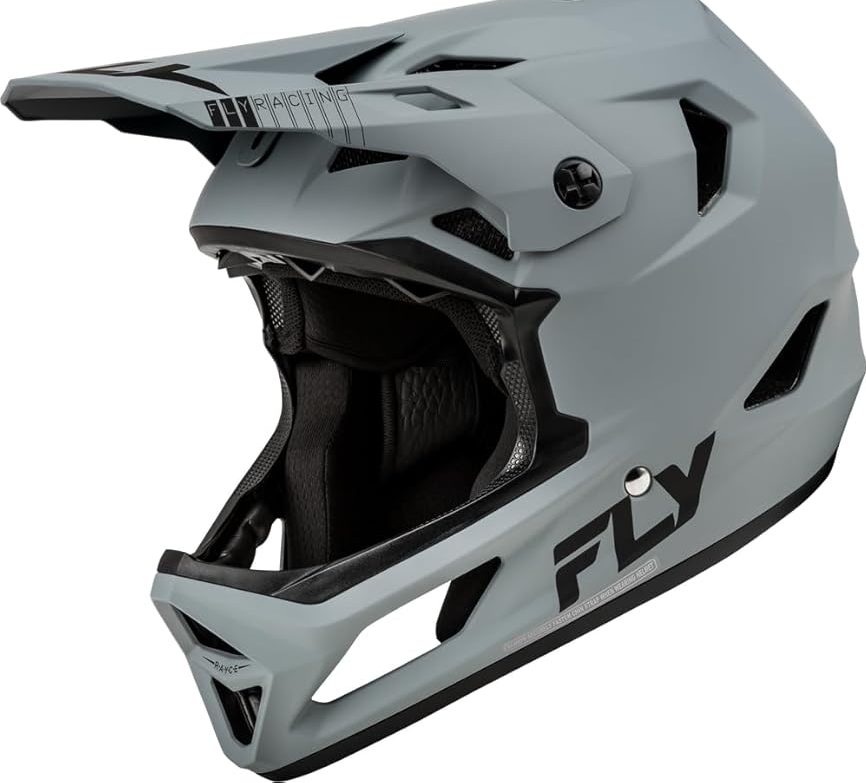

Helmet is spelled H-E-L-M-E-T. It means a hard protective covering worn on the head, such as for riding a bicycle, playing football, working on a construction site, or serving in the military. The word has two syllables: “HEL-met,” with the stress on the first syllable.
How do you spell helmet?
The correct spelling is helmet.
Letter by letter, helmet is spelled:
- H
- E
- L
- M
- E
- T
The complete word is H-E-L-M-E-T. It begins with “hel” and ends with “met.” A simple way to remember it is to split it into two spoken parts: hel + met.
For example, you might write, “Please wear your helmet when riding your bike.” In that sentence, helmet is a singular noun because it refers to one protective head covering.
How do you pronounce helmet?
Helmet is usually pronounced HEL-met. The first syllable sounds like “hell,” while the second sounds like the word “met.” The pronunciation is generally the same in American and British English, although accents can slightly change the vowel sounds.
The word has two syllables:
- HEL — the stressed syllable
- met — the lighter second syllable
Some speakers pronounce the first vowel with a sound closer to “eh,” as in help. The second vowel is also a short “e” sound. The spelling does not include an extra vowel after the “m,” so forms such as “helment” are incorrect.

What does helmet mean?
A helmet is a protective covering designed to shield the head from injury. Helmets are made from different materials depending on the activity, but many include a hard outer shell and an inner layer that helps absorb or spread the force of an impact.
People wear helmets in many settings, including:
- Cycling and electric scooter riding
- Motorcycle riding
- Football, hockey, baseball, and other sports
- Construction and industrial work
- Firefighting
- Military service
- Horseback riding
- Rock climbing and certain outdoor activities
A helmet is not designed to make every accident harmless. Its job is to reduce the chance or severity of some head injuries when it fits correctly and is used for the activity it was designed to cover.
Why is helmet sometimes spelled incorrectly?
People often misspell helmet because its pronunciation is quick and the two middle consonants, “l” and “m,” occur next to each other. When spoken rapidly, the word can sound as though it has an extra vowel or a different ending.
Common incorrect spellings include:
- helment
- helmit
- helmat
- helmut
- helmett
The most common error is probably helment. This version adds an “n” before the final “t,” even though there is no “n” in the correct spelling. Another mistake is helmit, which changes the second “e” to “i” because the final syllable may sound weak in ordinary speech.
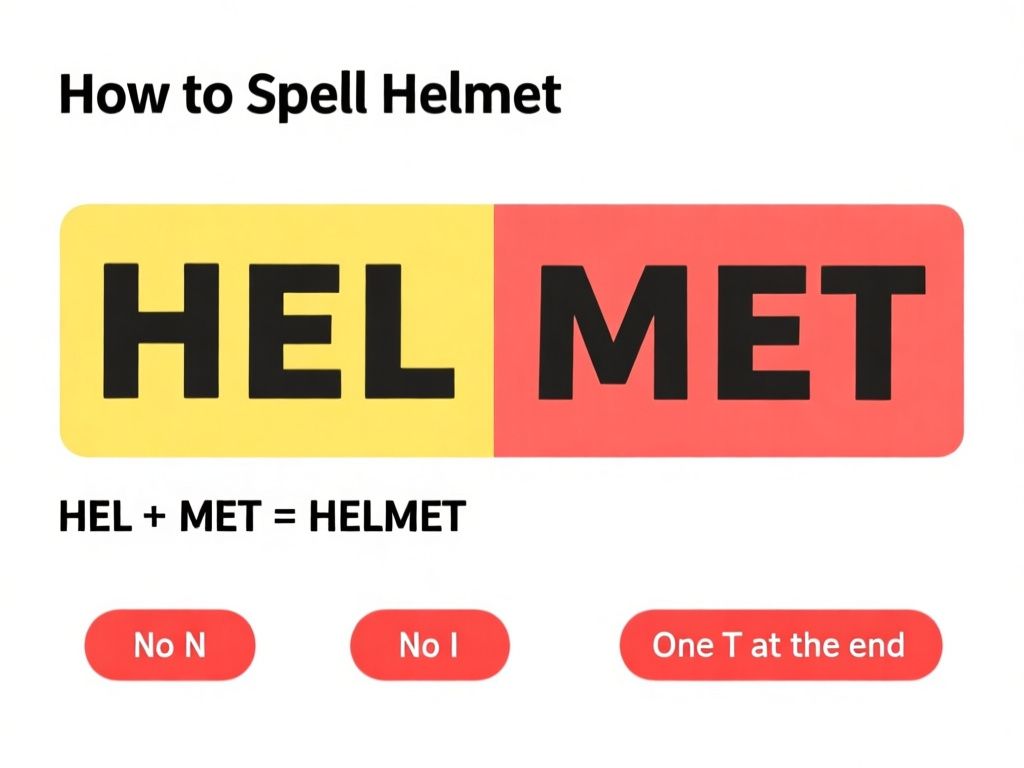
A useful spelling check is to remember the word’s two parts: HEL-MET. The first part contains “hel,” and the second part contains “met.” There is no “n,” no “i,” and no extra “t.”
What is an easy way to remember the spelling?
The simplest memory aid is the phrase “The helmet met the head.” The first two words contain the same ending pattern: hel and met. This makes it easier to recall the letters in the correct order.
Another method is to picture the word in two blocks:
| Part | Letters | Sound |
|---|---|---|
| First part | HEL | Like the beginning of “help” |
| Second part | MET | Like the past tense of “meet” |
Putting the blocks together gives HEL + MET = HELMET. Writing the word several times while saying each part aloud can also help children and language learners connect the sound with the spelling.
How do you use helmet in a sentence?
Helmet is usually used as a countable noun. That means it can refer to one item or more than one item. The singular form is helmet, and the plural form is helmets.
- She put on a helmet before cycling to school.
- The worker checked his helmet before entering the construction area.
- The store sells bicycle helmets in several sizes.
- The hockey players left their helmets beside the rink.
The word can also appear after a describing word. Examples include bicycle helmet, football helmet, motorcycle helmet, climbing helmet, and safety helmet.
In the phrase wear a helmet, the article “a” is used because helmet begins with a consonant sound. The phrase is not “wear an helmet.” However, an would be used before a word beginning with a vowel sound, such as “an orange helmet.”
What is the plural of helmet?
The plural of helmet is helmets. To make the plural, add the letter “s” to the end:
helmet → helmets
The final “t” remains in the plural form. The word is pronounced approximately “HEL-mets,” with a clear “s” sound at the end.
For example, “The coach inspected all the helmets before practice” refers to more than one helmet. The plural spelling is straightforward, but learners sometimes leave out the final “t” and write helmes. That spelling is incorrect.
Is helmet a noun or a verb?
Helmet is most commonly a noun, which is a word for a person, place, thing, or idea. In its ordinary use, it names the protective object worn on the head.
For example:
- “His helmet was scratched.”
- “The helmet has an adjustable strap.”
- “A properly fitted helmet should sit level on the head.”
In informal or specialized writing, helmet can occasionally be used as a verb meaning to provide someone with a helmet or to put a helmet on someone. That use is uncommon compared with the noun. Most learners only need to remember helmet as a noun.
What words are related to helmet?
Several words commonly appear with helmet. Learning them together can make the spelling and meaning easier to use in real sentences.
- Helmeted: wearing a helmet, as in “a helmeted rider.”
- Helmets: the plural form of helmet.
- Helmet strap: the adjustable fastening that helps hold a helmet in place.
- Helmet liner: an inner layer or padding inside some helmets.
- Helmet size: the measurement or fit category used to choose a suitable helmet.
- Safety helmet: a helmet used to reduce the risk of head injury during work or other hazardous activities.
The related word helm is worth treating carefully. A helm can mean the steering position or control of a ship, and it can also refer to an old type of helmet. Modern helmet contains the letters in helm, but the two words do not have the same everyday meaning.
How is helmet different from hard hat?
A helmet is a broad term for protective headgear, while a hard hat usually refers specifically to protective headgear used in construction, maintenance, utilities, and other work environments. A hard hat is designed with workplace hazards in mind, such as falling objects or contact with certain overhead surfaces.
These terms can overlap, but they are not always interchangeable. A bicycle helmet is not a substitute for a construction hard hat, and a hard hat is not automatically suitable for cycling, climbing, hockey, or motorcycle riding. The correct choice depends on the activity, the risks involved, and the manufacturer’s instructions.

Does helmet have different spellings in British and American English?
No. Helmet is spelled the same in British English, American English, Canadian English, Australian English, and other major forms of English. The spelling remains H-E-L-M-E-T.
Words associated with helmets can vary by region or sport. For example, people may use different names for particular types of protective headgear, but the basic spelling of helmet does not change. The main regional differences are more likely to involve pronunciation, local sports terminology, or the name of the activity.
How can you check whether helmet is spelled correctly?
A quick check is to look for the six-letter pattern H-E-L-M-E-T. If the word contains an “n,” an “i,” or an extra final “t,” it is probably misspelled.
When proofreading, use this short checklist:
- Does the word begin with hel?
- Does it contain m after the “l”?
- Is the second vowel an e, not an “i”?
- Does it end with one t?
- Does the sentence need singular helmet or plural helmets?
Spell-check tools can confirm the word, but understanding the pattern is more useful when writing by hand or filling out a form without correction software. Reading the word aloud as “HEL-MET” is often enough to catch an extra letter.
Frequently Asked Questions
How do you spell helmet correctly?
Helmet is spelled H-E-L-M-E-T. It has six letters and two syllables: “HEL-met.”
Is “helment” the correct spelling?
No. Helment is a common misspelling of helmet. The correct word has no “n” and is spelled H-E-L-M-E-T.
How many letters are in helmet?
Helmet has six letters: H, E, L, M, E, and T. The word has two syllables.
What is the plural of helmet?
The plural is helmets. Add “s” to the singular word: helmet becomes helmets.
What is the difference between a helmet and a hard hat?
A helmet is a general term for protective headgear. A hard hat is a specific type of protective headgear commonly used at construction and industrial work sites.
What is an easy way to remember helmet?
Break it into two parts: HEL + MET. The phrase “The helmet met the head” can help you remember that the word has no “n,” uses “e” in both vowel positions, and ends with one “t.”
When in doubt, write the word as two parts—HEL-MET—then remove the hyphen: HELMET.

Olivia
Writer at Helmet Today, covering helmet reviews, fit and riding safety.