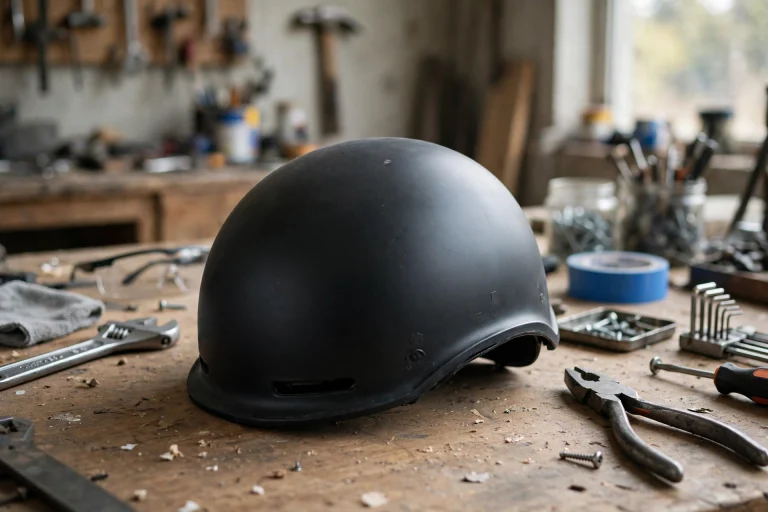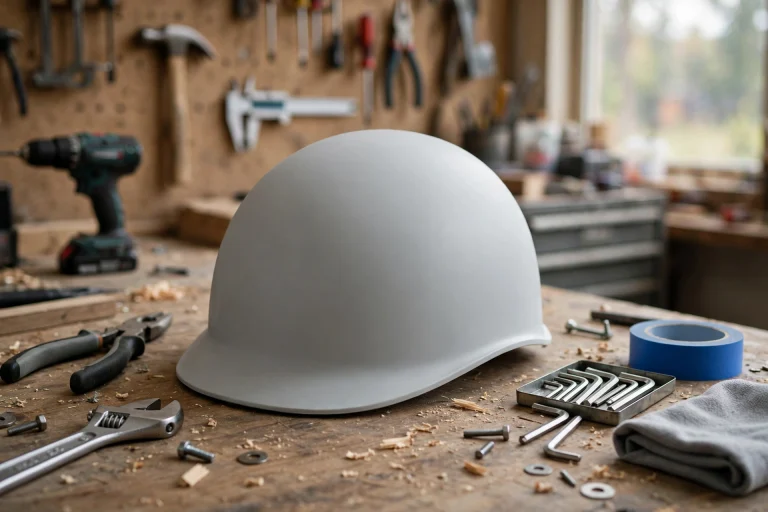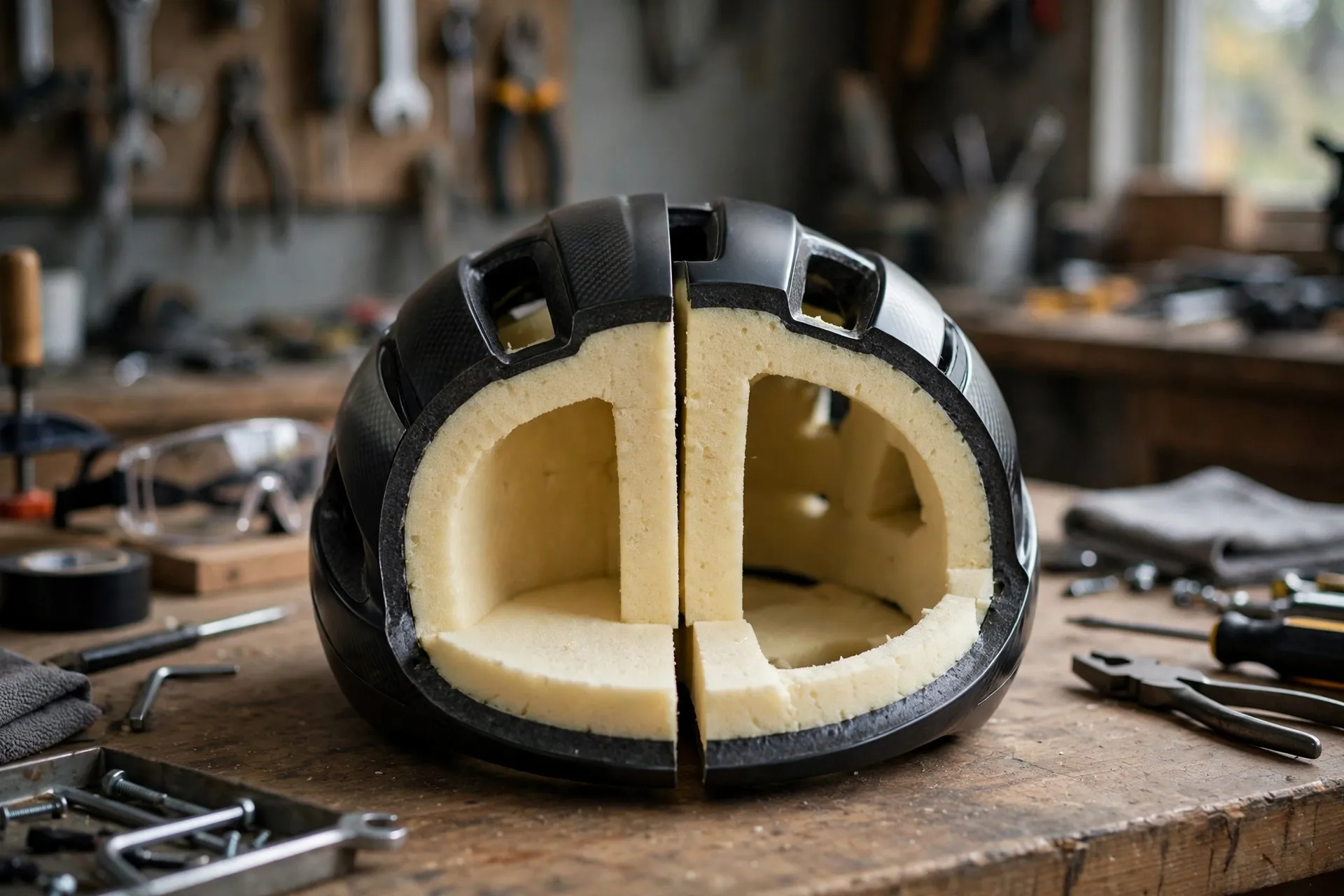
A helmet absorbs impact by spreading the force of a blow across its hard outer shell, then crushing its foam inner layer to slow your head down gradually, instead of letting it stop all at once. That two-step process is the heart of how every modern helmet works, from a bike helmet to a climbing helmet. The shell takes the hit and spreads it out, and the foam underneath soaks up the energy by deforming, which gives your head more time to stop.
In general terms, a helmet does not make a crash harmless. It reduces the force that reaches your head and lowers the risk of a serious injury. The foam inside is designed to be used once: after it has crushed in a hard impact, it cannot crush again in the same way, which is why a helmet should be replaced after a serious knock, even if it looks fine from the outside.
What are the parts of a helmet?
A modern helmet has three main parts: the outer shell, the impact-absorbing liner, and the comfort padding and straps. The outer shell is the hard layer you see, usually made from a tough plastic, and it protects against sharp objects, spreads the force of an impact, and holds the helmet together. The liner sits underneath the shell and is usually made from a foam that crushes on impact.
The comfort padding is the soft layer against your head, which makes the helmet comfortable and helps it fit well, but it is not the main protection. The straps and the fit system hold the helmet in place, so it is still on your head and in the right position when the impact happens. If the helmet is loose or the strap is undone, it cannot do its job properly.
How does the foam liner absorb energy?
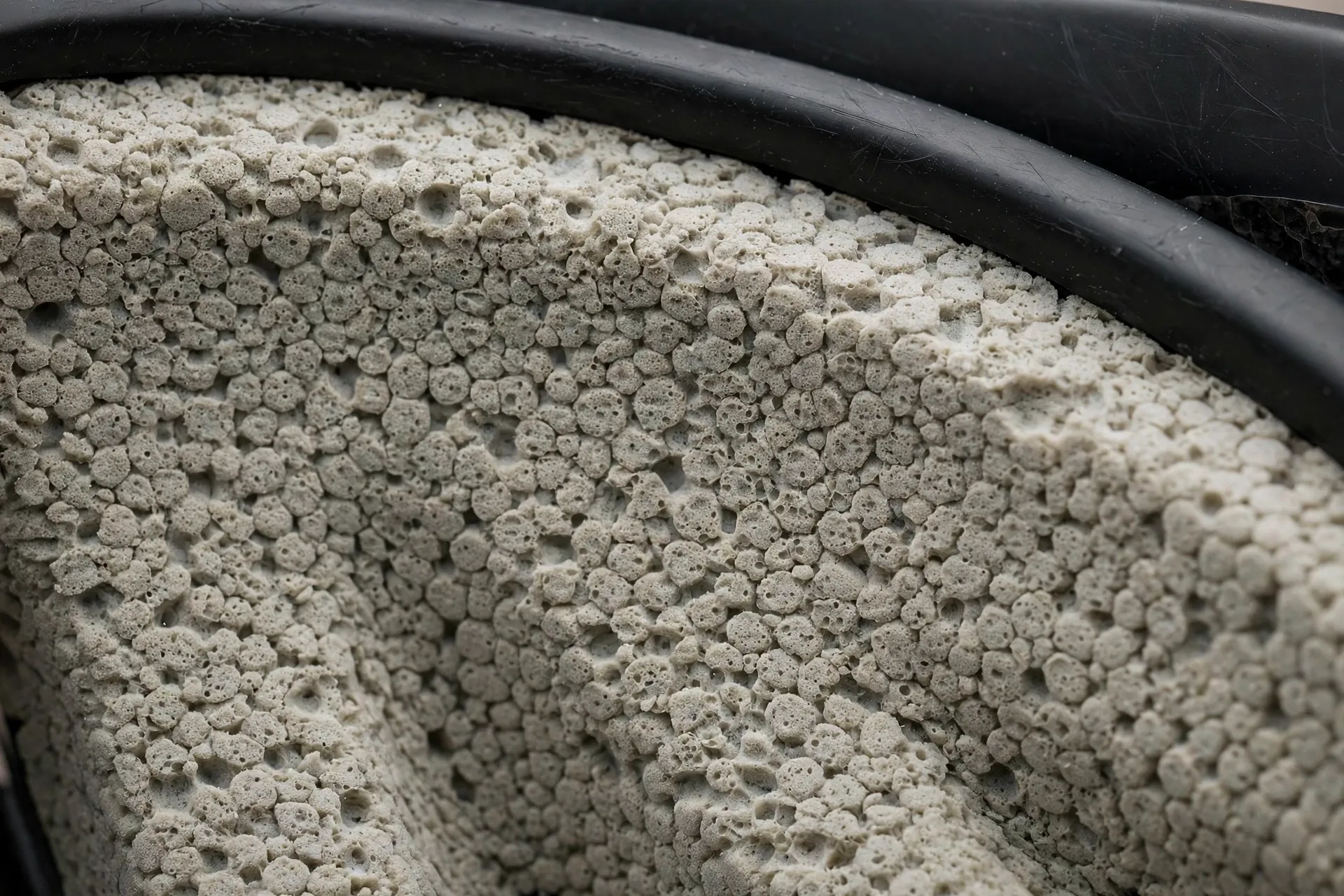
The foam liner absorbs energy by crushing. When your head hits something, the foam compresses, and the air trapped inside its tiny cells is squeezed out. That crushing takes time and uses up energy, which means your head slows down over a longer distance instead of stopping suddenly. In general terms, the longer your head takes to stop, the lower the peak force on your brain.
Think of it like landing on a thick mattress instead of a concrete floor. The mattress gives way and slows you down gently, while the floor stops you at once. The foam liner works the same way, on a smaller scale, inside a helmet. Once the foam has crushed, it stays crushed, which is why a helmet that has taken a hard hit should not be used again.
What does the outer shell do in a crash?
The outer shell has two main jobs in a crash. First, it spreads the force of the impact over a wider area, so the blow is not concentrated on one small spot on your head. A sharp stone or a pointed edge that hits the shell will press on a broad area of foam underneath, rather than on a single point. Second, it protects the foam from being cut or pierced, and it helps the helmet slide along the ground instead of catching.
That sliding matters, because a helmet that catches on the ground can twist your head suddenly. A smooth shell lets the helmet glide, which reduces the twisting force on your neck. The shell also holds the foam together as it crushes, so the liner stays in place and keeps working through the whole impact.
Why does slowing down gradually matter?
Slowing down gradually matters because your brain is soft and floats inside your skull in a layer of fluid. When your head stops suddenly, your brain keeps moving for a moment and can hit the inside of your skull. The faster the stop, the harder that internal impact can be. A helmet gives your head extra distance and extra time to stop, which lowers the force on your brain.
In general terms, even a small amount of extra stopping distance makes a real difference, because the foam can absorb a large share of the impact energy. Some helmets also include a system designed to reduce rotational forces in a fall, such as MIPS, which lets the helmet move slightly relative to your head and can reduce the twisting forces that reach the brain.
What happens to a helmet after an impact?
After a hard impact, the foam liner inside a helmet is usually crushed in the area of the blow, even if the damage is not visible from the outside. The shell may show a crack, a dent, or a scuff, but the foam damage can be hidden underneath. A helmet that has crushed its foam once cannot absorb a second impact in the same way, because the foam has already used up its ability to deform.
That is why the advice is to replace a helmet after a serious knock, a crash, or a hard fall, even if it looks fine. The same applies to a helmet that has been dropped hard onto a hard surface. A light knock, such as the helmet rolling off a table onto a soft floor, is different, but when in doubt, the safe choice is to replace it.
How can you check that your helmet is still working?
Check your helmet regularly by looking at the shell for cracks, dents, and deep scratches, and by pressing the foam liner gently to feel for soft spots or areas that feel different from the rest. Look at the straps and buckles for wear, and check that the fit system still adjusts smoothly and holds the helmet in place. If anything feels loose or damaged, take the helmet out of use.
Store your helmet in a cool, dry place, away from direct heat, strong sunlight, and chemicals such as solvents and fuels, which can weaken the shell and the foam over time. In general terms, a helmet that is looked after, worn correctly, and replaced after a hard impact will be ready to do its job when you need it most.
Does a helmet make a crash safe?
No, a helmet reduces the force that reaches your head, but it cannot remove all risk. In general terms, it lowers the chance of a serious head injury, which is why it is worth wearing every time.
Can a helmet be used again after a crash?
In general terms, no. A helmet that has taken a hard impact has crushed its foam liner, and it cannot absorb a second impact in the same way, so it should be replaced.
Does a cracked shell mean the helmet is broken?
Yes, a crack in the shell is a sign that the helmet has taken a hard hit or is damaged, and it should be replaced. Even a small crack can mean the foam underneath has been affected too.

Olivia
Writer at Helmet Today, covering helmet reviews, fit and riding safety.