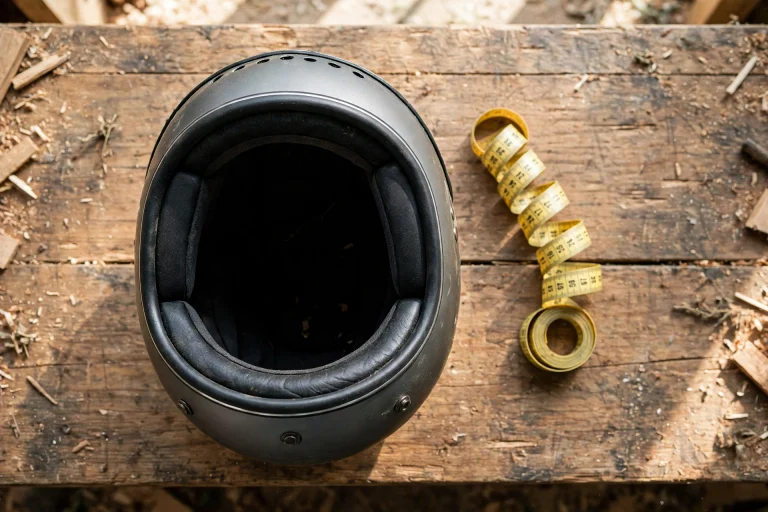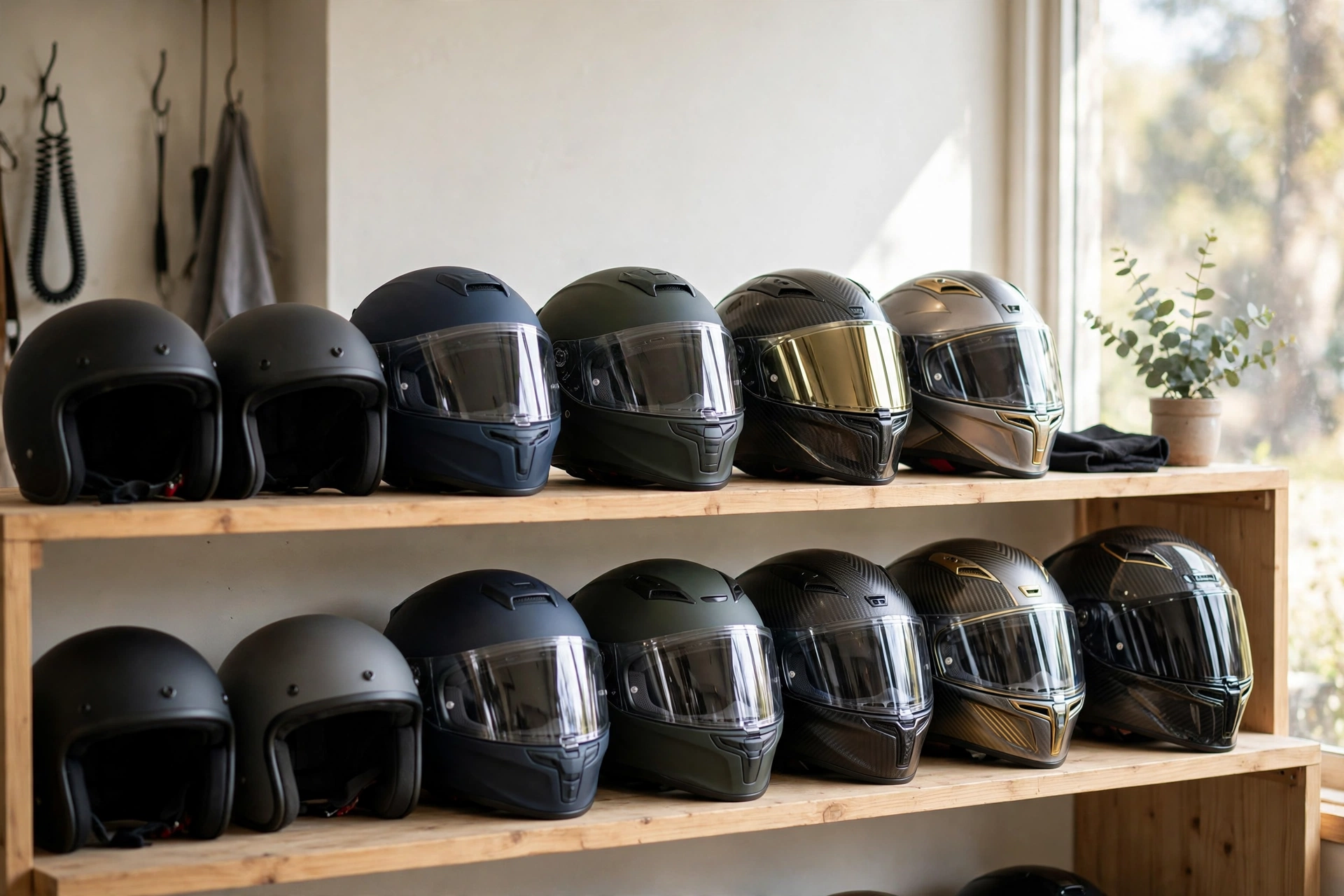
Most riders should spend in the mid-range on a motorcycle helmet — in general terms, that is roughly the $150–$350 band — because every street-legal helmet must meet the same safety standard, and what extra money really buys is comfort: lower weight, less noise, better ventilation, and nicer liners, not proportionally more crash protection. A certified budget helmet protects far better than no helmet, and a premium helmet only earns its price if you ride enough hours to feel the comfort difference.
Motorcycle helmet prices run from under a hundred dollars to well over a thousand, and the marketing at the top end can make riders feel unsafe on anything cheaper. That feeling is not how helmet standards work. Once you understand what each price tier actually adds, you can spend the right amount for how you ride — and put the rest of your budget toward gloves, a jacket, or training.
What Does the Safety Standard Mean for Your Budget?
In the US, every motorcycle helmet sold for road use must meet the DOT standard, and many helmets additionally carry the European ECE 22.06 certification, which many riders and testers regard as a more demanding regime. The key budget fact: a helmet at the bottom of the price range and a helmet at the top must both pass the standard they are certified to. There is no “twice as protective” premium tier.
That does not mean all helmets perform identically in every real-world crash — designs differ in coverage, shell construction, and how they manage different impacts. Some helmets add rotational impact liners, explained in our guide to what MIPS is and how it works, and independent rating programs test beyond the legal minimums. But the relationship between price and protection is weak compared with the relationship between price and comfort, and fit matters more than either: the best helmet is a certified one that fits your head shape and gets worn on every ride.
So treat certification as the gate and comfort as the ladder. First, the helmet must be genuinely certified and fit properly. Then, spend more only for the comfort and convenience features your riding will actually use.
What Do You Get From a Budget Helmet?
In general terms, budget helmets cluster under roughly $150. You get a certified polycarbonate shell, a basic liner, a simple visor, and ventilation that is present but often modest in effect. For a new rider doing short trips around town, that is a legitimate, safe starting point — vastly better than delaying riding gear purchases while saving for something fancy.
The compromises show up over hours and seasons. Budget helmets tend to be heavier, louder at highway speed, and fitted with liners that are not removable for washing. Visor mechanisms can feel crude, spare parts may be hard to find, and the padding packs down sooner, which shortens the helmet’s useful life.
One warning belongs in this tier: buy from a reputable dealer. The bottom of the market is where counterfeit and mislabeled helmets appear, and a fake certification sticker protects nothing. A genuinely certified helmet from a known retailer at a modest price is a good buy; an unknown marketplace helmet at an impossible price is not.
What Does the Mid-Range Add?
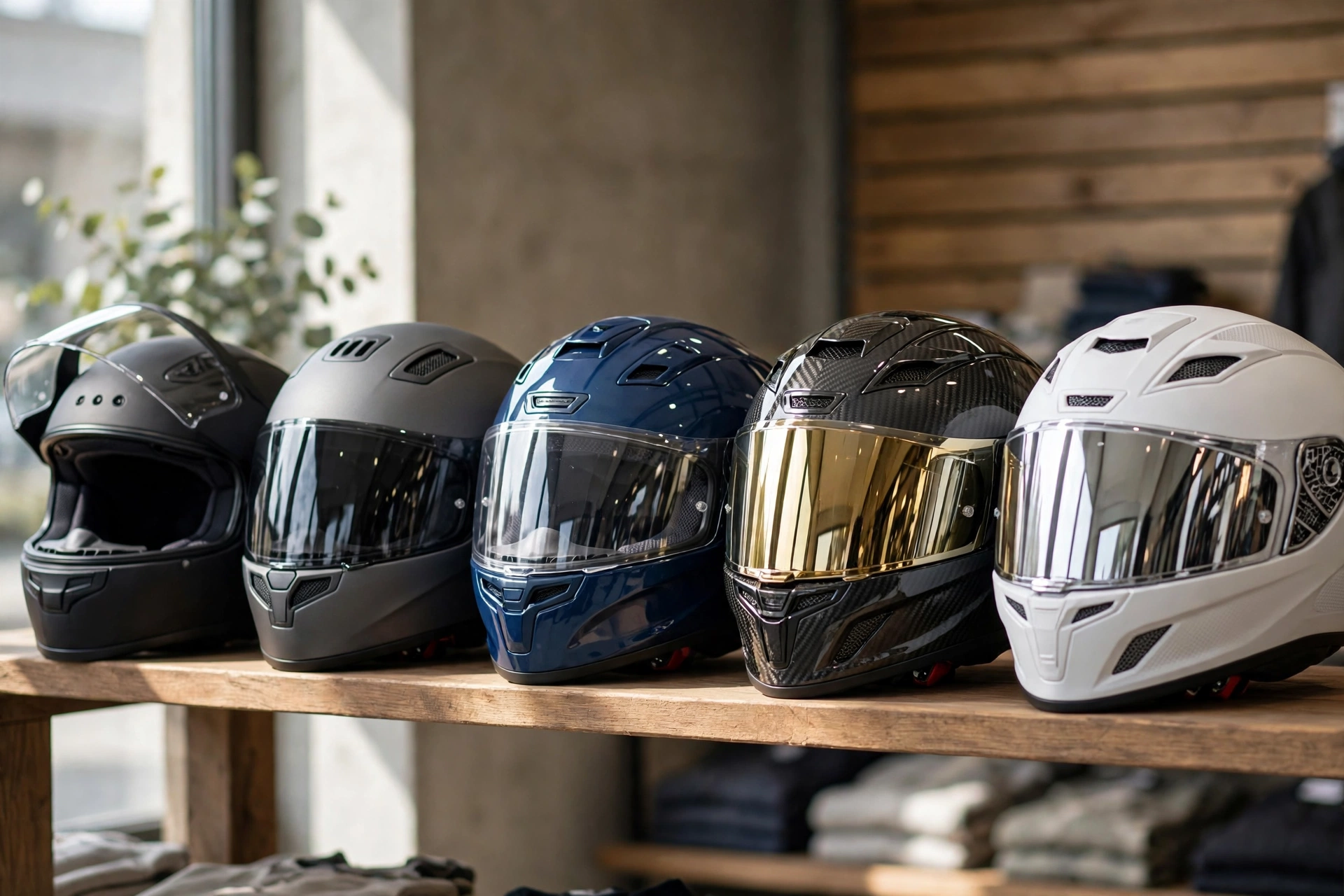
The mid-range — roughly $150 to $350 in general terms — is where most riders get the best value. Shells often move to fiberglass or composite blends that are lighter and stiffer than basic polycarbonate, and many models carry both DOT and ECE 22.06 labels. Weight drops, and with it, neck fatigue on longer rides.
This is also the tier where daily-life features arrive: removable, washable liners; drop-down internal sun visors; better-sealed visors with real detents; speaker pockets for intercoms; and vents that actually move air. Noise levels usually improve too, because the neck roll and shell shaping get more design attention.
For a commuter or a weekend rider covering real miles, these are not luxuries. A quieter, lighter helmet with a liner you can wash is a helmet you will wear happily for years, and total cost per season often ends up lower than a cheap helmet replaced early because the padding died.
What Do Premium Helmets Actually Add?
Above roughly $350, and climbing steeply from there, premium helmets add refinement rather than a different category of safety. Expect the lightest shells — sometimes carbon fiber — the quietest aerodynamics, top-tier ventilation, plush multi-piece liners you can customize, and excellent visor optics with wide fields of view.
You also pay for racing features and brand research programs: emergency-release cheek pads, elaborate aero spoilers, and shells tuned in wind tunnels. For a high-mileage touring rider or a trackday regular, those refinements are genuinely felt every ride. For a rider doing twenty-minute hops across town, they are mostly invisible.
The honest way to judge this tier is by hours. If you ride ten hours a week, premium comfort pays you back weekly. If you ride ten hours a month, the same money likely serves you better spent on the mid-range helmet plus better gloves, boots, or a rider course.
How Should You Split Your Budget?
Start with fit, because it outranks price entirely. A mid-range helmet that matches your head shape beats a premium helmet that gives you a forehead hotspot. Try helmets on for fifteen minutes or more, in a shop if you can, and let shape eliminate most of the shelf before money enters the discussion.
Then be honest about your riding. Short urban trips point to the budget or lower mid-range. Daily commuting and touring point to the mid-range comforts. High mileage, highway noise sensitivity, or very long days justify premium — in that order of priority, not because of the logo.
Finally, budget for the helmet’s whole life: a spare visor, replacement cheek pads when they soften, and a full replacement after any crash or after the maker’s recommended service life, which in general terms is about five years of regular use. A sensible plan is a quality mid-range helmet, replaced on schedule, rather than a flagship helmet stretched years past its prime.
Frequently Asked Questions
Q: Is a more expensive motorcycle helmet actually safer?
A: Not proportionally. Every street-legal helmet must meet its certification standard, budget or premium, and price differences mostly buy comfort, weight, noise, and features. Some costlier helmets add refinements like rotational liners or dual certification, but fit and certification matter far more than price.
Q: What is a realistic budget for a first motorcycle helmet?
A: In general terms, a reputable budget-to-mid-range helmet — roughly $100–$250 — gets a new rider a certified, comfortable helmet with a removable liner and decent visor. Spend on fit and genuine certification from a known dealer, and avoid suspiciously cheap marketplace helmets.
Q: When is a premium helmet worth it?
A: When your hours justify it: daily highway commuting, long tours, or track use, where lower weight, less noise, and better ventilation are felt on every ride. If your riding is short and occasional, a good mid-range helmet plus money left over for other gear is usually the smarter spend.

Olivia
Writer at Helmet Today, covering helmet reviews, fit and riding safety.