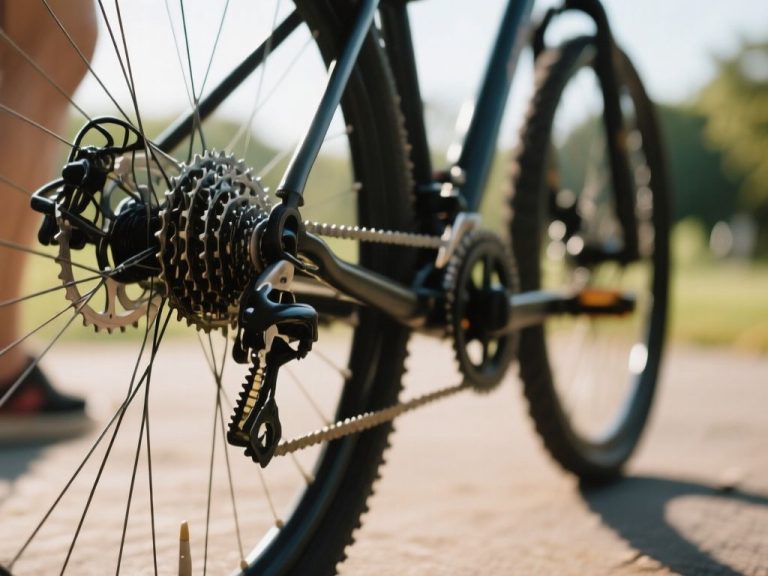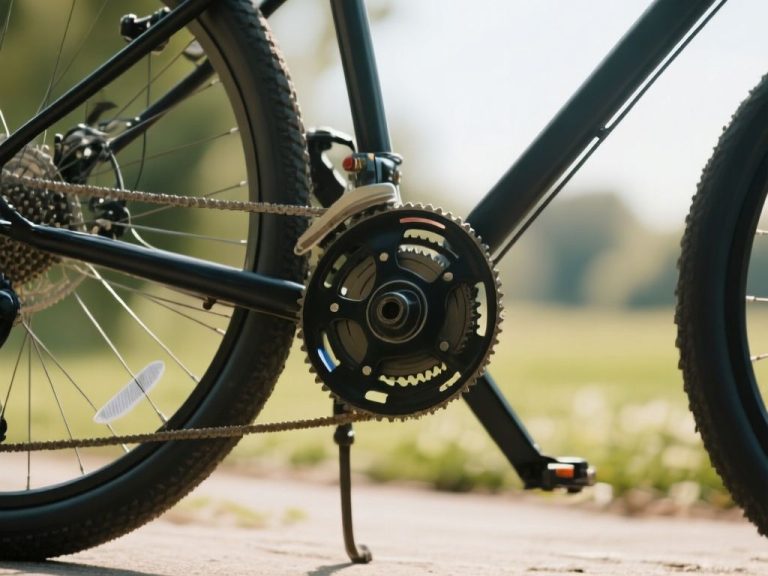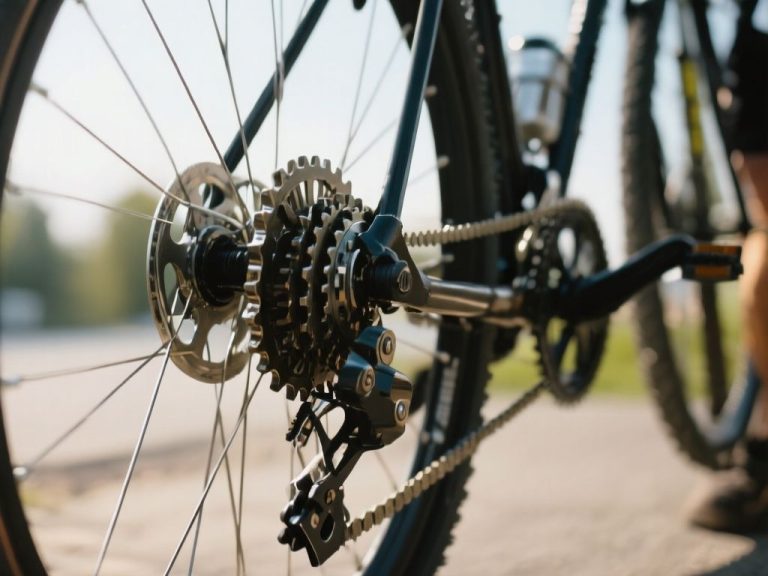

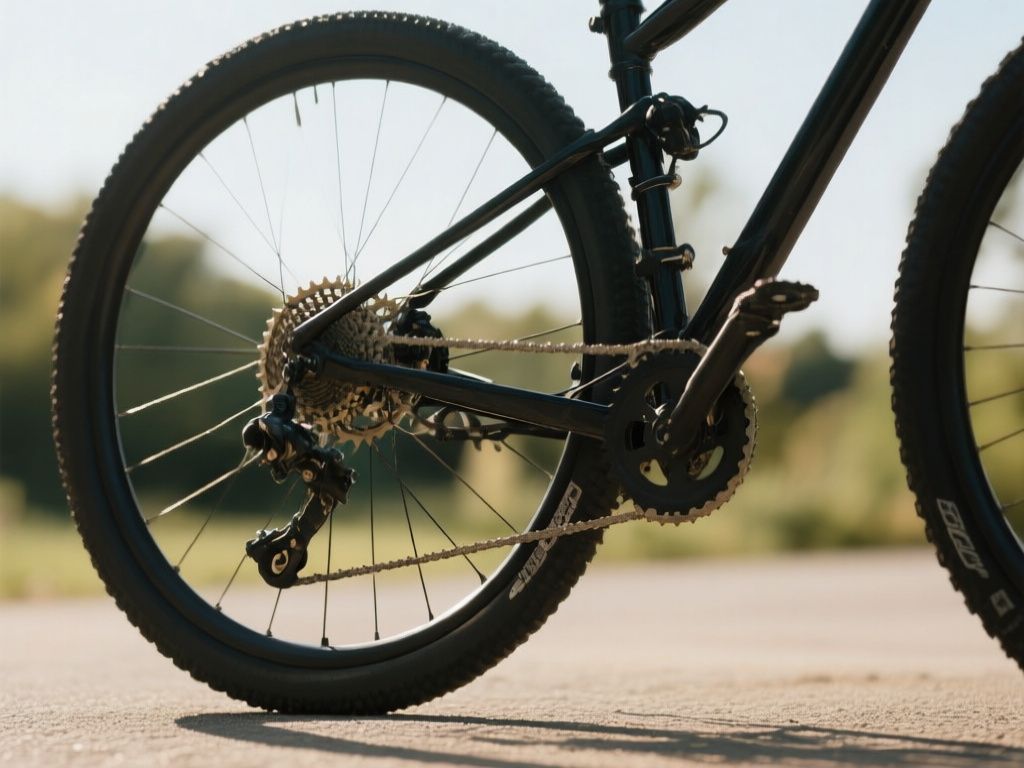
To change gears on a bike, keep pedaling gently while using the left or right shifter to move the chain between sprockets. Shift before a hill gets steep, change only one or two gears at a time, and ease pressure on the pedals during the shift. The correct gear lets you pedal smoothly without straining.
How do bike gears work?
Bike gears change how far the bicycle travels with each turn of the pedals. The chain connects the front chainring, attached to the pedals, with one of the rear sprockets, grouped together in a cassette or freewheel. Different combinations make pedaling easier or harder.
A low gear uses a small front chainring and a large rear sprocket. It makes climbing and starting easier because the rear wheel turns less for each pedal revolution. A high gear uses a large front chainring and a small rear sprocket, allowing more speed on flat roads or descents.
Most multi-speed bikes have two separate shifters. The right-hand shifter controls the rear derailleur, which moves the chain across the rear sprockets. The left-hand shifter controls the front derailleur, if the bike has one, and moves the chain between the larger front chainrings.
The number of gears is not always the simple product of the numbers printed on the shifters. A bike with two front chainrings and 10 rear sprockets may be described as having 20 gears, but some combinations overlap and are not useful because they place the chain at an extreme angle.
Which shifter controls which gears?
On most bikes, the right shifter changes the rear gears and the left shifter changes the front gears. The exact button, lever, or paddle varies by manufacturer, but the basic pattern remains consistent.
| Control | What it moves | Best use |
|---|---|---|
| Right shifter | Rear derailleur and rear sprockets | Small adjustments while riding |
| Left shifter | Front derailleur and front chainrings | Larger changes for hills or speed |
On a bike with one front chainring, often called a 1x drivetrain, only the right shifter is used for gear changes. On a single-speed bike, there is no shifter because the bike has only one gear ratio.
Many shifters show numbers, but the numbering can be confusing. On a rear shifter, a larger displayed number commonly means a smaller rear sprocket and a harder gear. On the front shifter, a larger number commonly means a larger chainring and a harder gear. Treat the numbers as a guide, then use your legs and cadence to judge the result.
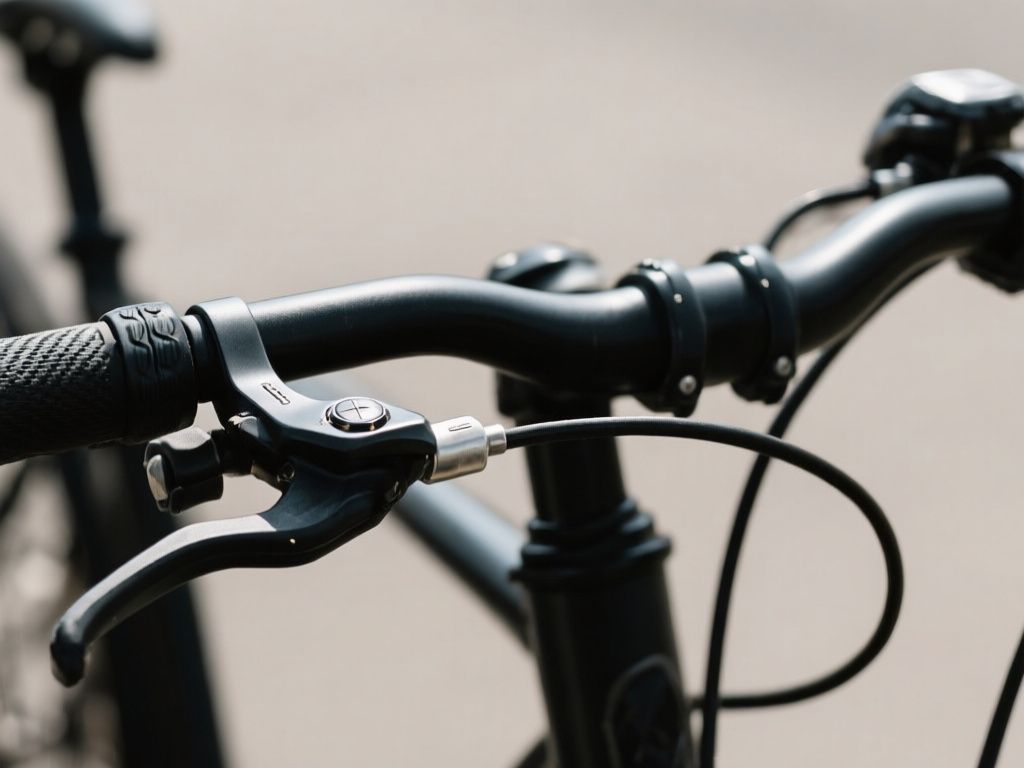
How do you shift gears on a bike?
Start by pedaling forward at a steady, moderate pace. Press or pull the appropriate shifter while continuing to turn the pedals. The derailleur guides the chain onto the next sprocket, usually with a brief clicking sound.
- Look ahead and choose the gear you will need.
- Keep both hands on the handlebars and continue pedaling.
- Reduce pressure on the pedals just before shifting.
- Operate the shifter with your thumb or finger.
- Keep pedaling smoothly until the chain settles into its new position.
Reducing pedal pressure is the detail that prevents many shifting problems. The chain needs to move sideways, and heavy force makes that movement harder. A shift under strong pressure can produce loud grinding, delayed movement, or a dropped chain.
Do not stop pedaling during a normal gear change. The derailleur cannot move the chain reliably if the chain is stationary. The main exception is a bike with an internal gear hub, where some models require a brief pause or reduced pressure while shifting.
How should you change gears before a hill?
Shift into an easier gear before the climb becomes difficult. If the road rises ahead, change down while the pedals still turn comfortably on the flatter approach. Waiting until the bike is barely moving puts more force through the chain and makes the change less reliable.
For a small adjustment, click the right shifter one or two times toward the easier direction. On many bikes, this moves the chain onto a larger rear sprocket. If the hill becomes much steeper, use the left shifter to move to a smaller front chainring, then use the right shifter to fine-tune the effort.
A good climbing gear lets the rider keep a steady rhythm rather than pushing hard on each pedal stroke. There is no single correct gear for every hill. A heavier rider, a loaded touring bike, strong headwind, or loose gravel may require an easier gear than a smooth, flat road.
Try not to make a large front shift halfway up a very steep hill. Front shifts take longer and can feel less smooth under load. If possible, make that change before the steepest section begins.
How should you shift on flat roads and downhills?
On flat ground, choose a gear that allows comfortable, controlled pedaling. If your legs are spinning quickly with little resistance, shift toward a harder gear. On most bikes, that means moving the chain to a smaller rear sprocket with the right shifter.
If each pedal stroke feels heavy or your cadence drops, shift toward an easier gear. A slightly easier gear often helps maintain speed and reduces fatigue, especially into a headwind.
During a descent, shift before the road becomes too fast or steep to pedal comfortably. Many riders stop pedaling on a descent, so shifting may not be possible until the bike reaches a flatter section. Keep both hands ready for braking, and never sacrifice control just to select a harder gear.
On a road bike, a harder gear can help maintain pressure on the pedals at higher speeds. On a mountain bike, an easier gear may be preferable on a technical descent because it allows quick acceleration after obstacles and better control when the terrain changes.
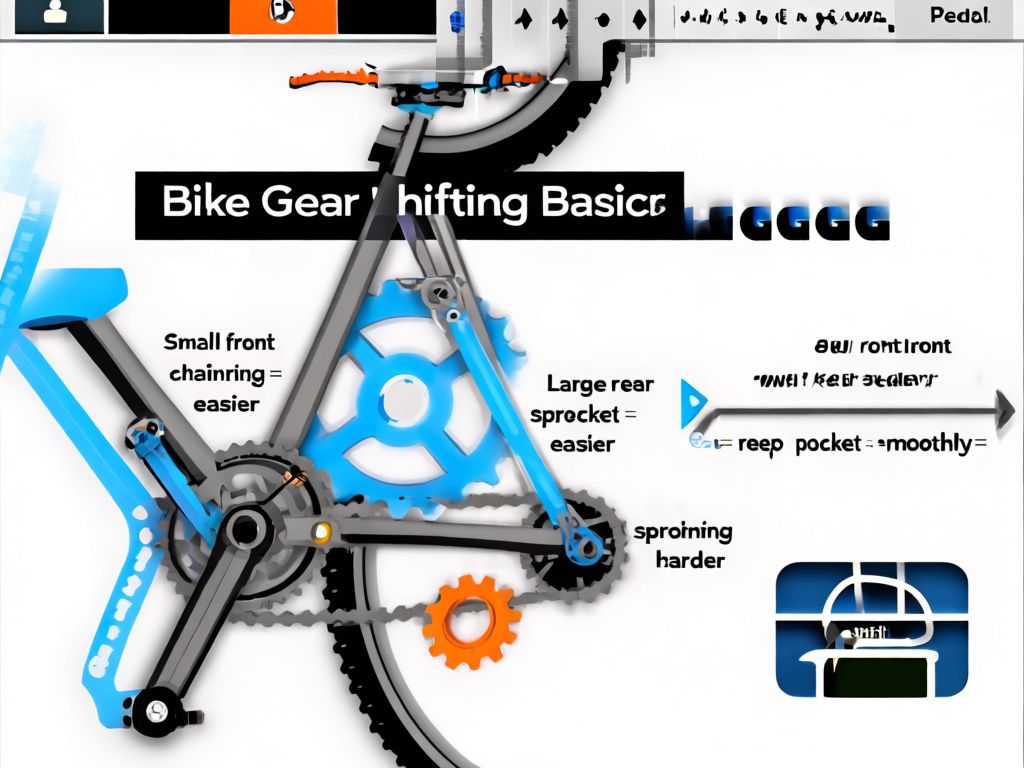
What is cross-chaining, and should you avoid it?
Cross-chaining means using an extreme chain position, such as the largest front chainring with the largest rear sprocket or the smallest front chainring with the smallest rear sprocket. The chain then runs diagonally across the drivetrain instead of in a relatively straight line.
Occasional use will not immediately damage a bike, but prolonged cross-chaining increases chain angle, noise, friction, and wear. It can also make the drivetrain less efficient and leave little room for a useful shift in the same direction.
As a practical rule, pair the small front chainring with the middle or larger rear sprockets. Pair the large front chainring with the middle or smaller rear sprockets. If the chain sounds noisy or looks sharply angled, select a nearby combination.
How do you know when to shift?
Your legs provide the most useful gear indicator. Shift to an easier gear when pedaling feels slow and forceful, especially before your knees begin to strain. Shift to a harder gear when your legs are spinning rapidly and the bike is not gaining useful speed.
Cyclists often describe pedaling speed as cadence, meaning the number of pedal revolutions per minute. Many riders find a moderate cadence more comfortable than either grinding slowly or spinning extremely fast, but comfort and terrain matter more than chasing an exact number.
- Use an easier gear for steep hills, headwinds, rough surfaces, and starting from a stop.
- Use a harder gear for fast flat sections and controlled descents.
- Shift early when the road changes instead of waiting for your legs to struggle.
- Make one or two rear shifts first when you need a small adjustment.
- Use the front shifter when you need a larger change in effort.
Experienced riders often shift based on what the road will demand next. A visible hill, stop sign, sharp corner, or change in surface gives a useful cue. Gear changes are easier when they happen before the rider is under maximum effort.
Why are my bike gears not shifting properly?
Slow or noisy shifting can come from incorrect technique, dirt, cable problems, or worn drivetrain parts. First, ease your pedal pressure and check whether the chain is trying to shift while you push hard. Technique alone solves many rough shifts.
A dirty chain and cassette can also interfere with smooth movement. Wipe the chain and apply a bicycle-specific chain lubricant according to the product directions, then remove excess lubricant with a clean cloth. Too much lubricant attracts grit.
If the chain skips, refuses to reach certain sprockets, or shifts two gears at once, the derailleur cable may need adjustment. A bent derailleur hanger can create similar symptoms, particularly after the bike falls on its right side. These problems are best checked by a bike shop if basic cleaning does not help.
A chain that regularly falls off may indicate incorrect limit-screw adjustment, a worn drivetrain, poor shifting technique, or a combination of these issues. Avoid turning adjustment screws at random; a small change can affect the derailleur’s entire range.
How can beginners practice shifting safely?
A quiet, flat road or empty paved path is the best place to practice. Begin in a middle rear gear, pedal at an easy pace, and shift one click at a time while listening to the chain. Watch the road first; gear practice should never compete with traffic awareness.
- Ride in a straight line with both hands near the controls.
- Shift one rear gear easier and notice the change in pedal effort.
- Shift one rear gear harder and listen for a clean, quick movement.
- Repeat while keeping your pedal pressure light.
- Practice a front shift only after rear shifts feel familiar.
When riding around cars or other cyclists, make gear changes before intersections, narrow passages, and crowded areas. A missed shift can distract the rider at exactly the wrong moment. Braking, steering, and awareness always come first.
Frequently Asked Questions
Should I pedal while changing gears?
Yes, keep the pedals turning during a normal derailleur shift. Pedal lightly rather than stopping or pressing hard, because the chain needs movement but not heavy force to move between sprockets.
Which way makes a bike easier to pedal?
On most bikes, shift the rear derailleur so the chain moves onto a larger rear sprocket. If the bike has multiple front chainrings, move the chain onto the smaller front chainring for a larger reduction in effort.
Why does my bike make a grinding sound when I shift?
Grinding usually means the chain is under too much pressure, the derailleur is not aligned correctly, or the drivetrain is dirty or worn. Ease your pedal pressure first; if the noise continues, inspect and clean the drivetrain or ask a bike mechanic to check it.
When should I use the front shifter?
Use the front shifter when you need a substantial change, such as moving from a flat road onto a steep climb. Make the shift before the steepest part and reduce pedal pressure so the chain can move cleanly.
Is it bad to shift while standing on the pedals?
Shifting while standing can place high force on the chain, especially during a climb. If a shift is necessary, briefly reduce your effort or sit down when possible, then shift with light pressure.
What gear should I start in after stopping?
Start in an easier or middle-easy gear that lets you accelerate without a heavy first pedal stroke. Shift into that gear before stopping when you can anticipate the stop, such as at a traffic light or the end of a path.


Olivia
Writer at Helmet Today, covering helmet reviews, fit and riding safety.