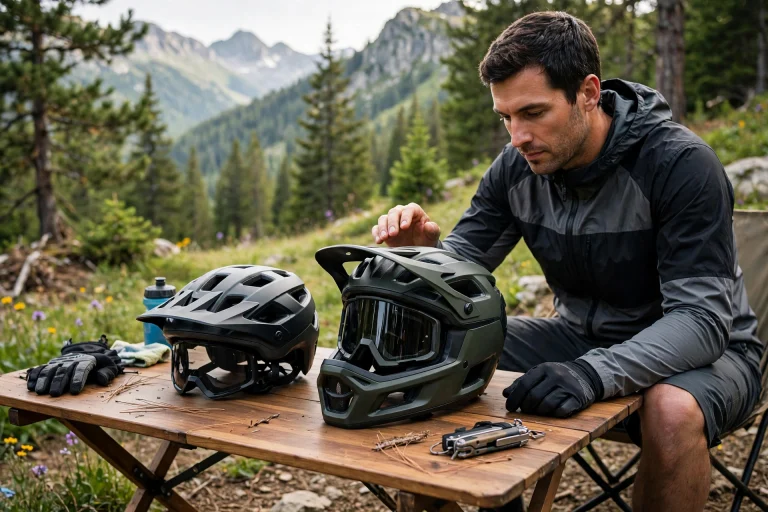
Clean a bike helmet by removing the pads and washing them in lukewarm water with mild soap, wiping the straps and shell with the same gentle solution, and letting everything air dry completely. Never use harsh solvents, bleach, or strong detergents on any part of the helmet — they can weaken the EPS foam and shell without leaving visible damage. If your helmet’s maker advises against soaking the shell, wipe it down instead of submerging it.
Regular cleaning is not just about odor. Sweat salt crusts into straps and buckles, sunscreen and grime build up on pads, and a dirty helmet fits worse and ages faster. A gentle clean every few weeks — more often for daily riders — keeps the helmet fresh, comfortable, and protecting the way it should. The whole job needs nothing more than a basin, lukewarm water, mild soap, and a soft cloth, and it takes about fifteen minutes plus drying time.
How Do You Wash Bike Helmet Pads and Liners?
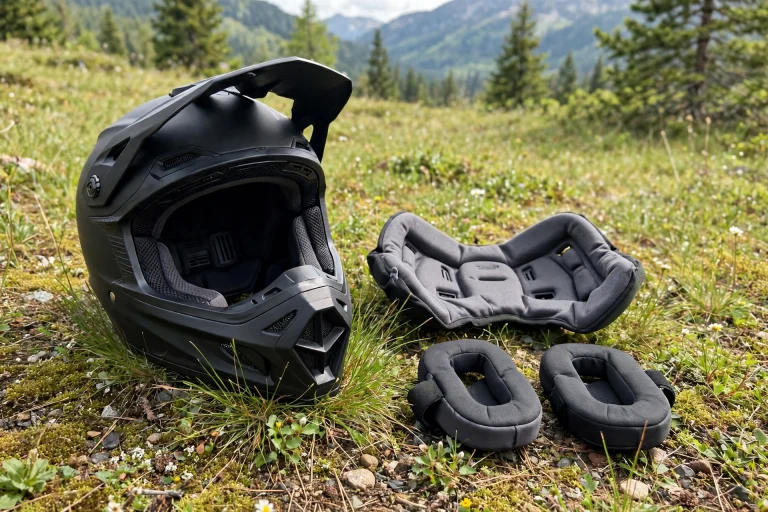
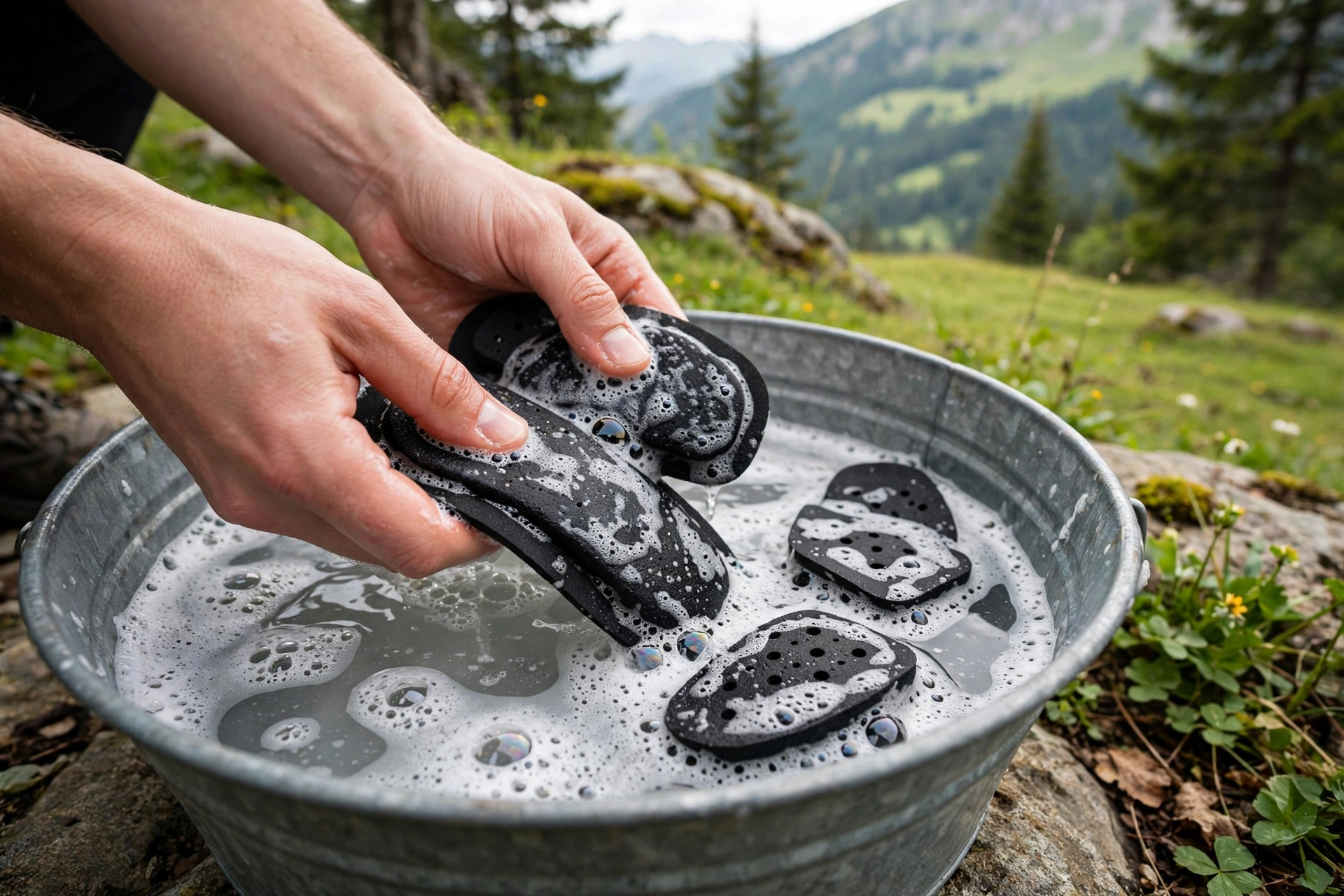
Start by removing everything that comes off: most modern helmets have comfort pads attached with hook-and-loop tabs or small snaps. Work slowly and note where each pad sits, or take a quick photo first so reassembly is easy. Wash the pads by hand in a basin of lukewarm water with a drop of mild soap or gentle detergent, squeezing them repeatedly to work the sweat out — the water usually turns gray the first time.
Rinse the pads thoroughly in clean water until no soap remains, since residue attracts dirt and can irritate skin. Squeeze out excess water with a towel rather than wringing, which can tear the pad foam and fabric. Some makers allow machine washing on a gentle cycle in a mesh bag, but hand washing is always safe and takes five minutes. Set the pads aside to air dry away from direct heat and sun.
How Should You Clean the Straps and Buckle?
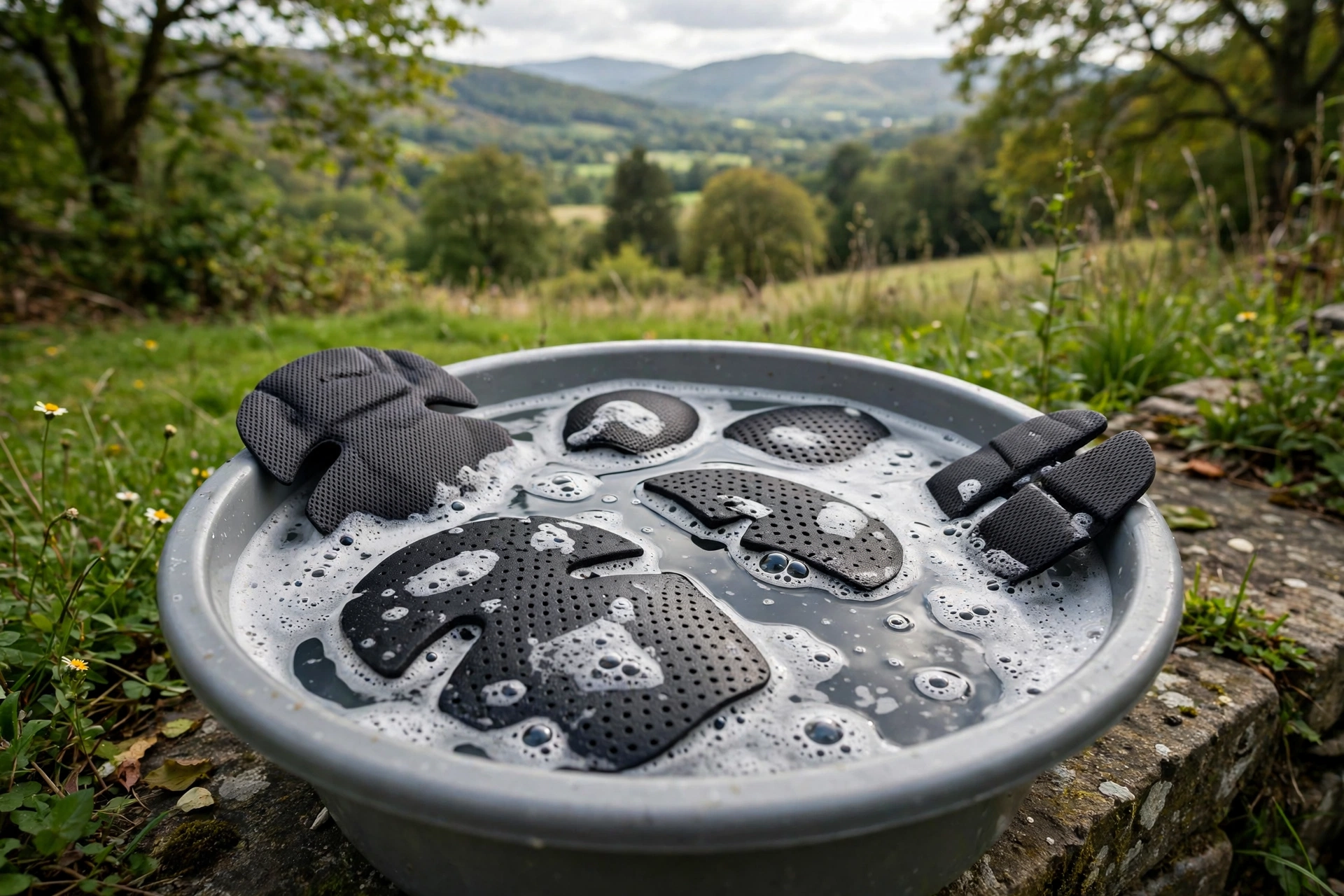
Straps cannot usually be removed, so clean them in place. Fill a bowl with lukewarm water and mild soap, then work the straps through it with your fingers or a soft cloth, paying attention to the areas that sit against your jaw and under your ears, where sweat salt builds up as a white crust. A soft old toothbrush helps loosen crust around the buckle and strap sliders.
Rinse by wiping repeatedly with a cloth dampened in clean water, and test the buckle several times as you go — it should click positively and release cleanly. Grit in the buckle is a safety issue, not just grime, so rinse until it runs clear. Leave the straps hanging free to dry; do not use a hair dryer or place the helmet on a radiator, since heat is bad for webbing and foam alike.
How Do You Clean the Shell and Foam Inside?
Wipe the outer shell with a soft cloth or sponge, lukewarm water, and a little mild soap. That is enough for road dust, bugs, and sunscreen smears. Rinse with a clean damp cloth and buff dry. Avoid solvent-based cleaners, citrus degreasers, bug-and-tar removers, and anything with petroleum ingredients — these can attack the shell finish and, worse, wick into the EPS foam and soften it invisibly.
Inside, the EPS foam itself only needs a gentle wipe with a damp cloth; it does not absorb sweat the way pads do. If your helmet has a low-friction liner system — see what MIPS is for helmets for how it works — wipe that layer carefully without detaching or stretching it, and let it dry fully before refitting the pads. Check your manual on submerging: many makers say never to dunk the whole helmet, because water gets trapped between shell and foam and dries very slowly. Wiping achieves the same clean without the risk.
How Do You Dry a Bike Helmet and Control Odor?
Air dry everything at room temperature in a ventilated spot, pads out, straps hanging loose. A full helmet typically needs several hours; pads may take overnight. Only reassemble when every part is completely dry — trapping moisture invites mildew, which creates the worst helmet odor of all and is very hard to reverse once established in foam and fabric.
For odor control between deep cleans, the basics work best: let the helmet air out after every ride instead of sealing it in a bag, rotate or rinse pads more often in summer, and use a helmet-specific deodorizing spray if you like — avoid household disinfectant sprays and scented products not meant for helmets, since their solvents can harm foam. A washable thin liner or skull cap worn under the helmet also absorbs much of the sweat before it reaches the pads, and it can go in the laundry after every ride. A clean, dry helmet stored openly on a shelf rarely develops a smell problem in the first place.
How Often Should You Clean a Bike Helmet?
Let your riding set the schedule. Daily commuters and riders in hot climates should wash pads every two to four weeks and wipe straps whenever salt crust appears. Weekend riders can stretch that to every month or two, and everyone should do a full clean before off-season storage and after any particularly sweaty, dusty, or sunscreen-heavy ride block.
Tie cleaning to fit checks. Every time the pads go back in, confirm the helmet still sits level and snug, the straps form even Vs under your ears, and the buckle tension is right. Pads compress as they age even with careful washing, and when a freshly cleaned helmet still feels loose, that is information: the pads — or the helmet — are nearing the end of their service, not in need of a harsher wash.
Frequently Asked Questions
Can I put my whole bike helmet in water to wash it?
Only if your manufacturer explicitly allows it. Many advise against submerging because water trapped between the shell and foam dries slowly and can cause odor. Washing the pads separately and wiping the shell and foam gets the same result safely.
What cleaning products are safe for a bike helmet?
Lukewarm water and mild soap or gentle detergent are all you need. Avoid solvents, bleach, citrus degreasers, and petroleum-based cleaners — they can damage the shell and weaken EPS foam without visible signs.
Can I machine wash helmet pads?
Some makers allow it on a gentle cycle inside a mesh laundry bag, but hand washing is universally safe and quick. Never machine wash or tumble dry the helmet itself, and never dry any part with direct heat.

Olivia
Writer at Helmet Today, covering helmet reviews, fit and riding safety.