To put a helmet on a toddler without a meltdown, get three things right: the helmet sits level with its front edge about two finger-widths above the eyebrows, the straps form a snug V under each ear, and the whole thing is a calm, predictable routine — helmet on before the bike comes out, every single time.
Most helmet battles are really fit problems or surprise problems. A helmet that pinches, wobbles, or appears only on random days will get fought. One that fits well and is simply part of riding gets accepted, usually within a week or two of consistency.
What Is the Correct Position for a Toddler’s Helmet?
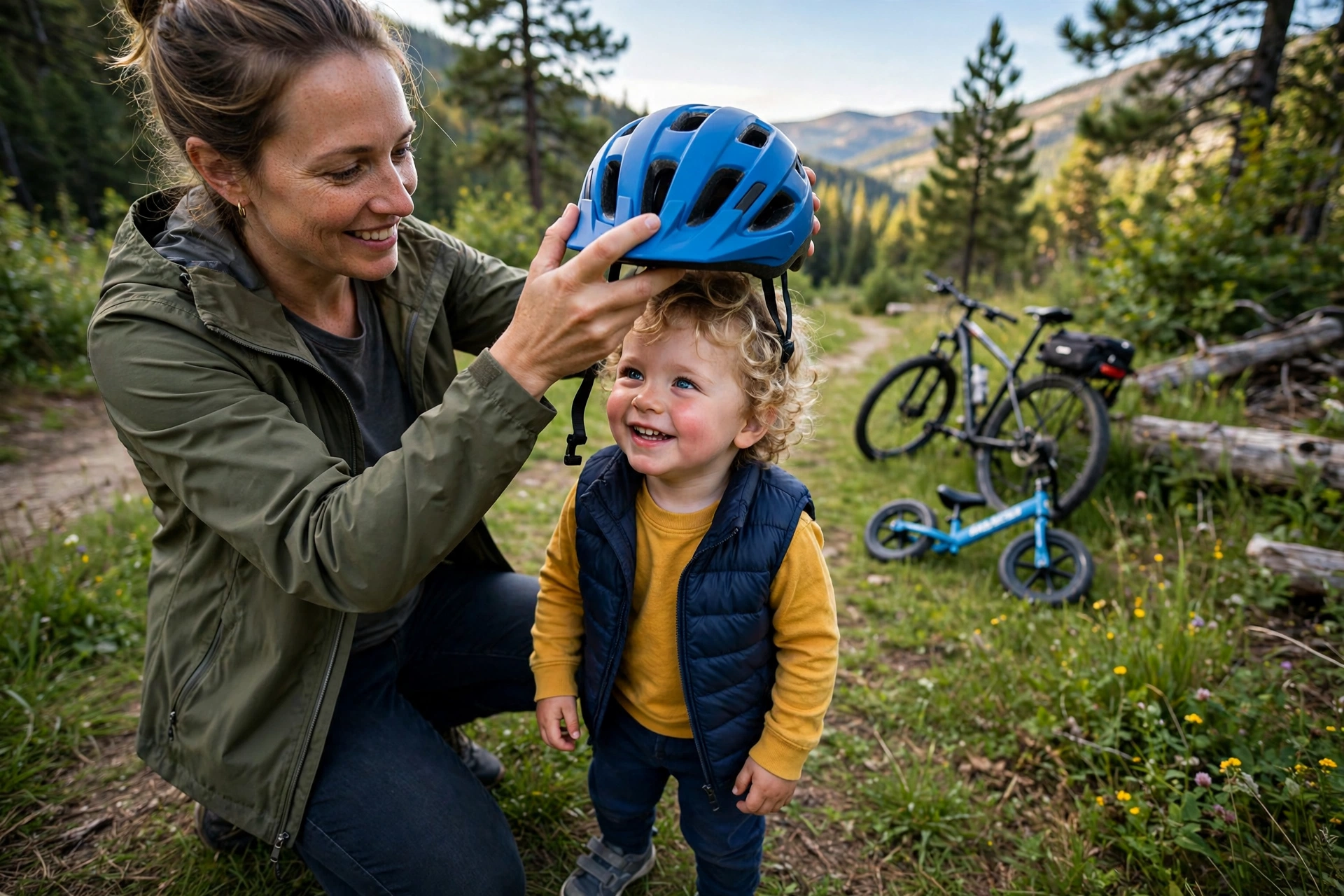
Set the helmet level on your toddler’s head, as if it were a bowl sitting flat — not tilted back exposing the forehead, and not tipped forward over the eyes. The front edge should sit roughly two finger-widths above the eyebrows, low enough to protect the forehead in a forward fall.
Your toddler needs a true bike helmet in their own size, not an older sibling’s hand-me-down or a heavy adult style. Bike helmets for small children are deliberately light and shallow, which matters because young necks tire quickly — the difference in design is as real as the one described in our comparison of a bike helmet vs motorcycle helmet. If the helmet is sized right, it should stay level on its own once the rear dial (if fitted) is snugged, before you even touch the straps.
Check for rocking: gently try to move the helmet front-to-back and side-to-side. Small movement is fine; a helmet that slides around freely is too big and no amount of strap tightening will fix it.
How Do You Adjust the Straps on a Small Head?
Start with the side straps. Each side should split into a V shape that meets just below the earlobe, with the ear sitting in the middle of the V. On toddler helmets the sliders are small, so adjust them while the helmet is off if your child is squirmy, then put it back on to check.
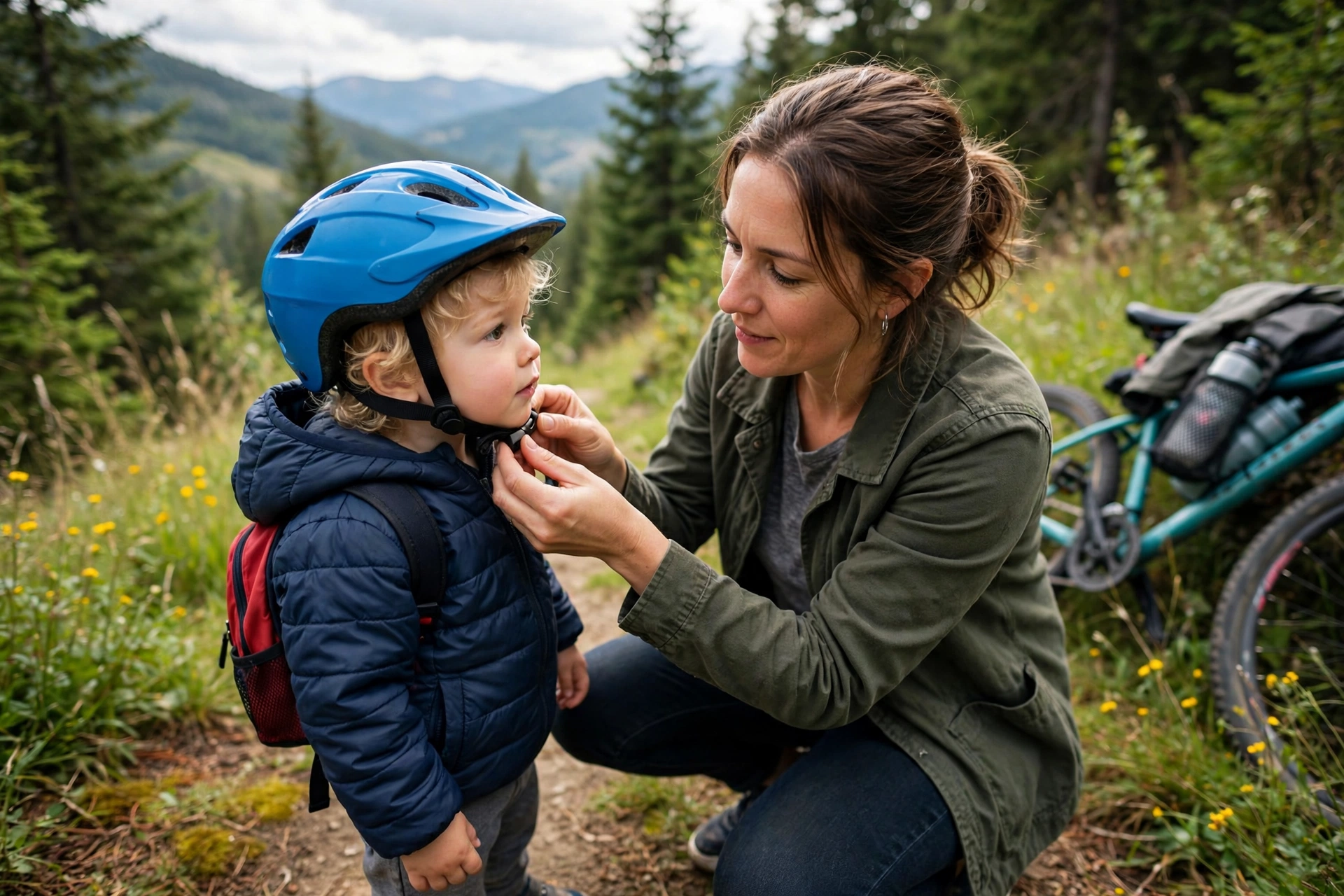
Then buckle the chin strap and take up the slack until you can slip just one finger between the strap and the chin. Too loose and the helmet can roll off in a fall; too tight and you have guaranteed tears. The strap should be snug enough that the helmet moves with the head when your toddler shakes it — gently, like saying “no.”
Finish with the rear fit dial if the helmet has one. A quarter-turn at a time is plenty. You want even, gentle pressure all around, not a squeeze.
Recheck the strap tension after the first few minutes of riding, too. Straps settle, pads compress slightly, and determined toddler fingers explore buckles — a quick recheck at the first stop keeps the fit you set at home.
How Do Pinch-Guard Buckles Prevent Tears?
The single most common cause of helmet-time crying is not the helmet — it is a pinched chin. A standard buckle closes right against soft skin under the jaw, and one pinch creates an association that can last for weeks of rides.
Many toddler helmets use a pinch-guard or “no-pinch” buckle, where the two halves meet behind a small shield so skin cannot get caught in the clasp. If your helmet has a regular buckle, build the habit yourself: slide one finger under the chin strap as you close it, so your fingertip takes any pinch instead of your child’s skin.
When you unbuckle, do it deliberately too. A rushed release can snap the strap or catch hair. Calm hands, same order, every time — toddlers relax when they can predict what happens next.
How Can You Make the Helmet a Habit Instead of a Fight?
Make it non-negotiable and boring: the helmet goes on before the bike, trike, or scooter moves, and if the helmet comes off, the riding stops. No exceptions and no long negotiations. Most toddlers test the rule a few times, then file it away as simply how riding works.
Wear your own helmet every time, without being asked twice. Toddlers copy far more than they obey. Let them choose the helmet’s color or add a sticker, and let them practice putting a helmet on a stuffed animal or on you. Short indoor practice sessions — helmet on for a minute while playing, with praise — build tolerance faster than battles at the driveway.
Keep the helmet by the door or hanging on the bike so the sequence is always identical: shoes, helmet, ride. Consistency turns a fight into a routine surprisingly fast.
Expect the first few attempts to be wobbly. Put the helmet on, adjust it, take a photo, offer praise, and take it off again if your toddler has had enough — then go a little longer next time. Short, successful sessions beat one long battle, and within days most toddlers stop noticing the helmet at all.
When Does Crying Mean the Helmet Needs a Refit — or a New Size?
Crying that starts the moment the helmet goes on, even indoors, usually signals a fit issue: a pinched strap, bunching hair, a helmet tilted onto the eyebrows, or a dial cranked too tight. Take it off, fix the basics — smooth the hair, level the helmet, loosen and re-snug the straps — and try again calmly.
Crying combined with red pressure marks that linger, a helmet that will not stay level, or one that your child can push off no matter how you adjust it points to the wrong size or shape. Re-measure the head and try a different size or brand rather than fighting the same helmet daily.
Some resistance is just toddlerhood, though. If the fit checks all pass and the tears stop once the riding starts, you are looking at a habit still forming, not a helmet problem. Keep sessions short, keep the routine identical, and it typically resolves within a couple of weeks.
Frequently Asked Questions
How tight should a toddler’s helmet strap be?
Snug enough that one finger fits between the strap and the chin, and the helmet moves with the head instead of sliding. If it leaves marks or your toddler pulls at it constantly, ease it off slightly and recheck the position.
Should my toddler wear a helmet on a balance bike?
Yes. Balance bikes are often a child’s first real falls, and the habit is easiest to build from the very first ride. Same helmet, same routine, every ride.
What if my toddler keeps taking the helmet off?
First verify the fit — pinching or a wobbling helmet is the usual culprit. If the fit is right, stop the ride calmly each time the helmet comes off and restart when it goes back on. Consistency, plus wearing your own helmet, ends the game quickly.

Olivia
Writer at Helmet Today, covering helmet reviews, fit and riding safety.