To fit a bike helmet correctly, set it level on your head about two finger-widths above your eyebrows, snug the rear fit dial, form the straps into a V just under each ear, and fasten the chin strap so only one or two fingers fit beneath it. A helmet that passes the head-shake test without straps fastened is the right size; the straps and dial then keep it there.
Fitting takes two minutes and makes the difference between a helmet that protects you and one that slides out of the way in a crash. Work through the steps in order: position, size, dial, straps, test.
Where Should a Bike Helmet Sit on Your Head?
Position comes first. The helmet should sit level — not tipped back like a cap, not pulled down over your eyes. The front edge should sit roughly two finger-widths above your eyebrows, low enough to protect your forehead while leaving your vision clear.
Tipped-back helmets are the most common fit mistake. They expose the forehead, which is exactly where a forward fall tends to land. If your helmet wants to sit high or tilted, the size or shape may be wrong for your head, or the fit dial may need tightening before you judge the position.
With glasses, the helmet edge should sit above the frames without pressing them into your temples. Try your usual riding glasses or sunglasses during the fitting, not afterward.
How Do You Choose the Right Size and Use the Fit Dial?
Measure your head circumference just above the eyebrows and ears with a soft tape, then match the measurement to the maker’s size chart. Sizes overlap and vary between brands, so the measurement — not the letter on the box — is what counts.
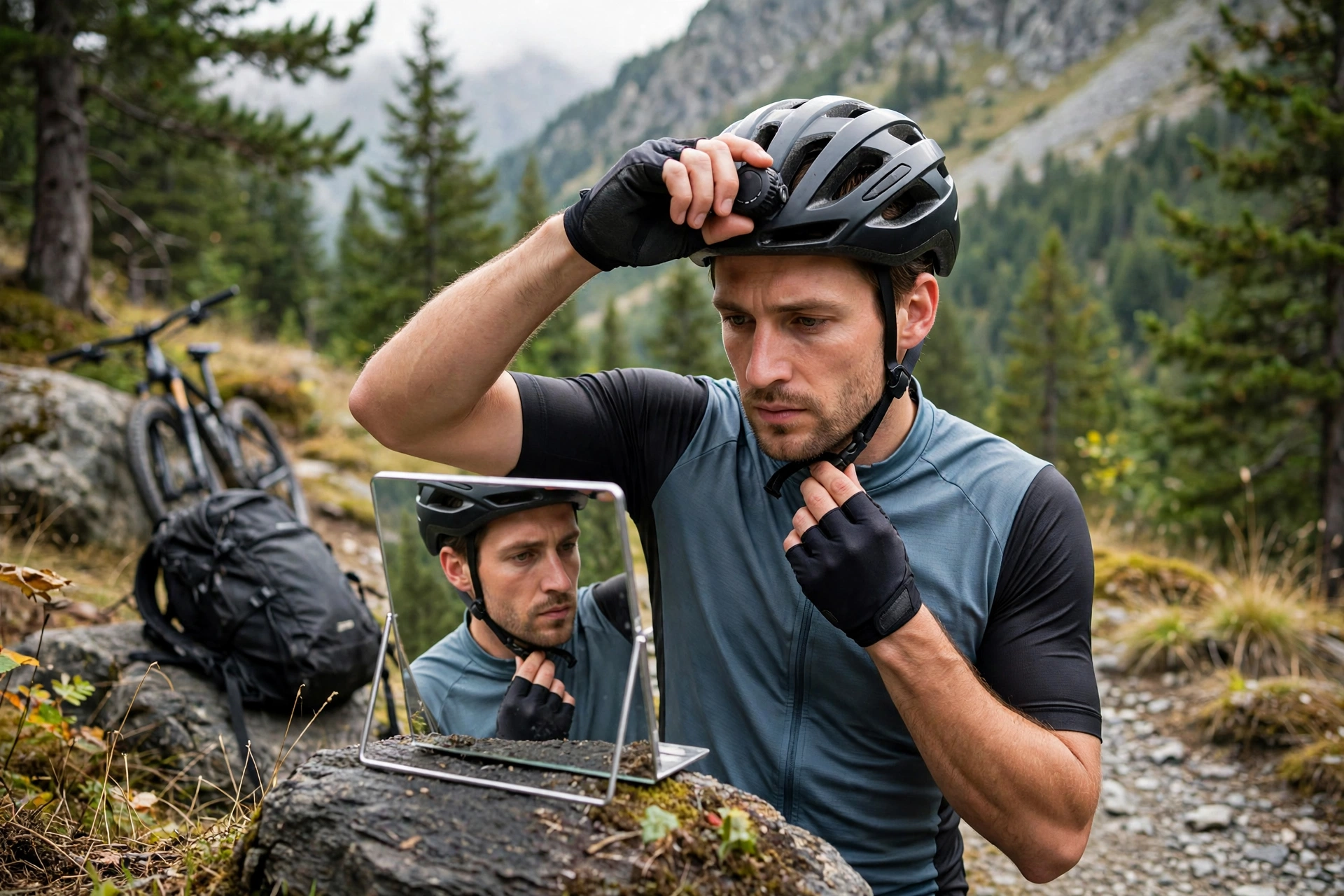
On your head, the helmet should feel evenly snug all around with no single pressure point. Most modern helmets have a rear adjustment dial: turn it until the internal cradle grips firmly but comfortably. The dial fine-tunes the fit; it cannot rescue a shell that is fundamentally the wrong size.
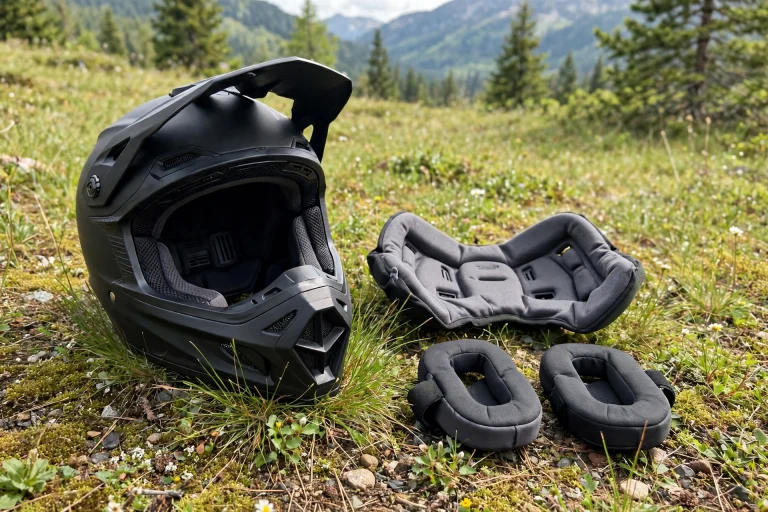
Head shape matters too. Some helmets suit rounder heads, others longer, oval heads. If a helmet presses your forehead and wiggles side to side, try another model’s shape rather than another size of the same one. Many helmets also include a low-friction rotational layer — what MIPS is for helmets — which must sit flat and uncompressed to work, another reason the base size has to be right before you start adjusting.
How Should the Straps and Buckle Be Adjusted?
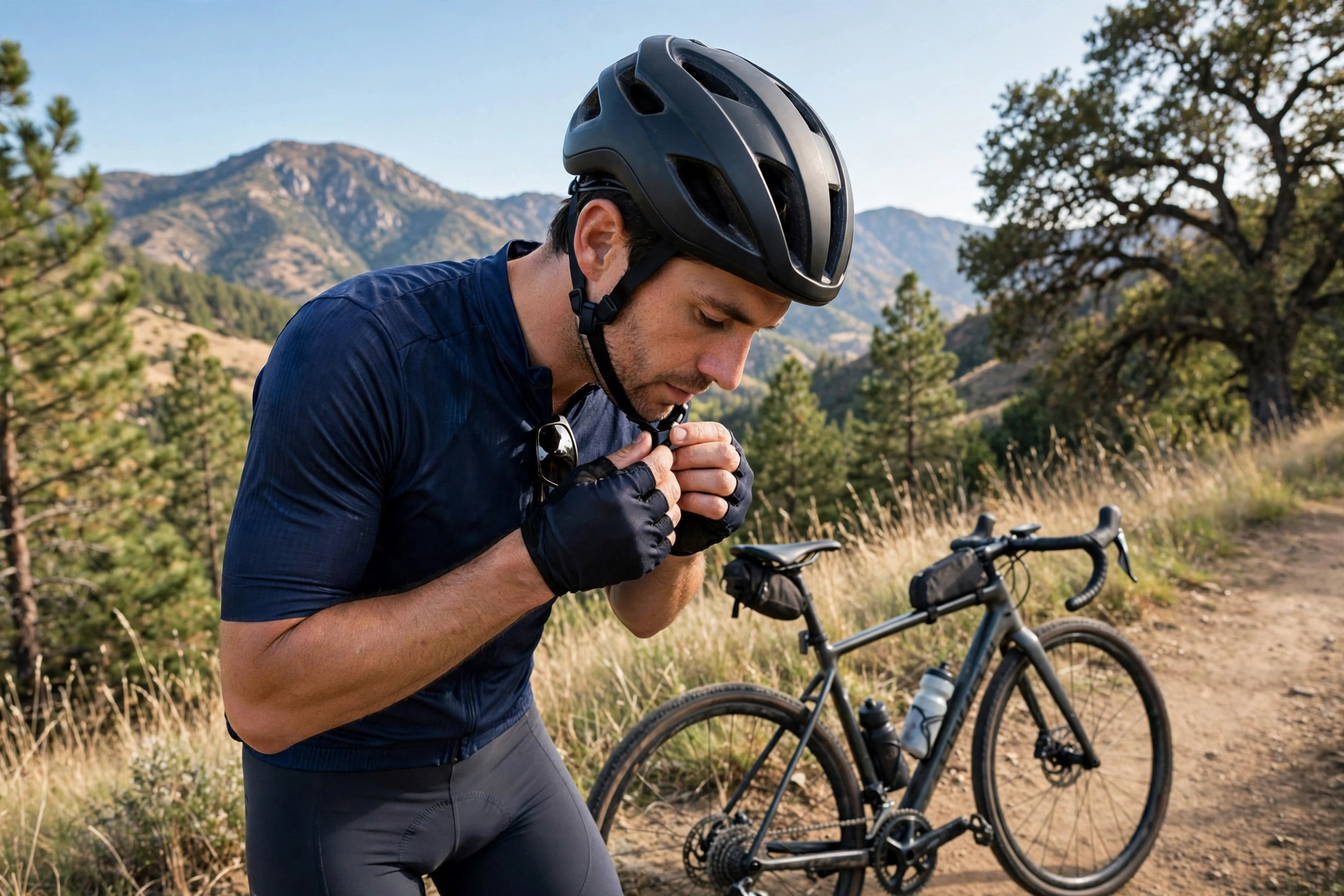
The side straps should form a V that meets just below and slightly in front of each earlobe, using the sliding dividers on each side. If the V sits on the ear or far below it, re-thread the divider until the junction sits right under the ear — this is what stops the helmet rolling forward or backward.
Fasten the chin strap and tighten it until you can fit one or two fingers between strap and chin. You should be able to open your mouth against slight resistance, and yawning should pull the helmet down a touch. Looser than that, the helmet can shift or come off; tighter, and you will loosen it mid-ride.
Trim or tuck any long strap end so it cannot flap into your eyes, and re-check the V position after any adjustment — moving one strap usually disturbs the other.
Expect to re-do this setup a few times a year. Removing pads for washing, swapping between summer and winter liners, or a strap divider slowly migrating all change the geometry. A quick monthly routine — level the helmet, check the Vs sit under your ears, confirm the one-to-two-finger strap rule, and do an unbuckled shake — keeps the fit you set from quietly drifting away. If a divider will not stay where you put it, that is an early sign the straps are worn and the helmet is aging.
How Can You Test the Fit Before Riding?
Do the shake test: with the chin strap unbuckled, shake your head side to side and nod. The helmet should move with your head, not around it. Then buckle up and try to roll the helmet forward and off from the back with both hands — a correct fit resists firmly.
Wear it around the house for ten minutes. A good fit stays comfortable; a bad one announces itself with a forehead hot spot or a creeping headache. New pads relax slightly in the first weeks, so snug-and-even is the right starting point, not painful.
If you ride with a ponytail, route it low through the fit system or under the cradle where the design allows, and re-run the shake test with your hair as you actually ride. Thick hairstyles, caps, and winter liners all change fit — retest whenever you add a layer.
One more real-world check: ride a short, familiar loop and pay attention. A well-fitted helmet disappears — no adjusting at stops, no pushing it back up, no hotspot forming. If you touched it more than once on a fifteen-minute ride, something in the setup still needs work.
How Often Should You Check a Child’s Helmet Fit?
Check kids’ fit at the start of every season and after any growth spurt — roughly every few months for young children. Run the same tests: level position two finger-widths above the brows, V straps under the ears, one-to-two-finger chin strap, and the unbuckled shake test.
Never buy a child a helmet to “grow into.” A too-big helmet shifts in a crash and can slide over the eyes while riding. When the shell is outgrown or the pads are fully compressed even at the dial’s tightest setting, it is time for the next size.
Also inspect straps and buckles on kids’ helmets regularly — small hands fiddle with dividers, and a V that has migrated onto the ear quietly undoes the fit you set.
Frequently Asked Questions
How tight should a bike helmet be?
Evenly snug with no painful pressure point. With straps done up correctly, the helmet should not shift when you shake your head, and you should fit one or two fingers under the chin strap.
Why does my helmet tip back?
Usually the size is too large, the rear dial is loose, or the strap V sits too low. Re-set position and straps first; if it still tips, try a smaller size or a different head shape.
Should a bike helmet cover your forehead?
Yes. The front edge should sit about two finger-widths above your eyebrows, protecting the forehead. A helmet worn high like a cap leaves the forehead exposed.

Olivia
Writer at Helmet Today, covering helmet reviews, fit and riding safety.